FREQUENCIES
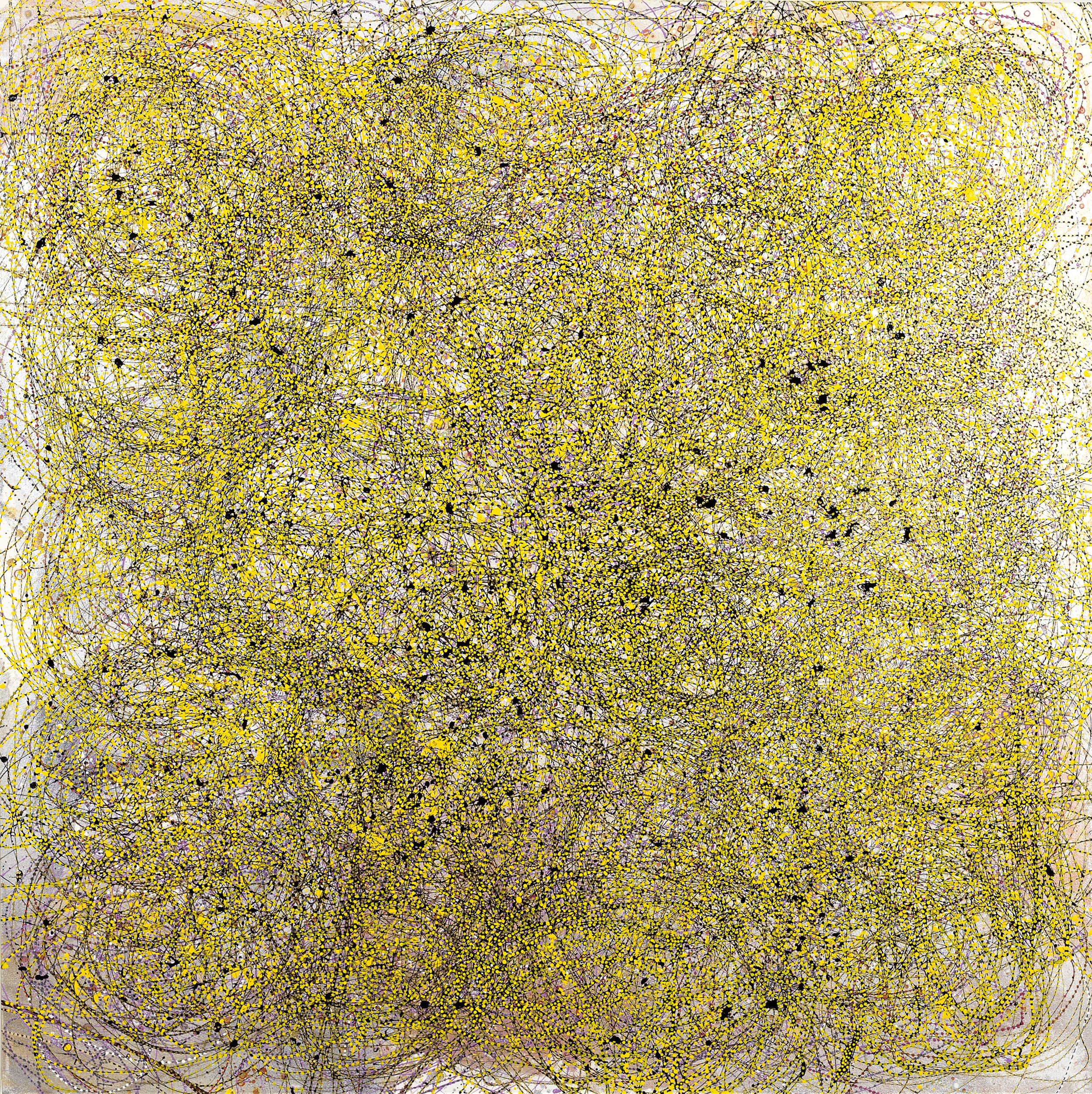
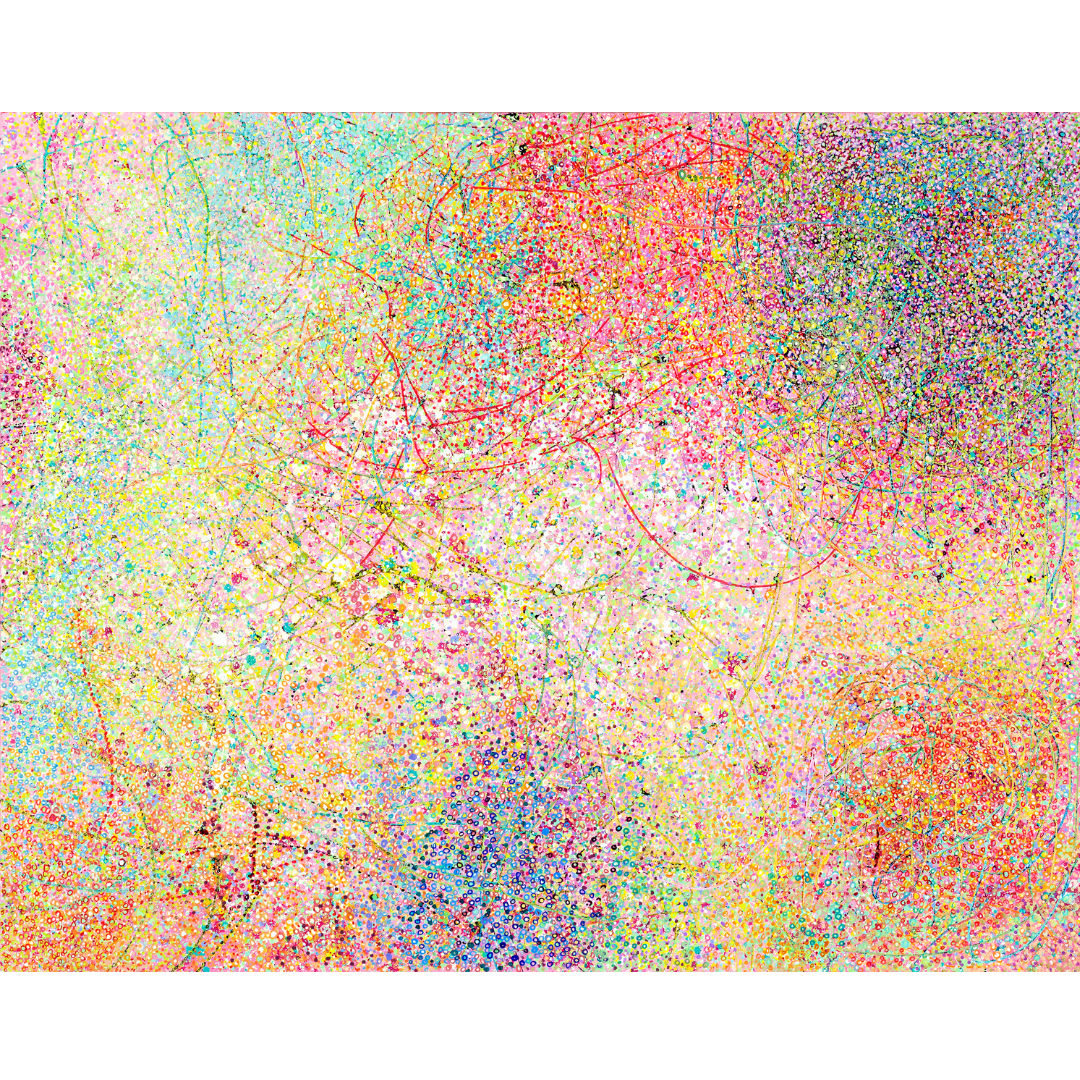
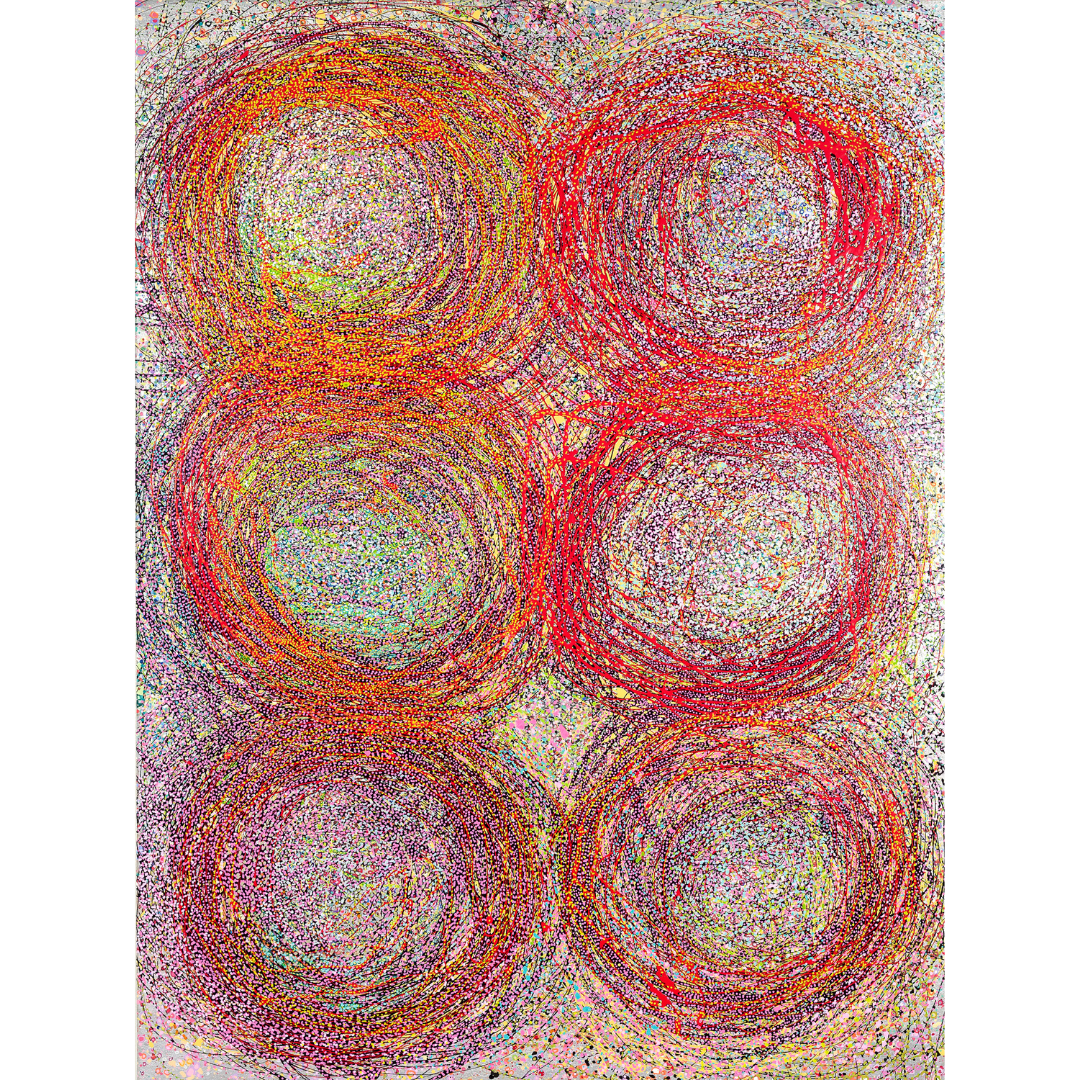
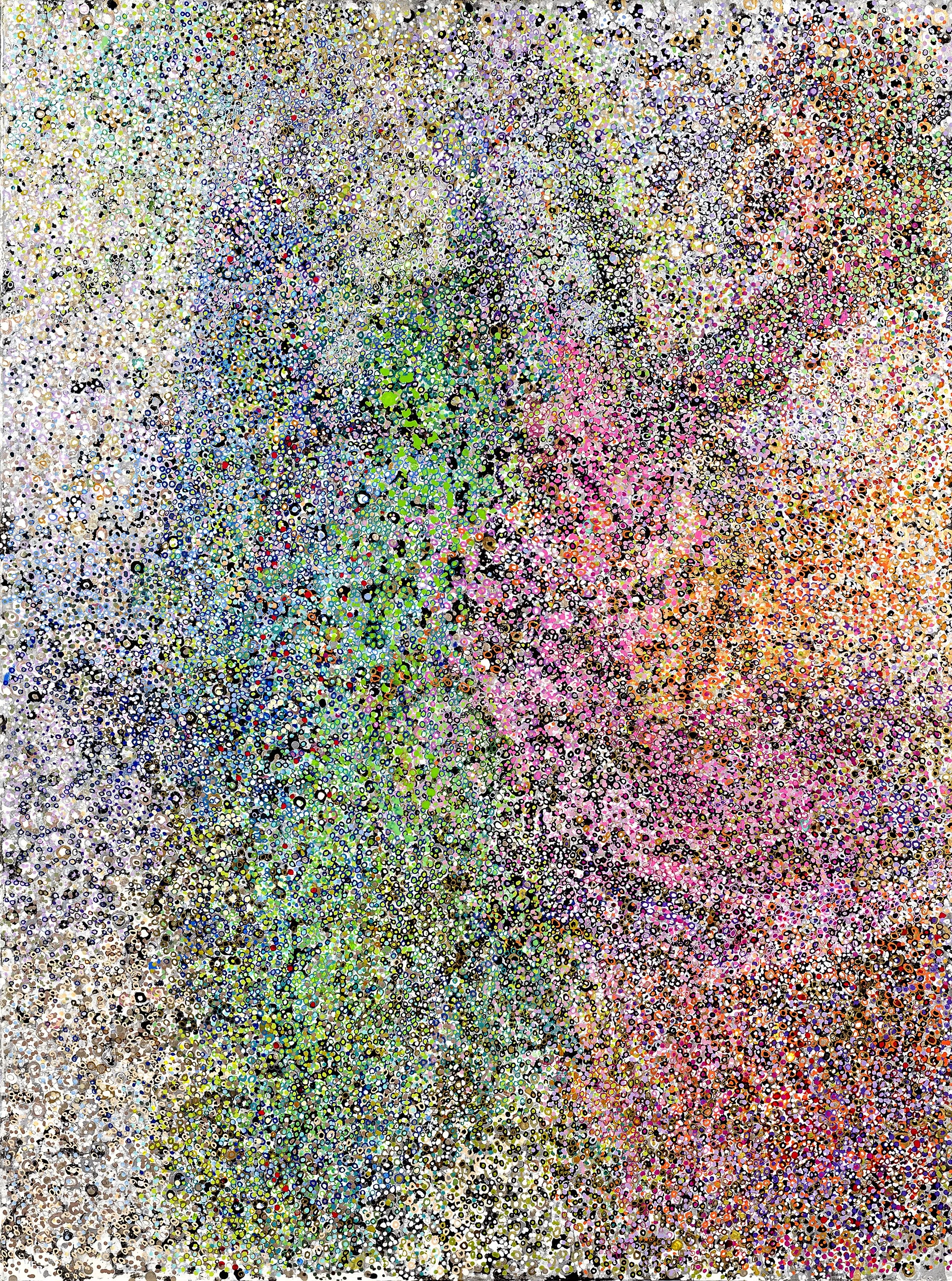
In FREQUENCIES the act of seeing is not a passive reception but an invitation to unravel the visual field itself. These paintings do not merely depict; they conjure—invoking a liminal territory where surface, light, and material perception collapse into one radiant continuum.

-
In the Unified Field series, Parke constructs visual spaces that feel both constructed and naturally occurring, akin to looking through a kaleidoscope made of memory and light. Metallic reflections, fractured packaging materials, ephemeral plastic—once inert artifacts of consumption—are transfigured into luminous architectures of space. The visual logic of these works owes as much to quantum field theory as it does to 17th-century Dutch still life: what we see is not a representation of the world but the resonance of its energy.
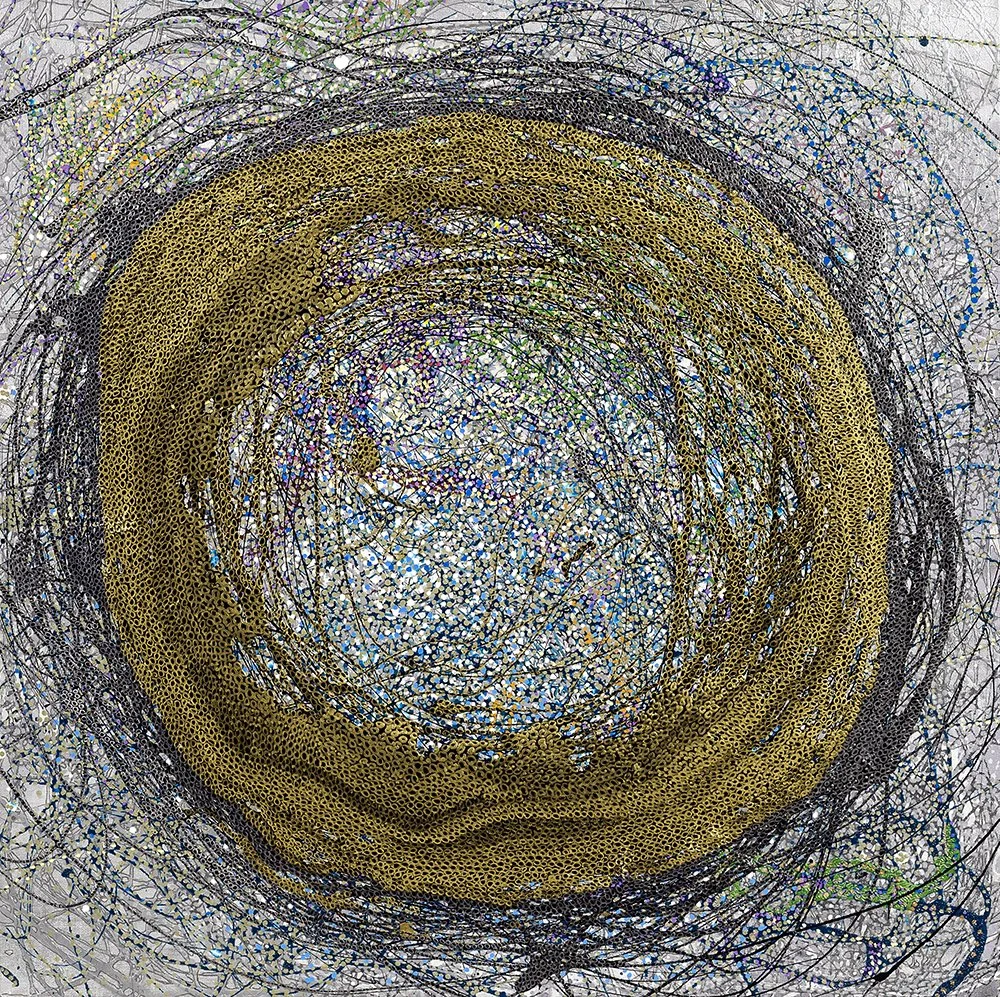
In the Lightness of Being series, this conceptual scaffolding softens. The palette shifts upward in frequency—toward light blues, opalescent whites, and iridescent silvers—hinting at a kind of weightless transcendence. If Parke’s earlier work held tension between chaos and order, here she leans into grace. These are not static compositions but kinetic atmospheres, vibrating with perceptual possibility. At moments, they recall the spiritual cool of Agnes Martin, yet Parke is less concerned with stillness than with a kind of visual surrender—the point where clarity and blur, object and field, coalesce into a singular experience.
What continues to distinguish Parke’s practice is her virtuosic command of paint in service of disorientation. As viewers, we are drawn in by the illusion—thinking we see aluminum foil, broken glass, chiffon—but slowly we realize that what’s being offered is not depiction but epiphany. These paintings glow from within, not because of what they contain, but because of what they release.
In this way, Parke aligns herself with a lineage of artists—Turrell, Richter, Celmins—who have redirected our attention toward the conditions of seeing itself. But she does so with a uniquely feminine grace and an intimate scale that grounds even her most ambitious metaphysical gestures. Where others announce, Parke whispers—and the effect is all the more powerful for it.
Ultimately, Unified Field and Lightness of Being represent more than a new chapter in Parke’s practice. They constitute a reframing of her visual philosophy—one where the visible and invisible, the sacred and the disposable, the rendered and the abstracted, are no longer distinct categories but harmonic registers of the same visual field.