
I was watching a short Instagram video by @evie_hatch, an art historian and pigment specialist, about a material I had never really considered before: Vivianite.
She was showing this strange, unassuming substance—something that can begin almost colorless, even gray—and then, with exposure, with time, it turns blue. Not a bright, declarative blue. Something quieter. A blue that seems to come into being rather than arrive fully formed.
The minute I saw it, I thought of Jean-Baptiste-Siméon Chardin’s The Pipe.
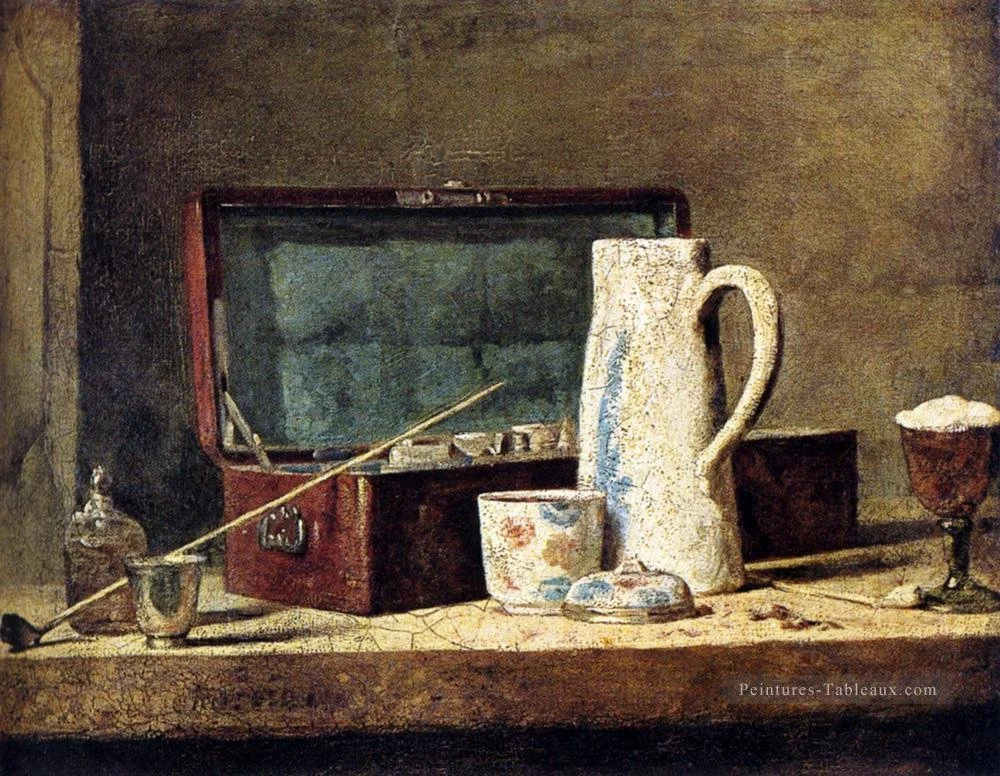
That padded box in the center. The blue that won’t hold still. The blue that can look pink one day and green the next. The blue that defeated Albert Skira when he tried to reproduce it, cutting up his own printed color and holding it against the painting, unable to match it. The blue that Matisse said could only be understood in paint was made with the same means.
For a moment, Vivianite felt like an answer.
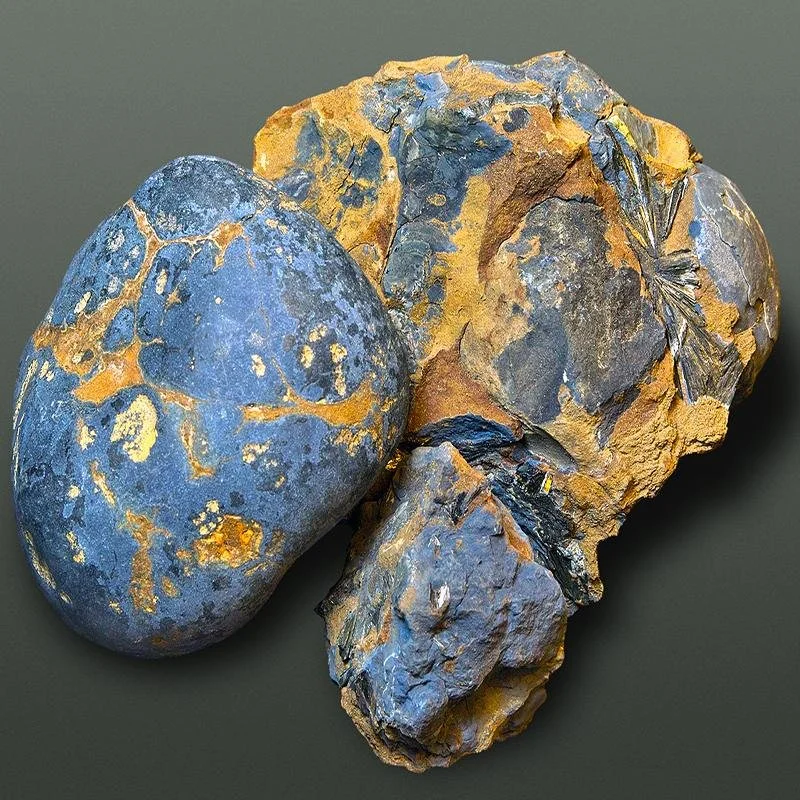
Vivianite
Vivianite forms in conditions of organic decay, where iron and phosphate meet—often in soils, peat, clay. It doesn’t present itself as a brilliant blue mineral. It emerges slowly, and it continues to shift. It can darken, mute, disappear into gray. It is not stable in the way that the canonical blues are stable.
It seemed plausible, in that moment, that Chardin had found some version of this and used it to construct that elusive color.
But the more I looked into it, the less likely that became.
There is no solid evidence that Chardin used vivianite. It is not part of the documented eighteenth-century Paris palette, and it doesn’t appear in the technical studies of his work. Whatever that blue is, it isn’t coming from this particular source.
And yet, the association wouldn’t leave.
Because vivianite behaves in a way that feels uncannily close to what happens in that painting. It doesn’t sit still. It doesn’t announce itself. It emerges, it shifts, it depends on conditions.
There are places where vivianite has been identified—most notably in works from the Dutch seventeenth century, including paintings by Johannes Vermeer.
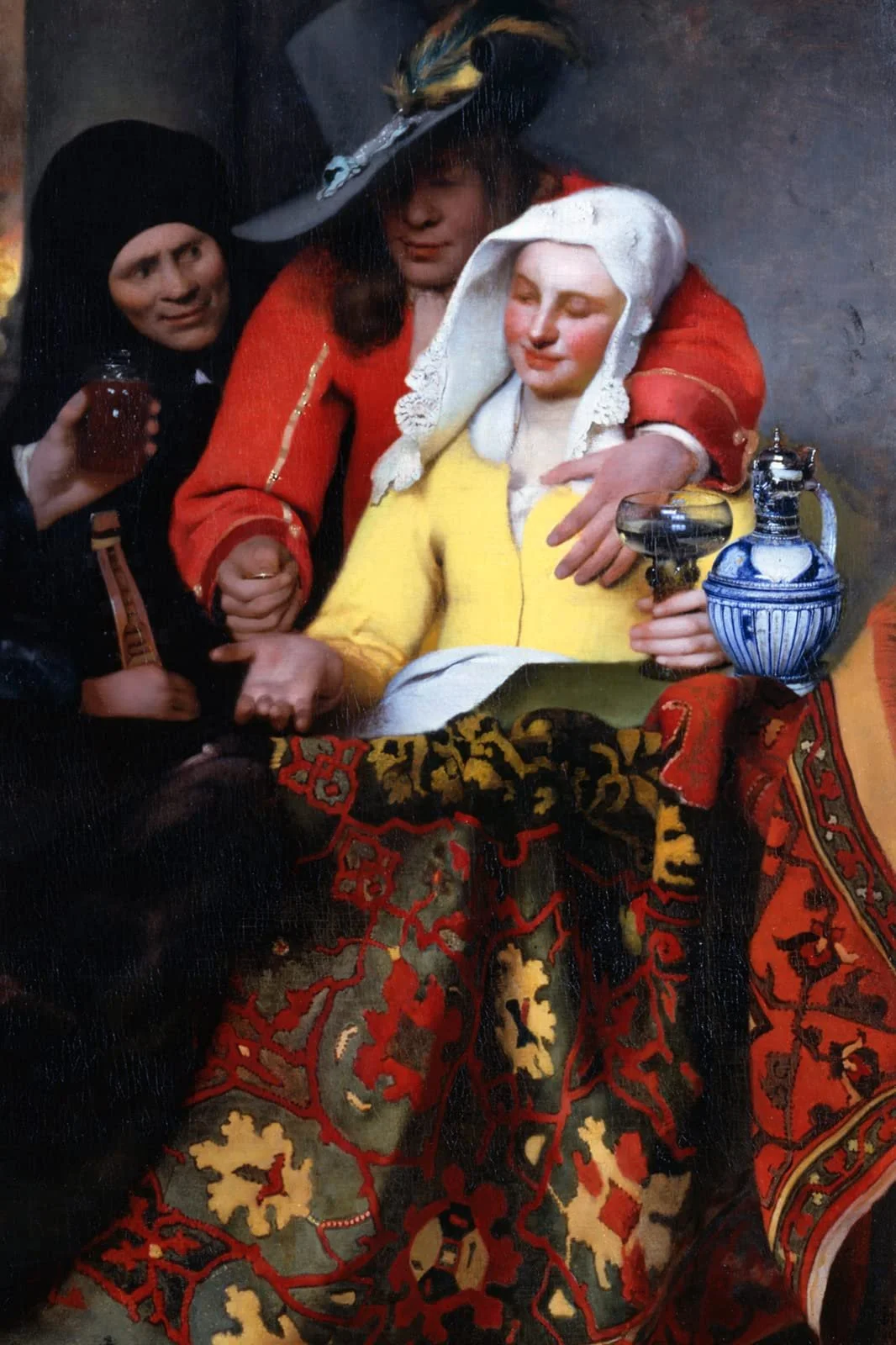
Vermeer, The Procuress
Not as the dominant blue. Vermeer’s great passages of blue rely on ultramarine, azurite, the known materials. But vivianite appears in more subtle ways—mixed into passages, part of the structure of the paint, something that participates in the overall effect without declaring itself outright.
It is there, but not as a statement. More as a condition.
Which brings me back to Chardin, and to Matisse, and to Skira.
Skira couldn’t reproduce that blue because he was trying to match a color.
Matisse said it was easier in paint because you were using the same tools.
They were not solving the same problem.
The blue in Chardin is not a single thing that can be isolated and matched. It is built—through underpainting, through layers, through glazes, through the surface itself. It is held in suspension. It depends on light, on distance, on the eye adjusting.
It behaves more like vivianite than like ultramarine, even if it is not vivianite.
Matisse understood that difference. When he said his own paintings were easy to reproduce because he used pure colors from the tube—“Anyone can copy my paintings”—he was making a distinction. His color is present, immediate. Chardin’s is constructed, contingent.
The quality, as he said, comes from “the quantity and the thickness.”
What I recognize now is that the impulse to name the pigment—to locate the source of the color—is a kind of wish for certainty. If I can identify it, I can understand it.
But that blue resists that kind of understanding.
It isn’t a color you can point to.
It’s something that happens.