
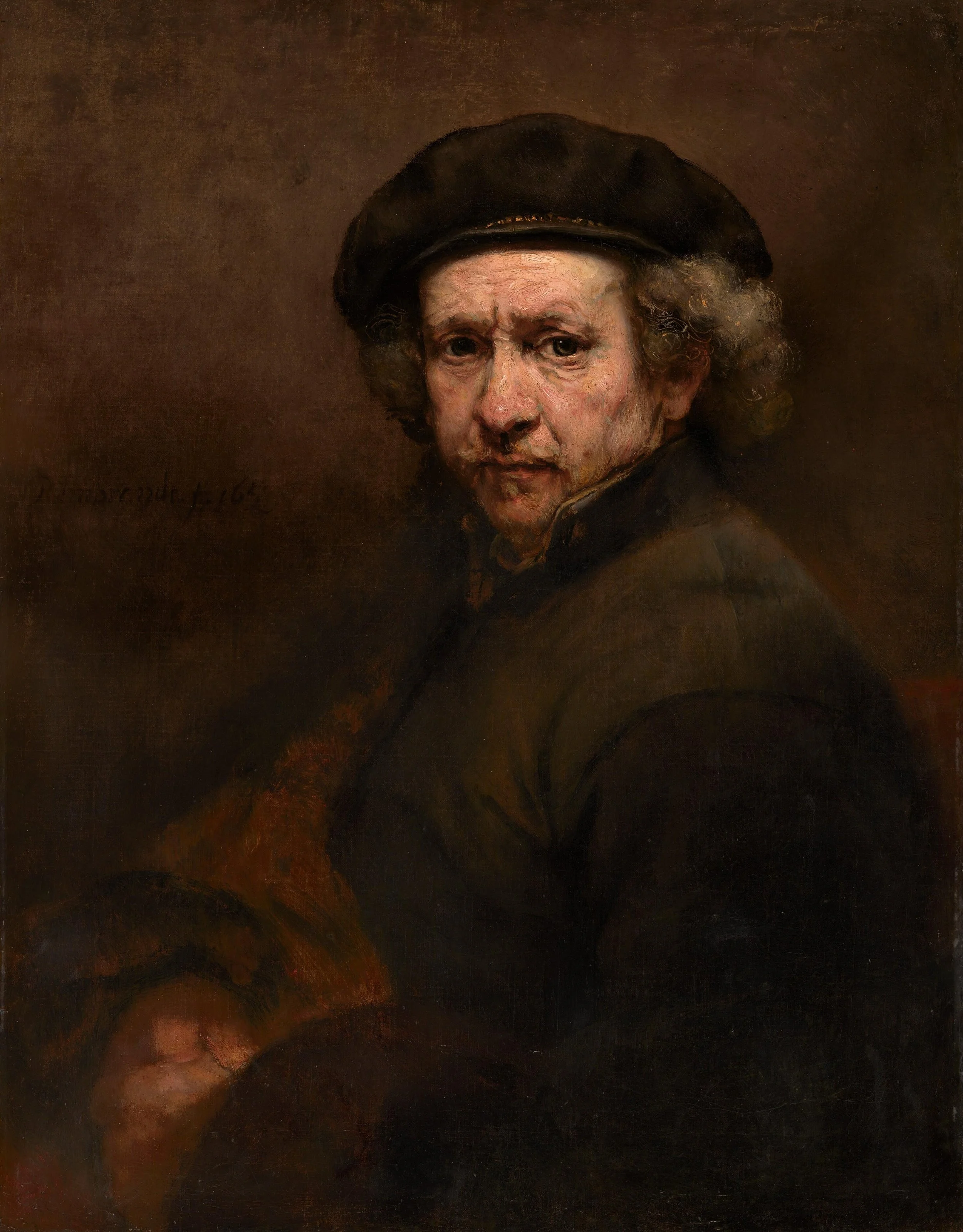
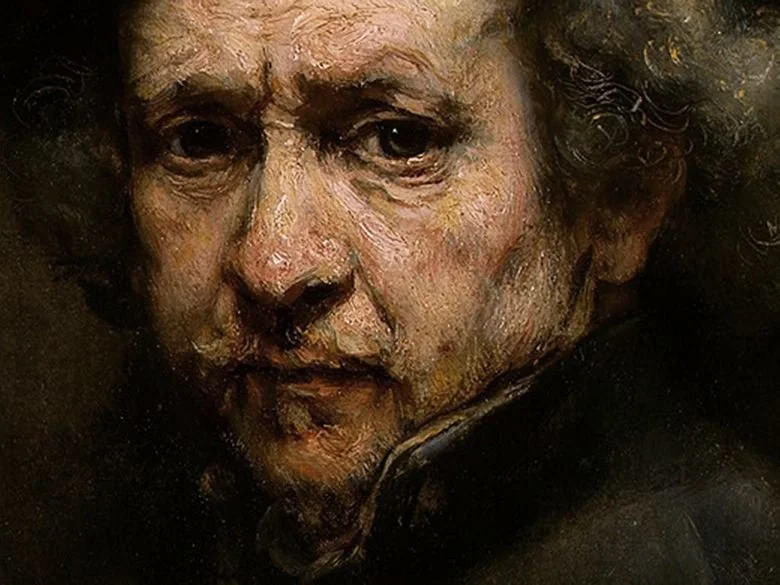
As far as I know, all the images on this page are actual paintings by Rembrandt.
I once traveled to California with a friend, where we stayed with some friends of hers. They had a Rembrandt portrait hanging in their hallway—or so they said. When they asked me what I thought of their Rembrandt, I blurted out, “That’s not a Rembrandt.”
And then I froze. Oh my God, I thought, they can’t possibly think this painting is a Rembrandt. They must be testing me.
But they weren’t testing me. They were perfectly serious. So, before I could stop myself, I kept going. “There’s nothing about this painting that’s Rembrandt,” I said. “Look at the lace—it’s too stiff. The underpainting is chalky. The light doesn’t breathe.”
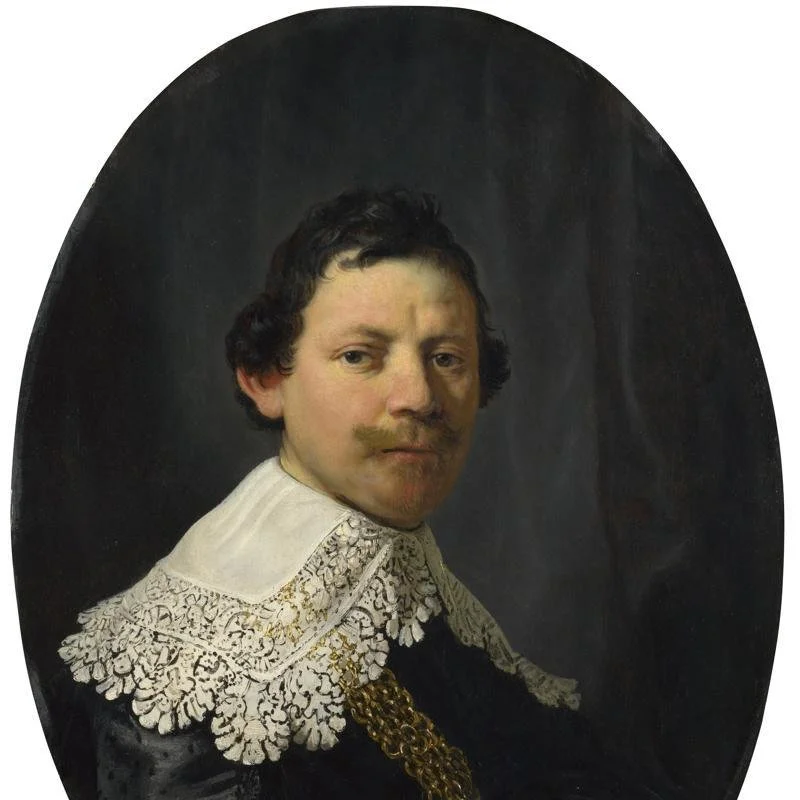
For me, the difference between that painting and a Rembrandt was as obvious as the difference between a Hello Kitty greeting card and a Caravaggio. I wasn’t trying to be clever or superior. It simply never occurred to me that this wasn’t obvious to everyone else.
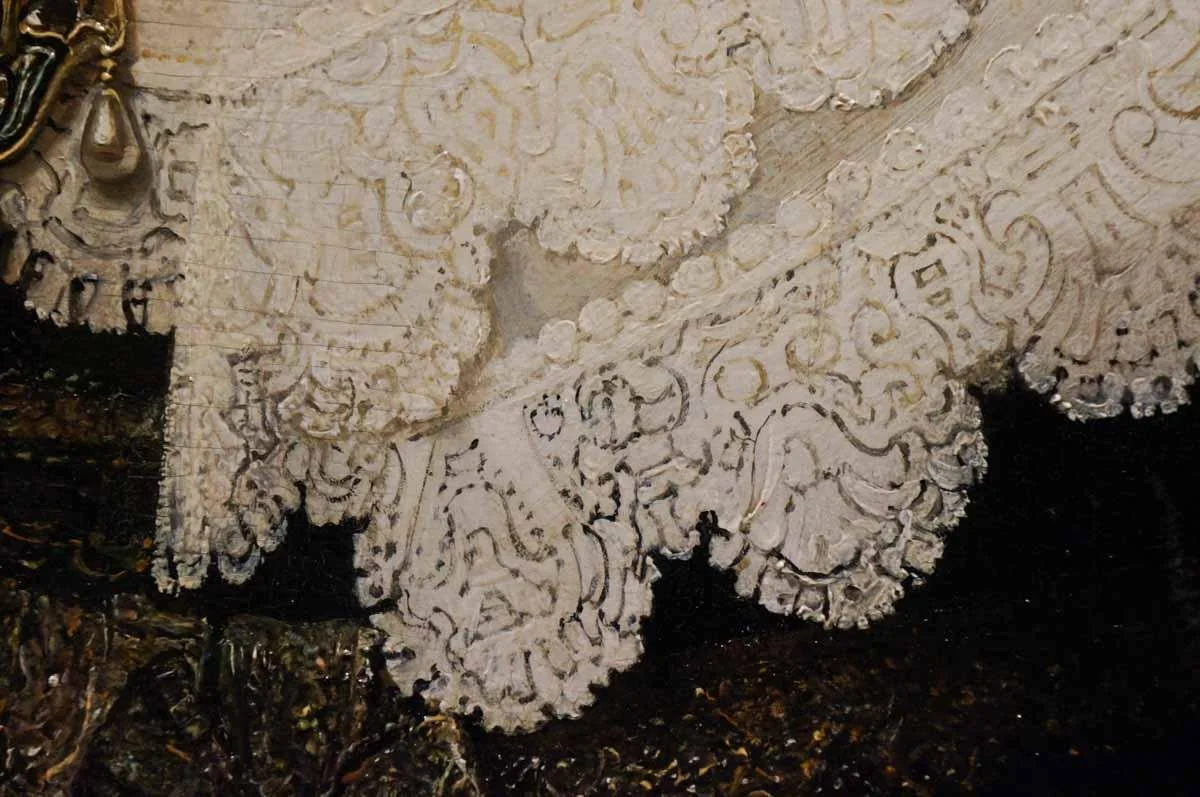
That moment has stayed with me, not because of the painting, but because of what it revealed about how we know things. I didn’t analyze anything; I didn’t compare brushstrokes or think through a list of Rembrandt’s characteristics. I looked, and I knew. The knowledge arrived fully formed, before language, before logic. It was as involuntary as breathing.
How We Know What We Know
Artists live in a visual world of pattern and rhythm. After years of looking—really looking—our perception becomes trained in ways we don’t notice. We see what others might overlook: the weight of pigment, the tension of line, the confidence of a stroke. It’s not magic, though it can feel that way. It’s a kind of muscle memory of the eye.
Cognitive scientists call this tacit knowledge, the kind of understanding that operates below the level of conscious thought. Michael Polanyi described it simply: “We know more than we can tell.” It’s the nurse who senses a patient’s decline before the monitors do. The chess master who sees the board once and already knows who’s winning. The trader who feels a market shift before the data confirms it.
Our minds are constantly running pattern-matching algorithms that make connections faster than words can form. What feels like intuition is often the brain’s predictive machinery working at full speed, drawing on thousands of stored experiences to deliver an instant verdict: yes, this fits, or no, it doesn’t.
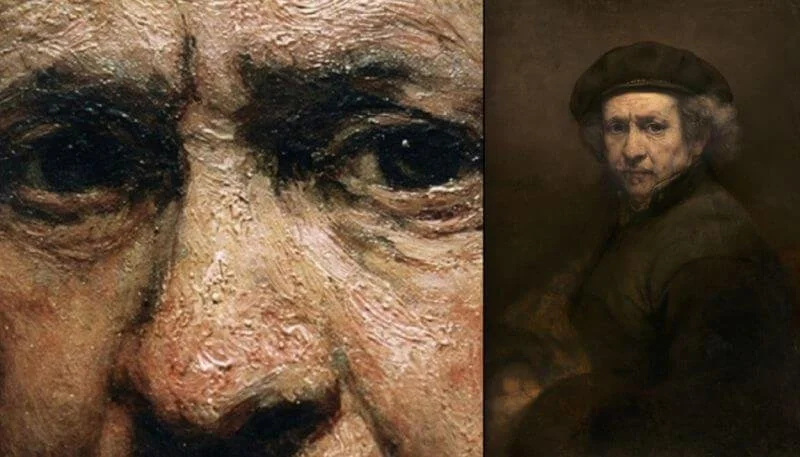
When I looked at that painting, my brain wasn’t consulting an internal checklist of “Rembrandt features.” It was running a simulation of Rembrandt’s world—his light, his brush, his particular gravity—and registering a mismatch.
The Body as an Instrument of Seeing
What fascinates me most is how physical this kind of knowing can be. It doesn’t happen in the abstract. You feel it in the body. When I’m in front of a painting that is right, I feel a kind of stillness settle in, a coherence, like every atom is in conversation with the next. When it’s wrong, there’s static. The painting might be beautiful, even skilled, but something resists.
That physical resonance is often what separates a casual viewer from someone who’s spent a lifetime immersed in a medium. Years of seeing train not only the eyes but the nervous system. Our perception becomes embodied. The body knows before the brain catches up.
I’ve seen this same phenomenon in entirely different worlds. A bond trader friend once told me he could look at his screen and feel when the market was about to turn. He couldn’t always explain it, but the numbers carried a certain energy. He said it was like walking into a room and knowing a storm is coming, even though the windows are shut.
The parallels between the trader’s “gut” and the artist’s eye are striking. Both depend on accumulated familiarity, a kind of sensory intimacy with a complex system. Both require surrendering a little to instinct, trusting perception that doesn’t announce its logic.
The Precision of Intuition
People sometimes treat intuition as something mystical or unreliable, but real intuition—expert intuition—is precise. It’s the distilled residue of experience. It’s not vague; it’s sharp-edged. The mistake is assuming that because we can’t explain a decision, it must be irrational.
Intuition, at its best, is reason compressed to the speed of light.
But it’s also deeply personal. My “Rembrandt sense” is something I earned through years of looking at paintings, making them, studying light and pigment until the differences became part of my nervous system. Someone else might have that same acuity for wine, or horses, or jazz phrasing, or courtroom dynamics. What looks like magic is just the quiet competence of time and attention.
The Trouble With Obvious Things
That day in California, I realized how isolated certain kinds of perception can be. When something feels obvious to you, it’s easy to forget that it might be invisible to others. You start to assume that everyone else sees the same colors, hears the same harmonies, senses the same patterns. But perception isn’t democratic. It’s earned, layered, and specific.
The irony, of course, is that once you’ve trained your eye—or ear, or gut—you can’t turn it off. You can’t unsee what you see. You’ll always spot the counterfeit in the hallway.
Still, I try to remember that what feels like certainty to me might just look like arrogance from the outside. Sometimes I wish I had softened my response that day. But honestly, I don’t think I could have. The knowing came too fast.
The Moment Before Thought
If I learned anything from that experience, it’s that those flashes of knowing are worth paying attention to. They’re not infallible, but they are real. They tell us something about how knowledge lives in the body, how experience writes itself into perception.
Every field has its own Rembrandts—moments when you look, or listen, or read, and you just know. The key is learning to trust that recognition without mistaking it for universal truth.
So I think back to that painting in the hallway, the one that was never a Rembrandt. It still makes me smile. Not because I was right, but because it reminded me of what a lifetime of seeing can do to the way we know the world.
And maybe that’s the real gift of expertise: not certainty, but sensitivity.