
NEW YORK CITY: ARTIST, BARS AND THE MAKING OF A SCENE
New York has always had two art worlds: the one in the studios and the one at the bar. The former produced the work; the latter produced the legends. If Paris had its cafés, New York had its dimly lit rooms with sticky floors, cheap whiskey, and artists who argued, seduced, collapsed, and occasionally painted the bathrooms.
Below is a guided stroll through the great artist bars of New York City — who drank where, who paid, what they ordered, and what survives.
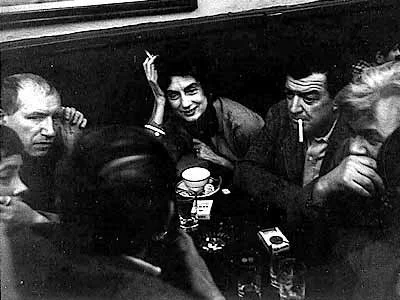
Charlotte Brooks, left, Jack Tworkov, Mercedes, Matter, and James Brooks hang out, however abstractly, at the Cedar Tavern in 1960. Photo: John Cohen/Courtesy of Deborah Bell
THE CEDAR TAVERN — ABSTRACT EXPRESSIONISM WITH A HEADACHE
The birthplace of the New York School’s public mythology. Pollock, de Kooning, Kline, Joan Mitchell (who could drink all of them under the table), Grace Hartigan, Frank O’Hara, and the rest of the crew gathered here.
Atmosphere: smoke, sweat, sawdust, arguments about space and gesture.
Signature drinks:
Pollock: whiskey shots, no chaser.
de Kooning: gin martinis, increasingly slurred.
O’Hara: beer and whatever was being poured nearby.
Kline: bourbon — fast, loud, and plentiful.
Who paid: Whoever had just sold something (often de Kooning). Pollock occasionally paid before he crashed into something.
Exists today? The building remains, but the original Cedar Tavern is gone. A ghost with excellent stories.
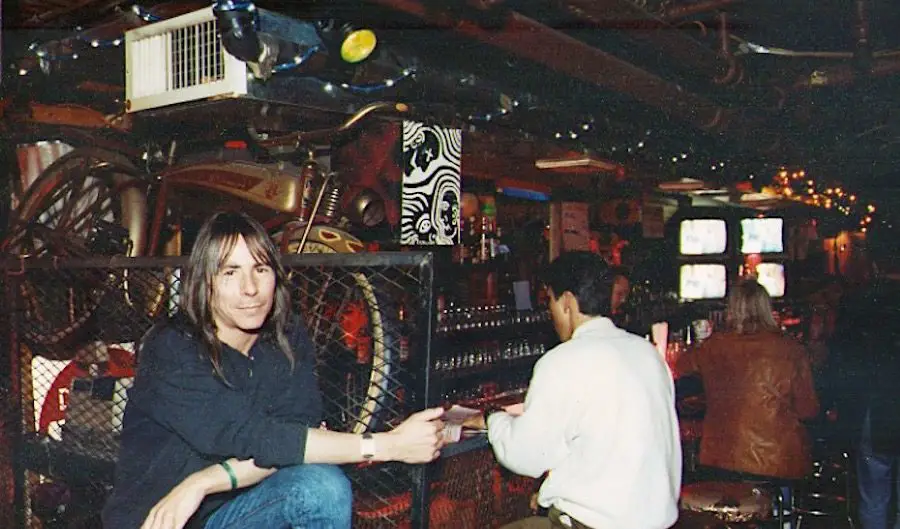
McDOUGAL’S (MACDOUGAL STREET) — THE VILLAGE MIXING BOWL
In the 1950s–60s the Village was full of bars, cafés, and clubs where poets, painters, and folk musicians mingled. McDougal’s wasn’t a single bar but a constellation — the street itself was the venue.
Artists drifted between the Kettle of Fish, San Remo, Café Wha?, and whatever doorway looked promising.
Who drank here: early Beat-adjacent painters, Village bohemians, and downtown artists before Soho became the gravitational center.
Signature drinks: cheap beer, Chianti in wicker bottles, and espresso with emotional problems.
Exists today? Some spaces remain under new names; the aura survives in fragments.
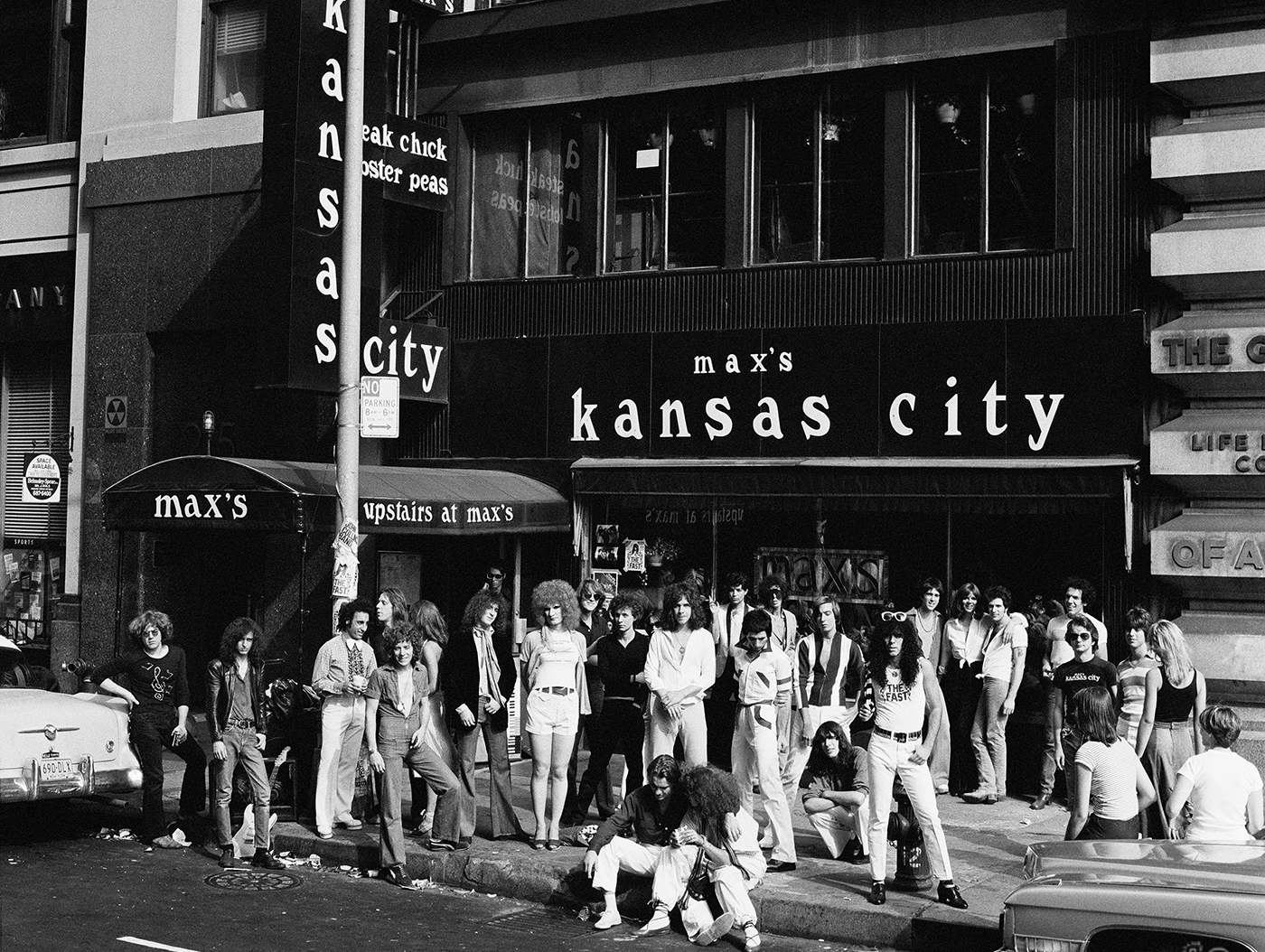
Max’s Kansas City in the 1970s
MAX’S KANSAS CITY — THE WARHOL FACTORY CANTEEN
A red-lit, leather-boothed legend. In the 1960s–70s, Max’s Kansas City was the gathering place for Warhol, the Factory crowd, Abstract Expressionists in their decline, early punk musicians, poets, conceptual artists, and drag queens.
Who drank here:
Warhol and his entourage
Robert Rauschenberg
Larry Rivers
Donald Judd (at the front room, making minimalist eye contact)
Patti Smith & Robert Mapplethorpe
Signature drinks:
Warhol: Coca-Cola — always, obsessively.
Mapplethorpe: vodka.
Patti Smith: beer, occasionally something stronger.
The Factory: amphetamine chasers.
Who paid: Often the patrons or wealthy hangers-on. Artists paid when flush, which was rare.
Exists today? Closed in 1981. Its myth is indestructible.
SPRING STREET BAR — SOHO IN ITS RAW STATE
In the 1970s, Soho was still gritty, industrial, and affordable. Spring Street Bar became the unpolished living room of early postminimalists, performance artists, and conceptualists.
Who drank here:
Gordon Matta-Clark
Laurie Anderson
Chuck Close
Lynda Benglis
Richard Serra
Signature drinks: beer, whiskey, the occasional tequila shot. The point was not the drink but the community forming in real time.
Who paid: Often no one — bartenders extended credit because they knew the artists were future legends (or because everyone was broke). Chuck Close sometimes picked up a tab.
Exists today? Gone. Soho’s transformation erased nearly all traces.
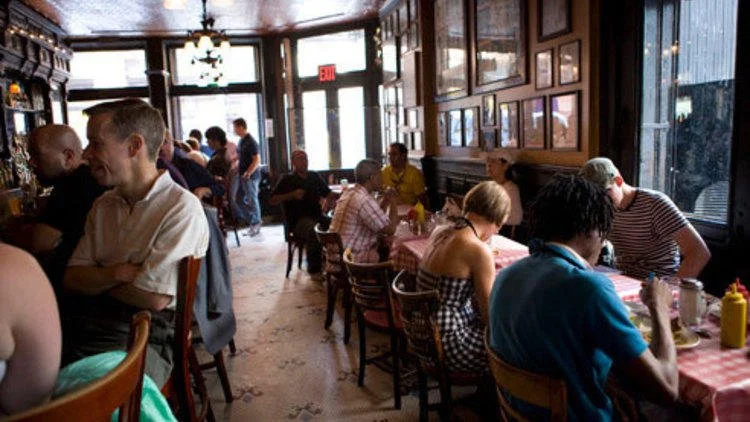
Fanelli’s
SOHO BARS OF THE 1970s — ARTISTS BEFORE THE MONEY ARRIVED
Beyond Spring Street, artists clustered in places like Fanelli’s Café, The Broome Street Bar, and The Ear Inn.
Fanelli’s: the beating heart — painters, photographers, gallerists, filmmakers.
Drinks: beer, whiskey, red wine that never improved.
Who paid: whoever had just sold something at Paula Cooper or OK Harris.
Exists today? Fanelli’s remains gloriously intact.
ASHCAN SCHOOL HANGOUTS — NEW YORK IN ITS COAL-DUST GLORY

McSorley’s by John Sloan
A generation earlier, the Ashcan painters (Henri, Sloan, Bellows, Glackens, Luks) haunted McSorley’s Old Ale House, Healy’s, and other working-class taverns.
McSorley’s: unchanged since 1854 — sawdust, ale, high-backed chairs.
Signature drinks:
Sloan: ale (many rounds).
Luks: whiskey, aggressively.
Henri: beer and intense conversation.
Who paid: They took turns. Sloan complained about the prices no matter what.
Exists today? McSorley’s is still open — an Ashcan diorama preserved in amber. This is one of my favorites because it has both a boxing and an artist history.
WHAT THESE BARS MEANT (BESIDES THE HANGOVERS)
Each of these places served as a second studio. Work was debated, reputations were made, alliances formed, insults hurled, friendships forged, and careers occasionally demolished. Drinking wasn’t incidental — it was the social glue of a city that demanded stamina.
If you wanted to be where art history was happening, you didn’t go to the museum. You went to the bar.