
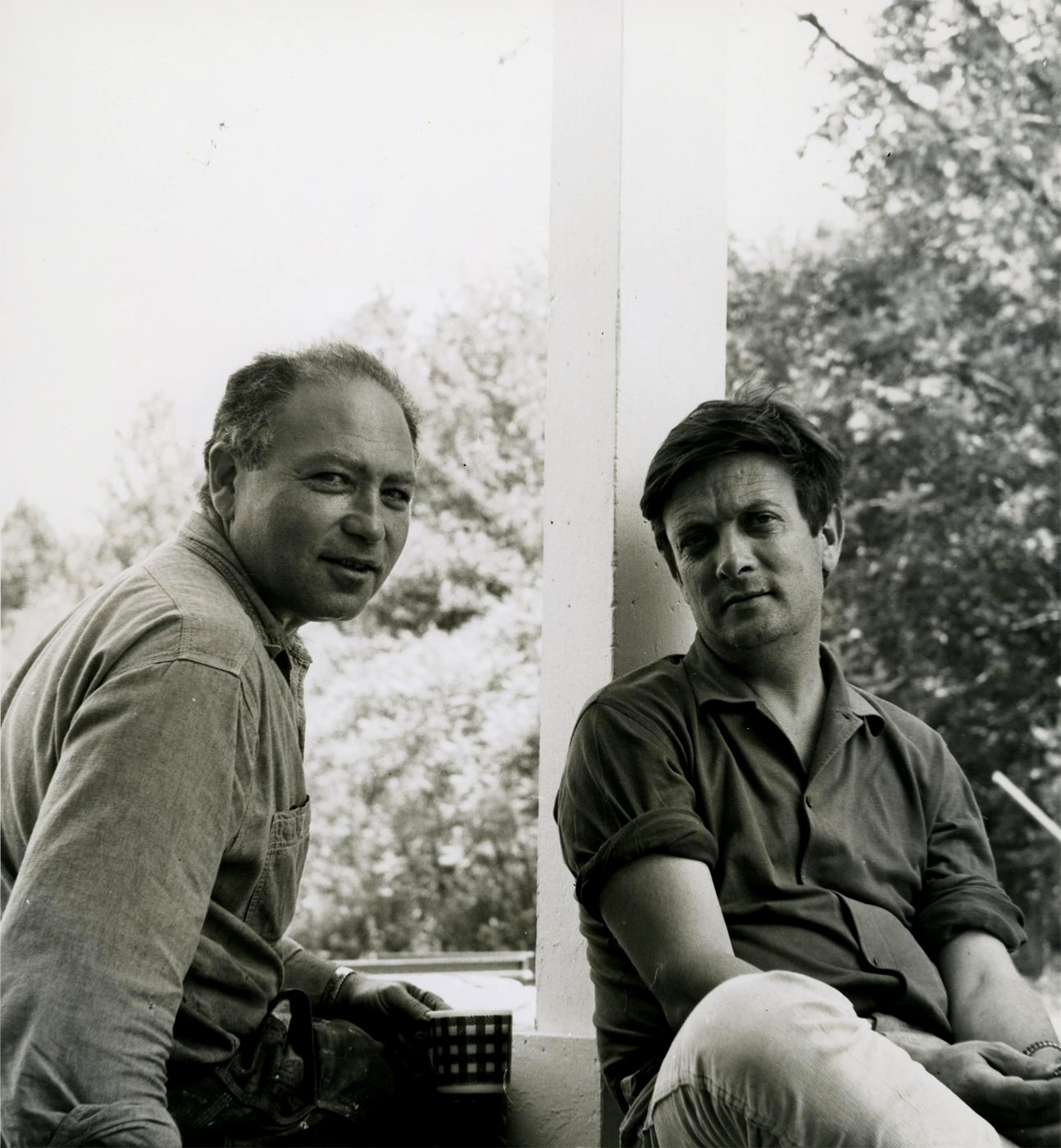
Jules Olitski and Ken Noland
Not all generosity is institutional.
Most of it isn’t.
Most of it happens off the record, without witnesses, without announcements, without plaques. It moves quietly, passed hand to hand, story to story, like folklore.
Kenneth Noland bought materials for Jules Olitski when Olitski couldn’t afford them. Jasper Johns carried Roy Lichtenstein’s work to Leo Castelli when Lichtenstein couldn’t bring himself to do it himself. Agnes Martin slipped younger artists envelopes of cash in Taos—or simply showed up at their studios and gave them her full attention, maybe the rarest gift of all.
None of this appears in wall texts. There are no labels for it, no catalog essays, no provenance records.
And yet these gestures have shaped as many careers as any museum or grant.
This is the quiet economy of art.
It doesn’t run on recognition.
It runs on recognition of the other—the moment when one artist sees another clearly enough to say: Keep going. You’re not wrong. You’re not alone.
Sometimes it’s money.
Sometimes it’s a phone call, an introduction, a bag of supplies, a name passed along at the right moment.
Sometimes it’s nothing more—and nothing less—than sustained attention.
Artists understand this kind of generosity instinctively.
They know how precarious the work is.
How easily doubt or circumstance can interrupt a trajectory.
How much difference a single act, at the right time, can make.
This is not charity.
It’s kinship.
And it circulates more freely than we think.
Most artists I know can trace their survival—if not their success—to one or two quiet interventions that arrived without ceremony and without strings. A door held open. A belief extended. A hand offered and then withdrawn before it could be noticed.
Art is held together by this quiet currency.
It always has been.
In difficult times, when institutions falter and resources are scarce, these small acts matter more, not less. They remind us that culture is not sustained solely from the top down. It’s sustained sideways, and diagonally, and sometimes almost invisibly.
Small acts.
Quiet acts.
They don’t make headlines.
But they make art possible.