
ARTISTS WHO UNDERSTOOD WHAT ARTISTS NEED
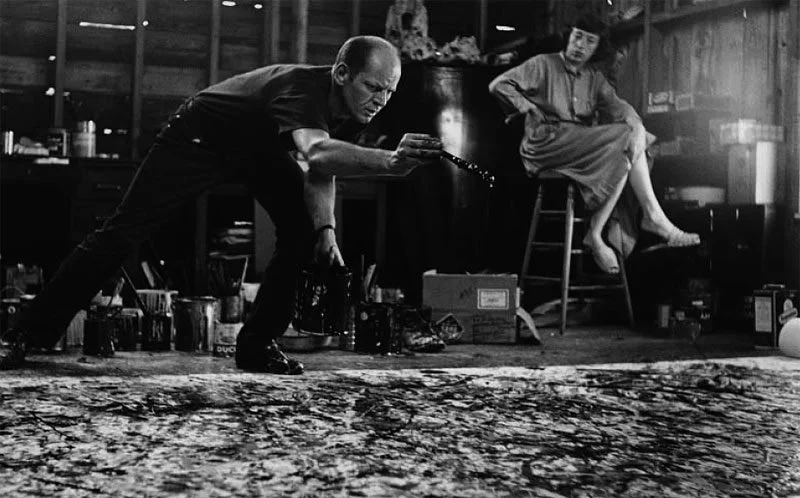
Jackson Pollock painting with Lee Krasner looking on. Photo by Hans Namuth
ARTISTS’ FOUNDATIONS BUILT NOT FROM CHARITY, BUT FROM RECOGNITION
The artists who created the major foundations of the last century were not marginal figures or cautionary tales. They were serious artists with long, complex careers — people who knew what it took to keep working through uncertainty, invisibility, and the strain of daily life. Their foundations exist because their work succeeded, not in place of it.
What distinguishes these artists is not that they gave money away, but that they understood the conditions required for art to continue. They knew, from lived experience, that what artists need most is not direction, mentorship, or approval. It’s unrestricted support, money that arrives without prescription or judgment, and a vote of confidence that trusts the artist to know what to do.
These foundations ask applicants to articulate their practice so they can understand the work.
But once the award is given, they step aside.
The money is the freedom. The trust is the gift.
Some artists use a grant to make a new body of work, others to install a furnace.
Both decisions are correct. Both keep the work alive.
Here are four artists whose generosity was matched by their trust in other artists.
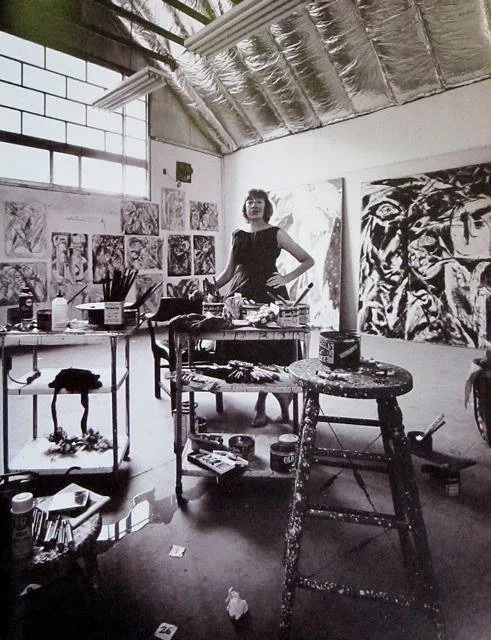
Lee Krasner in her studio.
LEE KRASSNER: THE POLLOCK-KRASNER FOUNDATION
Lee Krasner spent decades refining a vision that was often overshadowed by the legend of Jackson Pollock. Yet her work — disciplined, lyrical, constantly evolving — stands on its own. When she died, she directed the bulk of her estate to create the Pollock-Krasner Foundation, now one of the most significant sources of support for working artists worldwide.
Krasner knew exactly how precarious an artist’s life can be. Her foundation doesn’t shape careers; it stabilizes them. It gives artists the space to continue — to work, to think, to survive a difficult year without abandoning the studio.
It is practical, not sentimental. She understood the difference.
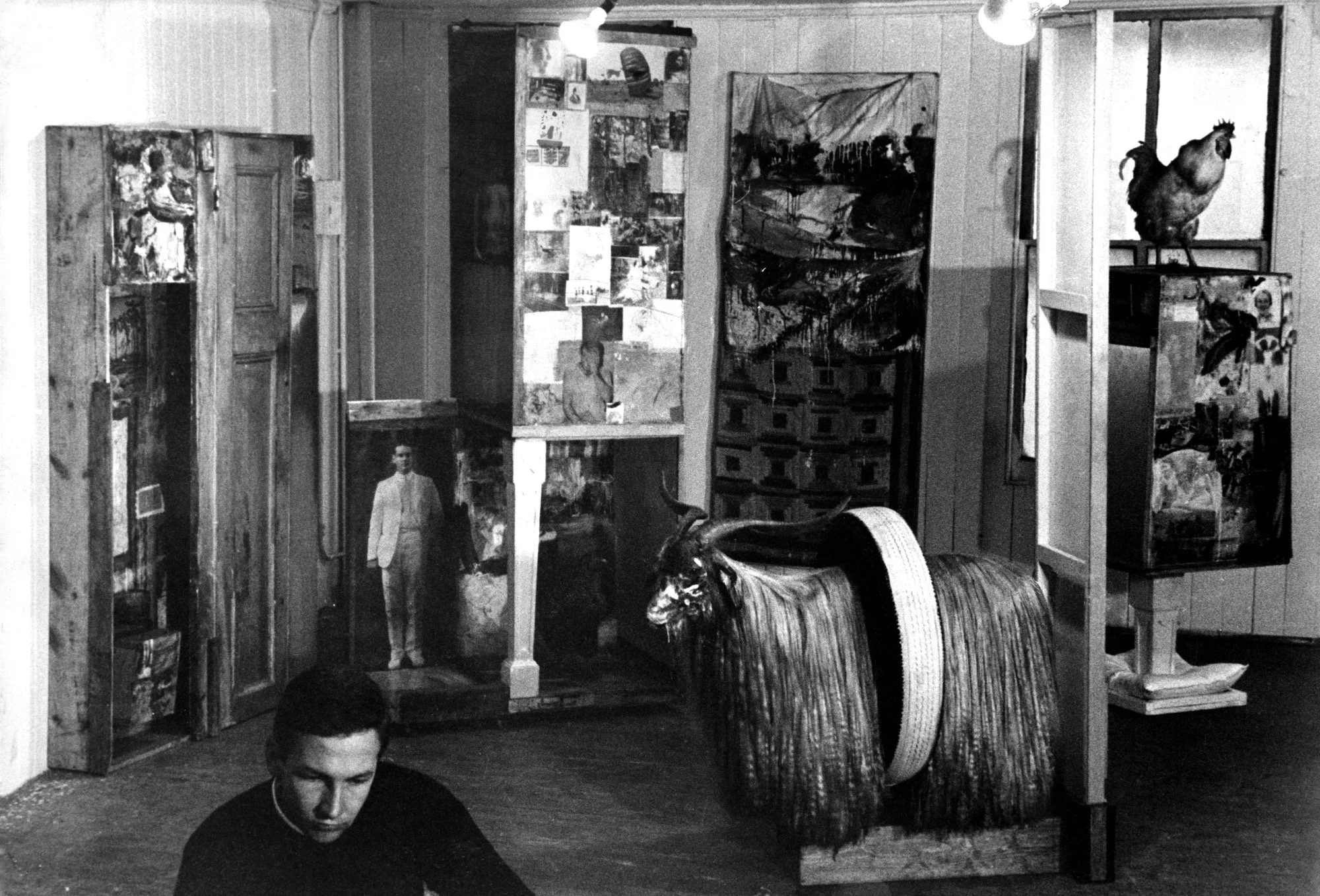
Robert Rauschenberg in his studio.
ROBERT RAUSCHENBERG: SUPPORT AS EXPANSION
Rauschenberg’s career was defined by openness — to collaboration, to other disciplines, to new materials, to change. His foundation reflects that same expansive intelligence.
The Robert Rauschenberg Foundation funds innovation, environmental projects, social engagement, and exploratory residencies. But what sits at its center is the same principle shared by all great artist-led foundations: trust the artist. Provide resources, then let the work unfold on its own terms.
Rauschenberg had lived the volatility of an artistic life. His support structures come from that knowledge, not from theory.
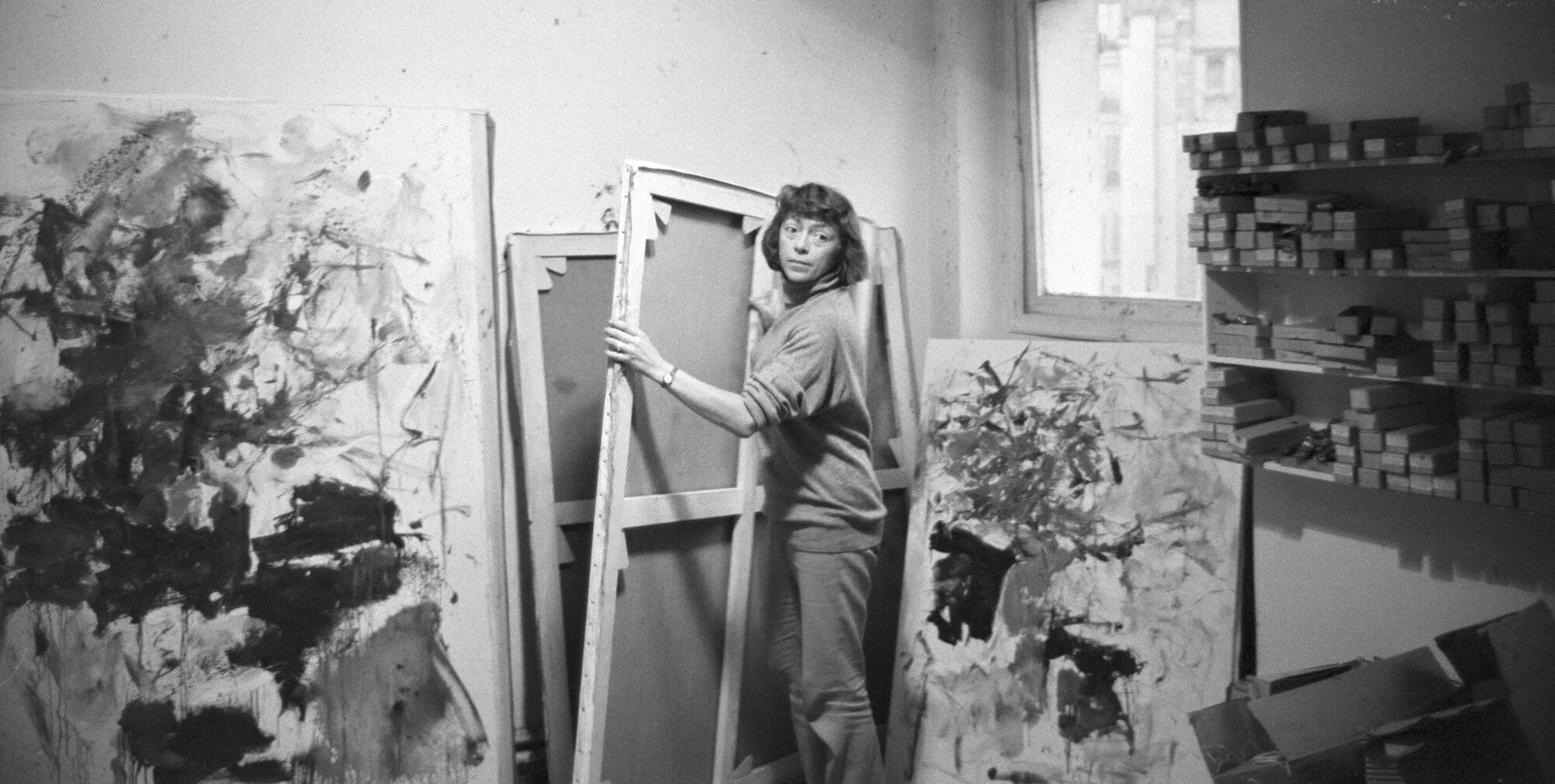
Joan Mitchell in her studio
JOAN MITCHELL: FIERCE CARE
Joan Mitchell’s work is uncompromising: muscular, emotional, deeply formal. She approached painting with intensity and precision, and she extended that same seriousness to the artists and poets around her.
The Joan Mitchell Foundation continues that ethos. It supports painters and poets through unrestricted grants, residencies, and long-term programs. Mitchell understood that artists need room — psychological, financial, and physical — to create work that is honest and alive.
Her generosity is not soft. It is rooted in rigor.
It respects the difficulty of the path.
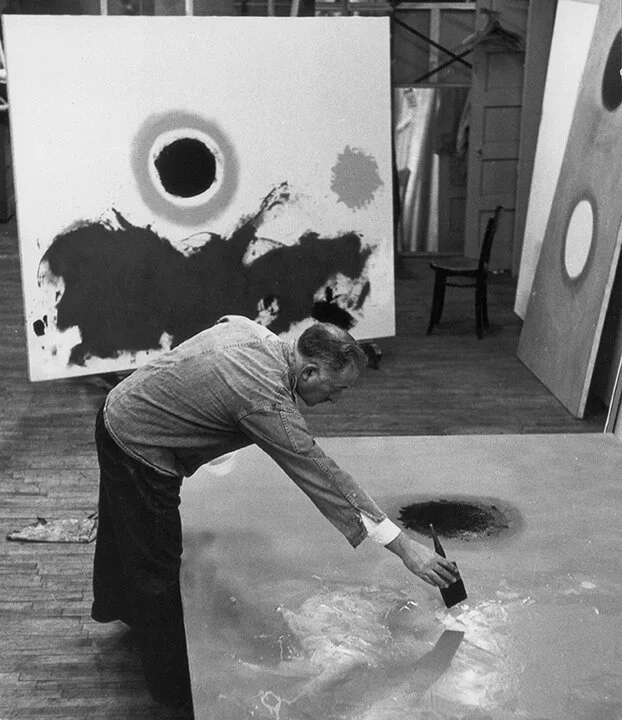
Adolph Gottlieb in his studio, Photo by Fred McDarrah
ADOLPH & ESTHER GOTTLIEB: SUPPORT ACROSS A LIFETIME
Adolph Gottlieb’s career spanned decades and multiple evolutions. He knew that artistic life isn’t linear — it rises, falls, plateaus, and sometimes collapses. He and his wife Esther structured the Gottlieb Foundation to meet those realities.
Their grants focus on mature artists and on artists in emergencies. Both categories are under-recognized and under-supported. Their philosophy is simple: Artists remain artists for life, regardless of age, visibility, or market conditions.
The Gottlieb Foundation honors that truth with clarity and respect.
TRUST AS LEGACY
These foundations didn’t emerge from a desire to “give back” in the vague philanthropic sense. They came from knowledge — often hard-earned — about what allows artistic work to continue over time.
They share a single principle:
Unrestricted support is the most honest form of respect one artist can offer another.
It acknowledges autonomy.
It acknowledges intelligence.
It acknowledges that artists know what they need — whether it’s paint, rent, time, silence, or in one memorable case, a furnace.
These foundations are not monuments. They are practical structures, built by people who have lived the life themselves. They don’t interfere, prescribe, or moralize. They simply provide the conditions that make art possible.
That is the real generosity.
Clear, calm, and fierce.