
IT TAKES A VILLAGE: When Community Makes Art Happen - Literally
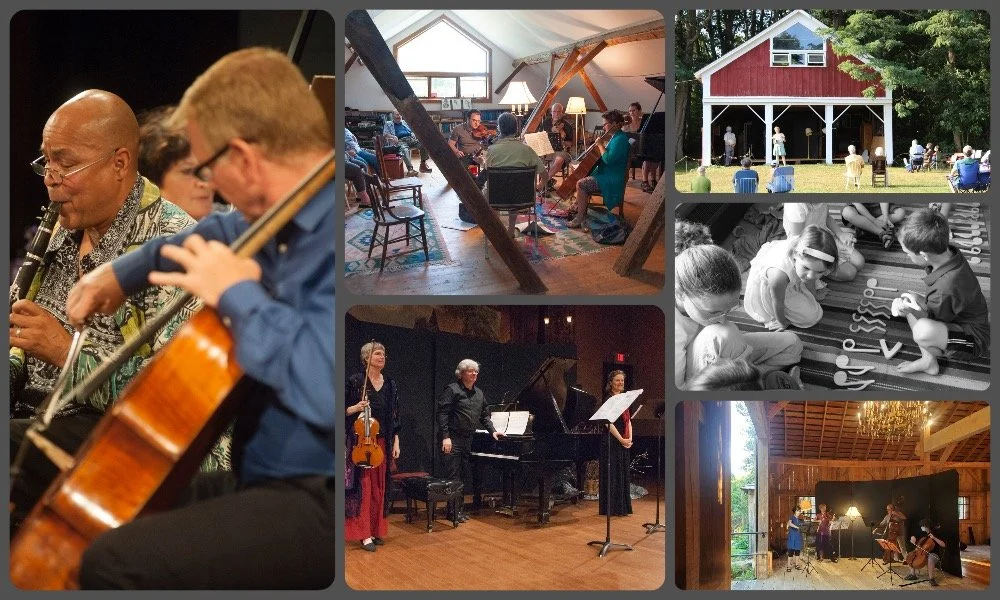
This is how Music from Salem describes itself: Music from Salem brings together musicians of international reputation to prepare and perform chamber music in the peace and beauty of rural Washington County, New York, and environs. Chamber music is classical music written for a small group of performers and encompasses a range of styles from the 18th century to today.
The connection between artist and audience is at the heart of Music from Salem. Concerts are intimate, with most held at Cambridge’s Hubbard Hall, whose fine acoustics enhance the listener’s experience. Open rehearsals are held at Brown Farm in Salem, where MfS originated in 1986. Music from Salem also leads educational workshops and conducts violin, viola, and cello seminars for emerging young artists.
What they don’t tell you is that since they started performing in my community, there are people in the audience who have attended their performances every year, some every concert, from that day to this. That means when musicians join Music from Salem to perform here, the audience collectively knows a vast number of classical and contemporary works they have heard performed live together and has followed artists who started here and went on to illustrious careers. The audience is enthusiastic and supportive.
But my favorite illustration of that is from a concert held in the basement of Hubbard Hall. The heat had not been installed yet for the Opera House, where they usually performed, so a. makeshift stage was built, just a platform really, about 8 to 10 inches off the floor. They were playing Rachmaninoff, and the violinist was very expressive, and every time he lifted his bow, he rose a bit out of his chair, and the chair began to migrate across the floor. It became clear that the chair would hit the end of the platform, causing the performer to fall and hit his head on the concrete floor. That was, until a woman in the audience quietly got up from her chair, kneeled on the floor, and held on to the legs of the chair until the end of the performance! When the piece ended, she quietly retreated to her chair. The performer never knew.
That’s what I call community support.