
THE VOGELS: HOW A MAILMAN AND A LIBRARIAN REWROTE THE STORY OF ART COLLECTING
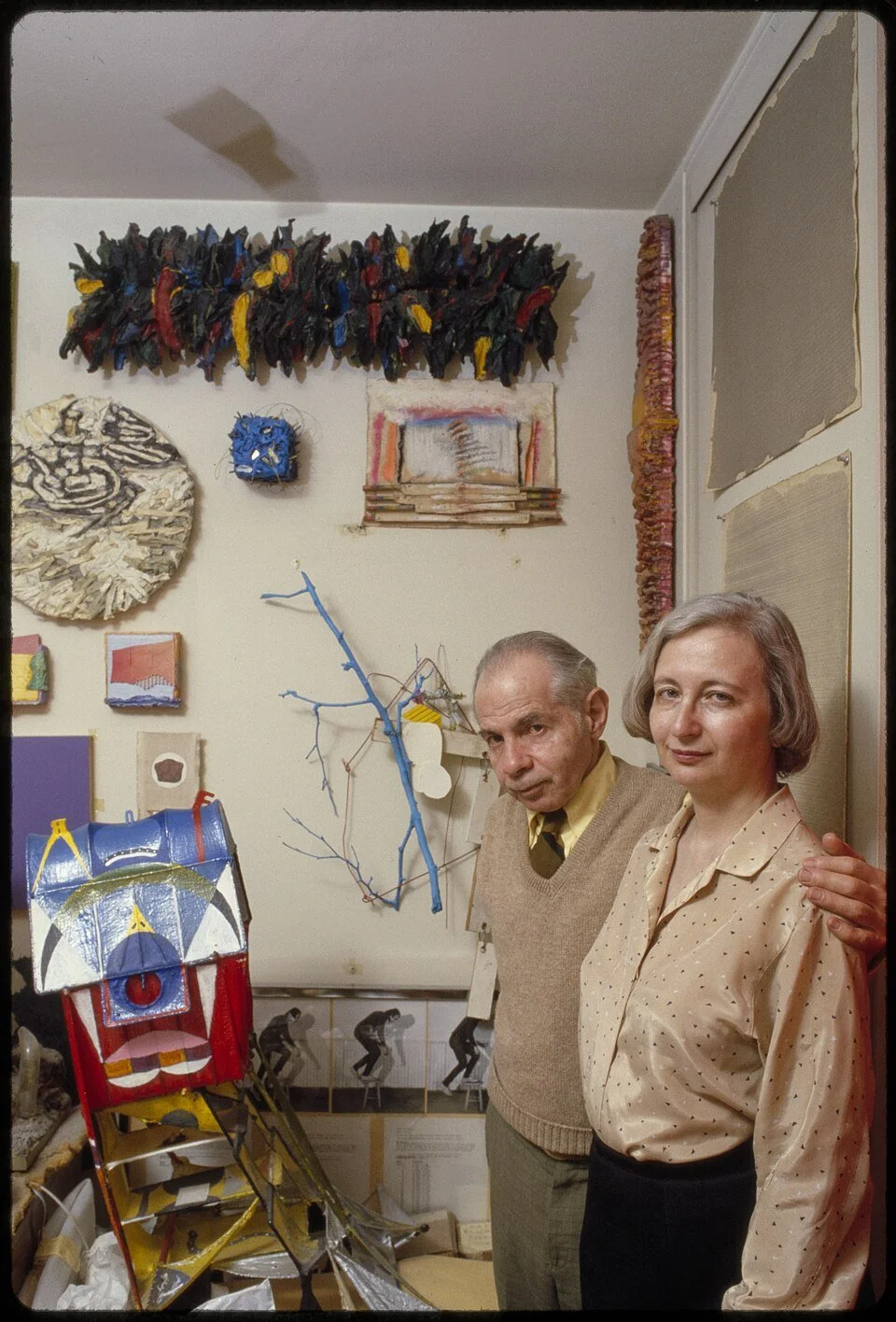
Herbert and Dorothy Vogel
In a moment when so many conversations about art circle around markets—prices, auctions, returns—it feels grounding to remember Herbert and Dorothy Vogel, a retired postal worker and a Brooklyn librarian who built one of the most remarkable collections of postwar art on a pair of modest civil-service salaries. Their story is often told as a charming oddity, but it is something far more instructive: a long, sustained act of devotion that reshaped the lives of artists, the stability of galleries, and the cultural map of this country.
The Vogels began collecting in the early 1960s, roaming small downtown galleries after Herbert’s shifts at the Post Office. They had no financial strategy. They had no advisors. What they had—what guided everything—was a direct line of sight to the work. They trusted their eyes, they trusted the artists, and they trusted that living with art mattered. Their one-bedroom apartment on East 86th Street became a dense, layered archive of drawings, conceptual notes, small paintings, and sculptural experiments. Every surface was occupied. Even the turtles had to navigate carefully.
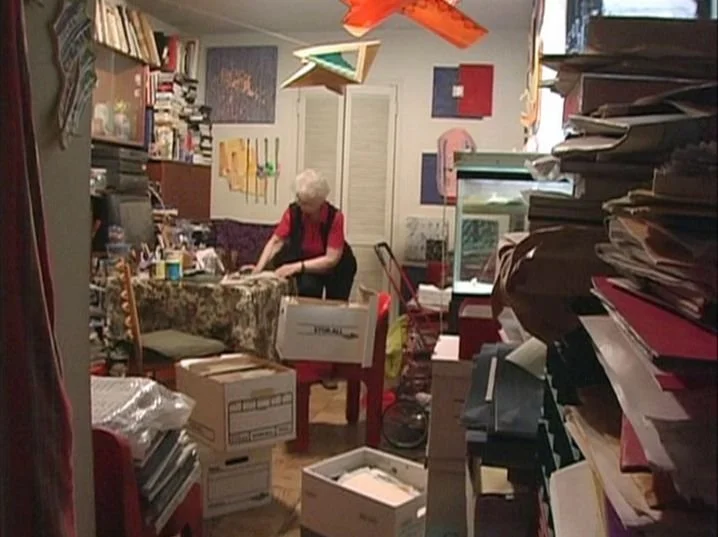
Dorothy Vogel in her modest apartment filled with art.
What still moves me is how reciprocal those relationships became. Artists didn’t see the Vogels as collectors in the conventional sense. They saw them as allies. As people who showed up, listened, asked questions, and cared deeply. Because the Vogels weren’t speculating, artists often offered them payment plans or reduced prices—not out of charity, but out of respect. They knew the Vogels weren’t buying with an eye toward flipping a piece; they were buying because the work meant something to them. And there is a particular kind of sustenance that comes when someone believes in you early, when the work is fragile and untested.
Over time, that devotion created its own gravitational field. Dealers came to rely on the Vogels' unerring curiosity and seriousness. Scholars followed the trail of the works they’d quietly gathered. And eventually the National Gallery of Art, recognizing both the integrity and the historic breadth of the collection, accepted more than 4,000 pieces from them—not as a windfall, but as the natural culmination of a life spent in conversation with art.
But the part that still astonishes me is what happened next. Rather than consolidating their legacy in one institution, the Vogels initiated the Fifty Works for Fifty States program. They distributed 2,500 works to museums across the country, from Alaska to Alabama. Small institutions suddenly found themselves stewards of important conceptual and minimalist works—pieces that had once lived in a narrow downtown circle. In one stroke, the Vogels democratized access to contemporary art in a way that major donors rarely imagine: they shared it.
Their lives remind us that generosity in the arts doesn’t only flow from money. It can come from attention, from loyalty, from a belief sustained over decades. The Vogels lived quietly, kept their jobs, collected steadily, and left a gift so dispersed and far-reaching that it continues to shape public collections today. They made the art world larger, not through accumulation, but through the stubborn insistence that art belongs to more than a few.
Whenever I think about giving—in this season especially—I return to them. Their story is a reminder that devotion itself can be a public good, that the smallest acts of sustained support ripple outward, and that the heart of a cultural ecosystem is often found in the hands of ordinary people who choose to care.