
blog
ALL | ABOUT MY WORK | EVERYTHING ELSE

BLACKER THAN BLACK: ANISH KAPOOR AND THE DISAPPEARING OBJECT
Some time ago I wrote a very short blog post called Having Sex with Artists. I had dreamed that I had sex with Frank Stella under a boardwalk on Fire Island. Not long after that, Anish Kapoor turned up in another dream, this time courting me.
Harold Bloom called it the anxiety of influence. I called it having sex with artists.
Apparently Kapoor had already made his way into my subconscious.
Now that I have been looking at black paintings, I have a more respectable reason to think about him.

PIERRE SOULAGES: LIGHT REVEALED BY BLACK
Pierre Soulages is the artist I think of first when I think of black paintings.
I have seen his work in several settings over the years, and I remember being overwhelmed at first by the blackness. It dampened my spirit. I don’t know quite how else to put it. There was simply too much black.
And then, almost despite myself, I began to see the light.
It caught the edge of a ridge of paint. Then another. A streak appeared where a tool had dragged through the surface. As I moved, the light moved with me. I could suddenly see that Soulages was drawing with light.
The black wasn’t there to create a void. It was there to give the light something to catch on.
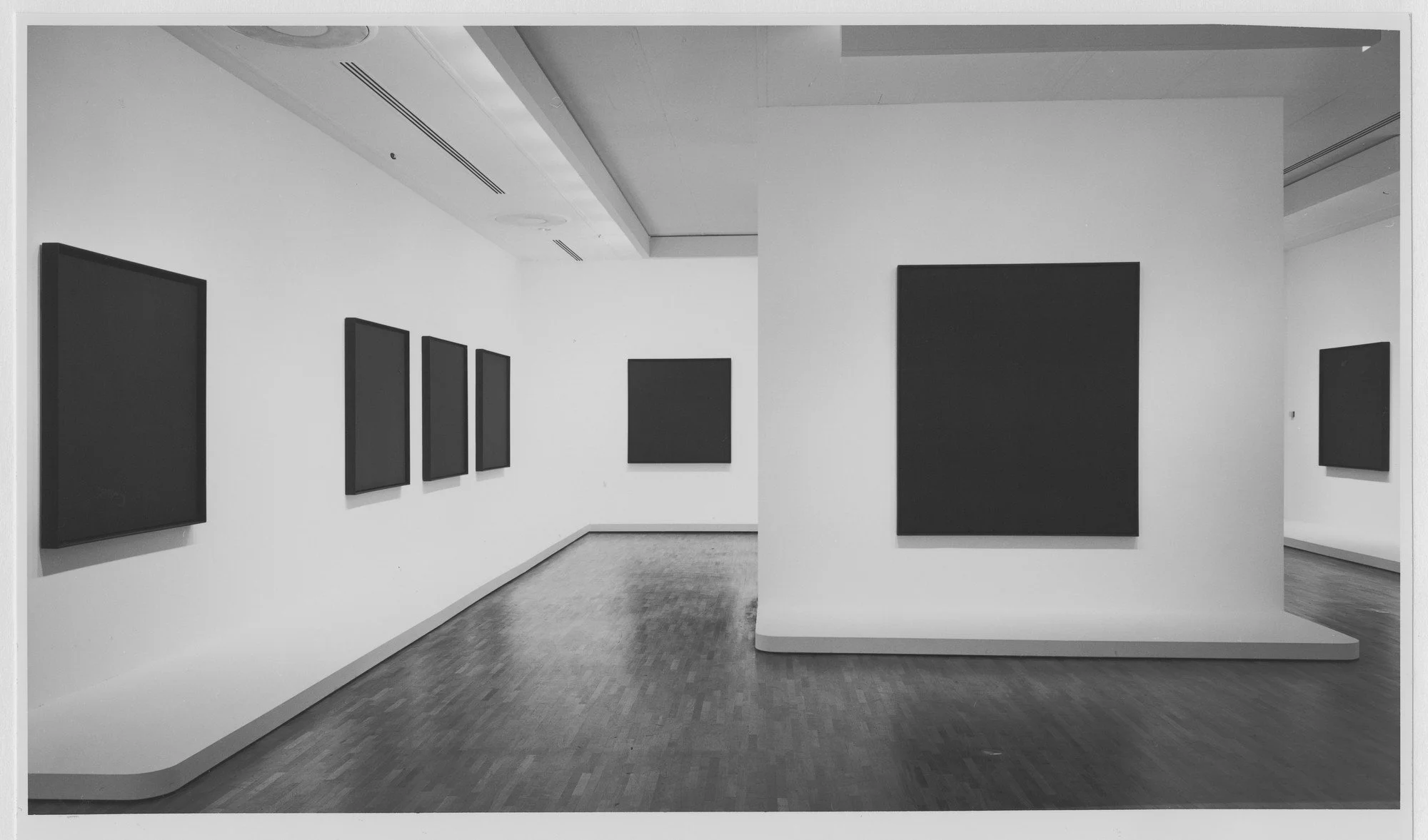
AD REINHARDT: HIDDEN IN PLAIN SIGHT
When I was a child, I took art lessons at the Museum of Modern Art. After class I would go through the collection. I did this every week, so certain paintings became almost like acquaintances.
I remember the first time I came across one of Ad Reinhardt’s black paintings. My first reaction was more or less: WTF.
I can’t remember now for sure, but there may have been a Larry Bell box nearby and possibly a white painting by Robert Ryman. I may be telescoping different visits. Bell’s glass box, which glistened like a gas leak, was a helpful comparison. It had already made me alert to the surface. Reinhardt’s painting seemed to be doing something entirely different.
So what was it?

BLACK IS BLACK—UNTIL IT’S NOT: Malevich’s “Black Square”
Years ago, I took my “steppish” daughter to the Guggenheim. I never married her father, hence the qualification, but she has been in my life since she was a child.
We wandered into a side gallery that held several paintings by Kazimir Malevich. I don’t think I had taken twenty steps before she began peppering me with questions. Did Malevich know Picasso’s work? What other artists did he know about? Had he seen Duchamp? Was this before or after the Russian Revolution?

AGNES MARTIN: PAYING ATTENTION
A million years ago, when I was in the Whitney Museum Independent Study Program, the program left New York City for what I believe was the only time and spent the summer in New Mexico. David Diao, Ron Clark, and a few others visited Agnes Martin.
What they may have thought would be a studio visit became something else.
Instead of taking them into the studio and showing them paintings, Martin took them on a long hike on a very hot day to see a remote tree she insisted they had to see.

BRIDGET RILEY: WHY THE STRIPES?
When people first encounter Bridget Riley's stripe paintings, they often assume the work is highly calculated. The stripes appear so precise, so controlled, that it is easy to imagine a system determining the outcome.
The reality is more interesting.
Riley was not trying to make a system. She was trying to understand color.
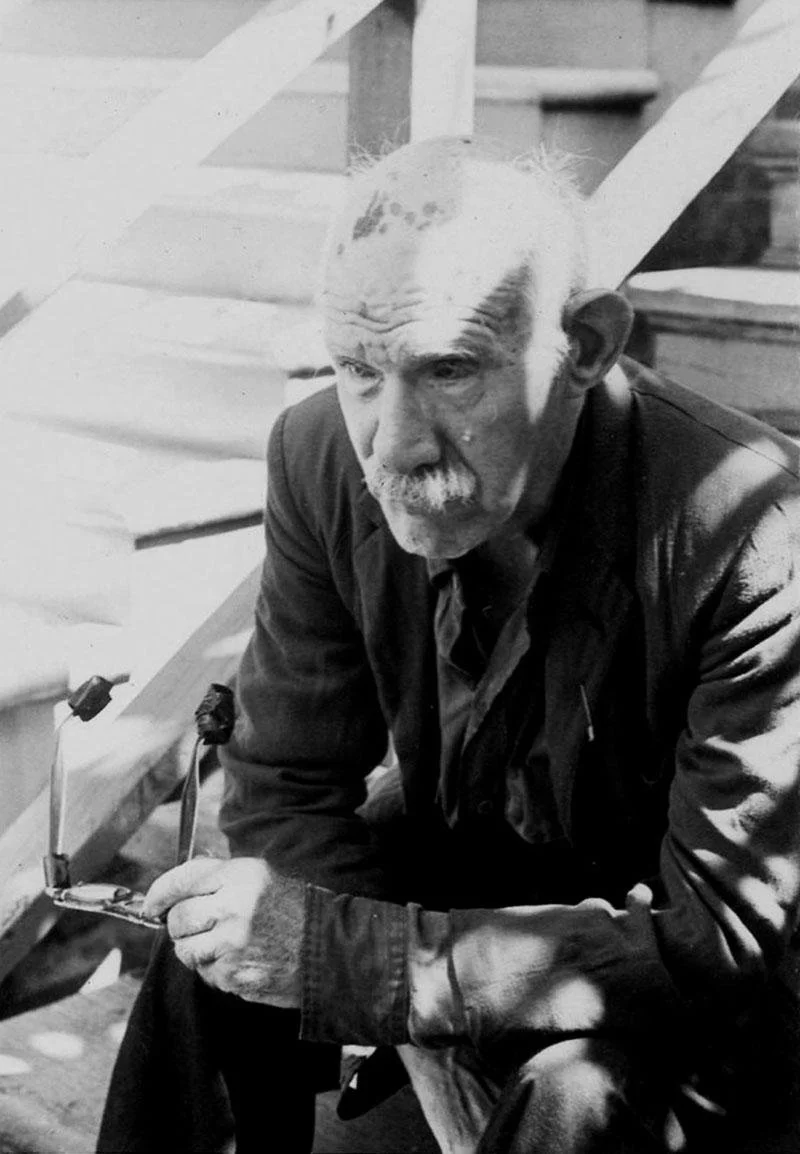
HENRY DARGER: EVIDENCE OF A LIFE VIOLATED
Jim Elledge’s biography Henry Darger, Throwaway Boy places Darger in the realities of his time and place. Darger was born in Chicago in 1892. His mother died when he was very young and his sister was put up for adoption. Darger was placed in Catholic schools and later in institutions for boys labeled “feeble-minded.” Conditions in those institutions could be harsh, routine, and authoritarian. There was little accountability and almost no space for a child to name his own experience, or to be believed when he did.