
blog
ALL | ABOUT MY WORK | EVERYTHING ELSE

PIERRE SOULAGES: LIGHT REVEALED BY BLACK
Pierre Soulages is the artist I think of first when I think of black paintings.
I have seen his work in several settings over the years, and I remember being overwhelmed at first by the blackness. It dampened my spirit. I don’t know quite how else to put it. There was simply too much black.
And then, almost despite myself, I began to see the light.
It caught the edge of a ridge of paint. Then another. A streak appeared where a tool had dragged through the surface. As I moved, the light moved with me. I could suddenly see that Soulages was drawing with light.
The black wasn’t there to create a void. It was there to give the light something to catch on.
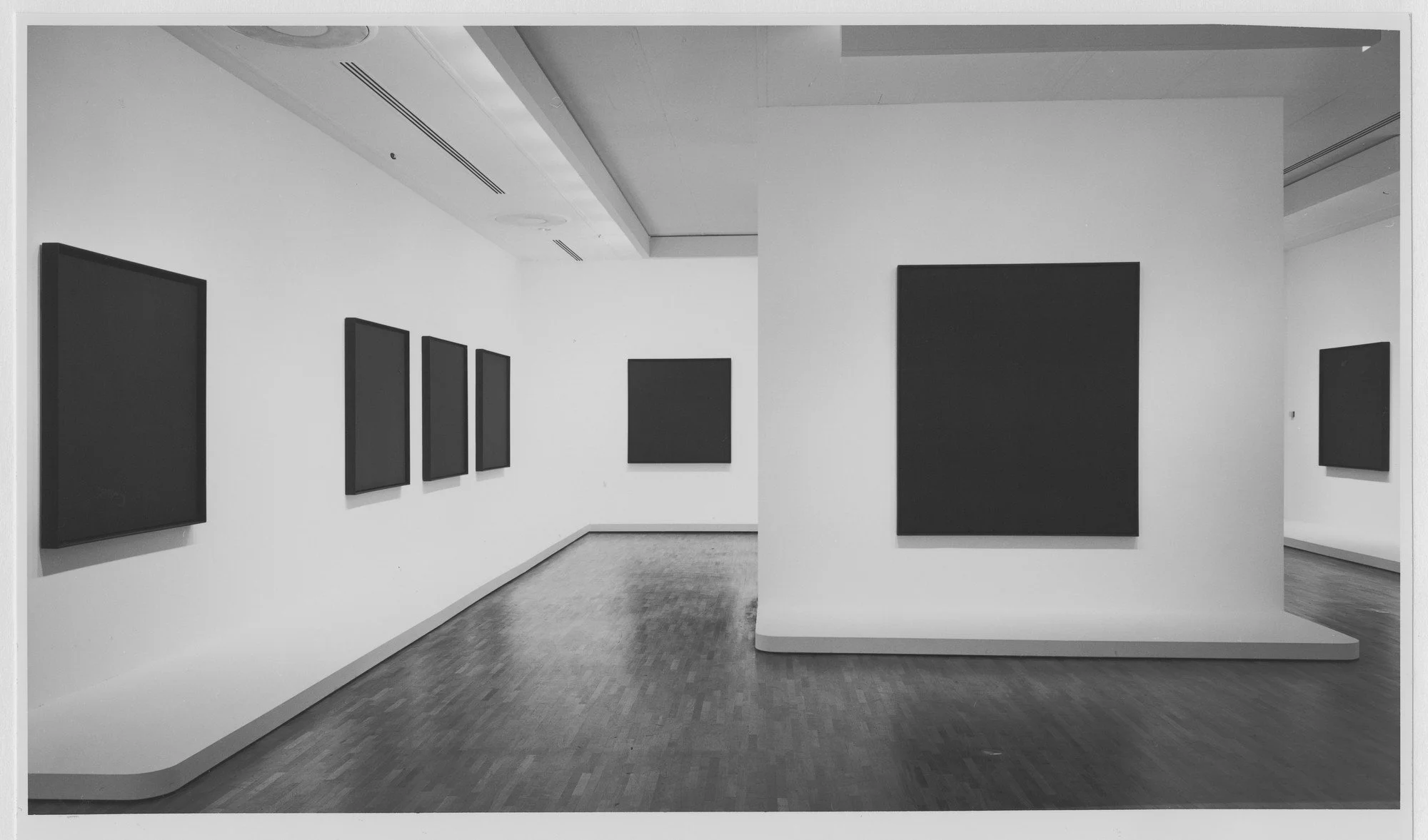
AD REINHARDT: HIDDEN IN PLAIN SIGHT
When I was a child, I took art lessons at the Museum of Modern Art. After class I would go through the collection. I did this every week, so certain paintings became almost like acquaintances.
I remember the first time I came across one of Ad Reinhardt’s black paintings. My first reaction was more or less: WTF.
I can’t remember now for sure, but there may have been a Larry Bell box nearby and possibly a white painting by Robert Ryman. I may be telescoping different visits. Bell’s glass box, which glistened like a gas leak, was a helpful comparison. It had already made me alert to the surface. Reinhardt’s painting seemed to be doing something entirely different.
So what was it?
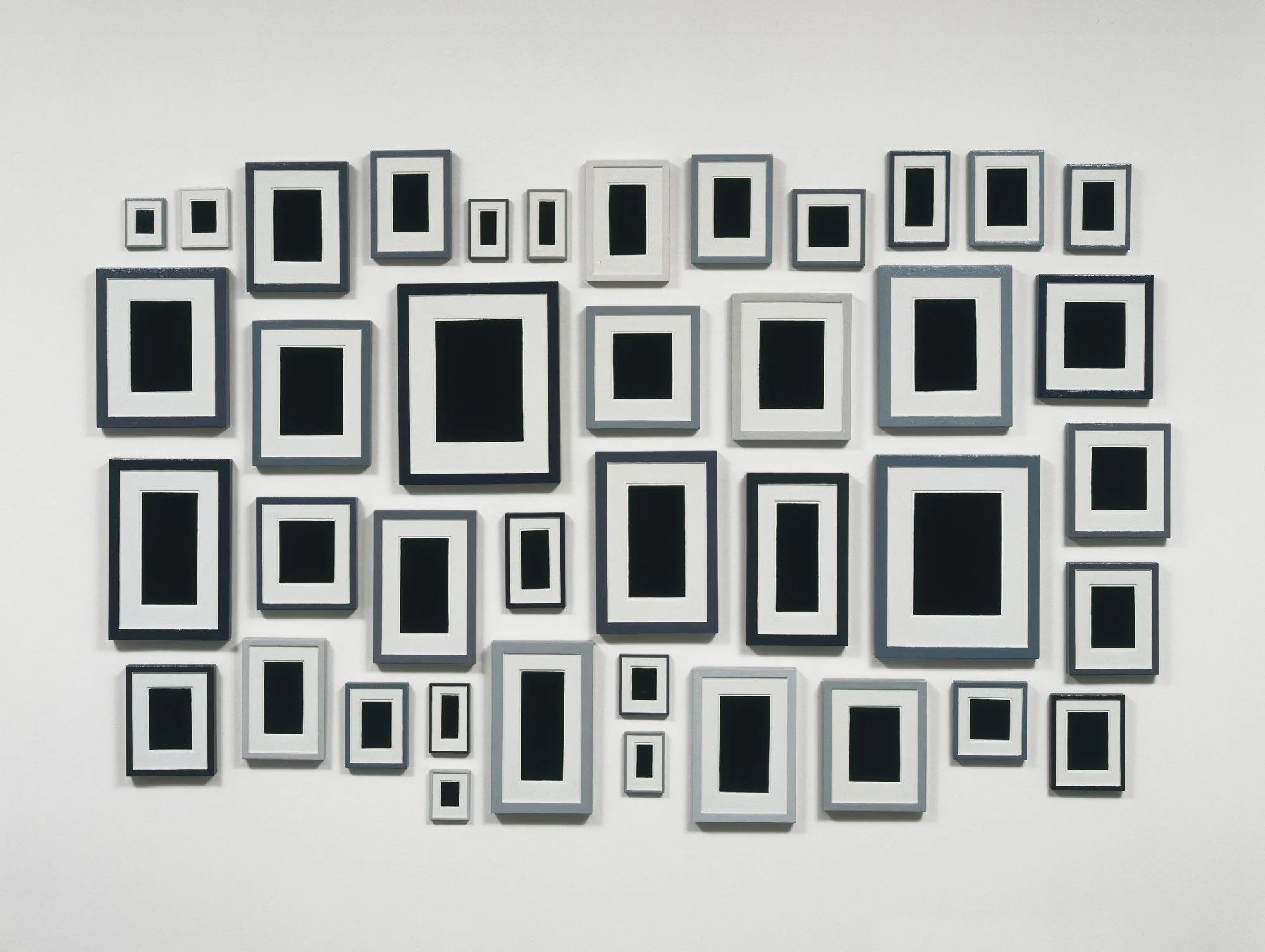
ALLAN McCOLLUM: WHAT ARE WE LOOKING AT?
The first time I saw Allan McCollum’s Surrogate Paintings, I thought they were totally cynical.
As I looked at them, what I thought I was seeing was a black painting, matted in white and put into a brown frame. The painting was nondescript other than its color. The mat was ordinary white, not what I would have thought of as museum quality, and the frames looked as though they might have been bought at a rummage sale.
But what they actually were was something else.
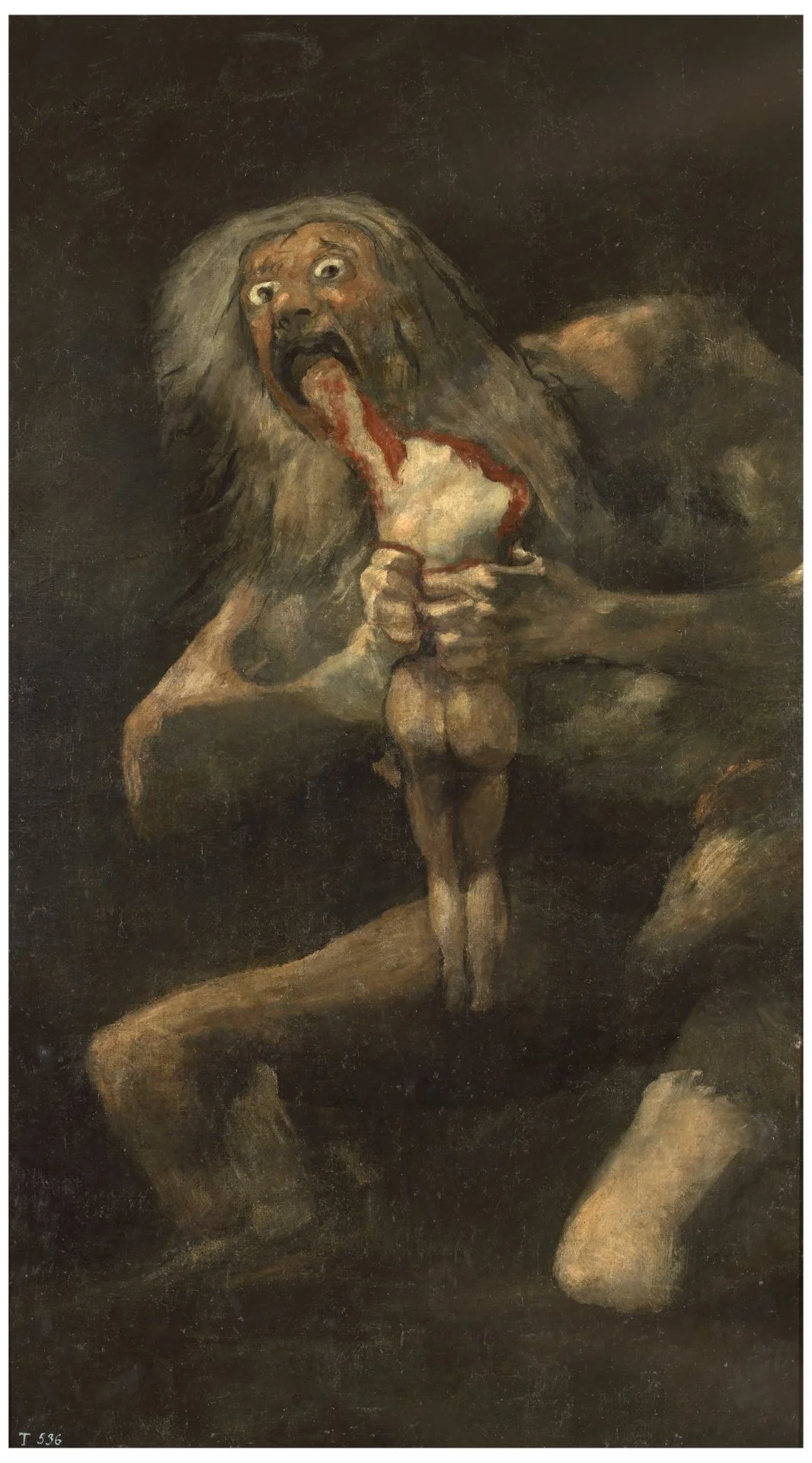
GOYA: LIVING INSIDE THE BLACK PAINTINGS
Goya's Black Paintings were not his first encounter with black.
Years before he painted those extraordinary images on the walls of his house outside Madrid, black had already carried the weight of The Disasters of War, the print series he began during the Peninsular War. They are some of the most horrifying images of war ever made. Bodies are mutilated. People are hanged. Women are attacked. Families flee. People starve. There are no heroic generals on horseback, no glorious battles, no suggestion that war ennobles anyone.
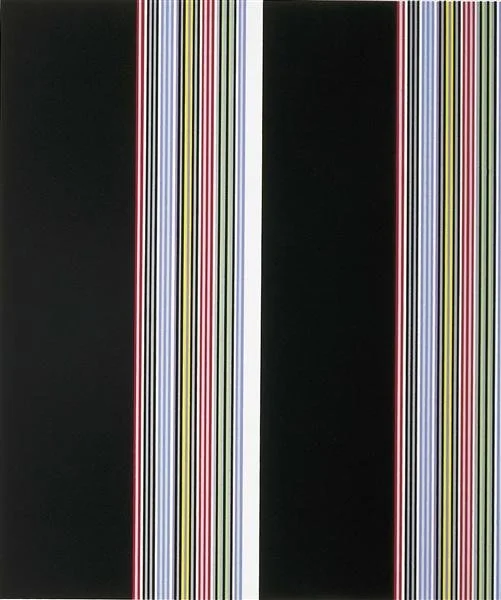
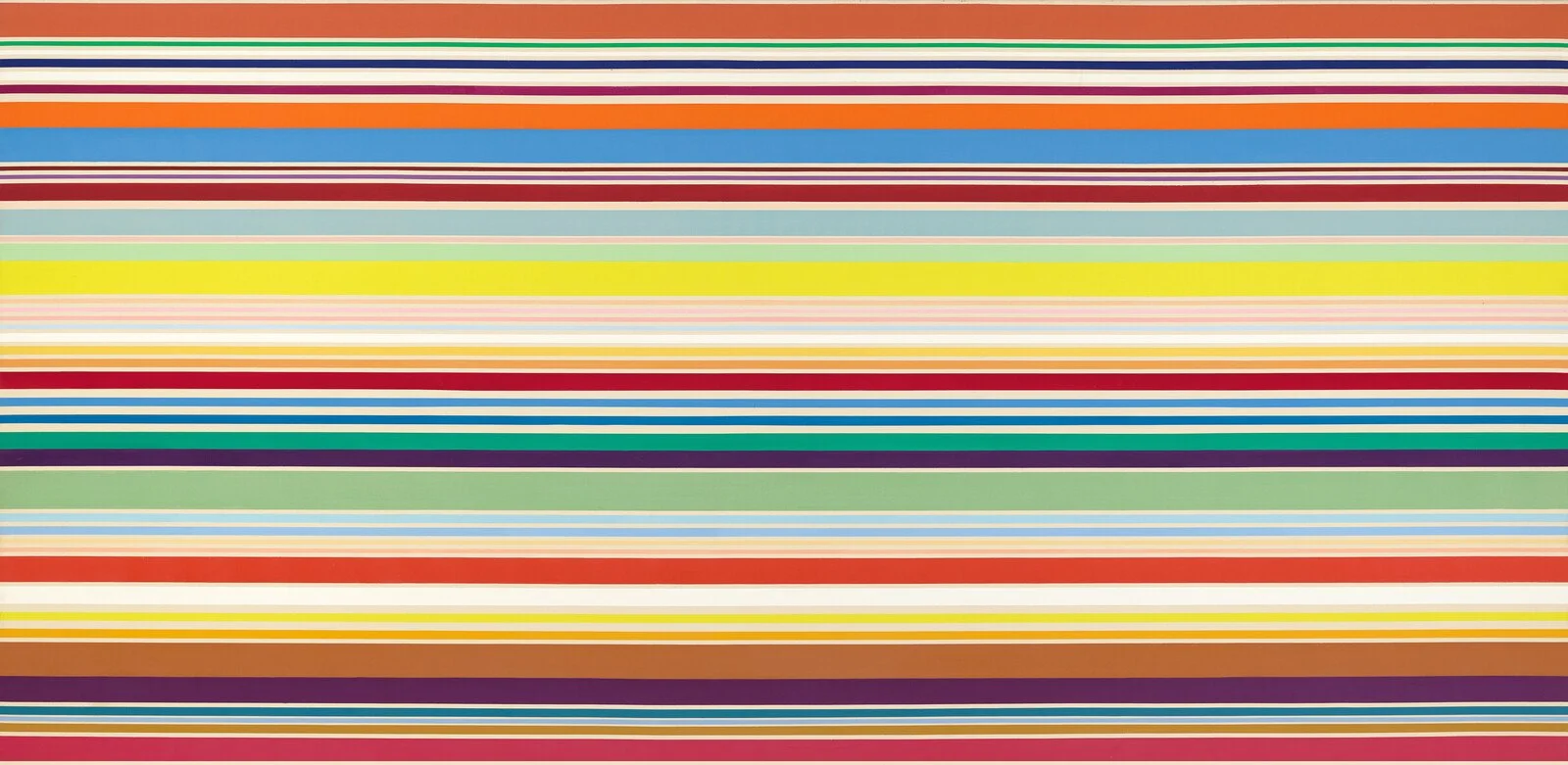
GENE DAVIS: PLAYING COLOR BY EYE
I had assumed that Gene Davis made nothing but stripe paintings. He did not. He began with drawings and Abstract Expressionist paintings and later made collages, micro-paintings, video, neon, and enormous outdoor works. But once he found the stripe in the late 1950s, it became his principal subject.
Subject is the word Davis himself used.
“I have very, very strong subject matter in my work, which is stripes,” he said. “A stripe is just as real as a goddamn flower.”
That gets us closer to the paintings. The stripe was not simply a device for arranging color. It was the thing itself.
KEN NOLAND: WHEN COLOR MET COLOR
When I was a student at Bennington College, Kenneth Noland lived a few miles away in Shaftsbury, Vermont. He had nothing officially to do with the college while I was an undergraduate, but his presence was felt. Artists and critics who came to see him would sometimes turn up at Bennington—Larry Poons, Tony Caro, Clement Greenberg.
When I became a graduate student, Noland taught a course that I took. He was surprisingly practical. He talked about how we arranged our studios and how we dealt with all the things that pulled us away from the work. He was interested in the circumstances of being an artist: how you set things up so that you could keep painting.
SEAN SCULLY AND THE PAINTED STRIPE
Frank Stella did not arrive at the stripe because he liked stripes.
He arrived at it because he was trying to solve a problem in painting.
GERHARD RICHTER: THE REALITY OF PAINTING
Frank Stella did not arrive at the stripe because he liked stripes.
He arrived at it because he was trying to solve a problem in painting.
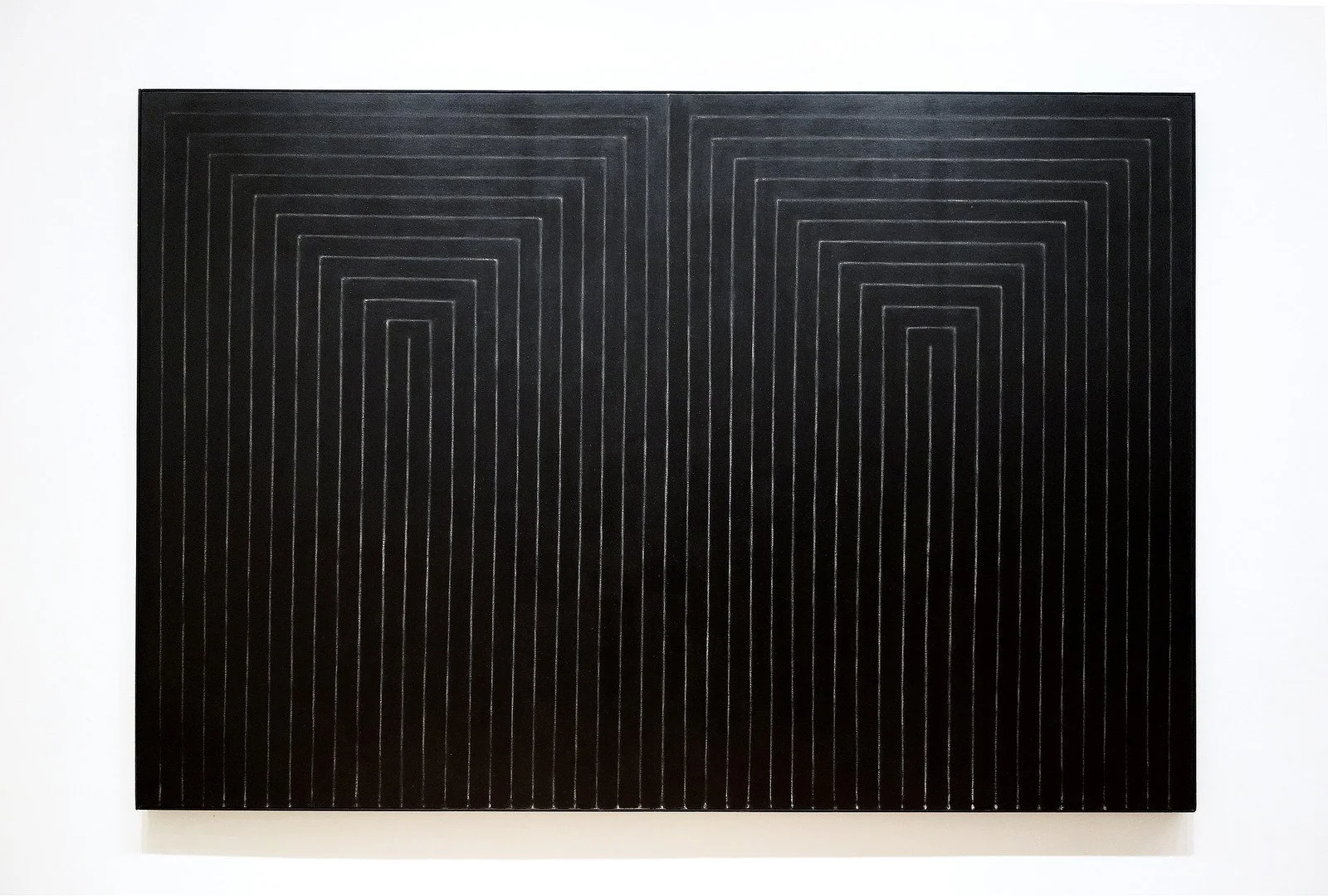
FRANK STELLA: WHAT THE STRIPE SOLVED
Frank Stella did not arrive at the stripe because he liked stripes.
He arrived at it because he was trying to solve a problem in painting.
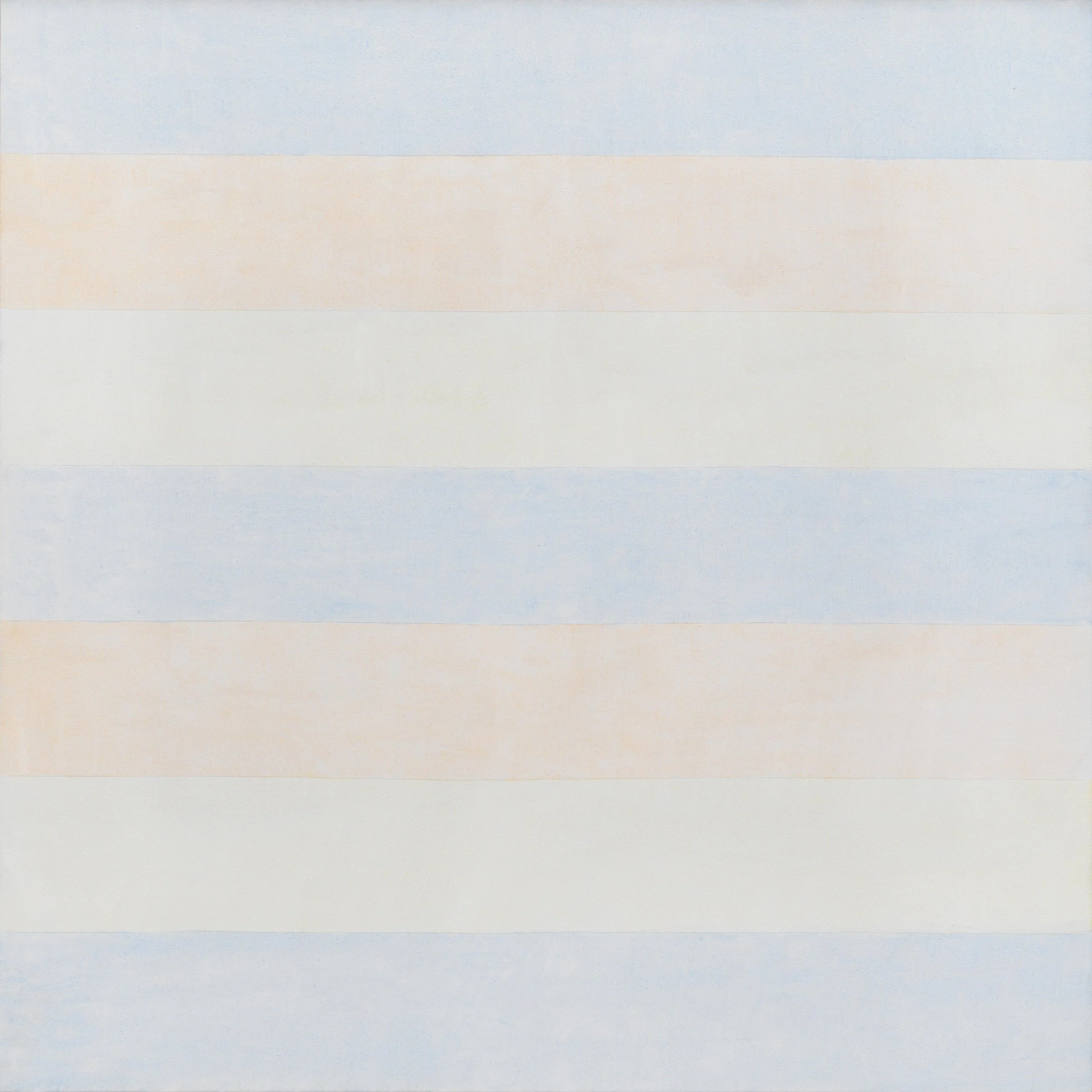
AGNES MARTIN: PAYING ATTENTION
A million years ago, when I was in the Whitney Museum Independent Study Program, the program left New York City for what I believe was the only time and spent the summer in New Mexico. David Diao, Ron Clark, and a few others visited Agnes Martin.
What they may have thought would be a studio visit became something else.
Instead of taking them into the studio and showing them paintings, Martin took them on a long hike on a very hot day to see a remote tree she insisted they had to see.
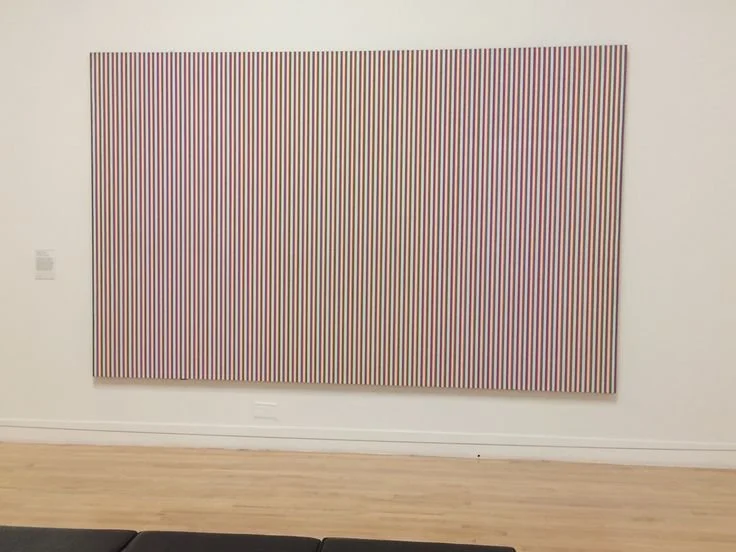
BRIDGET RILEY: WHY THE STRIPES?
When people first encounter Bridget Riley's stripe paintings, they often assume the work is highly calculated. The stripes appear so precise, so controlled, that it is easy to imagine a system determining the outcome.
The reality is more interesting.
Riley was not trying to make a system. She was trying to understand color.
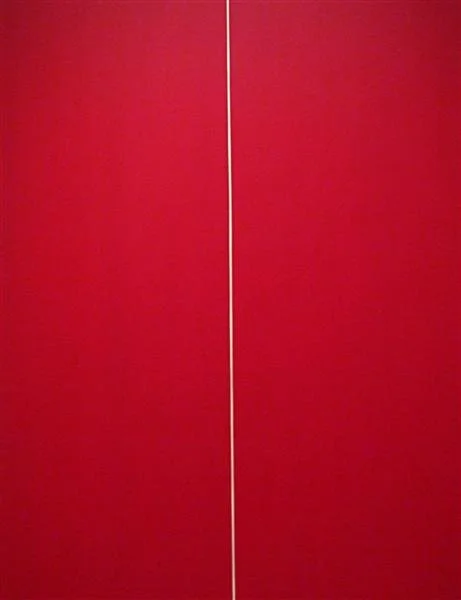
BARNETT NEWMAN AND THE ZIP
Standing in a parking lot in Maine, I saw the light glint off the chrome on a sports car's hood.
Of course, my first thought was Barnett Newman.
That may seem like an odd association, but Newman spent much of his career exploring the power of a single vertical stripe. He called it a "zip."
Once you become aware of Newman's zips, you start seeing them everywhere. In tree trunks. In telephone poles. In shafts of light. In the narrow gap between two buildings. In reflections running down a pane of glass.
Or in a strip of chrome running down the hood of a bright red sports car.
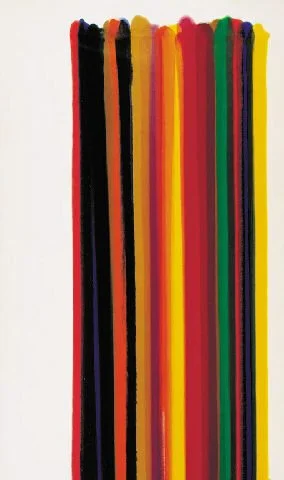
MORRIS LOUIS: COLOR, GRAVITY, AND THE RADICAL STRIPE PAINTING
Some artists use stripes as a way to measure space. Some use them as rhythm, structure, pattern, discipline, refusal, or optical vibration. With Morris Louis, the stripe begins somewhere else. It begins with liquid paint, raw canvas, gravity, and a room too small for the scale of what he wanted to make.
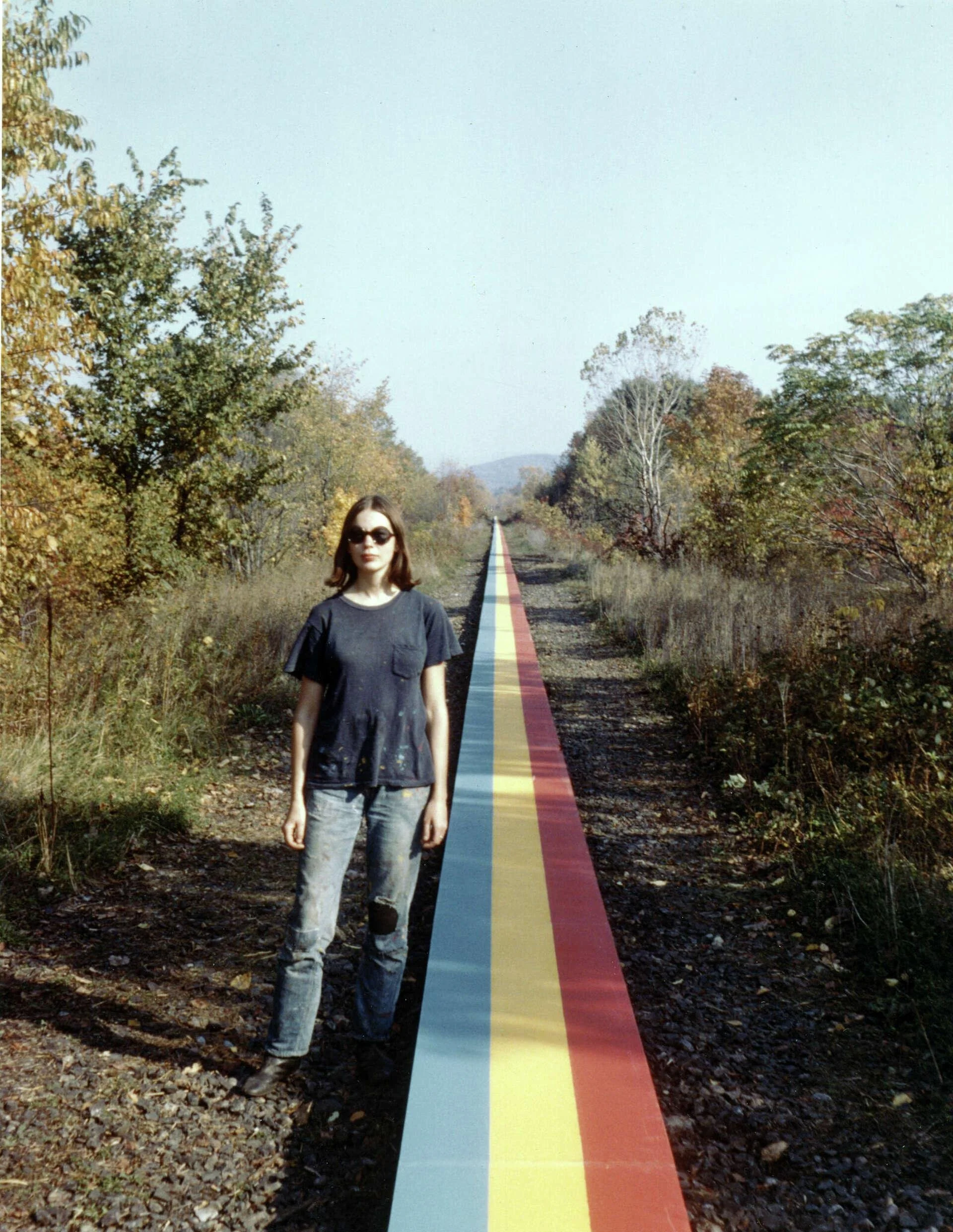
PAT JOHANSON: THE STRIPE LEAVES THE FIELD OF VISION
After Pat Johanson gave her talk at the Curiosity Forum, I walked her to her car.
She had come with almost nothing. A computer bag, a fanny pack, and the clothes she was wearing. She told me this was how she traveled, whether she was going to a dinner or to a site where she might have to walk through mud, look at drainage, think about water flow, plants, animals, erosion, construction, access, use. The same clothes. The same body. The same attention.
That is what stayed with me. Not just the work, though the work is remarkable, but the way she carried herself in relation to it. She did not seem to arrive anywhere with an idea to impose. She came prepared to look.
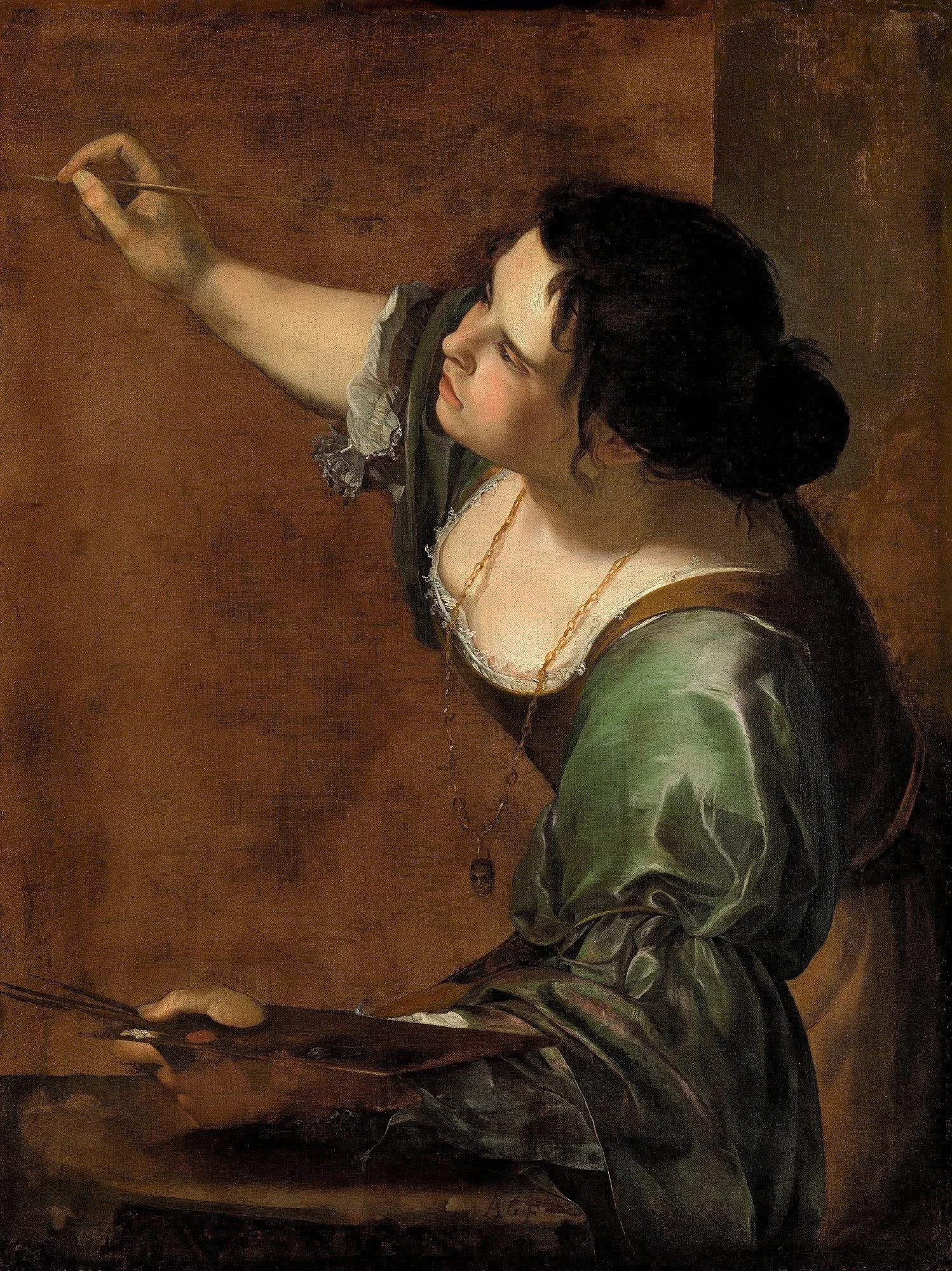
ART HISTORY IN THE COURT PAPERS
Here is a filing category you do not expect to find in art history: Stupri et lenocinii. Rapes and pandering.
Filed together. Not as tragedy. Not as biography. As administration.
The folder sits in the Archivio di Stato di Roma, busta 104. Inside is the 1612 case brought by Orazio Gentileschi against Agostino Tassi after the rape of Orazio’s daughter, Artemisia Gentileschi, who was then a young painter in her father’s studio.
I have been thinking about court papers as a strange place to find art history.
Not because they explain the paintings. They do not. They were not made for that. They were made for accusation, defense, property, reputation, legal procedure. They flatten a life into testimony. They ask the wrong questions. They preserve the wrong things. They turn violence into a file.

THE INVENTOR WHO ACCIDENTALLY DYED THE BRITISH ARMY RED
I found Cornelis Drebbel the way you find the best characters: in a footnote in someone else’s story.
He turns up in Amy Butler Greenfield’s A Perfect Red, which I’m reading this month, as the man behind the brilliant scarlet that made cochineal even more valuable than it already was. But the dye was only one piece of him. Drebbel was an inventor, an engraver, a chemist, a maker of improbable machines, and, apparently, a man spectacularly bad at converting genius into money.
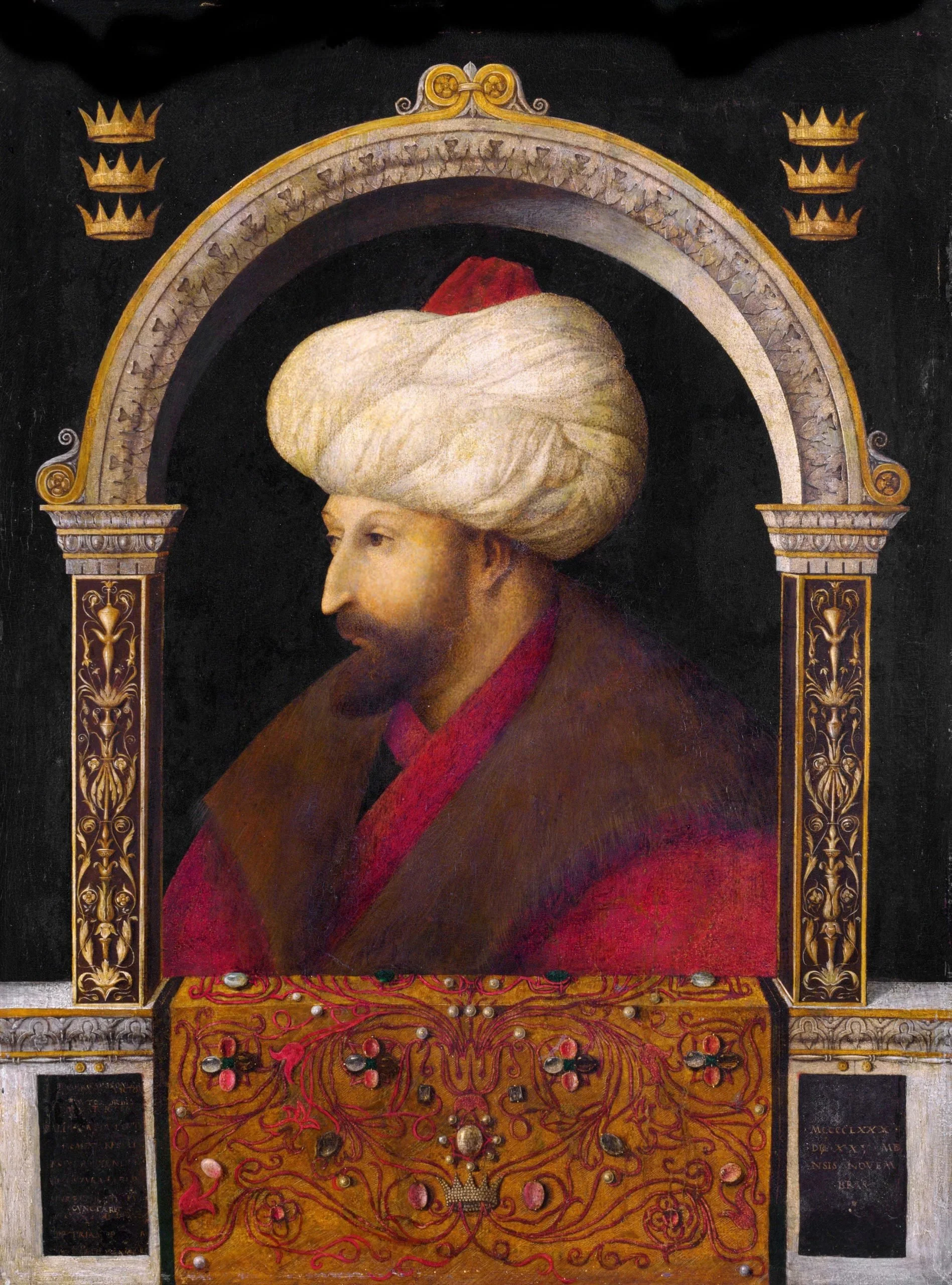
THE PAINTER AND THE SULTAN: How a Venetian Artist Walked into Another World and Never Quite Came Back
There is a portrait of Sultan Mehmed II in the National Gallery in London that has been nagging at me for years.
The first time I saw it, I was not thinking about diplomacy, trade, or the fall of Constantinople. I was looking at the painting itself.
The arch around the figure did not feel like ordinary Renaissance architecture to me. It felt like the edge of a manuscript page. The decorated cloth, the jewels, the gold, the contained darkness behind the Sultan, all of it seemed closer to ornament, calligraphy, and courtly display than to the kind of Venetian portrait I thought I knew.
Even the profile seemed to have crossed a border.
Something about the painting felt translated. Not wrong. More like a sentence spoken in another accent. The grammar was familiar, but something underneath it had shifted.
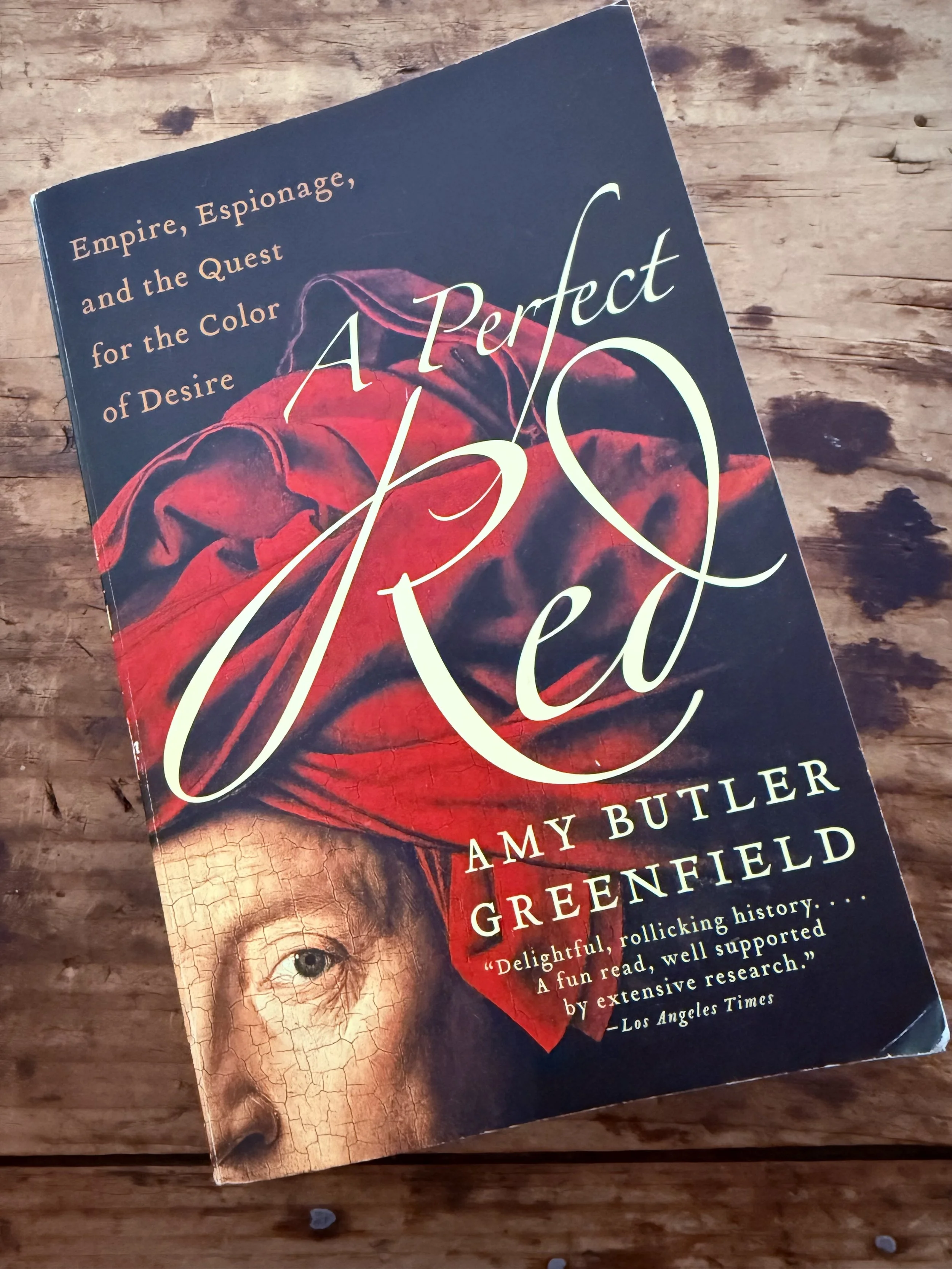
A PERFECT RED by Amy Butler Greenfield
I have been reading Amy Butler Greenfield’s A Perfect Red, and it has already sent me off in several directions.
That is usually how I know a book is working on me. It does not stay inside its own covers. It starts attaching itself to other things I am looking at, writing about, or painting. From this one book, I found my way to Rembrandt, to cochineal, to Cornelis Drebbel, to military uniforms, to trade routes, to insects, to empire, to the astonishing fact that a color can carry half the world inside it.
That is the great subject of A Perfect Red: not red as an idea, or red as a symbol, but red as a material fact. A color made from tiny insects. A color people desired, guarded, stole, traded, imitated, taxed, wore, painted with, and fought over.
A color is never just a color.