
ARTIST AND MODEL
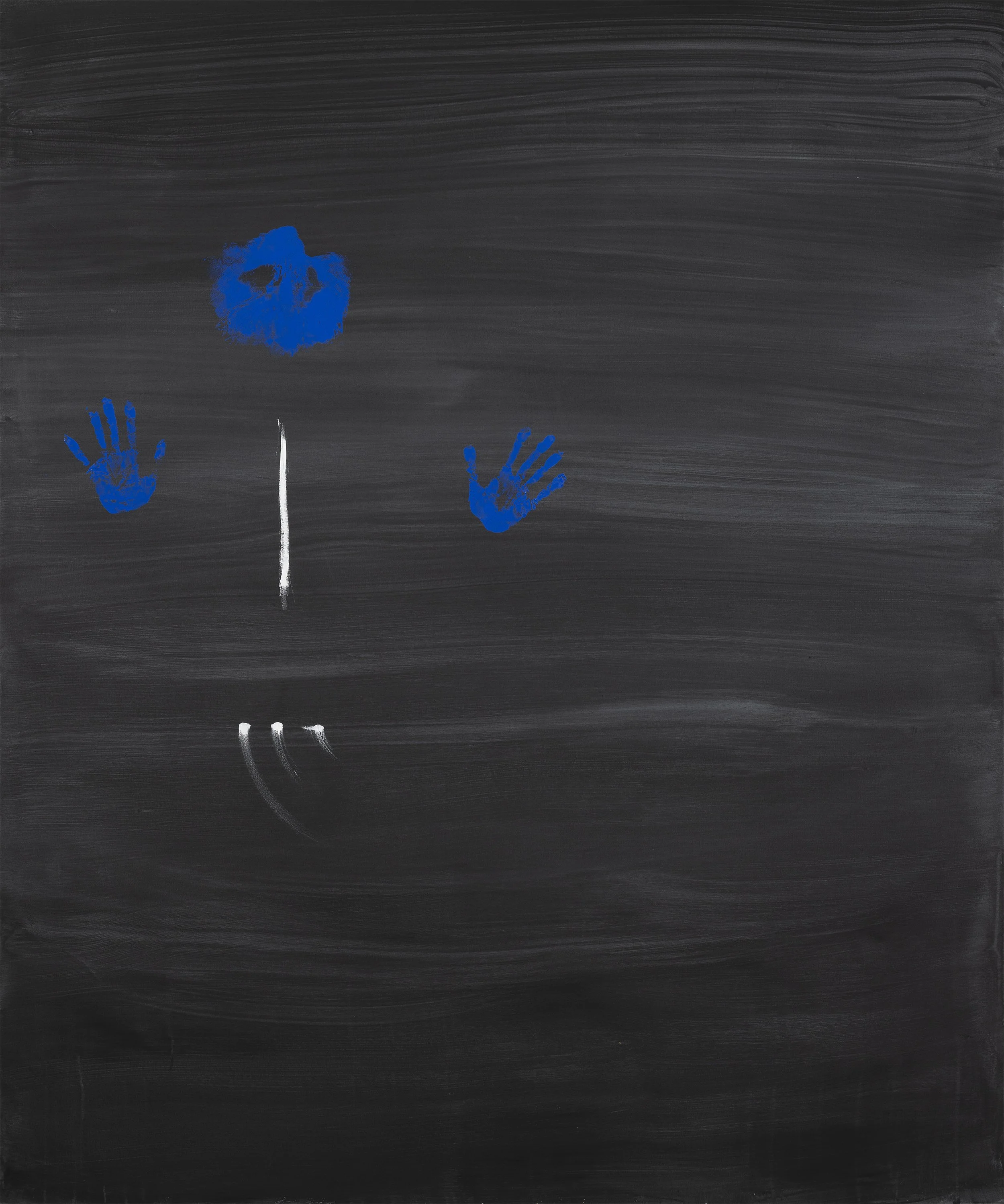
The Artist and the Model, 72 inches x 48 inches, oil on canvas, ©2026 Leslie Parke
“Color does not enter a painting alone. It brings its history with it.”
Artist and Model began as part of a painting series I call Disrupted Weather. In those paintings, I built atmospheric grounds and then interrupted them with high-key color. I began Artist and Model in the same way, creating a ground by mixing charcoal with acrylic medium so that it covered the surface more as a smear than a solid color.
As I made the paintings that preceded this one, I looked for ways to “mess up” the surface, use unusual materials, and find new ways of applying them. In a previous painting, I had already applied the disruptive color by hand. I thought, What if I print the color onto the canvas with my face? As soon as I thought of that, Yves Klein’s Anthropométries entered my thinking. Klein directed nude female models covered in International Klein Blue to press their bodies against paper or canvas. Klein called the women “living paintbrushes,” a phrase that makes the hierarchy unmistakable: he retained authorship while their bodies became his instruments.
If I were to print my face onto the canvas using another color, the astute viewer would think, She is doing an “Yves Klein” and disguising the connection by using another color. No. I will use his color. I want to own the comparison. But I did not cover a model in blue paint. I covered myself. I was both the artist and the model. I covered my face and hands, walked up to the canvas, smacked my hands against it, then leaned in and rolled my face over the surface. When I stepped back, I realized that the painting was no longer doing what the other paintings had done. It had become a self-portrait, but my body was missing.
I picked up a brush loaded with white paint and marked the places that had defined the last several years of my life: the scar left by my open-heart surgery and the three smaller scars where tubes the size of garden hoses came out of my body. My operation was described as routine and, as it turns out, many of my friends have experienced such an operation. I began to wonder why none of them had talked about the feeling of dismemberment, the temporary loss of cognitive ability, or the sheer effort it takes to put yourself back together. When I first looked at the painting, I wasn’t even sure it was a painting. The space was awkward and unfilled. But then I began to take in each element.
The molten black ground has its own historical references. My black is not the Vantablack of Anish Kapoor’s void. Mine is of the earth, but not solid. It is material, worked, and receptive. It is something burnt, but reused. No color comes into the studio innocent. Certain colors arrive carrying an artist, a history, a controversy, and an entire set of claims. I was laying down mine. Klein used another person’s body to make his paintings. I used my own. The “face” smears into something amorphous, perhaps a bat or a head with a dent in it. Hollowed out, diffuse, not quite there. The hands seem more solid, landing hard against the canvas, like the hands on cave walls. They declare: I am here.The scars are ghostly, but clear. They were made by other hands. Those hands are in the portrait too.
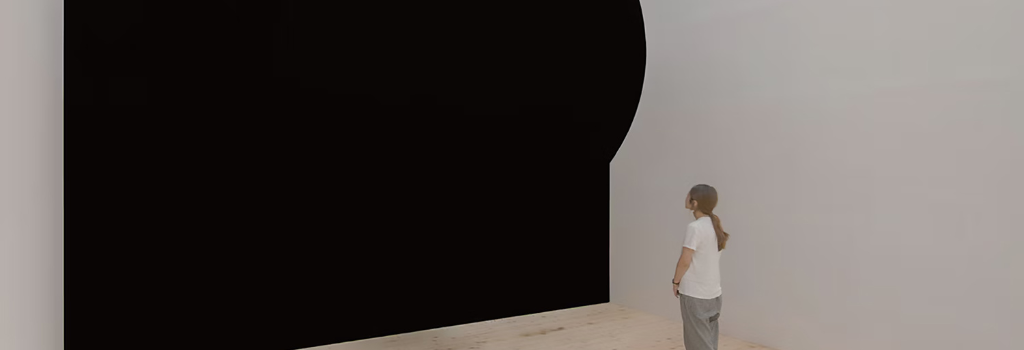
BLACKER THAN BLACK: ANISH KAPOOR AND THE DISAPPEARING OBJECT
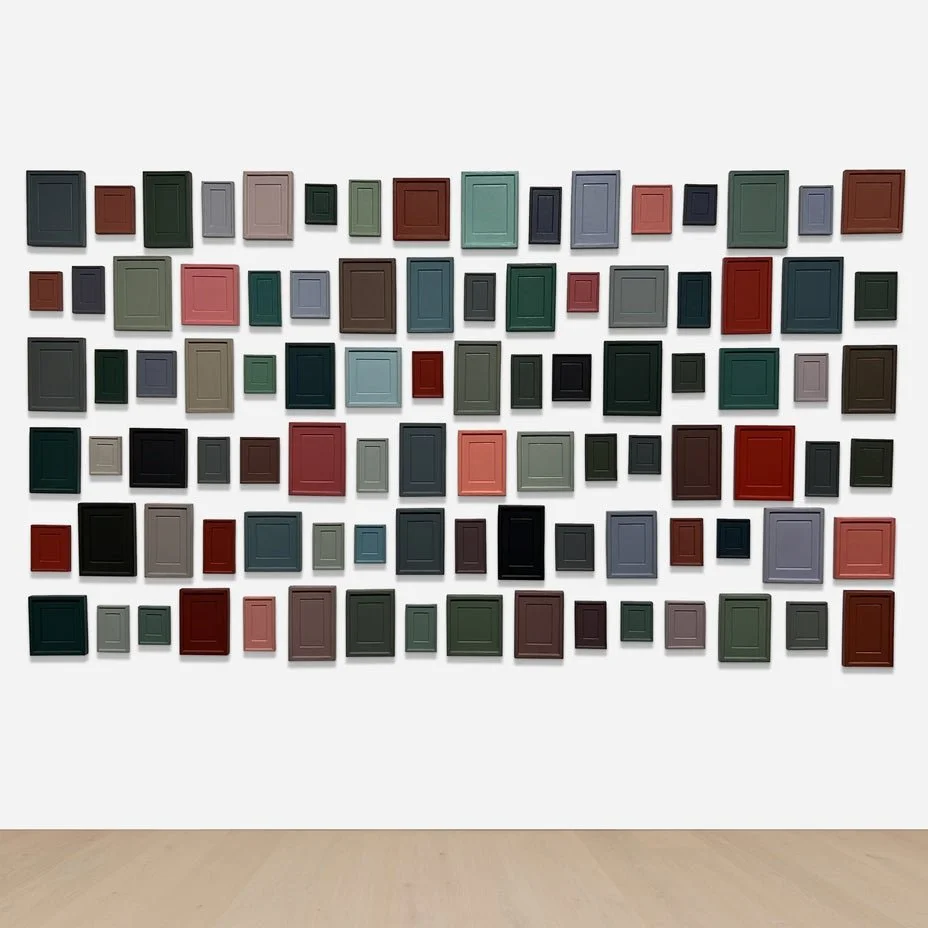
ALLAN McCOLLUM: WHAT ARE WE LOOKING AT?
FROM THE STUDIO
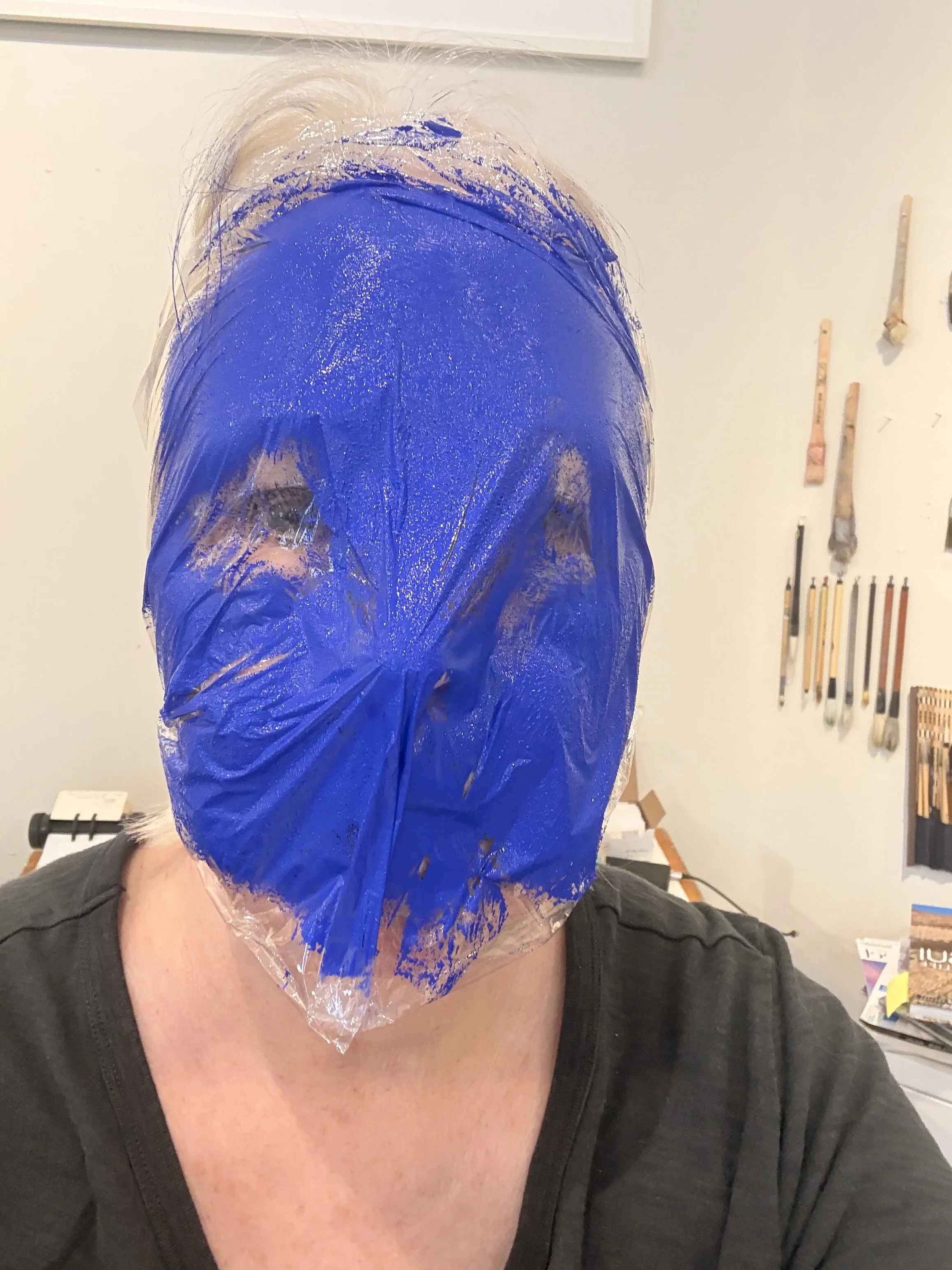
Since I was using oil paint, I first covered my face with plastic.
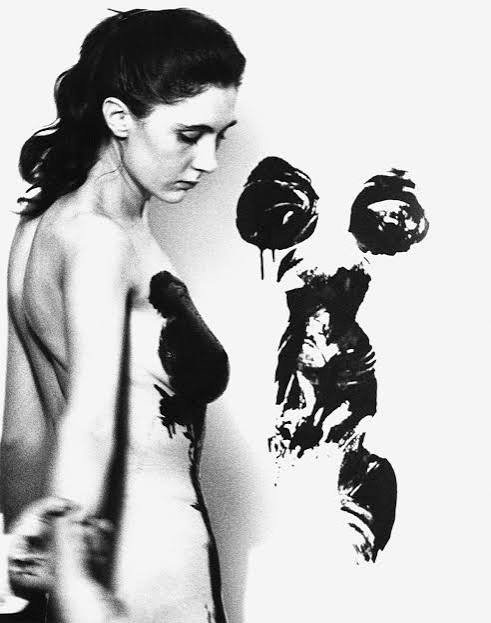
Here is one of Klein's models in front of a print of her body. Notice Klein's hand in the lower left.
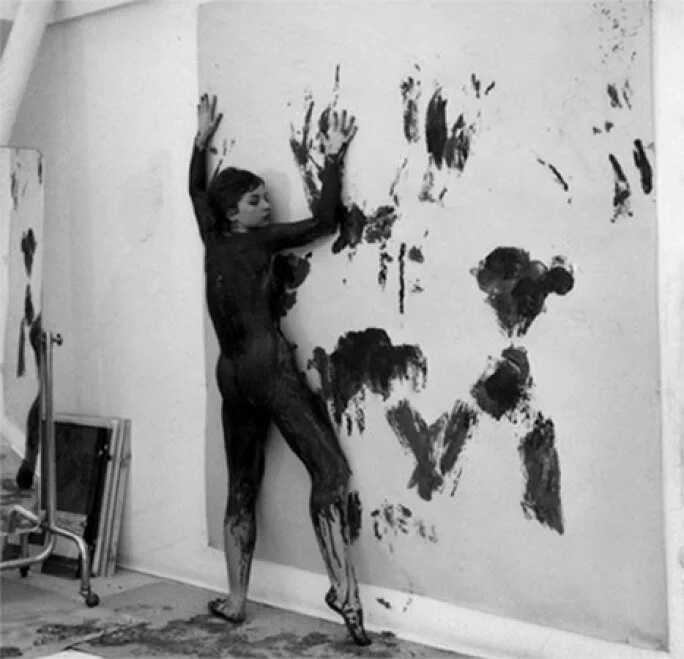
One cannot tell from this photograph if the model was being directed by Klein. I assume she was.
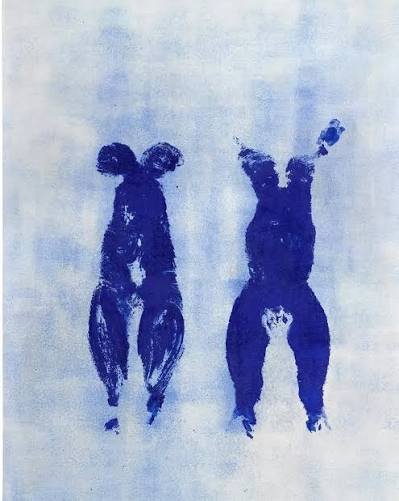
A finished Anthropometrie painting by Yves Klein.