PIERRE SOULAGES: LIGHT REVEALED BY BLACK
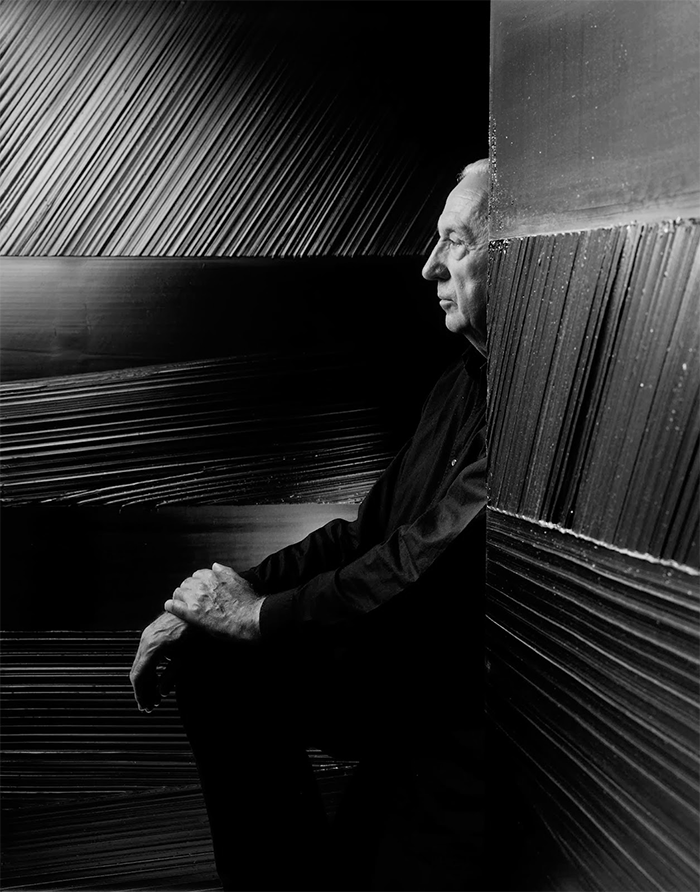
Pierre Soulages
Pierre Soulages is the artist I think of first when I think of black paintings. I have seen his work in several settings over the years, and I remember being overwhelmed at first by the blackness. It dampened my spirit. I don’t know quite how else to put it. There was simply too much black. And then, almost despite myself, I began to see the light. It caught the edge of a ridge of paint. Then another. A streak appeared where a tool had dragged through the surface. As I moved, the light moved with me. I could suddenly see that Soulages was drawing with light. The black wasn’t there to create a void. It was there to give the light something to catch on. I remember wishing the walls had been black. Against a bright white wall, the blackness announced itself first. On a dark wall, perhaps the light catching those surfaces would have been the first thing I saw.
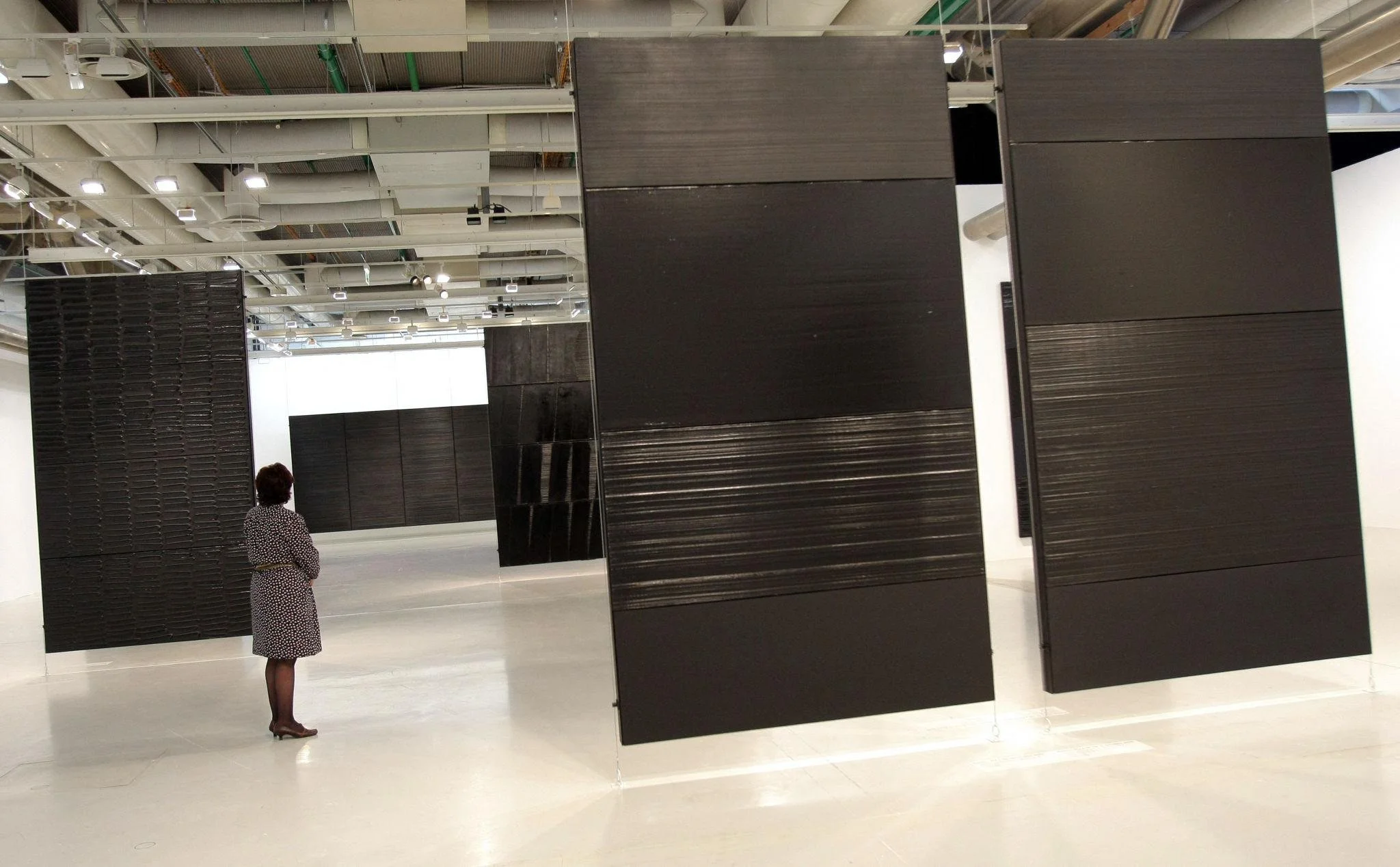
Pierre Soulages’ paintings at the Centre Pompidou.
Soulages had been working with dark materials almost from the beginning of his career. In the late 1940s, some of his most remarkable paintings were made not with expensive artist’s pigments but with brou de noix—walnut stain, the stuff used to darken wood. He liked its warm, dark color, but also the way it could move between transparency and opacity. The Musée Soulages notes that he prepared it in large jars and applied it with housepainter’s brushes. This was not precious material handled with precious tools. (Musée Soulages Rodez)
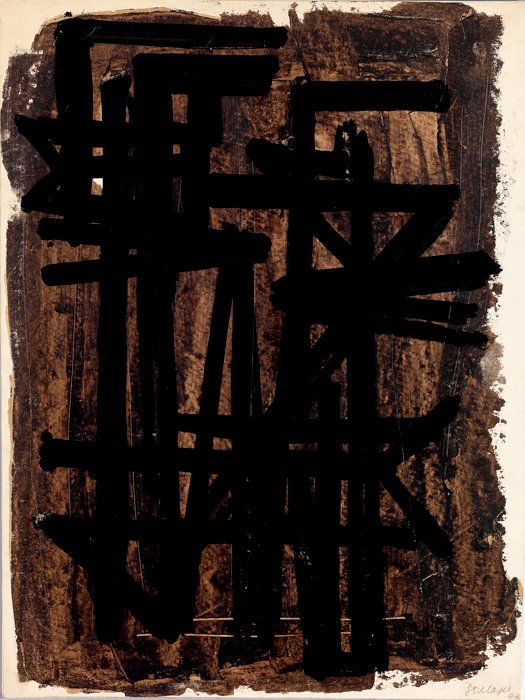
Pierre Soulages, Brou de Noix, 65,7 X 50,1 cm, 1947
In these early works, black or dark brown sits against the light ground of the paper or canvas. The darkness makes the white more intense. Later he allowed other colors to emerge from under and around the black. Soulages eventually described several different ways he had used black over the course of his work: against a light ground, in relation to other colors, and finally as a completely black, textured surface whose changing reflections produced the light. That last possibility changed everything.
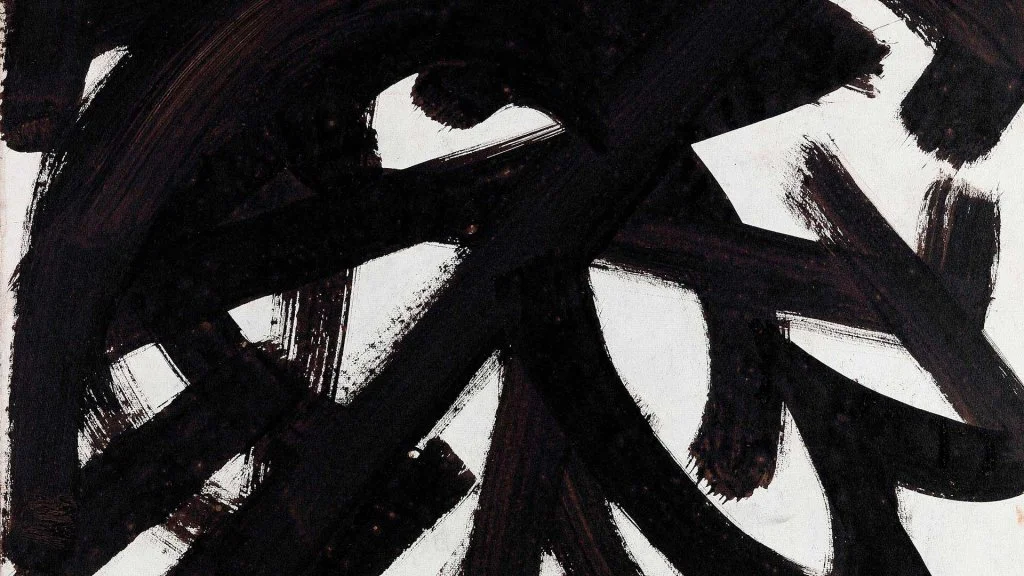
Pierre Soulages, Brou de Noix sur Papier 65,4 X 50,3 cm, 1949
In January 1979, Soulages was working on a painting and getting nowhere. He spent hours adding black, removing it, adding it again. Finally he left the studio. When he came back a couple of hours later, the painting hadn’t changed, but something in the way he saw it had. The black had taken over the entire surface, yet what caught his attention was the light being reflected back from it. The Centre Pompidou identifies this as the beginning of the new territory he would later call Outrenoir—usually translated as “beyond black.” Not a blacker black. Something beyond the experience of black. Soulages himself said that black “never exists in the absolute.” Its appearance changes according to the size of the surface, its texture, the light falling on it, and where we happen to be standing. That last part matters.
These paintings cannot really be seen from a single fixed position. A ridge that looks almost silver from one angle can become black when you take two steps sideways. A deeply furrowed area catches light differently from a smooth one. What appears gray may suddenly become blue. The painting changes because you move.
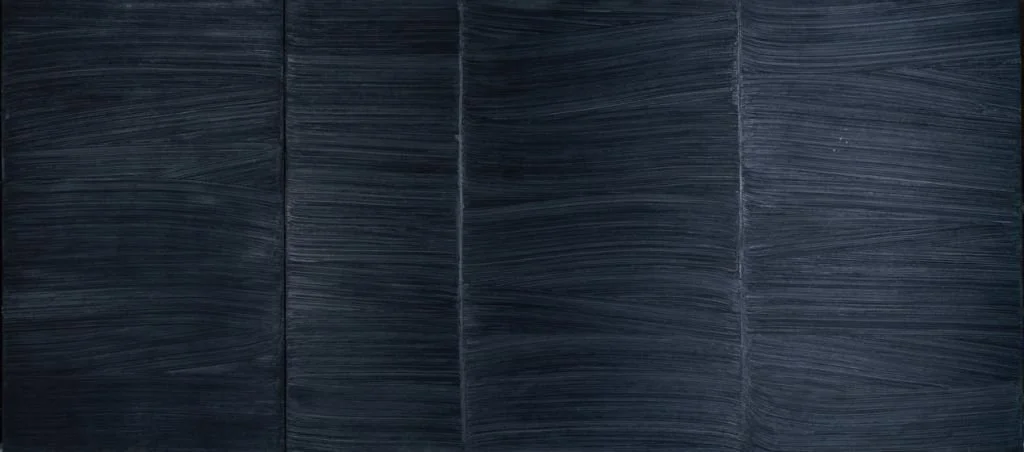
Pierre Soulages, Peinture 202 x 453 cm, 29 juin 1979, oil on canvas.
And I think this explains something about my experience in Antibes. I was trying to take in an exhibition. The paintings wanted me to look at them one at a time. A room full of Soulages paintings can initially register as a room full of black. But an individual painting asks for something slower. You have to stand in front of it, then move. The painting changes with you. The light that reveals it is partly the light in the room and partly the result of where your body happens to be. I hadn’t expected that from a black painting.
FOR THOSE WHO LIKE TO WATCH PAINT DRY
Soulages was particular about tools, although not necessarily the tools sold to artists.
From the beginning he liked housepainter’s brushes, broad flat brushes, scrapers and blades. By the 1960s he was using wide brushes with square ends and soft scrapers to lay down large passages of paint. As the canvases became larger, he increasingly worked on the floor, which allowed him to use broader brushes and squeegee-like tools. The choice of tool was not incidental. A brush leaves one kind of surface. A scraper leaves another. Drag a blade through viscous paint, and the paint piles up along its edges. Cut parallel furrows into a black surface, and every ridge becomes a place where light can strike. With the Outrenoir paintings, he could cover the entire surface in black and then differentiate it by what he did to the black: smoothing it, scraping it, furrowing it, flattening it, changing the direction of the ridges. The paint began to operate almost as low relief. The image was no longer produced primarily by one color sitting beside another. It was produced by the physical surface meeting the light. The Centre Pompidou describes these textural blacks as a “matrix with changing reflections.”
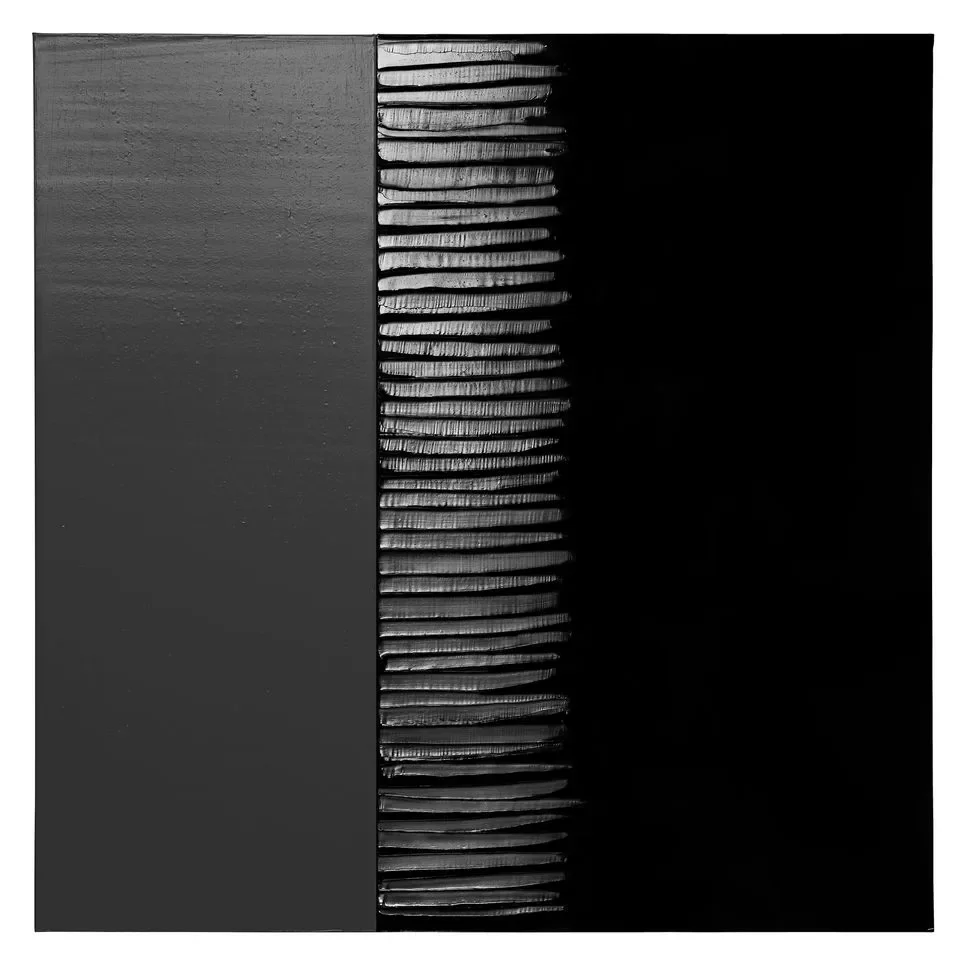
Pierre Soulages, Peinture 202 x 202 cm, 13 septembre 2013 (2013) Photo: Courtesy Dominique Lévy and Galerie Perrotin.
He wasn’t doctrinaire about materials. There are oil paintings, works combining oil and acrylic, and later works in acrylic on panels, as well as the early walnut stains, inks, gouaches and occasional experiments with tar. What remains remarkably consistent is his attention to what a particular material and a particular tool will actually do. There is a phrase of his that I particularly like:
“I learn what I am looking for from what I do.”
That seems to me a painter talking. You do something to the paint. It does something back. You pay attention. Then you decide what to do next. Soulages spoke repeatedly about accepting accidents and responding to what the material gave him rather than beginning with a completely predetermined image.
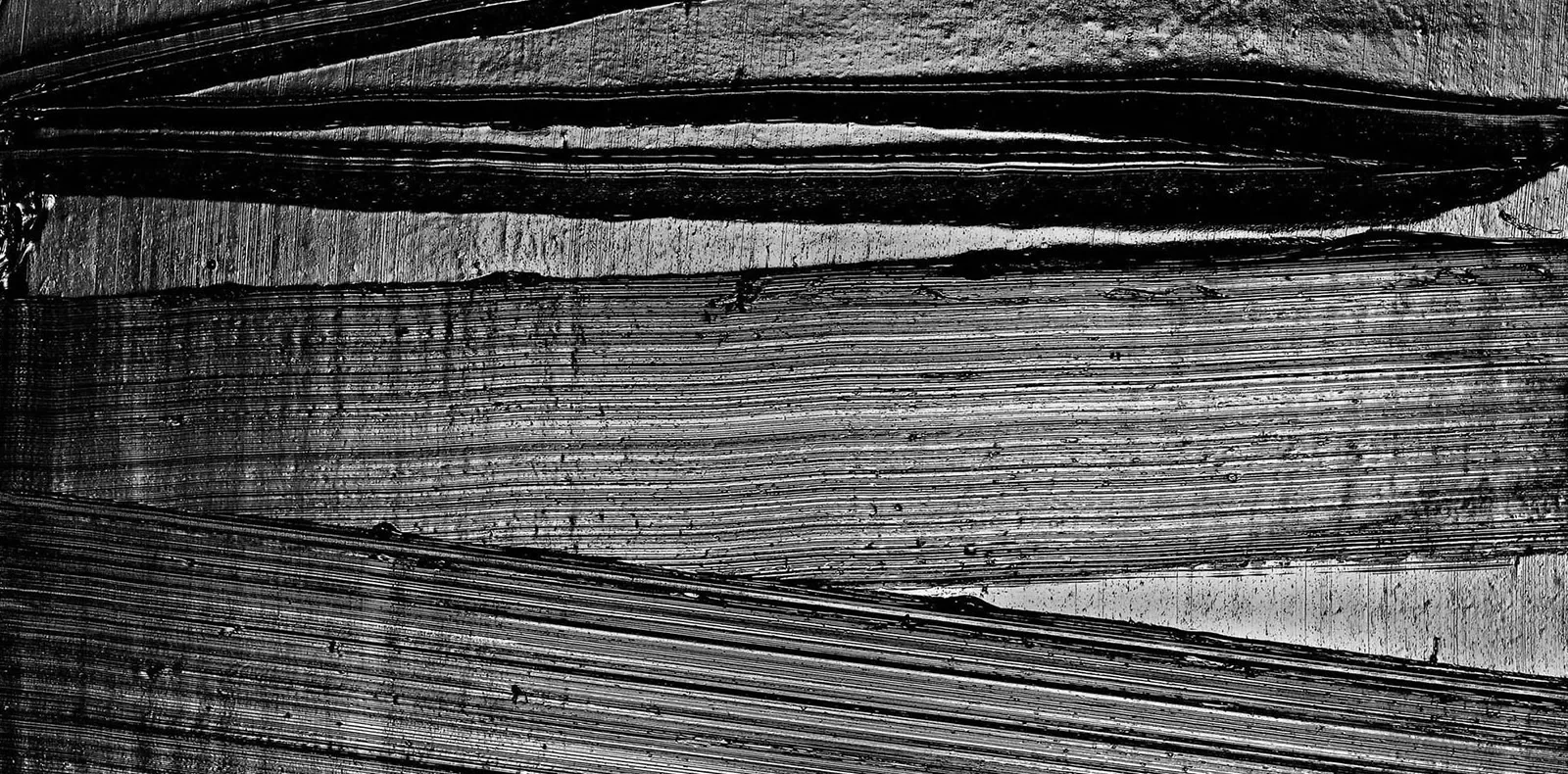
Pierre Soulages, detail
This is where Soulages and Anish Kapoor, whom I wrote about in the last post, part company. Kapoor’s extraordinary blacks absorb reflected light until it becomes difficult to tell where an object's surface is. Soulages wants the light back. He gives it ridges to land on, grooves to disappear into, smooth passages to slide across. I keep coming back to the first ridge I noticed in Antibes. It was only a narrow edge of paint, lit for a second. Once I saw it, I could no longer see the painting as simply black.
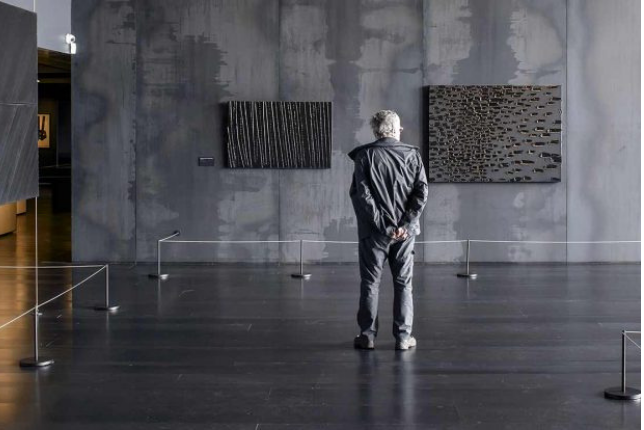
Soulages Museum in Rodez: It seems that Soulages agreed with me about putting his work on a dark wall.
IF YOU WANT TO KEEP LOOKING
The Centre Pompidou’s material prepared for its major Soulages retrospective is unusually good. It goes into his different uses of black, his tools, his materials, and the development of Outrenoir without turning the paintings into theory. (Centre Pompidou Mediation)
If watching paint dry has not frozen your brain, the Musée Soulages has an excellent detailed account of his works on paper: the walnut stain mixed in jars, the housepainter’s brushes, his interest in tools, scraping and transparency, and the route from those early works toward Outrenoir. It also draws on the catalogue for the 2016 Soulages. Papiers exhibition at the Musée Picasso in Antibes. (Musée Soulages Rodez)
And if you would rather hear Soulages talk than read about him, the French INA archive has wonderful filmed interviews. In one, he talks about working without a predetermined theory and says that what he does teaches him what he is looking for. (Ina)
YOU MAY ALSO LIKE