
ART HISTORY IN THE COURT PAPERS
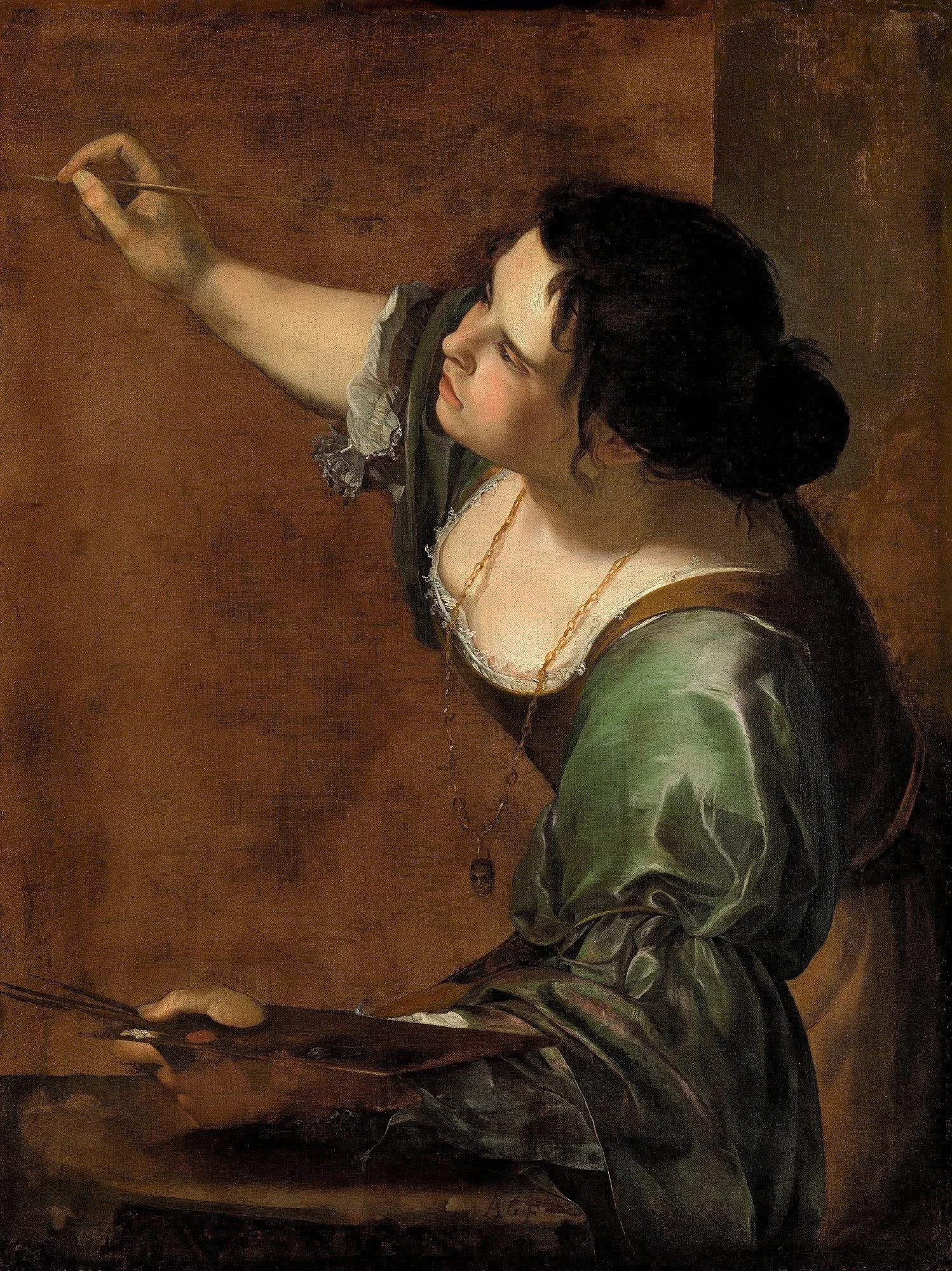
Artemisia Gentileschi (Italian, 1593-1653)
Self-Portrait as the Allegory of Painting (La Pittura)
c. 1638-1639
Oil on canvas 98.6 x 75.2cm
Royal Collection Trust
© His Majesty King Charles III 2024
Here is a filing category you do not expect to find in art history: Stupri et lenocinii. Rapes and pandering. Filed together. Not as tragedy. Not as biography. As administration. The folder sits in the Archivio di Stato di Roma, busta 104. Inside is the 1612 case brought by Orazio Gentileschi against Agostino Tassi after the rape of Orazio’s daughter, Artemisia Gentileschi, who was then a young painter in her father’s studio.
I have been thinking about court papers as a strange place to find art history. Not because they explain the paintings. They do not. They were not made for that. They were made for accusation, defense, property, reputation, legal procedure. They flatten a life into testimony. They ask the wrong questions. They preserve the wrong things. They turn violence into a file. And yet, there she is. Artemisia begins by naming what happened to her:
“Con vituperio e tradimento sono stata sverginata da un certo Agostino Tassi pittore...”
With shame and betrayal, I was deflowered by a certain Agostino Tassi, painter.
There is a whole world in that last word. Painter.
Not stranger. Not soldier. Not anonymous attacker. A painter. Someone in the same professional world. Someone connected to her father. Someone who had access to the house, the studio, the rooms in which work was made. Tassi, when questioned, does what men in trouble often do. He supplies circumstance instead of truth.
“Son stato in casa di Tutia di notte... cinque o sei volte...”
I was at Tuzia’s house at night, five or six times.
He admits the visits, but turns them into vigilance. Orazio, he says, had sent him to watch who was coming and going. The answer has the shape of an explanation, but it keeps sliding away from the question. Then there is the witness, not one of the central figures, but someone close enough to the damage to understand the social machinery around it:
“Veggasi che Agostino non ha voluto sposare Artemitia conforme alla promessa.”
Look how Agostino refused to marry Artemisia, despite his promise.
That sentence is almost unbearable now, because it tells us what the court could see and what it could not see. The crime is there, but so is the failure of repair. The broken promise matters because marriage was understood as the way to restore what had been damaged. Not Artemisia herself, exactly. Her standing. Her marriageability. Her father’s honor. The household. This is what court papers do. They preserve the wound, but also the system that misnamed it.
Partway through her testimony, Artemisia’s fingers were bound with cords, the sibille, and tightened while she continued to speak. Tassi was in the room. She repeated the truth under torture: è vero, è vero. It is true, it is true. I keep thinking about the fact that this, too, is art history. Not as a key to the paintings. I distrust that. I do not want to reduce Judith Slaying Holofernes to biography, or make every violent image answer back to this room. Paintings are not court exhibits. But neither are they sealed off from the world that made them.
The court record gives us the rooms around the paintings: the father’s studio, the neighbor’s house, the movement of men through doorways, the status of a young woman trained to paint but not protected by the world that needed her talent. It shows us reputation as a material fact. It shows us how much of an artist’s life can survive in documents that were never meant to honor her.
I went looking for art history and found a legal file. Or maybe that is not quite right. I found a place where art history had been all along.
A note on sources: Eva Menzio published the Italian trial documents in Atti di un processo per stupro in 1981. The documents also appear in the later Abscondita volume, Lettere di Artemisia Gentileschi precedute da Atti di un processo per stupro. Mary D. Garrard included an English translation of the trial materials in Artemisia Gentileschi: The Image of the Female Hero in Italian Baroque Art in 1989. I have used only a few short passages here, translated myself, because the point of this piece is not to reproduce the trial but to think about what court papers can show us when we read them as part of art history.