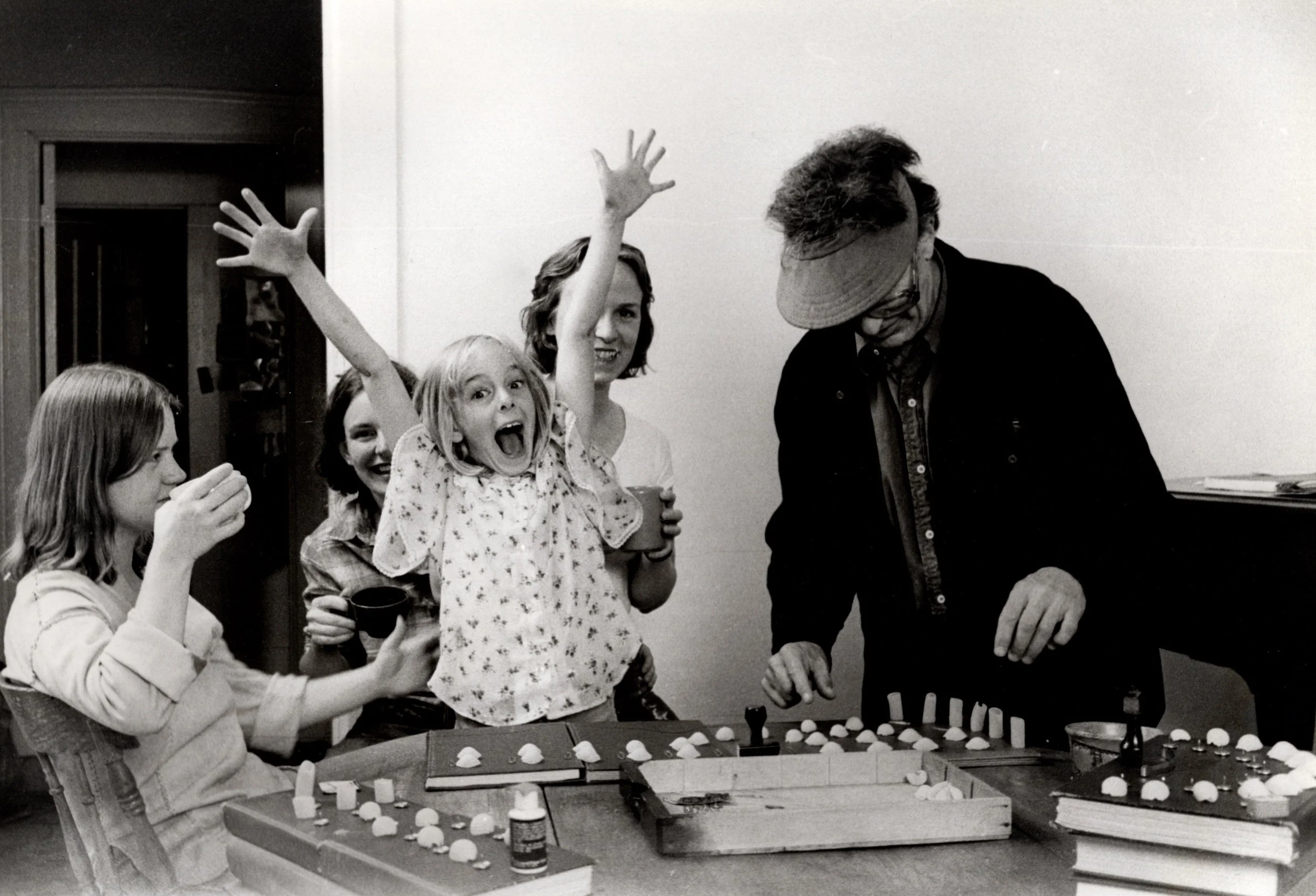
CARL RUGGLES - ARTIST, COMPOSER AND NEIGHBOR
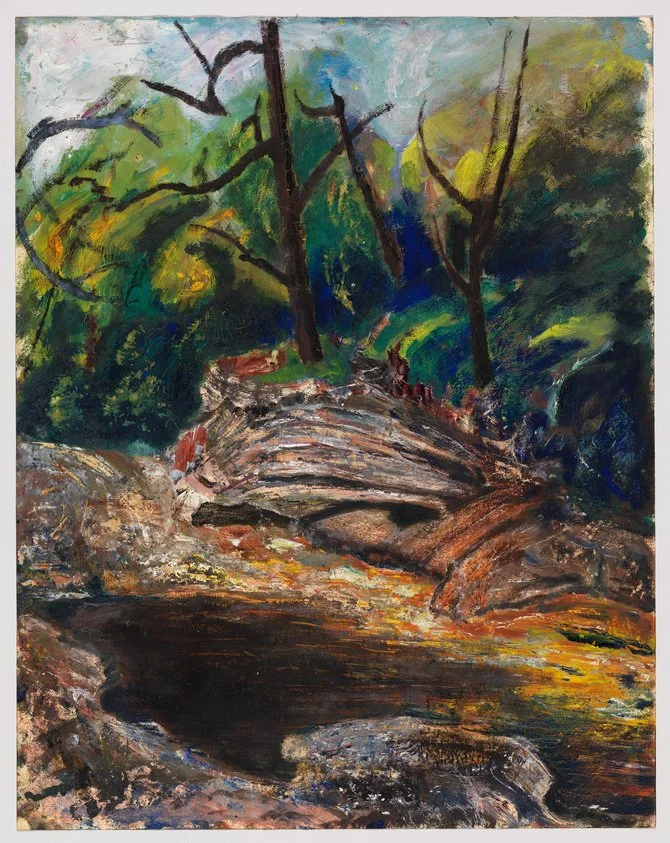
Carl Ruggles The Pool, Roaring Branch 1932, Whitney Museum of American Art, New York; purchase, © artist or artist's estate
Over the Hill to Arlington: Dropping in on Carl Ruggles
If I drive ten minutes east from my home in Shushan, New York, the road wriggles beside the Battenkill and sets me down in Arlington, Vermont—Ruggles‑country. On School Street, in a weather‑beaten former one‑room schoolhouse, the composer‑painter Carl Ruggles spent his mornings growling over contrapuntal knots and his afternoons splashing color onto scraps of paper. Painters know him for explosions like Trumpet Flower and The Pool, Roaring Branch; musicians know him for exactly sixteen published pieces, each one honed until every note felt granite‑sure. Two art forms, one relentless temperament.
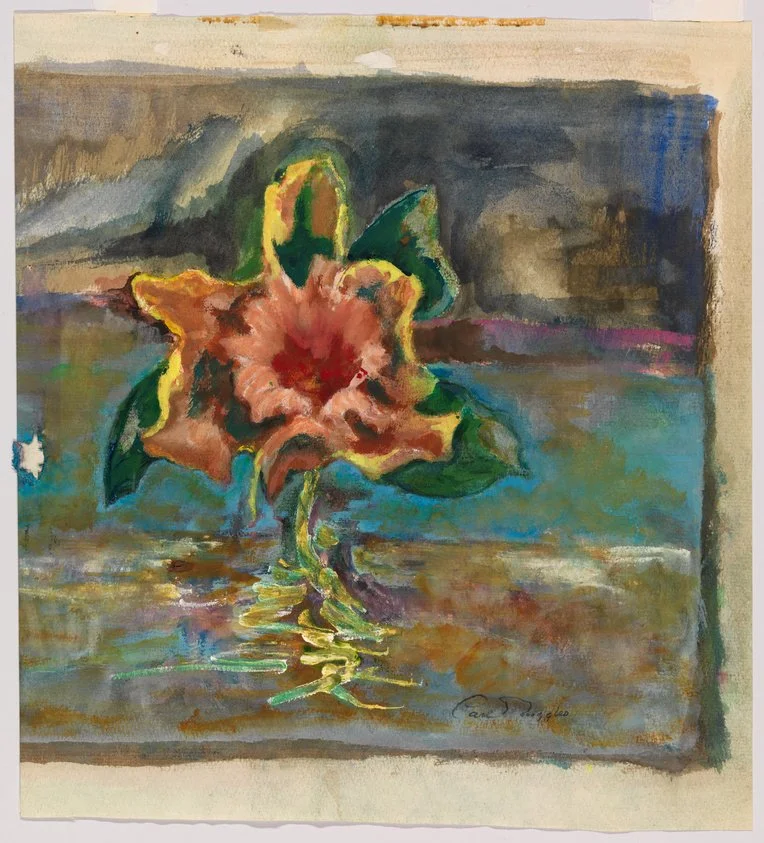
Carl Ruggles, Trumpet Flower, 1940, Whitney Museum of American Art, New York; purchase, © artist or artist's estate
Painting first—because that’s what hits you at the door
Open the Whitney’s flat file and slide out Trumpet Flower (1940): a single blossom drifts on a rippling pool, petals raw as sunrise. The paint is cheap student water‑colour, but Ruggles works it like molten glass—thin sluices next to crusts of impasto. A decade earlier he’d stood at the confluence where Roaring Branch, a mountain stream, dives into the Battenkill just upstream from Arlington’s covered bridge. There he hammered out The Pool, Roaring Branch (1932), all jagged ledges and limbs clawing at the sky. Even the later “rhythm” and “storm” sheets—gauzy veils of turpentine‑thinned oil—pulse like seismic read‑outs.
Every picture feels scored: foreground chords, background countermelodies, sudden rests of bare paper. Ruggles called them “music for the eye,” and you can almost hear the brush yell fortissimo! as it rasps across the grain.
The music: sixteen shards of granite
On paper Ruggles’s catalog looks tiny—Sun‑Treader (1926‑31), Men and Mountains (1924), a handful of choral miniatures—but each score took years. He wrote in what Charles Seeger nick‑named “dissonant counterpoint”: no pitch could repeat until seven or eight others intervened. Think of it as musical crop‑rotation—keep the soil busy so no note grows complacent.
That obsession bred legend after legend. Henry Brant, the Canadian‑American composer I once documented on film, used to drive over from Bennington to copy parts for the old man. One afternoon Brant found Ruggles at the piano pounding the same pitch—bang . . . bang . . . bang . . .—for nearly half an hour.
“Carl, what are you doing?”
“Making sure it’s a good note.”
Brant swore the answer was half joke, half catechism; Ruggles wouldn’t move on until that C‑sharp (or whatever it was) rang true clear down to his boots.
How the two practices fed each other
Line is everything. In interviews, Ruggles claimed, “Melody—line—is everything!” then laughed that there were no straight lines in nature. His paintings obey the same rule: nothing rigid, only curves and eddies.
Slow cooking. An orchestral page might take weeks; a water‑colour, days—but both simmered until the color (or chord) felt inevitable.
Local sound, local light. Standing where Roaring Branch meets the Batten Kill, he heard boulders clack in spring floods; indoors he painted those thumps as smeared indigos and umbers. The music’s hammer‑blow brass chords echo the same river stones.
Today a pair of Ruggles paintings lie quietly in the Whitney’s flat files, while orchestras trot out Sun‑Treader when they want to rattle the chandeliers. Yet the real thrill is knowing all that intensity brewed a stone’s throw from my mailbox. Next time you follow the Batten Kill over the state line, pause on School Street. Listen to the water gurgling behind the old schoolhouse, look up at the Green Mountains, and picture an elderly man inside, hammering one note, one color, until it was good enough to stand for the whole roaring universe.
YOU MIGHT ALSO LIKE;