
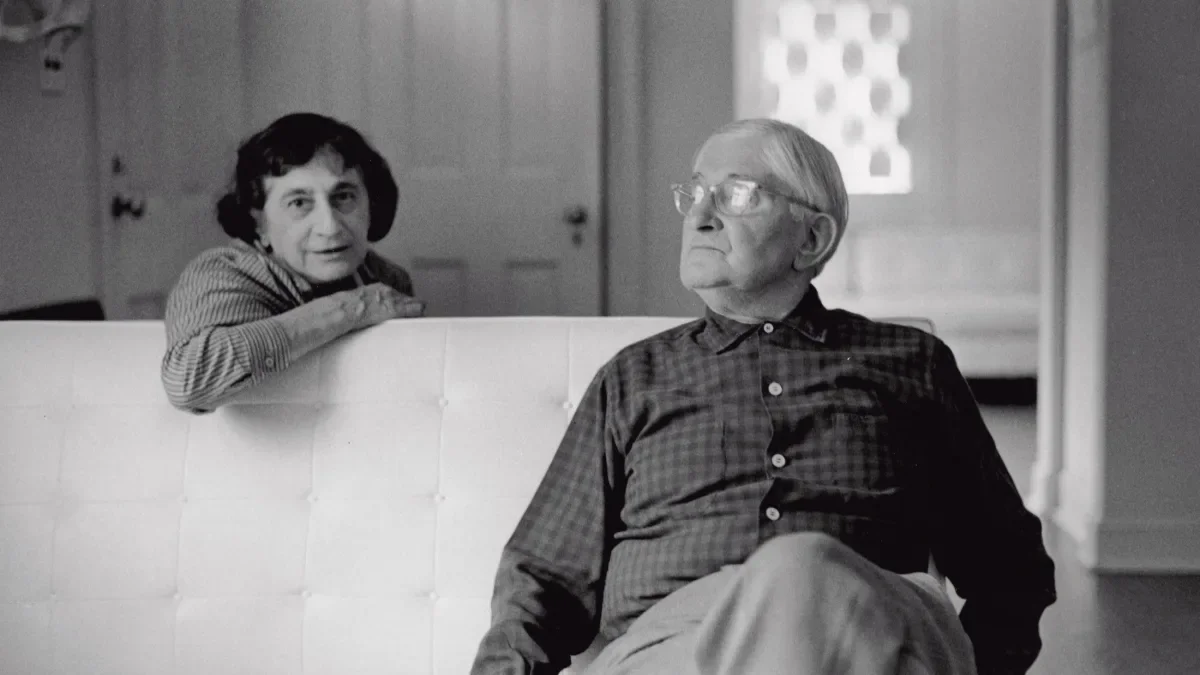
Anni and Joseph Albers
With Anni and Josef Albers, collaboration does not announce itself through shared objects or joint signatures. It appears instead through parallel concentration. Two practices, rigorously separate in material, moving toward the same questions with extraordinary discipline.
Again, the collaboration becomes clearest when you look at the work side by side.
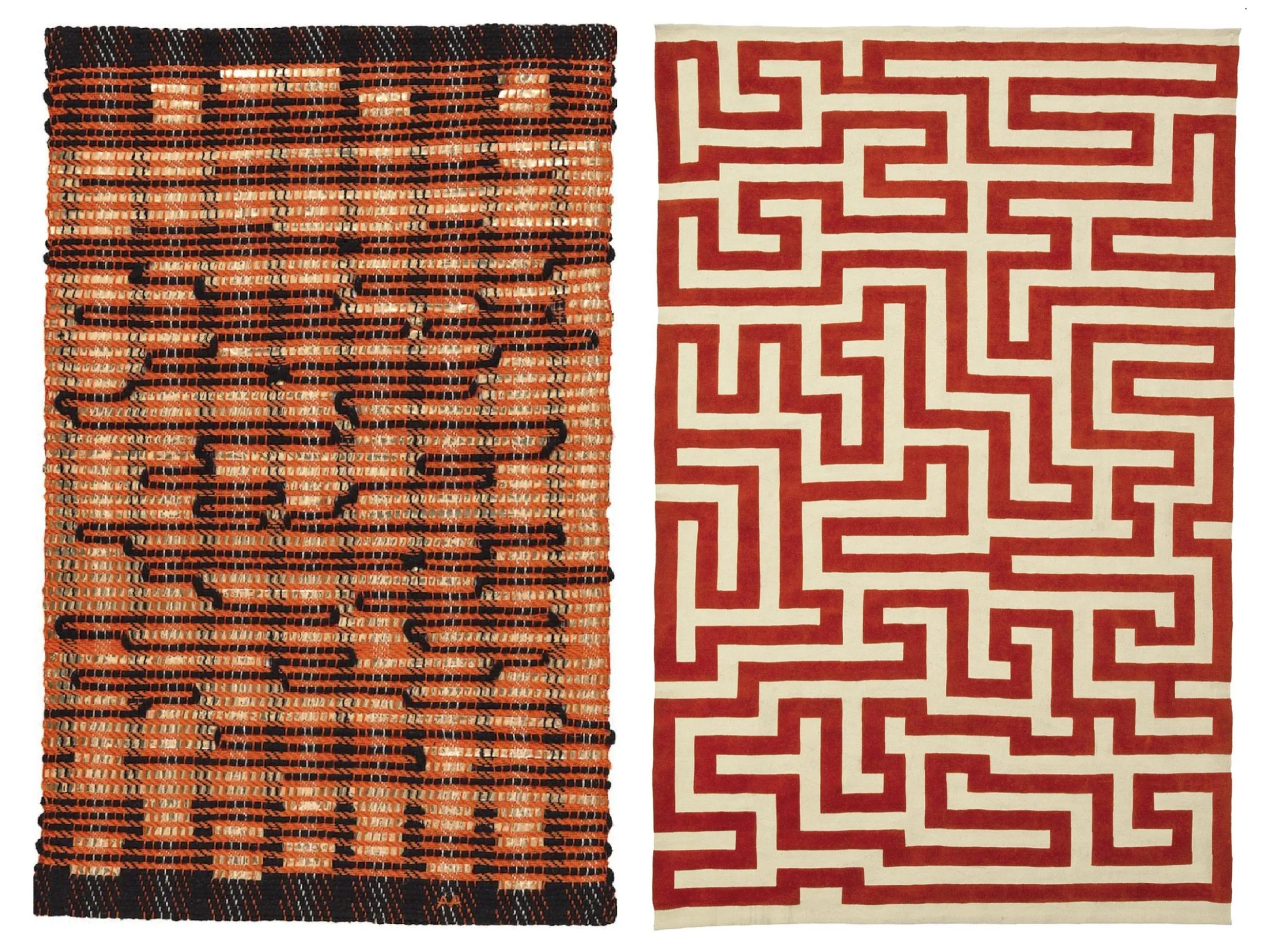
Put one of Josef Albers’s Homage to the Square paintings next to an Anni Albers wall hanging from the same period and the kinship is unmistakable. Both are built from restraint. Both rely on repetition, variation, and exactitude. Both ask the viewer to slow down and notice what changes when very little appears to change at all.
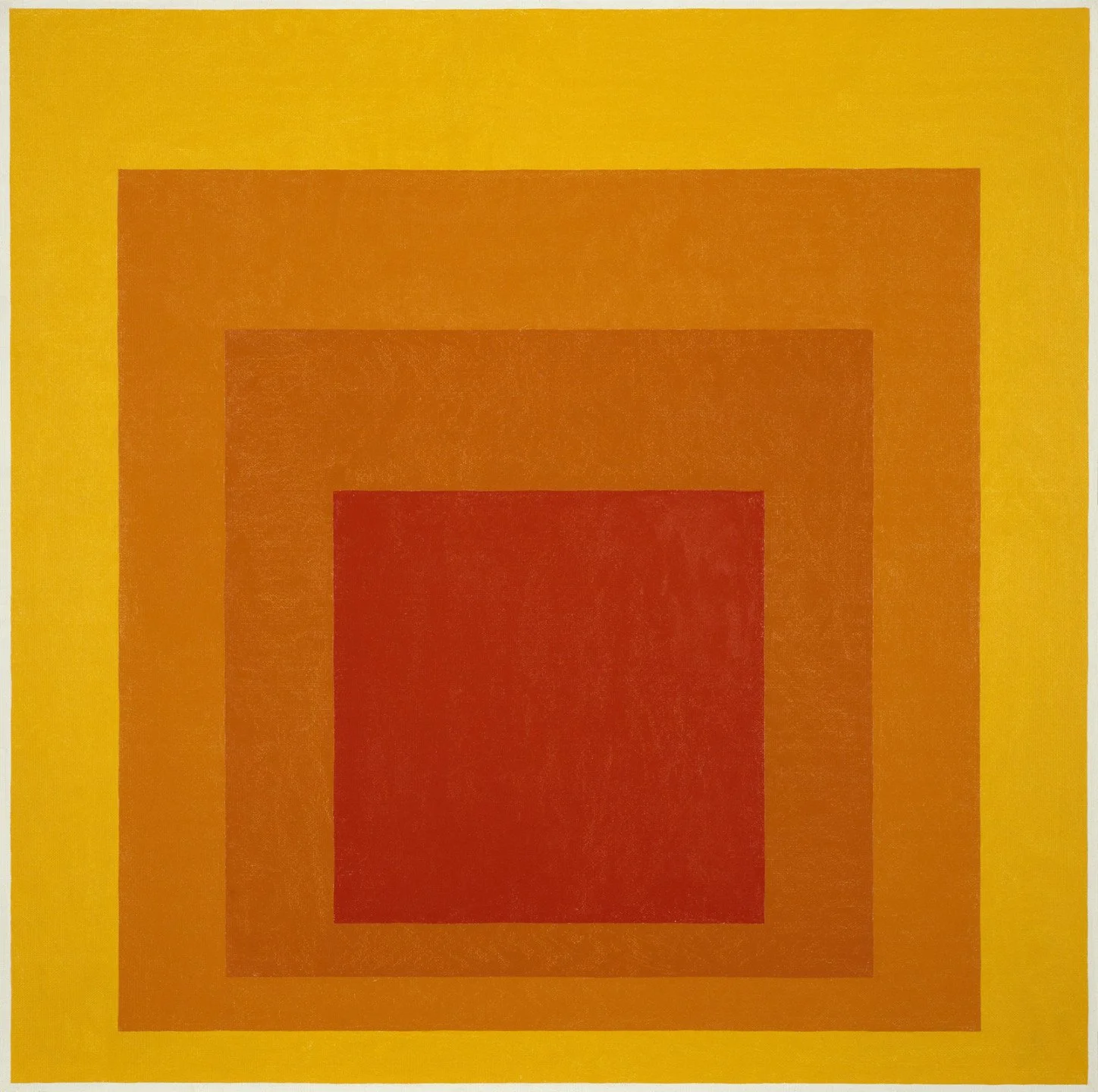
Joseph Albers, Hommage to the Square
Josef’s paintings are exercises in perception. Color is never fixed. It advances, recedes, vibrates, collapses. The square is not a symbol but a container, a stable structure within which instability can be observed. His work insists that seeing is active, not passive. What you perceive depends on context, adjacency, and duration.
Anni’s textiles operate under similar constraints, but the intelligence is tactile. Thread replaces pigment. Structure is literal. Warp and weft determine possibility. Where Josef’s color interactions happen optically, Anni’s happen materially. The surface is not illusionistic. It is built.
What I find compelling is that Anni’s work never reads as illustrative of Josef’s ideas, nor do Josef’s paintings feel like abstractions of hers. They are not translations of one another. They are parallel investigations conducted in different languages.
Anni’s textiles carry weight. They hang. They absorb sound. They exist in space as objects. Yet they are never merely functional. Pattern becomes a way of thinking. Repetition becomes a method of inquiry. The limits of the loom are not obstacles. They are generative.
Josef’s paintings, by contrast, are resolutely non-tactile. They ask you not to touch but to look, and to look again. The surface is flat, but the experience is not. Color behaves unpredictably, even within strict parameters.
What binds these two practices together is a shared ethic. No excess. No gesture for its own sake. No hierarchy between media. The distinction between fine art and applied art simply does not hold here, because both are engaged in the same perceptual labor.
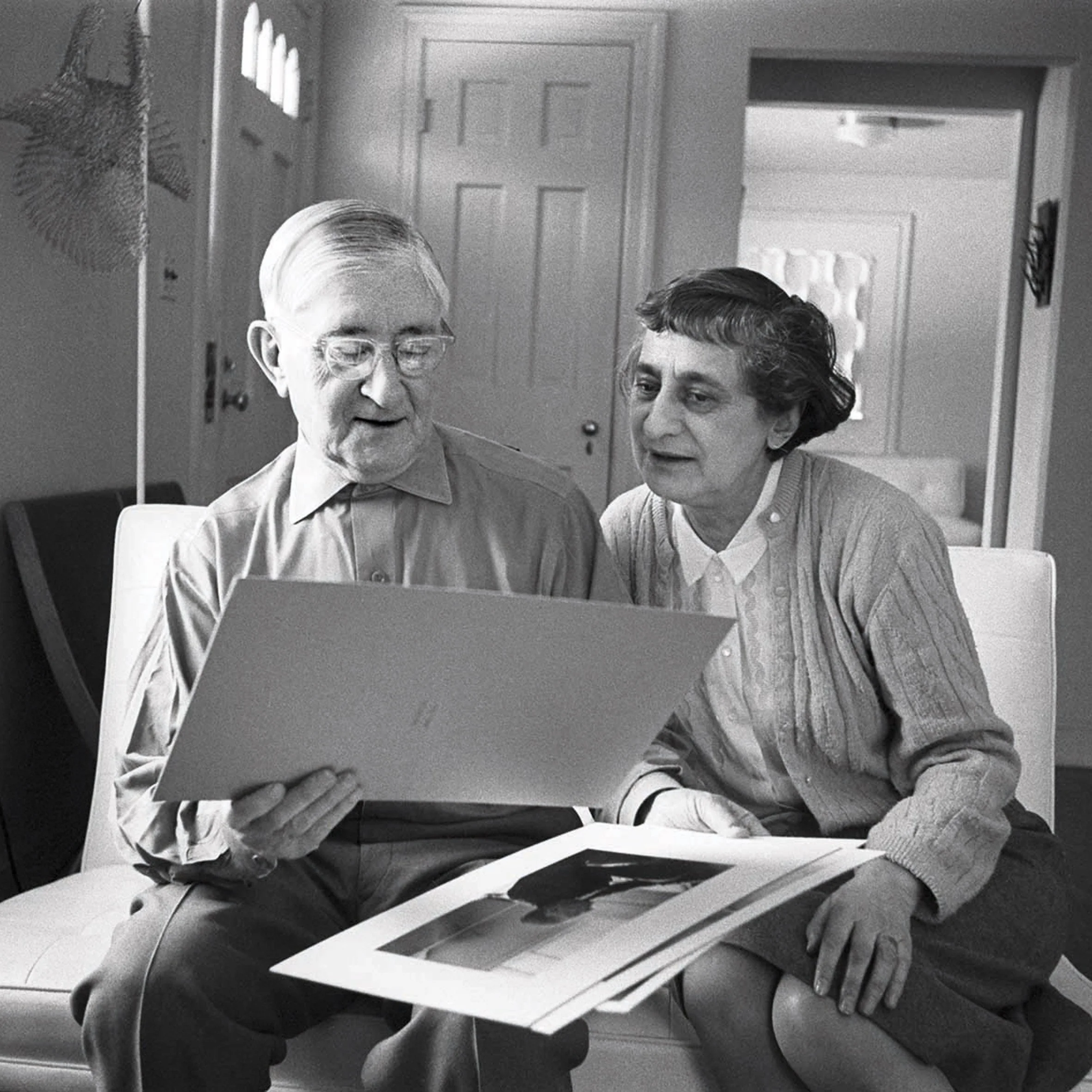
Historically, Anni’s work was easier to sideline. Textiles were read as craft. Domestic. Decorative. But when placed next to Josef’s paintings, that dismissal fails. Her work is not adjacent to theory. It is theory, embodied.
Their collaboration was not about influence in the casual sense. It was about living inside a shared set of values. Teaching mattered. Making mattered. Attention mattered. Each practice sharpened the other by example, not by instruction.
If the Delaunays show us collaboration through expansion and complication, the Alberses show us collaboration through parallel rigor. Two minds agreeing on what is worth sustained attention, then proceeding independently, patiently, for decades.
Some partnerships amplify ambition. This one deepened it.
For other posts on artistic collaborators, check out:
Sonia Delaunay and Robert Delaunay