
blog
ALL | ABOUT MY WORK | EVERYTHING ELSE

THE COUNCIL OF TEN: SECRECY, SURVEILLANCE, AND PUNISHMENT IN VENICE
Venice had a complicated system of government. Power was distributed among councils, committees and elected officials, all carefully arranged to prevent any one person from taking control.
Then, in 1310, a group of Venetian noblemen tried to overthrow it.
The conspiracy failed, but it frightened the ruling class badly enough that they created a special committee to investigate what had happened and make certain it did not happen again. It was called the Council of Ten because ten patricians were elected to serve on it. The name was slightly misleading. The doge and his six councillors also attended its meetings, making seventeen men in the room before any additional members were called in.
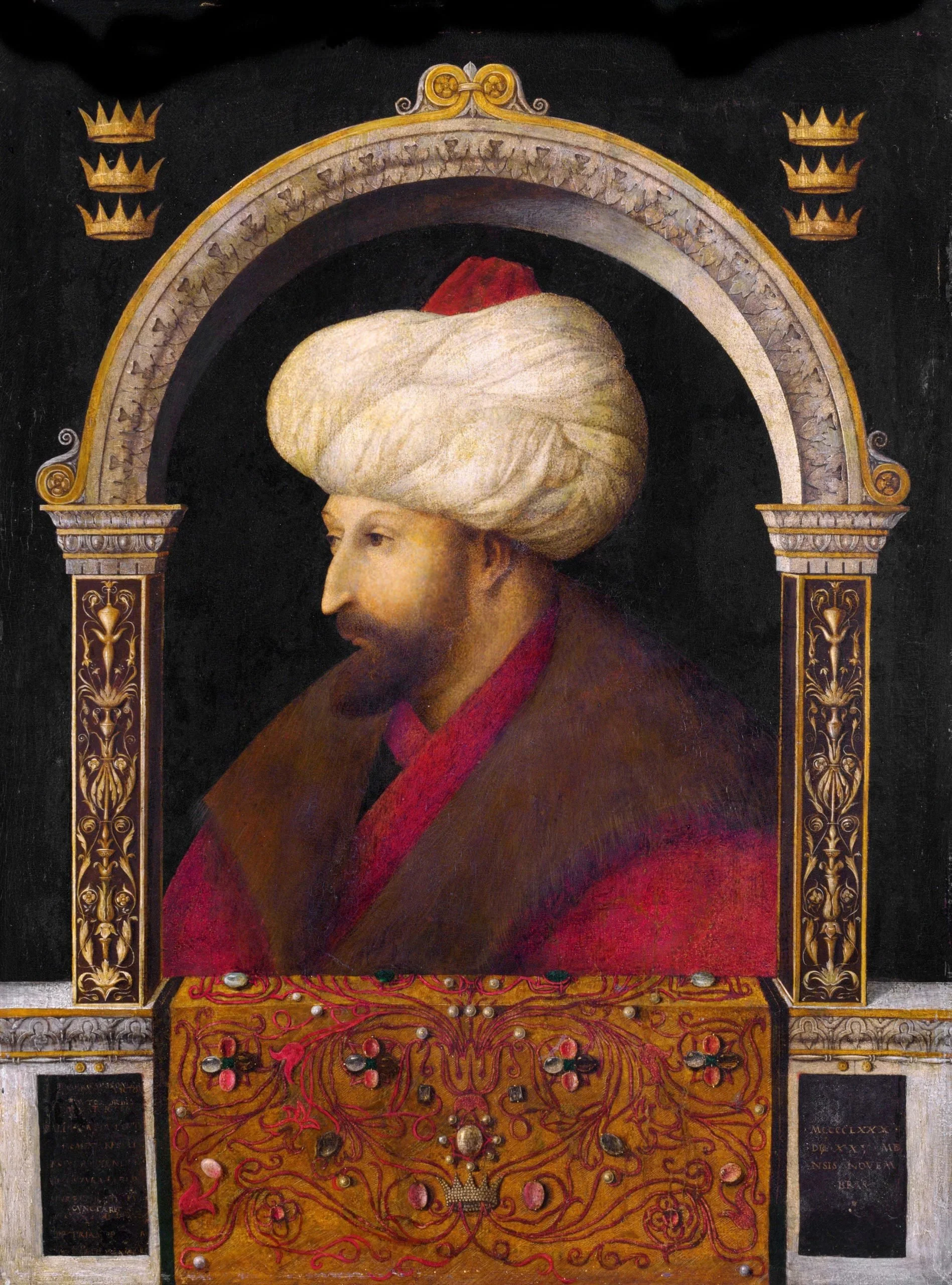
THE PAINTER AND THE SULTAN: How a Venetian Artist Walked into Another World and Never Quite Came Back
There is a portrait of Sultan Mehmed II in the National Gallery in London that has been nagging at me for years.
The first time I saw it, I was not thinking about diplomacy, trade, or the fall of Constantinople. I was looking at the painting itself.
The arch around the figure did not feel like ordinary Renaissance architecture to me. It felt like the edge of a manuscript page. The decorated cloth, the jewels, the gold, the contained darkness behind the Sultan, all of it seemed closer to ornament, calligraphy, and courtly display than to the kind of Venetian portrait I thought I knew.
Even the profile seemed to have crossed a border.
Something about the painting felt translated. Not wrong. More like a sentence spoken in another accent. The grammar was familiar, but something underneath it had shifted.