
blog
ALL | ABOUT MY WORK | EVERYTHING ELSE
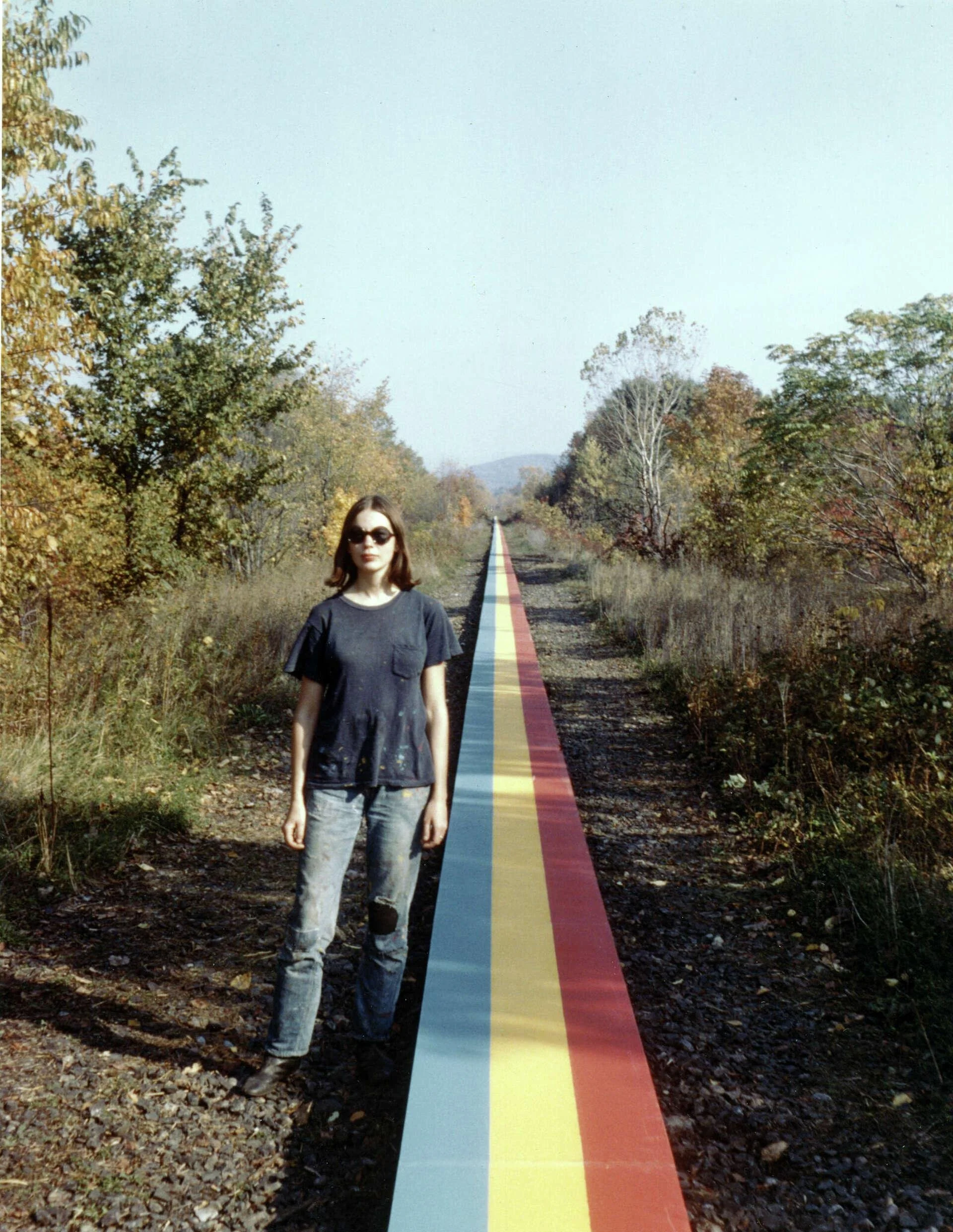
PAT JOHANSON: THE STRIPE LEAVES THE FIELD OF VISION
After Pat Johanson gave her talk at the Curiosity Forum, I walked her to her car.
She had come with almost nothing. A computer bag, a fanny pack, and the clothes she was wearing. She told me this was how she traveled, whether she was going to a dinner or to a site where she might have to walk through mud, look at drainage, think about water flow, plants, animals, erosion, construction, access, use. The same clothes. The same body. The same attention.
That is what stayed with me. Not just the work, though the work is remarkable, but the way she carried herself in relation to it. She did not seem to arrive anywhere with an idea to impose. She came prepared to look.

THE LINEAGE OF EXPERIMENT: From the Bauhaus to Bennington College to Woodstock Country School
I didn’t realize it at the time, but the schools I attended — Woodstock Country School and later Bennington College — were direct descendants of the Bauhaus experiment. Each believed that art was not a subject but a way of understanding the world. The lineage that ran from Weimar to North Carolina to Vermont shaped not only my education but the way I’ve made art ever since.

CLEMENT GREENBERG AND JACKSON POLLOCK, and a Defining Exhibition at Bennington College
The mid-20th century witnessed a seismic shift in the landscape of American art, with the emergence of Abstract Expressionism marking a departure from European traditions and establishing New York as a new global art center. At the heart of this transformative period were two towering figures: Clement Greenberg, a highly influential art critic whose formalist aesthetic shaped the discourse around modern art, and Jackson Pollock, an artistic innovator who revolutionized painting with his energetic "drip" technique

