
THE STRIPE AS ATMOSPHERE
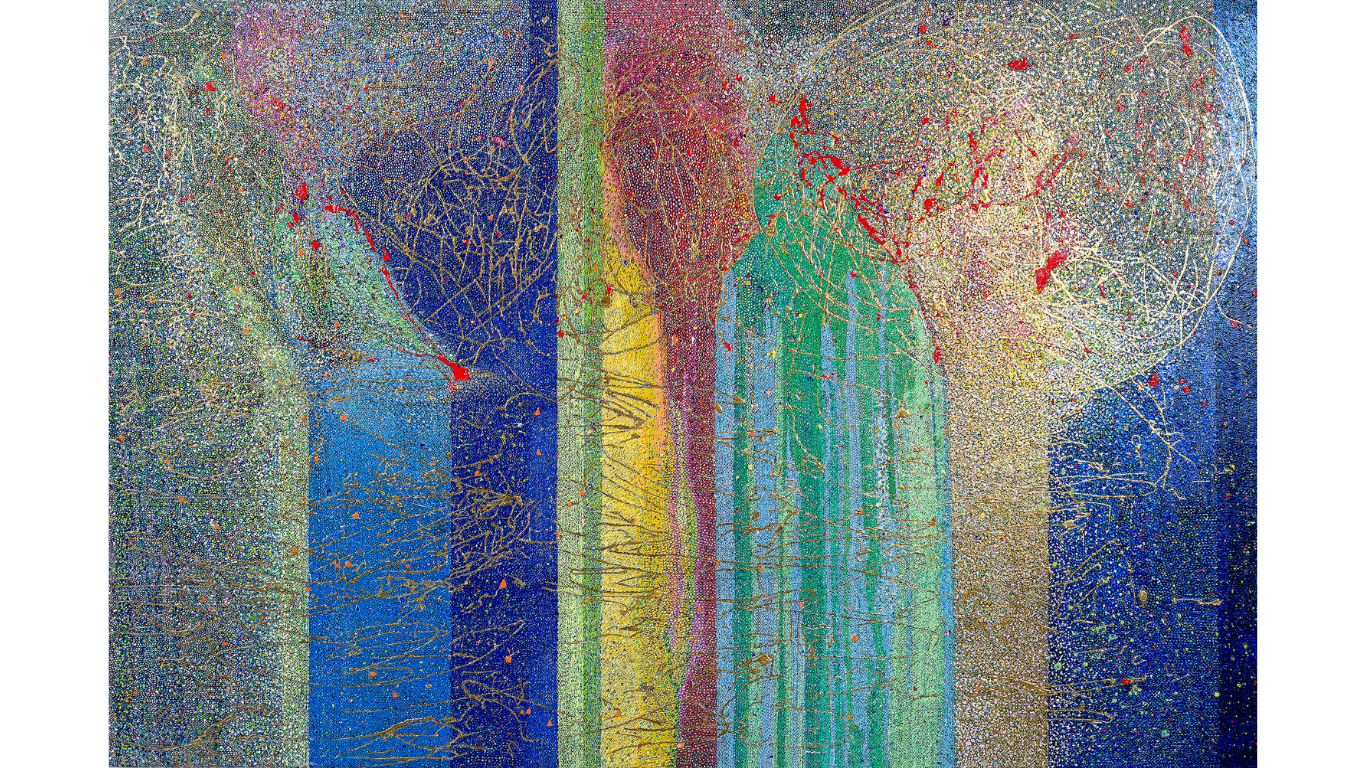
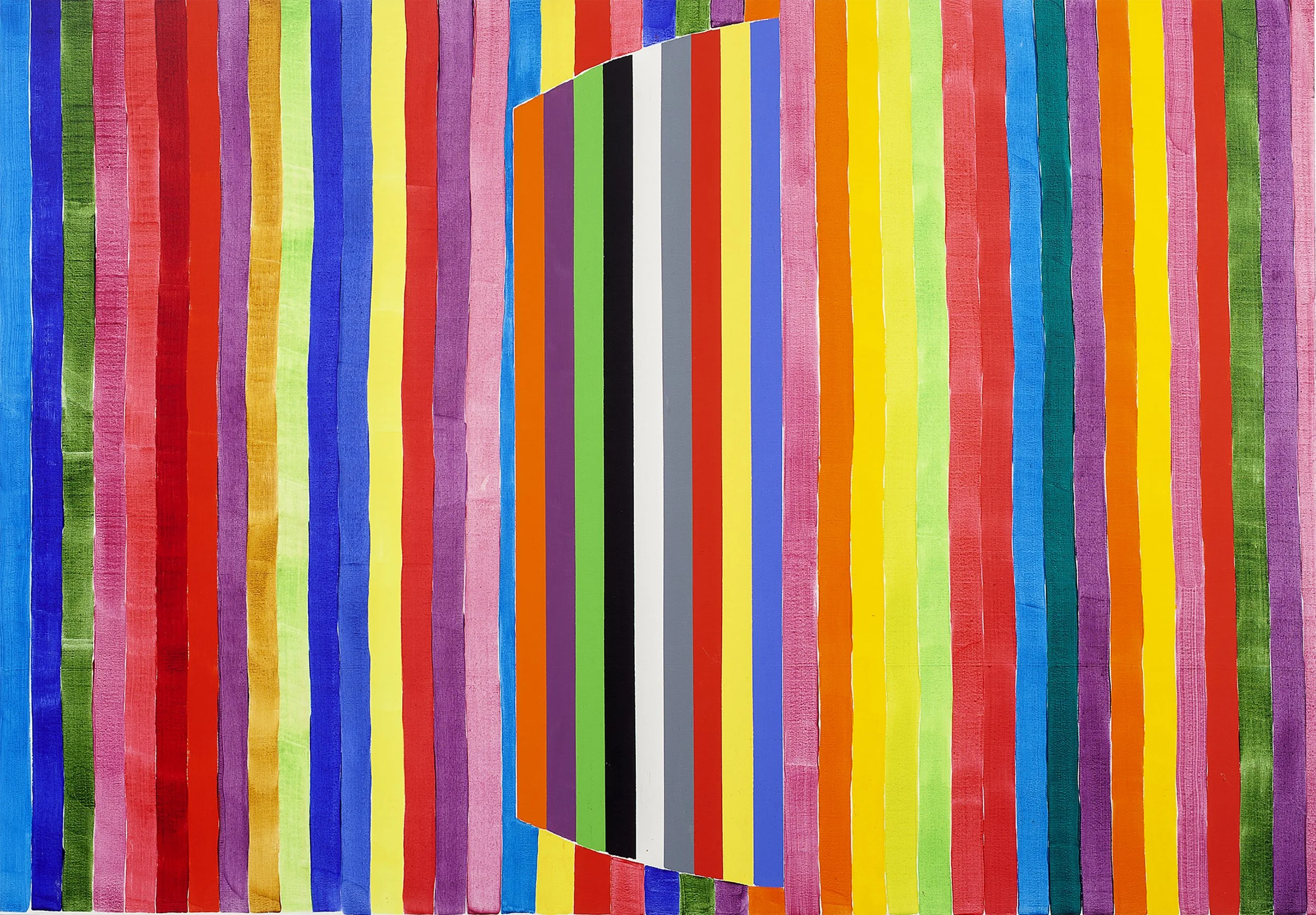
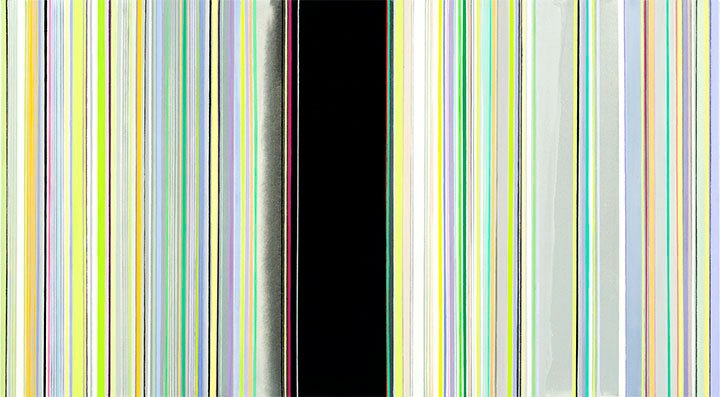
"Luminous Morning," 48 inches x 72 inches, oil paint and acrylic marker on canvas, Stanford University, ©2025 Leslie Parke
“What entered the work was the stripe. In these paintings, the stripes control the atmosphere.”
These paintings began with Luminous Morning. I was asked to make a larger painting based on it, and I wasn’t sure that I could. I could repeat its dimensions, colors, or arrangement, but that would not necessarily recover what had happened in the painting.
What interested me was the way the stripes held the surface together while seeming to dissolve into light and atmosphere. They established a structure, but they were not the entire subject. Color passed across them. Marks accumulated, disappeared, and reappeared. The paintings felt less like arrangements of bands than like changing conditions—something seen through light, weather, or distance.
Trying to make the larger painting led not to a copy of Luminous Morning, but to Field Song, Alternating Current, and Bright Air. Each began with a related structure, yet each developed its own temperature, rhythm, and density. The stripe gave me something firm enough to work against while leaving room for the painting to move somewhere I had not planned.
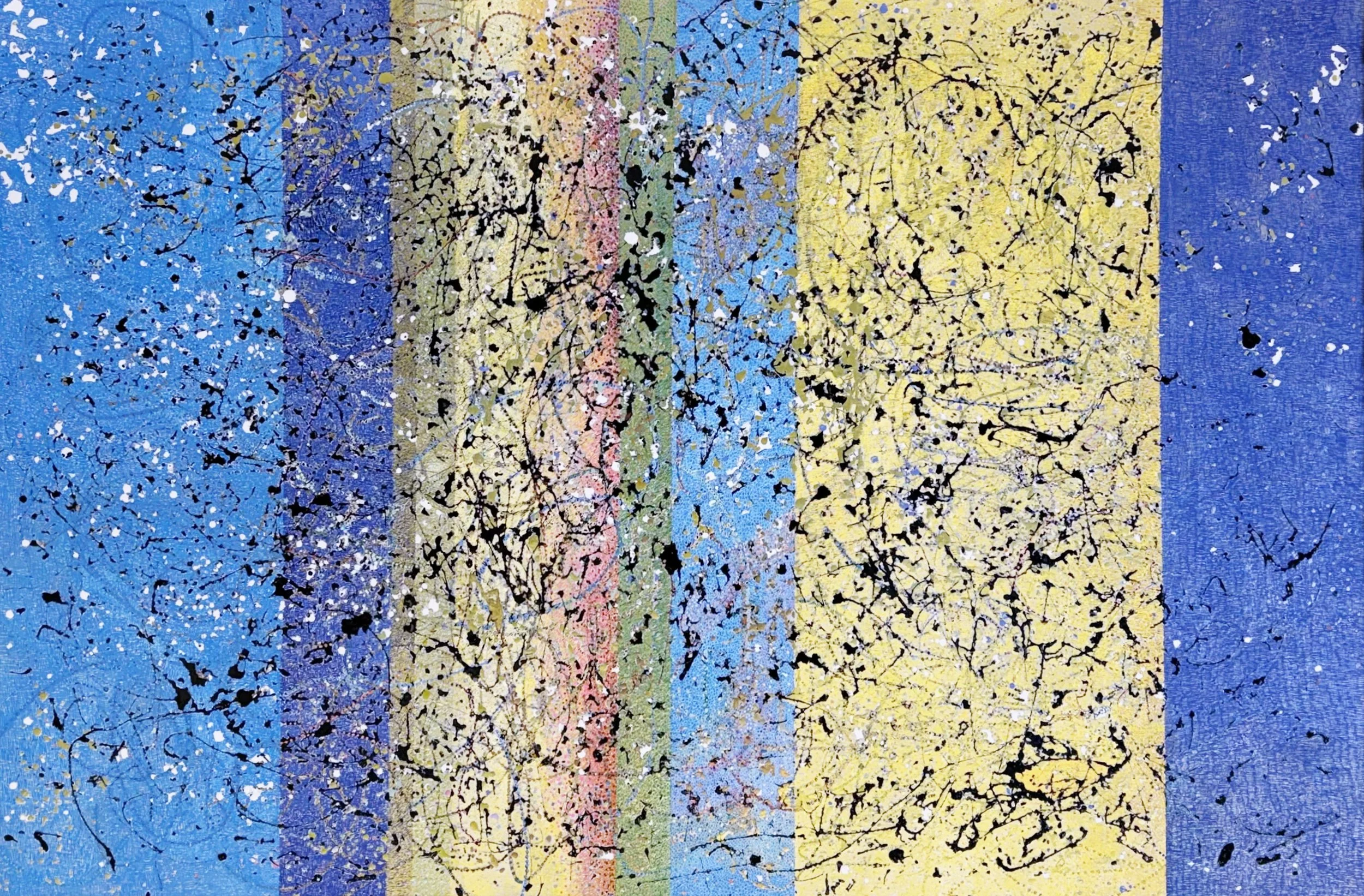
"Alternating Current," 48 inches x 72 inches, oil painting and acrylic markers on canvas, ©2026 Leslie Parke
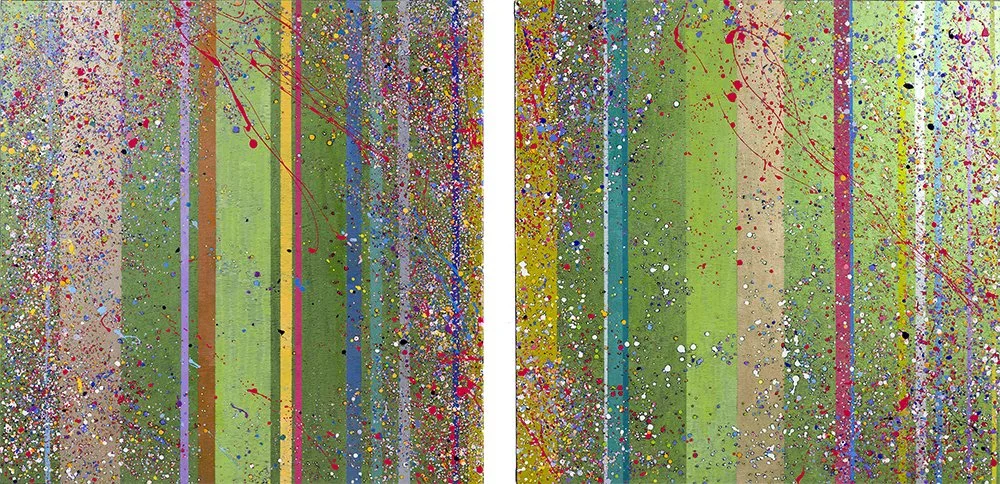
"Field Song," diptych, 48 inches x 96 inches, oil paint and acrylic marker on canvas, © 2026 Leslie Parke
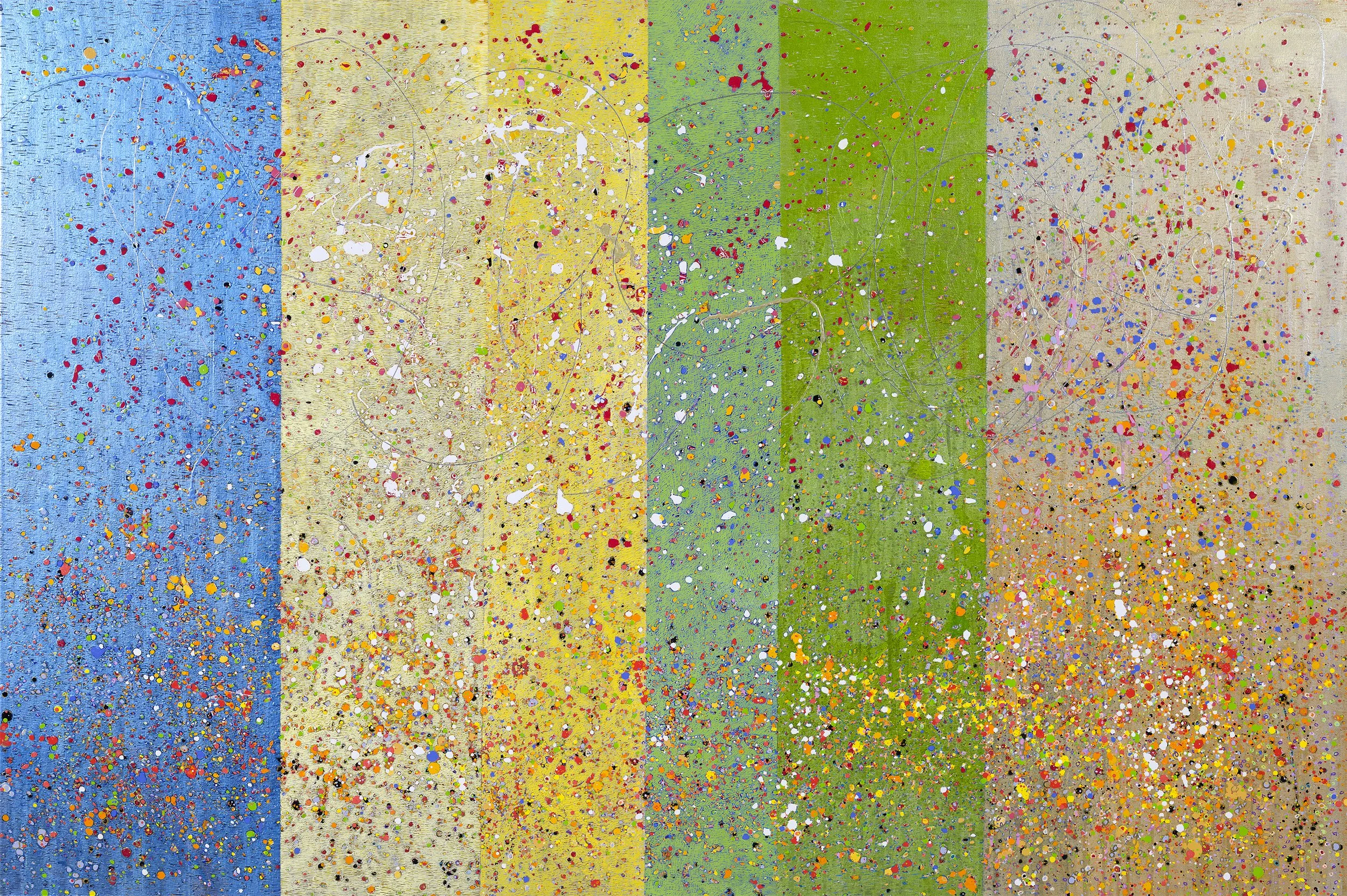
"Bright Air," 48 inches x 72 inches, oil paint and acrylic marker on canvas, © Leslie Parke 2026
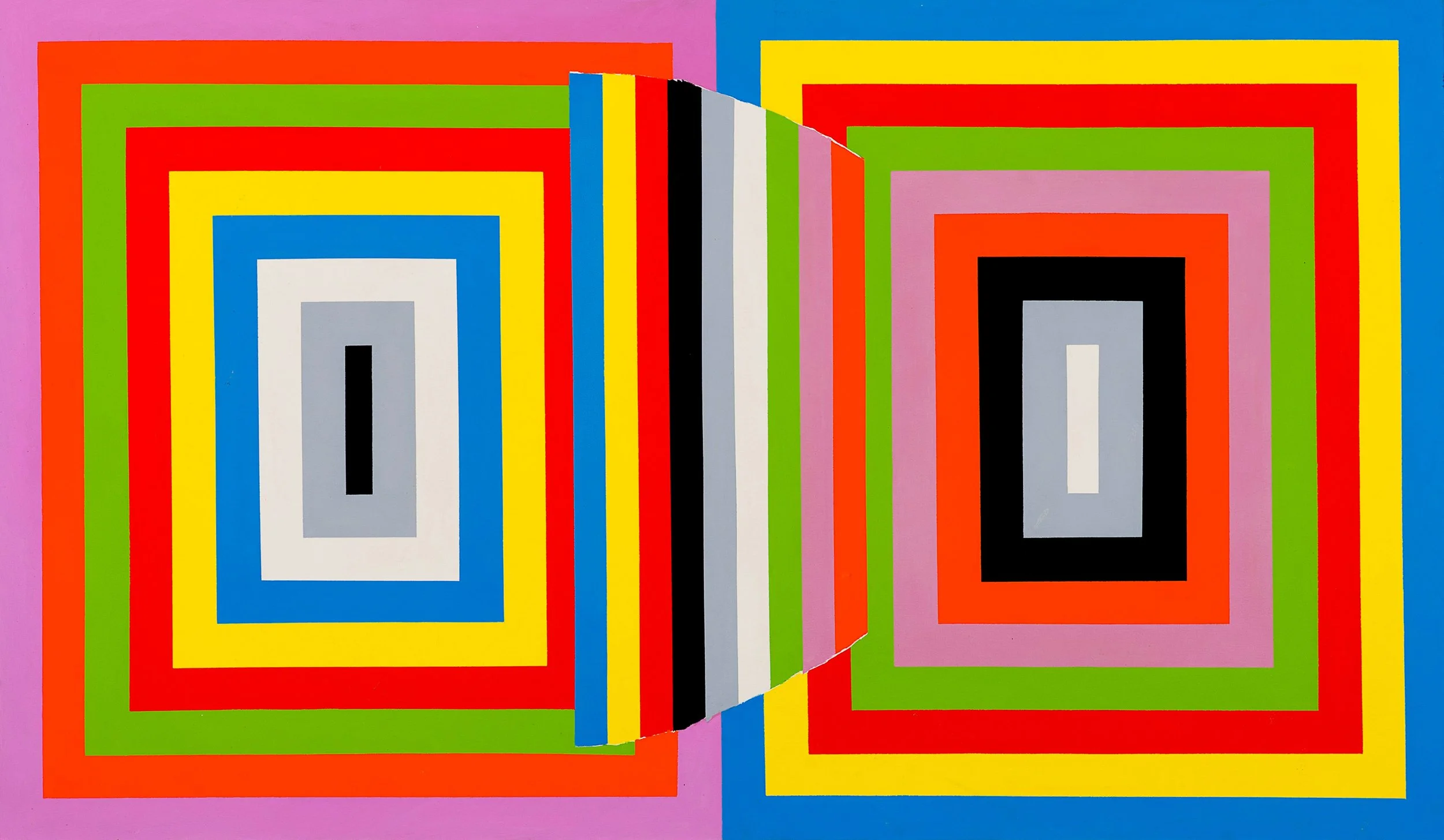
STRIPE AS KEY
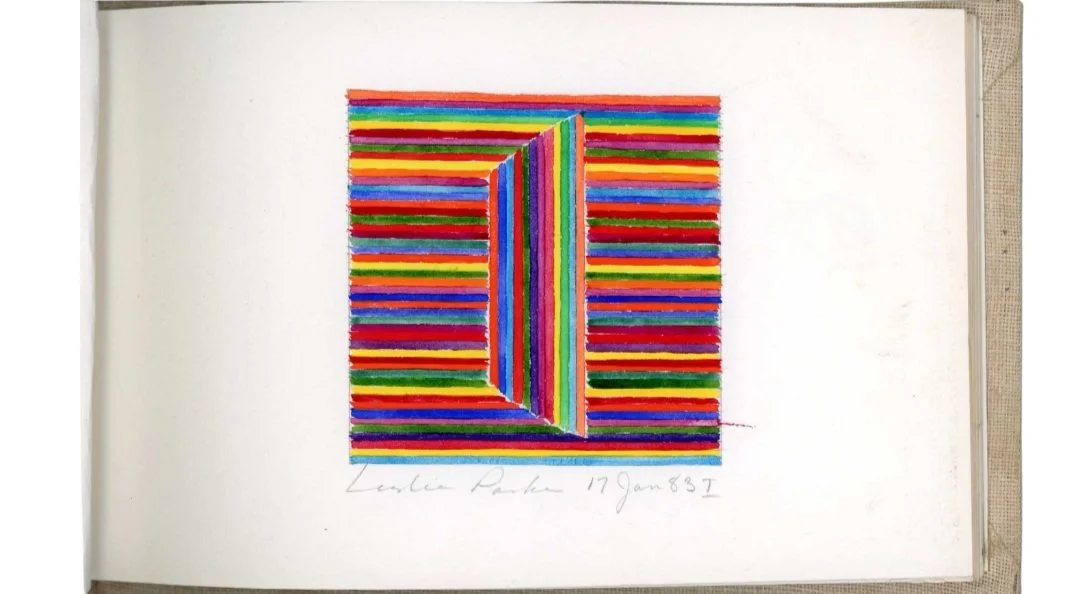
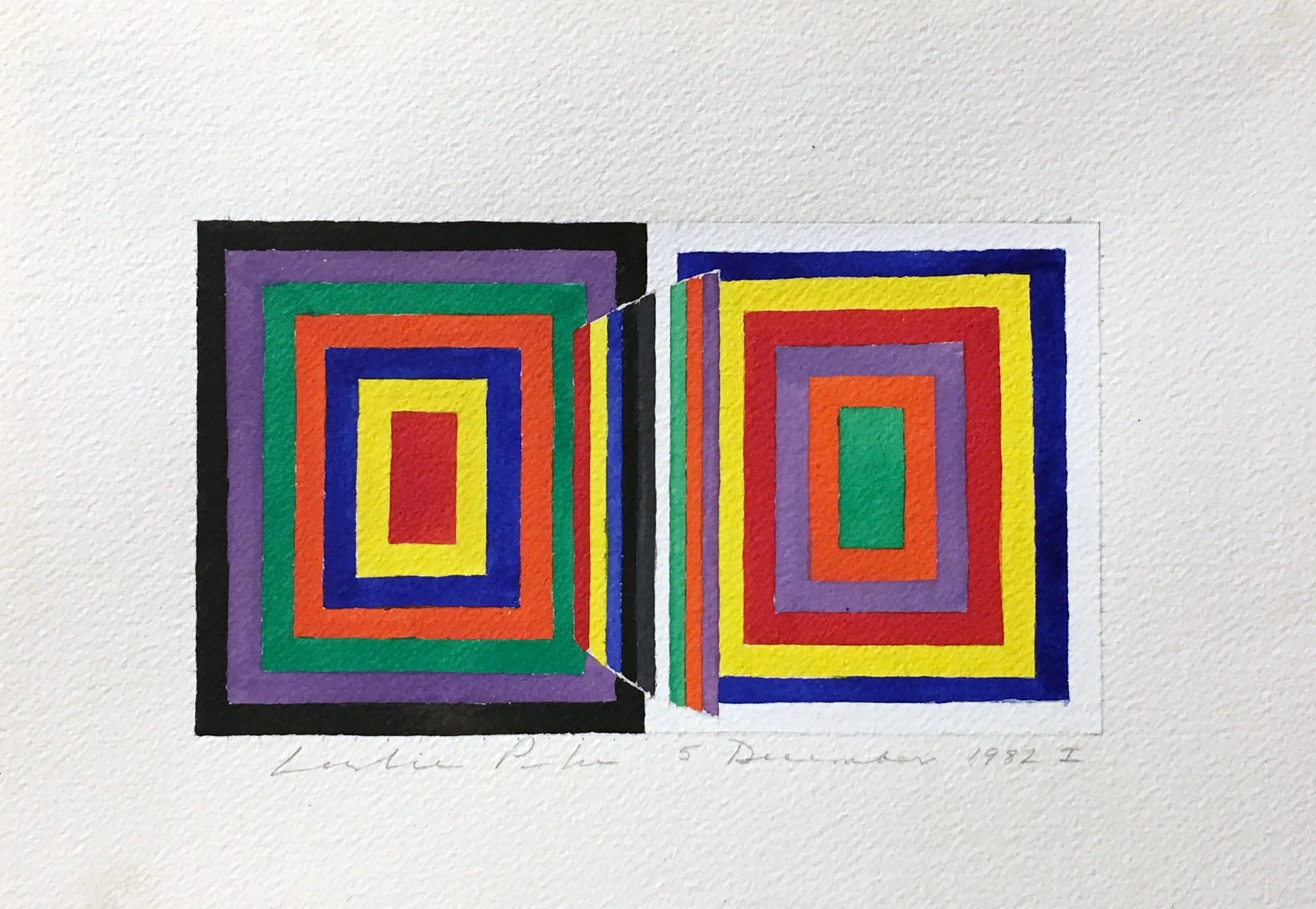
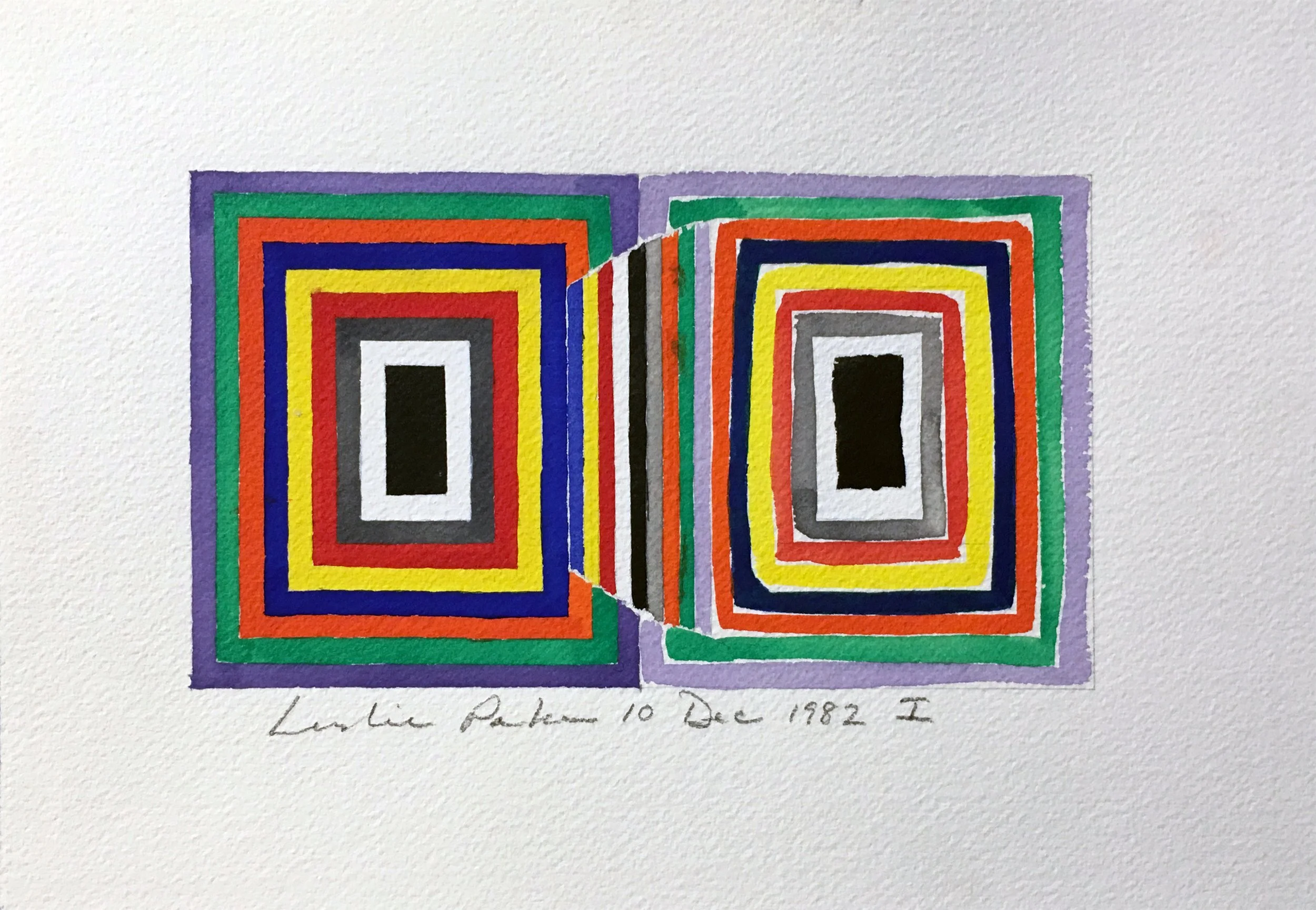
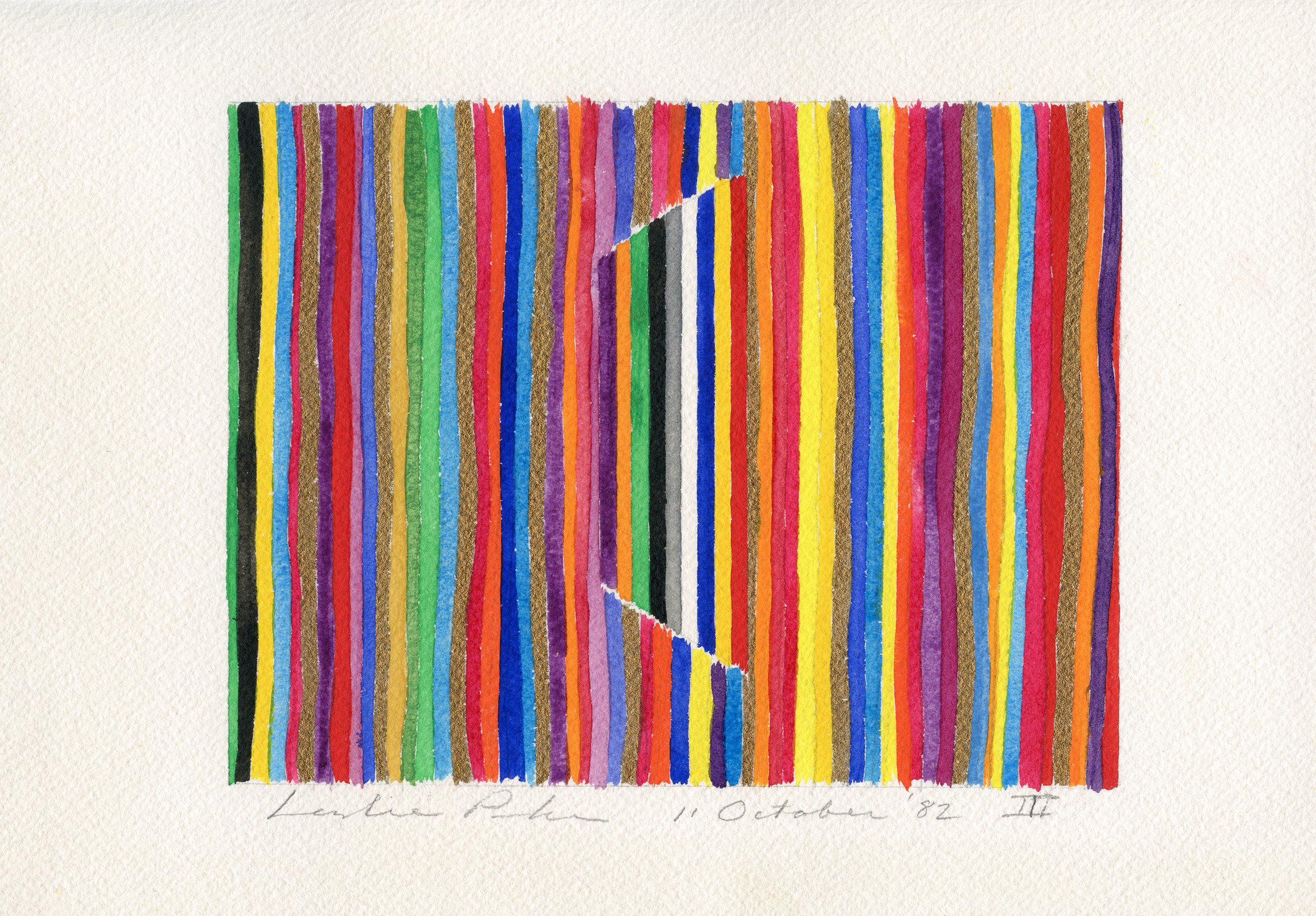
In the early 1980s, I began my drawings with something I called a “key.” It was a group of lines placed near the center of the paper that included primary and secondary colors, black, white, and gray; straight lines and curves; ruled edges and edges drawn by hand. It contained, in miniature, most of the elements I might need to make a painting.
The key gave me an anchor, but not a destination. Once it was in place, I could add almost anything to the drawing. One decision suggested another. The stripe was not yet atmosphere, nor was it something I had found in the visible world. It was a structure that allowed the rest of the work to develop.



THE STRIPE IN THE WORLD
Photographs and Related Paintings
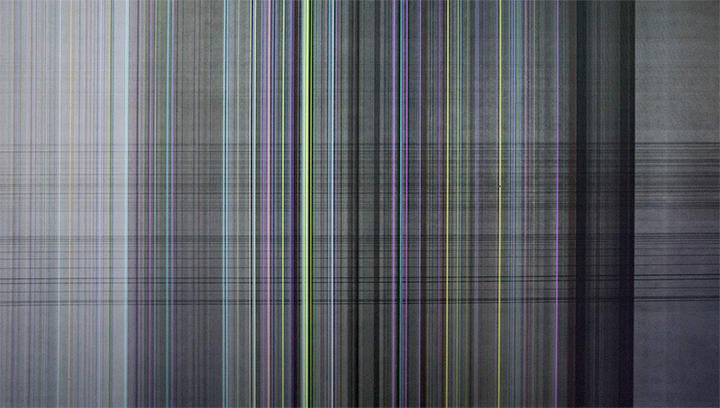
The stripe also entered my work through photography. I found it in the horizontal bands of television interference, in silos, wrapped cargo, reflective materials, and repeated industrial forms. These were not all stripes in the same sense. On the television screen, the bands were remnants of an image that could no longer resolve itself. In the silos, the stripe came from architecture, repetition, and light moving across curved metal.
Photography allowed me to notice structures I might not have invented. The stripe could be a seam, a reflection, a division, a stack, or a damaged signal. Sometimes it organized what I was seeing. At other times, it showed the image beginning to come apart.
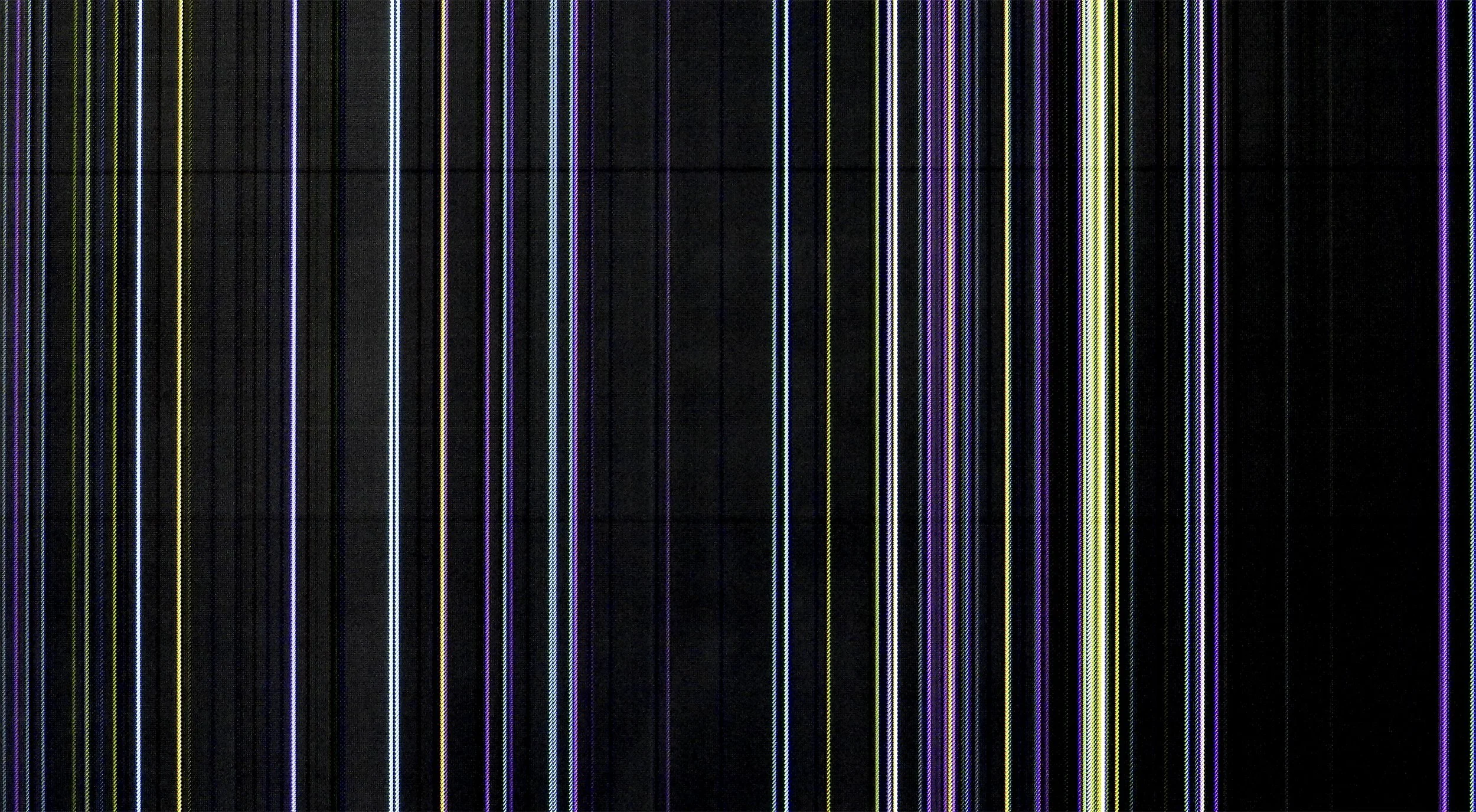
"Zip," archival inkjet print, 12 inches x 24 inches, Private Collection, ©2019 Leslie Parke

"Evening Fog," 25.5 inches x 34 inches, archival inkjet print, © 2018 Leslie Parke
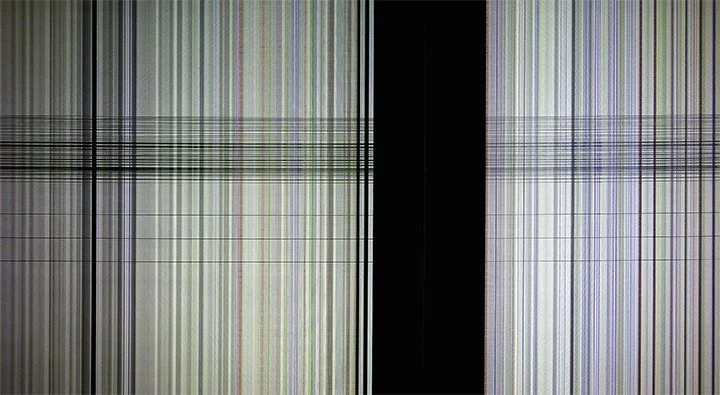
"Gate," 18.5 inches x 34 inches, archival inkjet print on paper, © 2018 Leslie Parke
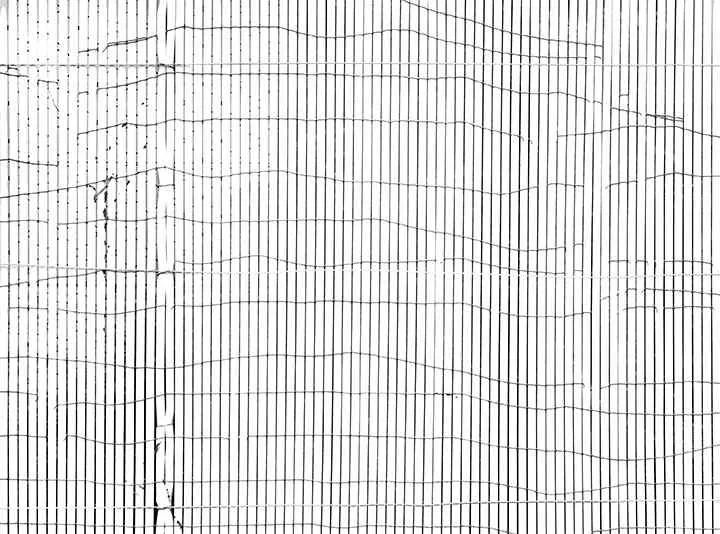
"Fence Grid," 22.25 inches x 30.5 inches, archival inkjet print on paper, © 2016 Leslie Parke

"Sudden Light," 19 inches x 34 inches, archival inkjet print on paper, ©2020
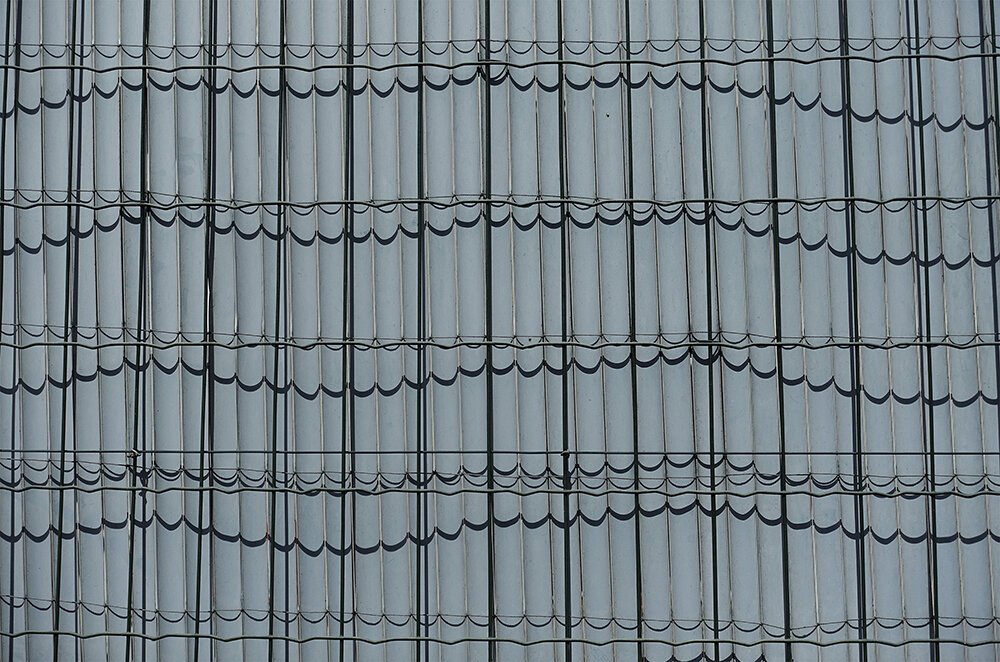
"Green Fence," 22.5 inches x 34 inches, archival inkjet print on paper, © 2017 Leslie Parke

"Particle/Wave," 22.5 inches x 34 inches, archival inkjet print on paper, © 2016 Leslie Parke
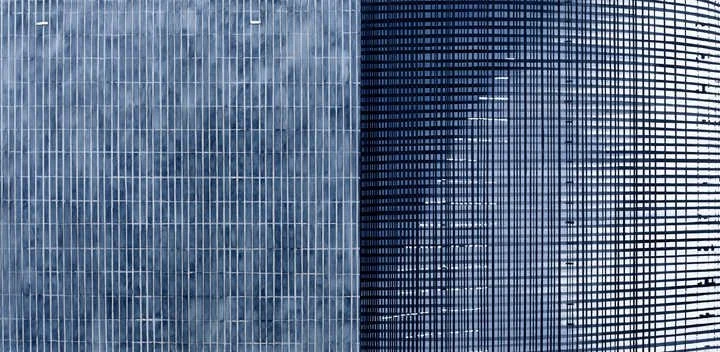
"Silo," 46 inches x 94 inches, oil on canvas, SLB, formerly Schlumberger, Houston, ©2014 Leslie Parke
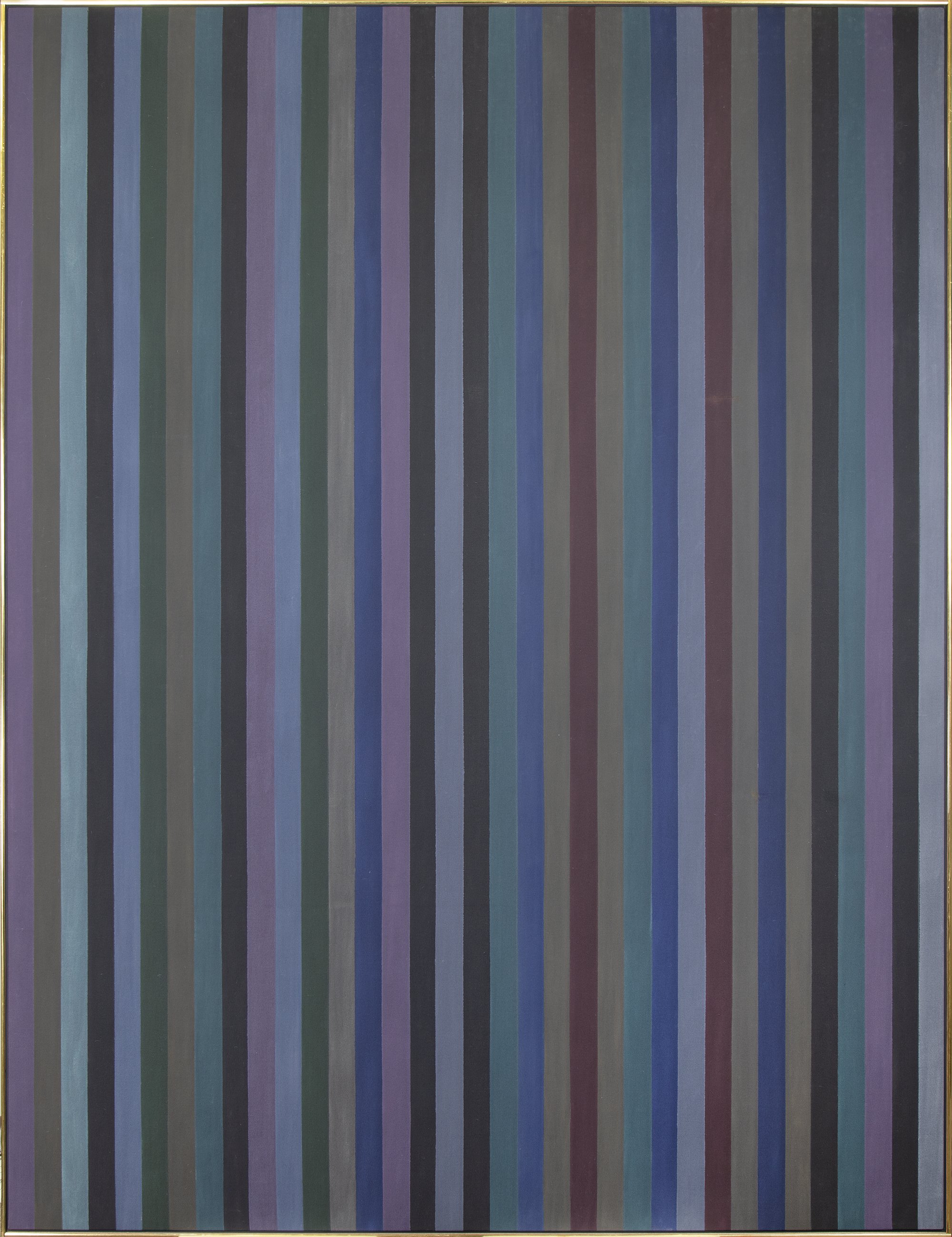
"Gate," 40 inches x 72 inches, oil on canvas, © 2018 Leslie Parke
FROM THE STUDIO
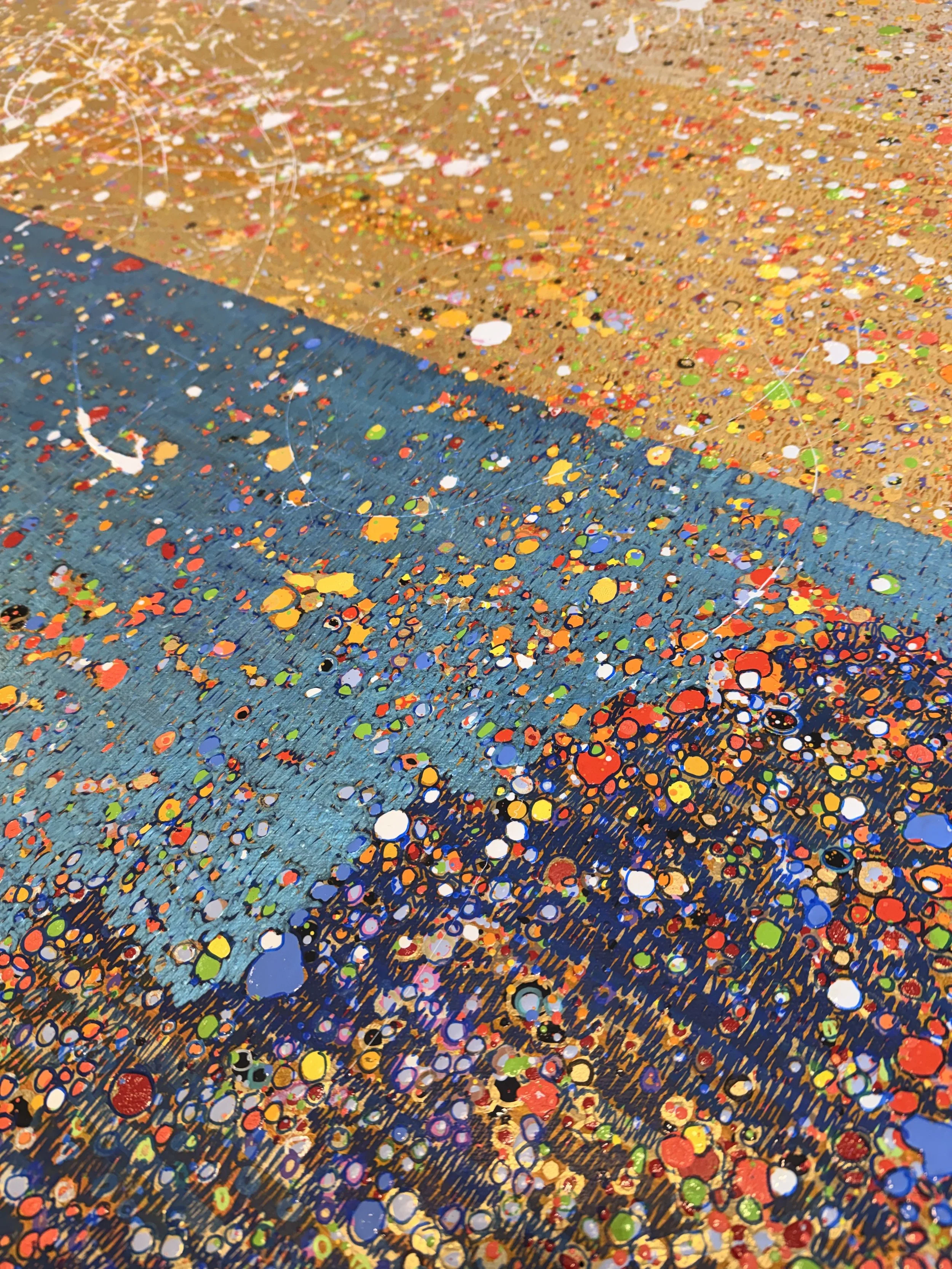
I put the dots down first and then I put in the background with pens.
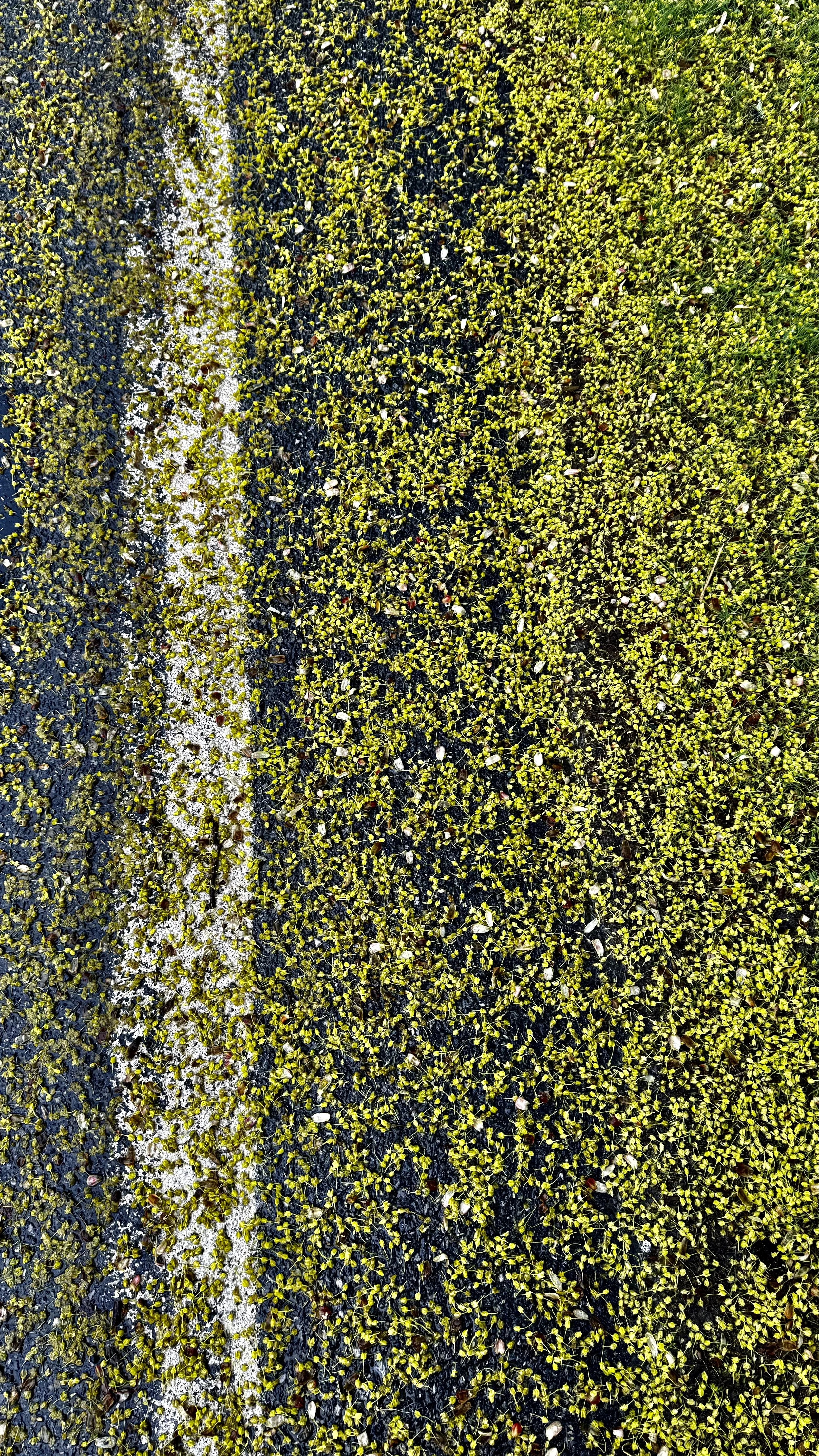
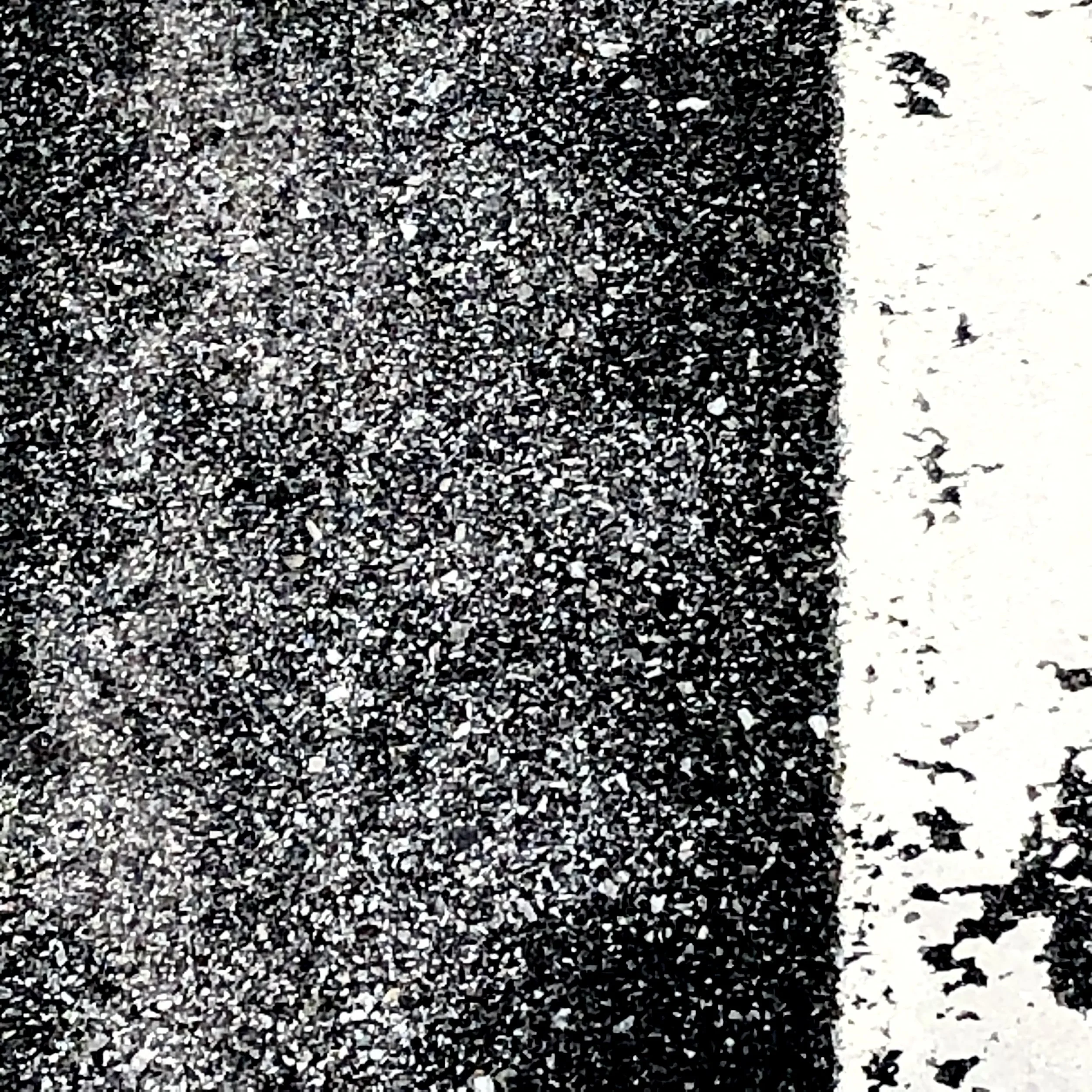
I took this photo of pollen on the road before I started these striped paintings. I love it when nature imitates art.

I took this photograph in Vallauris, France. It was a corrogated metal wall on a building. What I loved about it was the light was so harsh there that the black part of the photo is actually a shadow. The local color was the same as the rest of the wall to the right. I also loved the flicks of green.
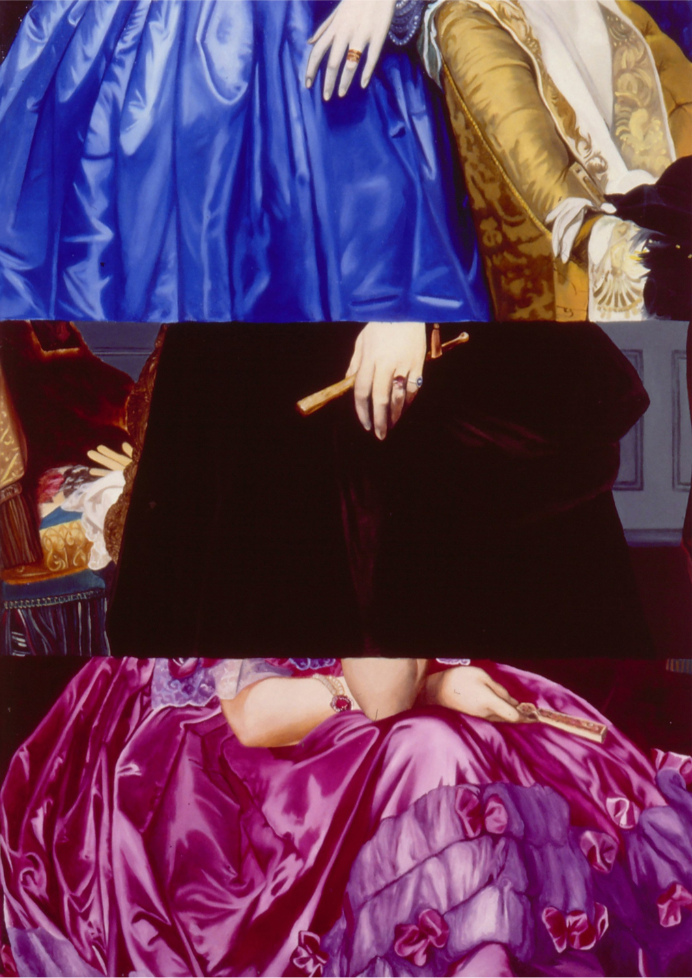
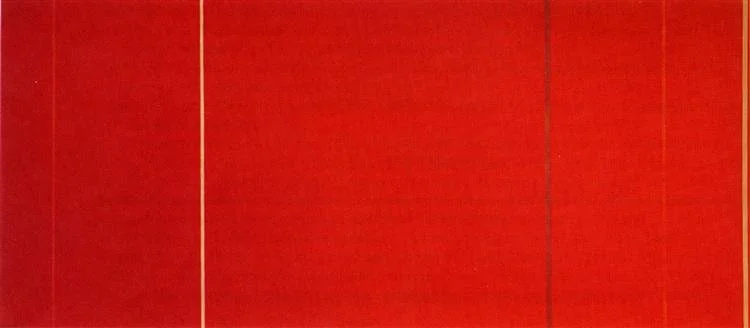
This is a painting I did in the 1990s. I was thinking of Barnett Newman's "Who is Afraid of Red, Yellow, and Blue" when I did it. The images are from Ingres.
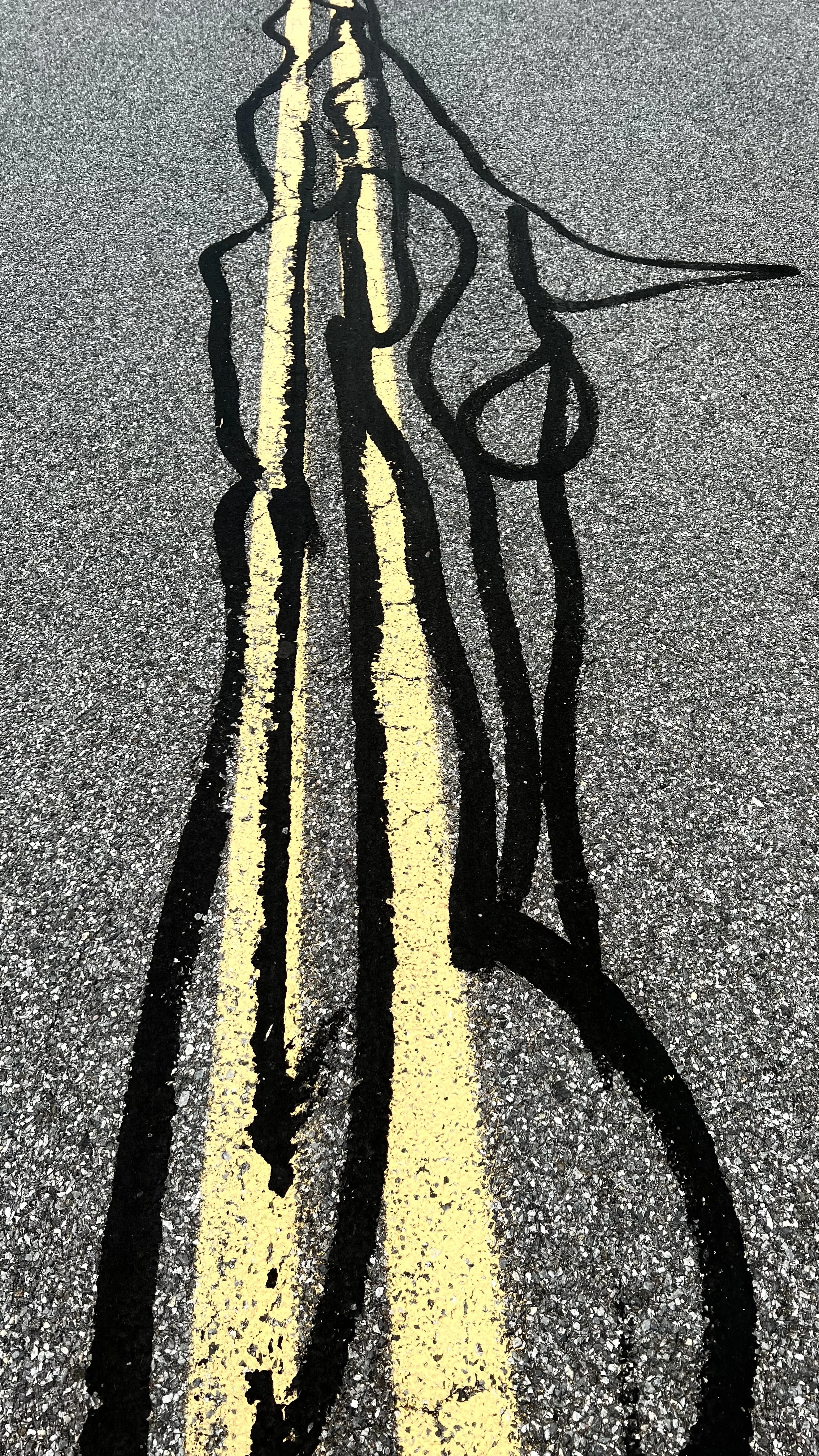
I could probably do a whole "Stations of the Cross" series, like the one Barnett Newman did, using road paint.
Stripes and lines.
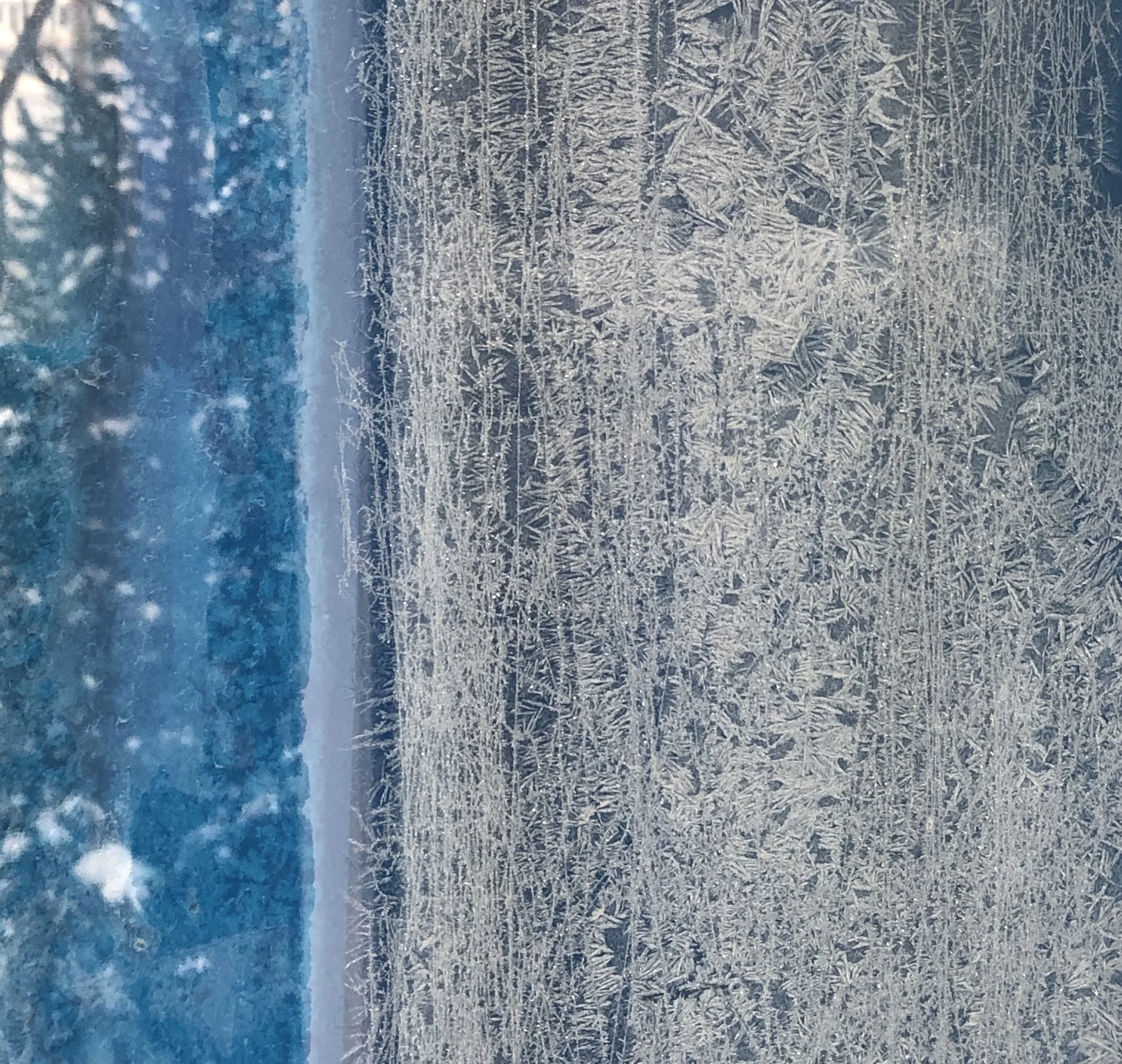
Stripes of frost.
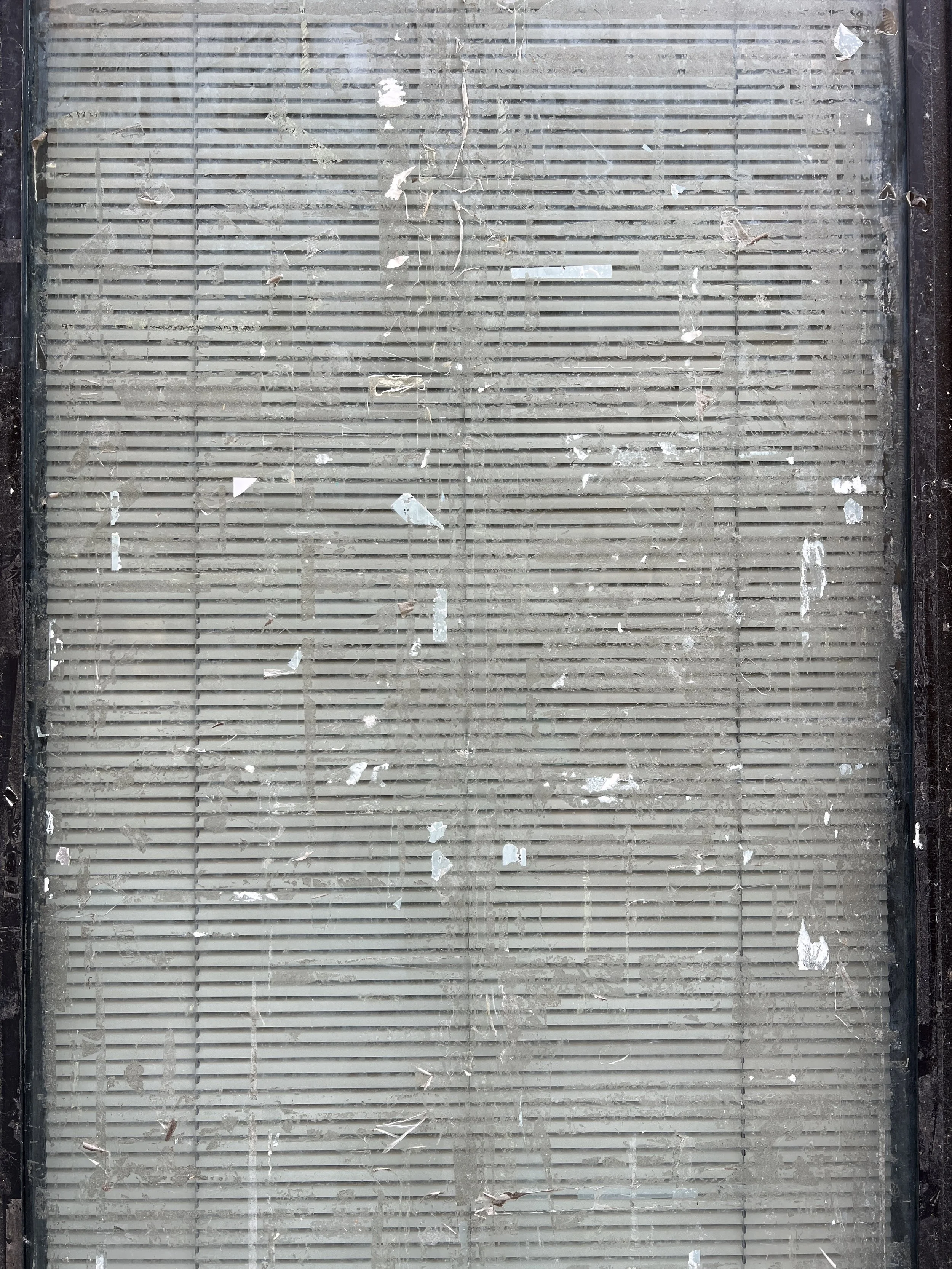
The last time I was in Vallauris, the town was failing. Most of the storefronts were closed. I loved what I saw on the windows, these bits of paper from fliers that had once been pasted there. Makes me think of Agnes Martin.
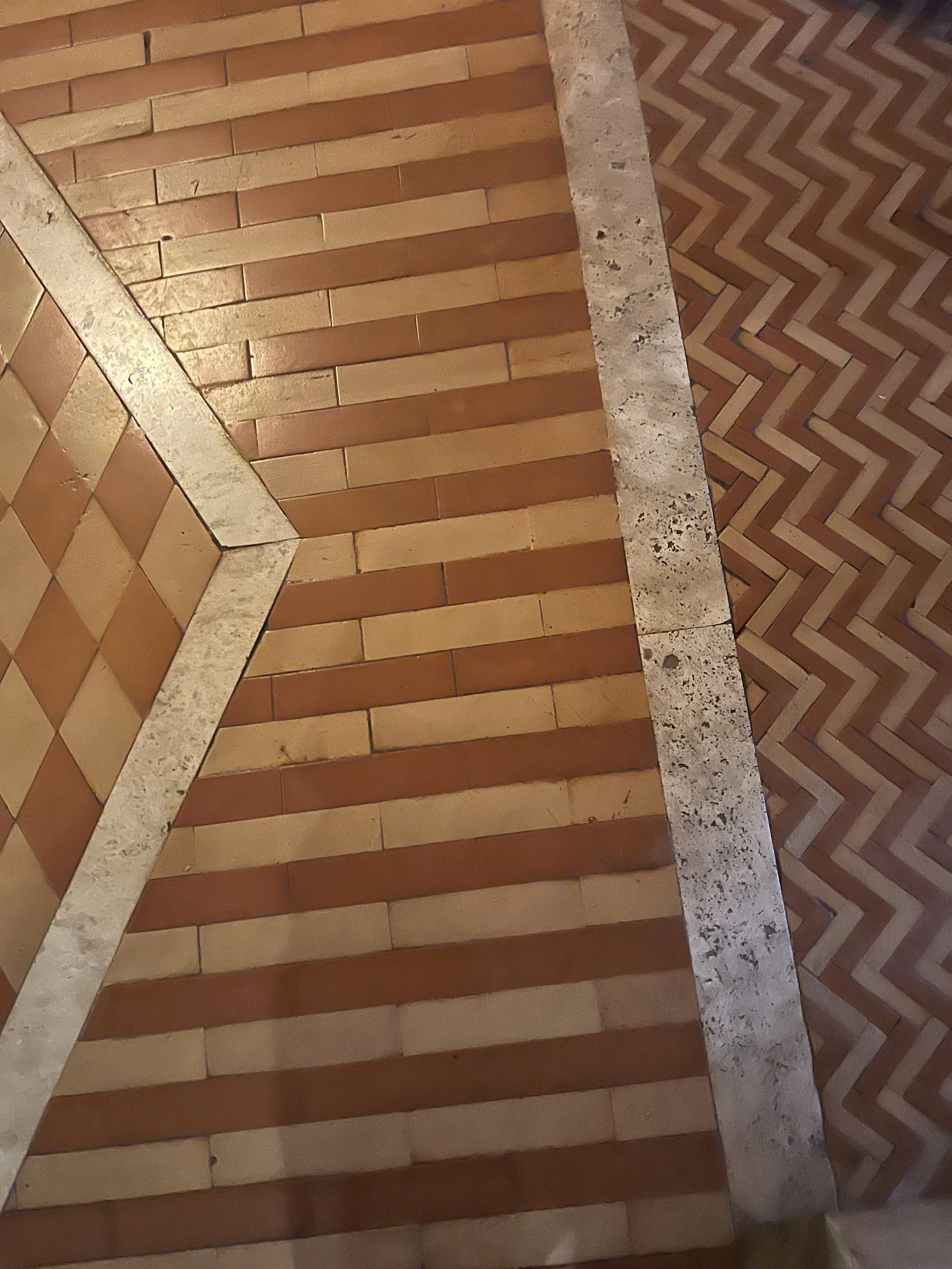
Italy knows how to rock a stripe. This from a floor of a cathedral.
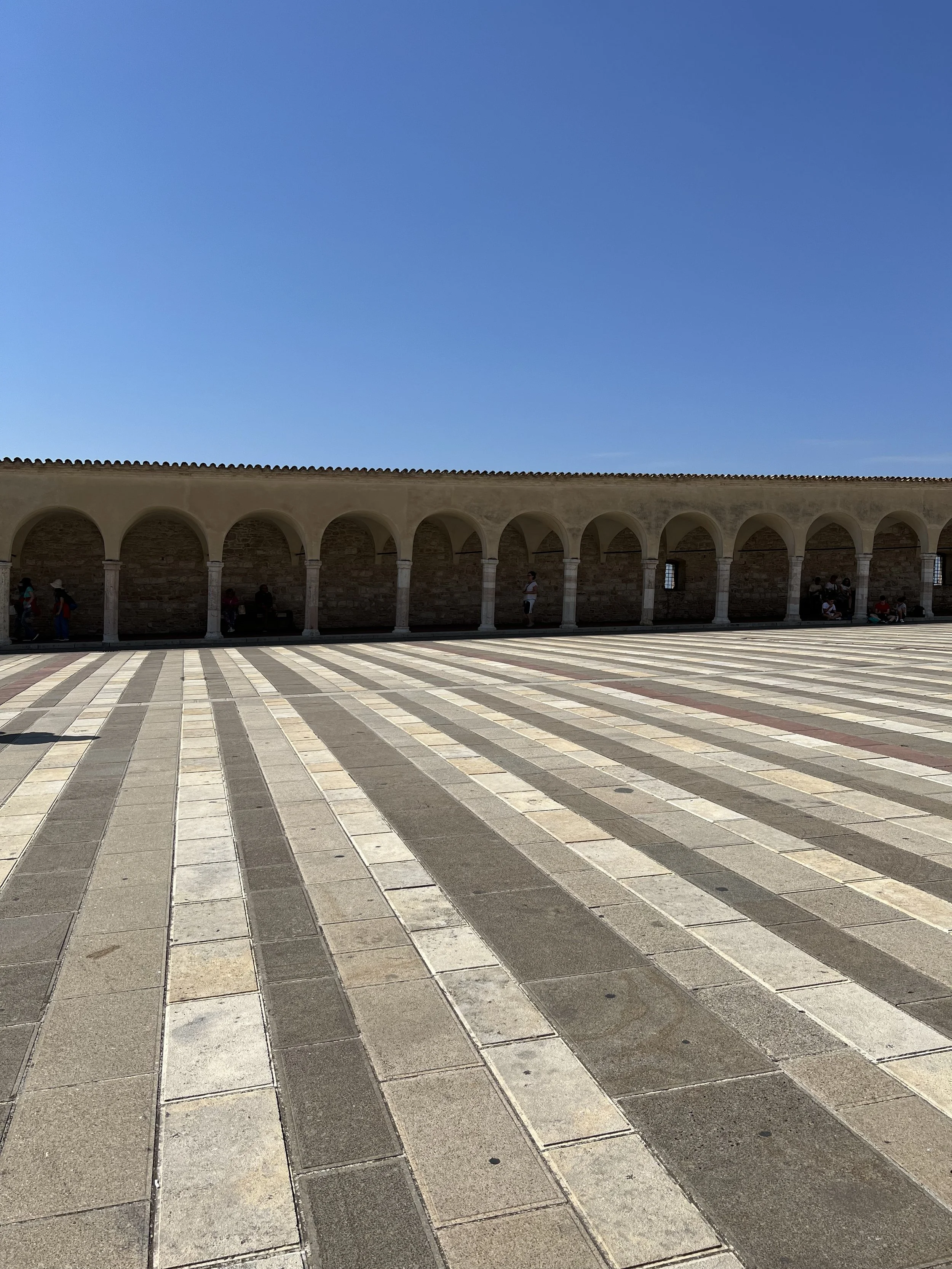
In Assisi you can see this in the plaza put there centuries before Pat Johanson took the stripe to the landscape, or Gene Davis painted the streets of Washington.
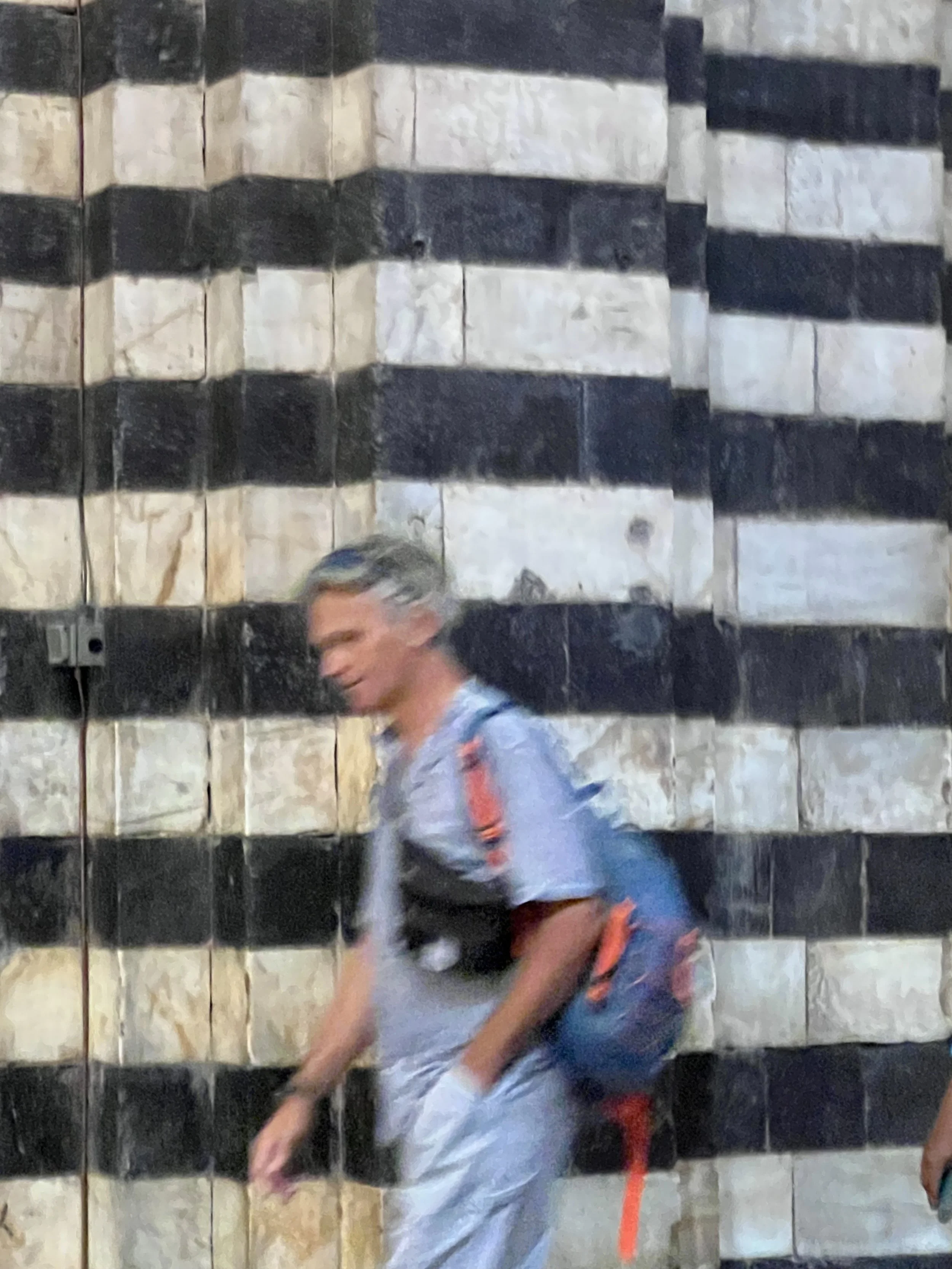
An early version of the strip in architecture, before Buren.
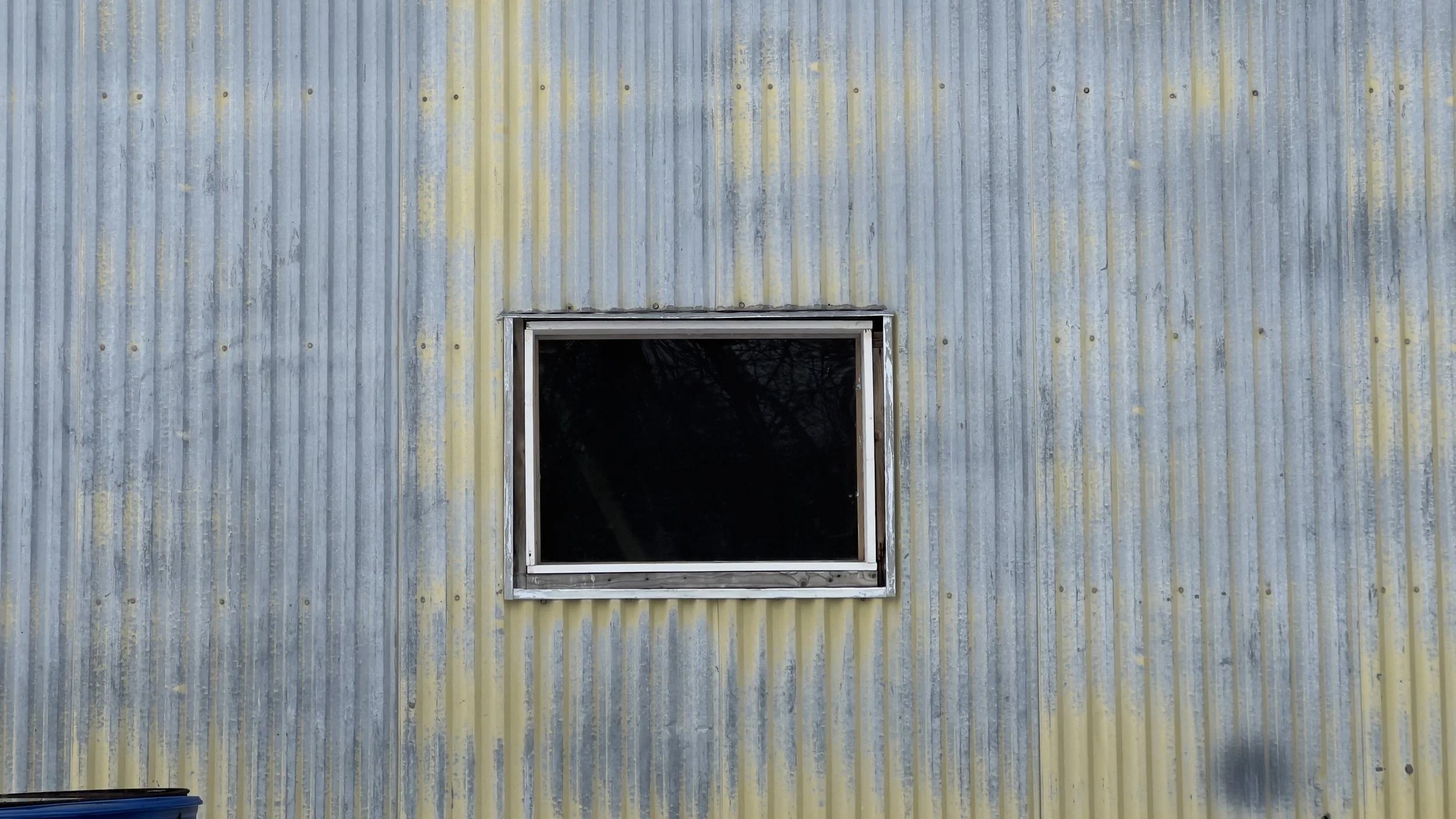
Walking around town I found this homage to Sean Scully.
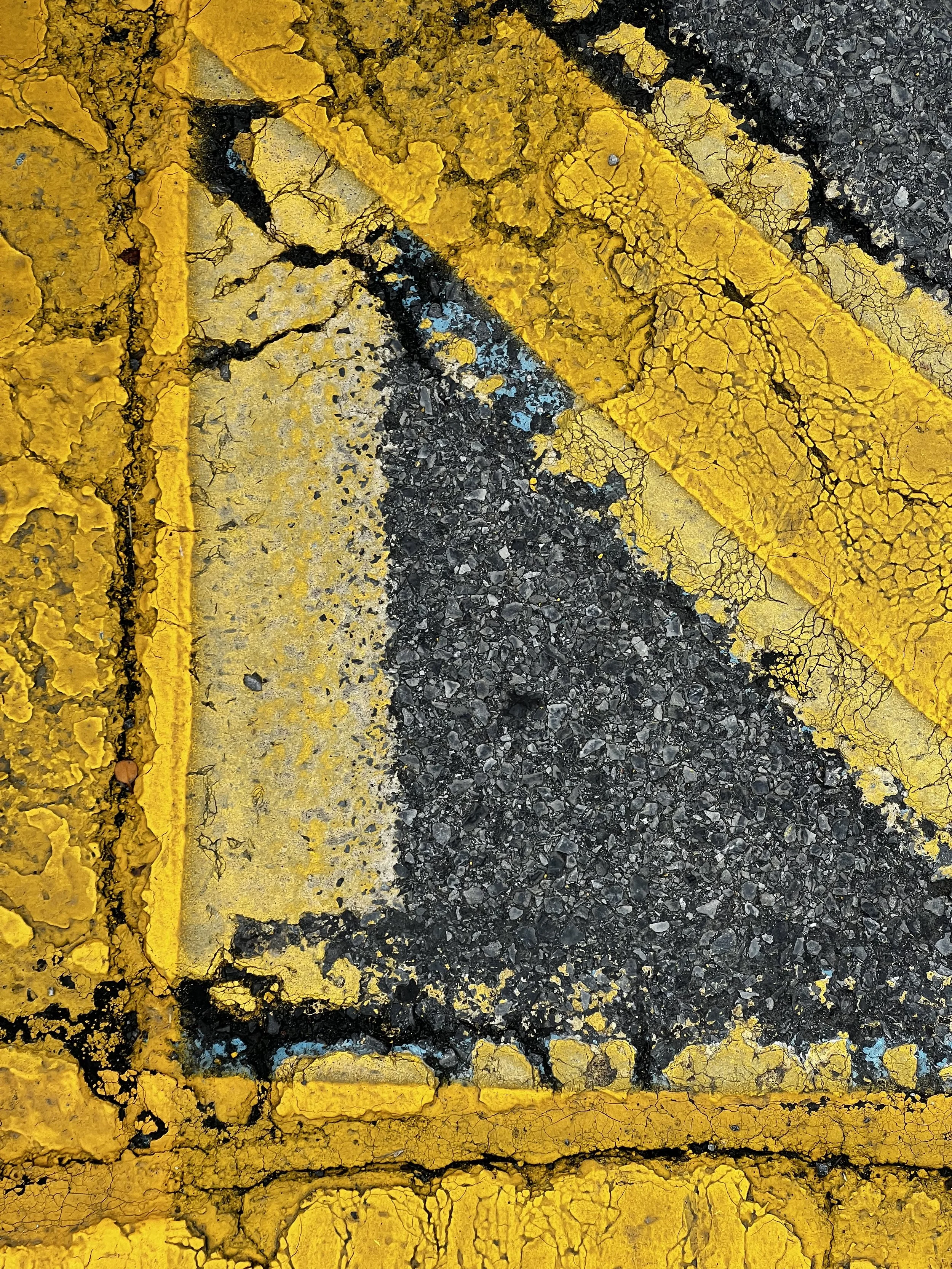
I am very enamored of road paint. I often thought that if I weren't a painter I would lay macadam.
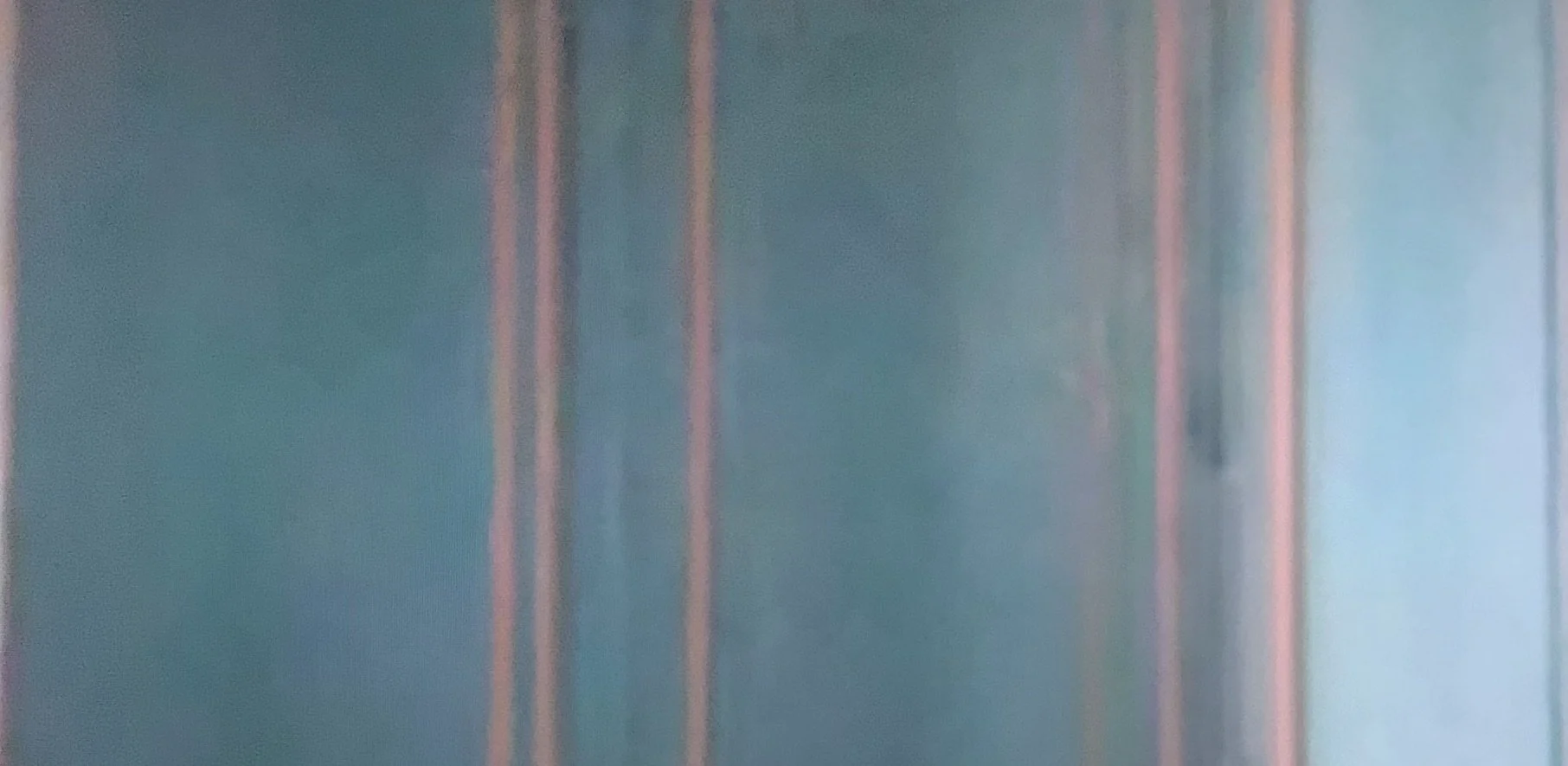
During COVID I spent a lot of time photographing off of my television. Here are some stripes I found.
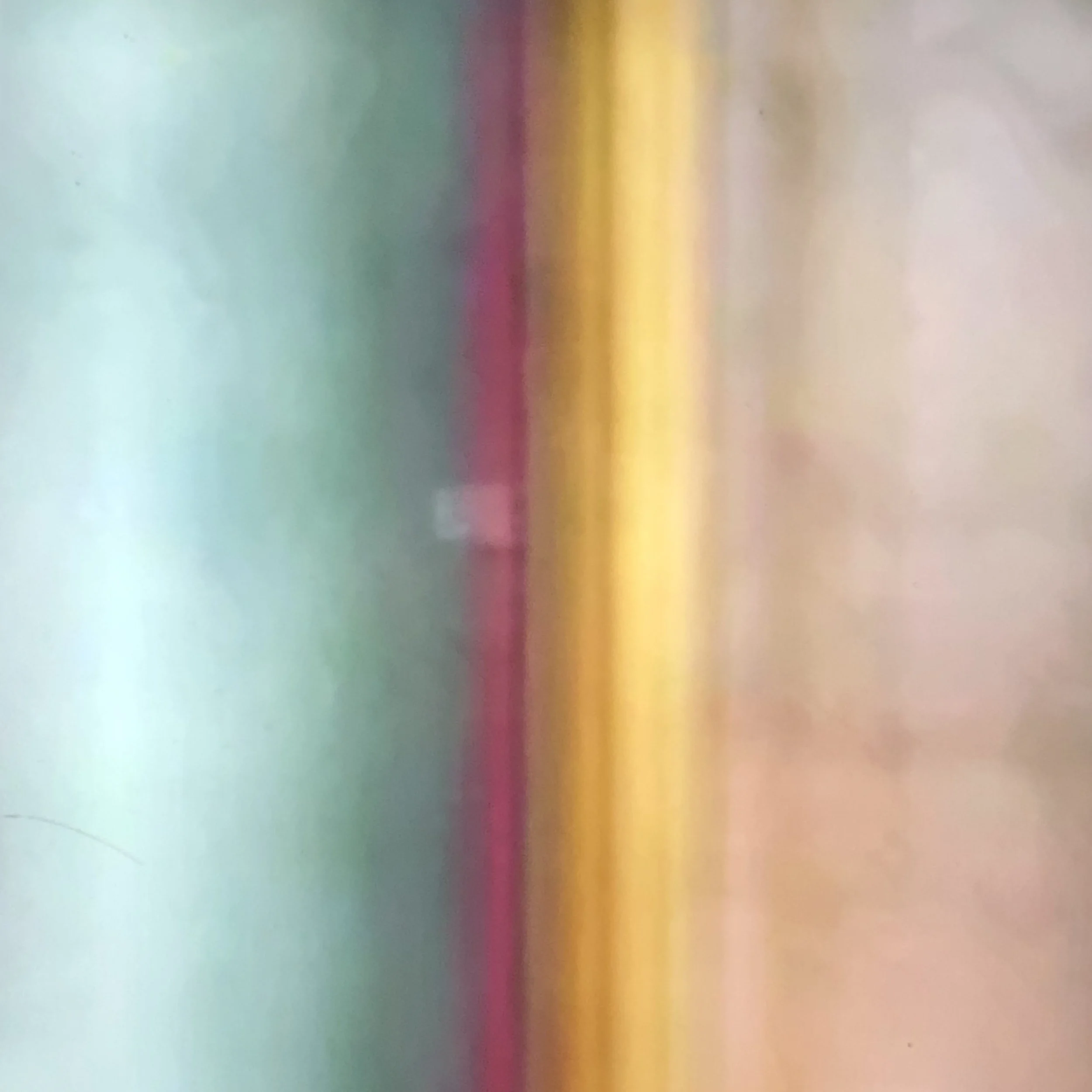
What I love about these ethereal images is how have light passing through the image gives you a different quality than you can get from applying paint.
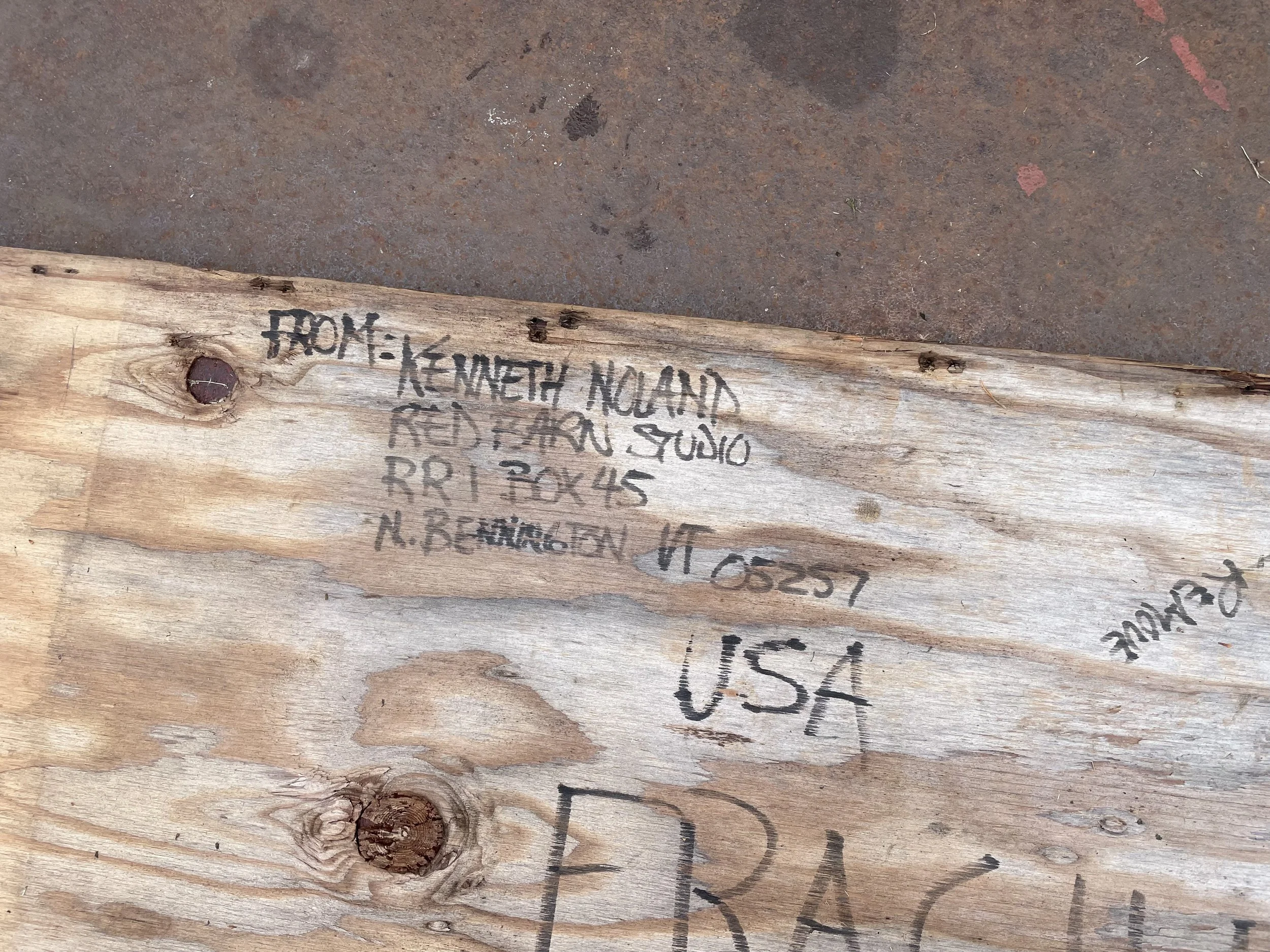
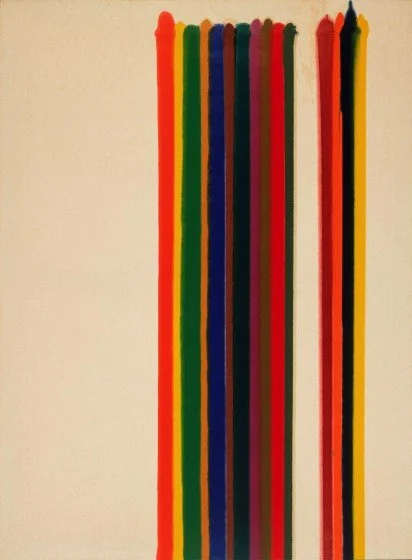
This painting crate is in my studio. No, Noland doesn't live there any more. It probably came to me via his former painting assistant, Michael Williams, who I have continued to work with.