
A PERFECT RED by Amy Butler Greenfield
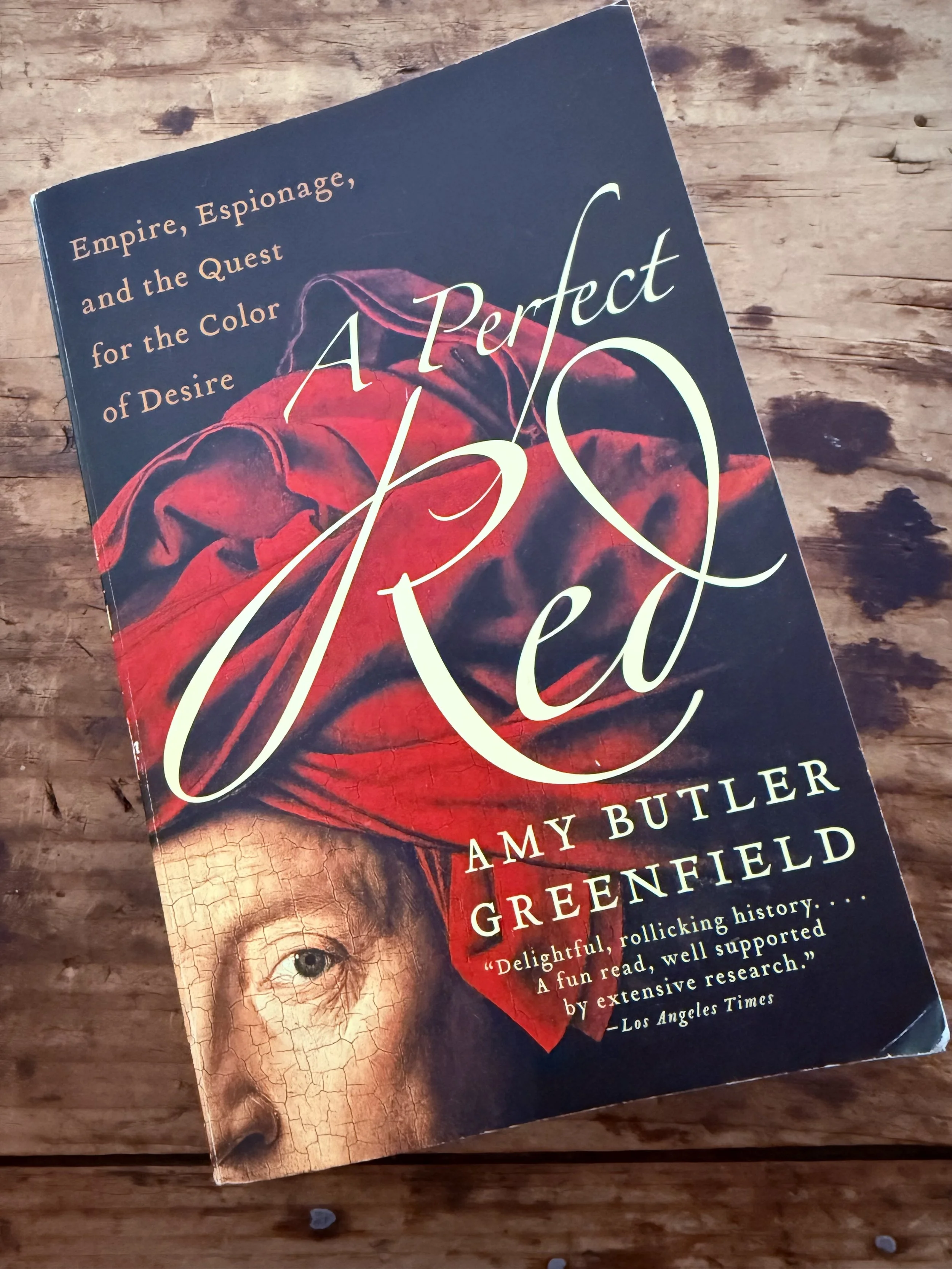
I have been reading Amy Butler Greenfield’s A Perfect Red, and it has already sent me off in several directions.
That is usually how I know a book is working on me. It does not stay inside its own covers. It starts attaching itself to other things I am looking at, writing about, or painting. From this one book, I found my way to Rembrandt, to cochineal, to Cornelis Drebbel, to military uniforms, to trade routes, to insects, to empire, to the astonishing fact that a color can carry half the world inside it.
That is the great subject of A Perfect Red: not red as an idea, or red as a symbol, but red as a material fact. A color made from tiny insects. A color people desired, guarded, stole, traded, imitated, taxed, wore, painted with, and fought over.
A color is never just a color.
It is history. It is commerce. It is labor. It is secrecy. It is art. It is agriculture and chemistry and conquest. It is a luxury good, a status marker, a technical problem, and a visual thrill.
For a painter, this is irresistible. We spend our lives thinking about color as sensation, but every pigment and dye has a life before it reaches the eye. Someone found it. Someone harvested it. Someone ground it, boiled it, transported it, sold it, protected it, adulterated it, or tried to make a cheaper version. The color arrives with a past.
That is what I loved about this book. It restores consequence to color. It reminds you that beauty is not innocent, and that the materials of art are never separate from the world that produces them.
Red, in Greenfield’s telling, is not simply beautiful.
It is expensive, dangerous, coveted, political, and alive.