
John Chamberlain: Lyricism Against Type
I was at the Colby College Museum of Art in Maine when I saw a John Chamberlain. I knew immediately what I was looking at. The compressed metal, the torque, the density—his vocabulary is unmistakable. I’ve carried a clear internal shorthand for years: crushed car parts, force, impact, a kind of sculptural aggression.
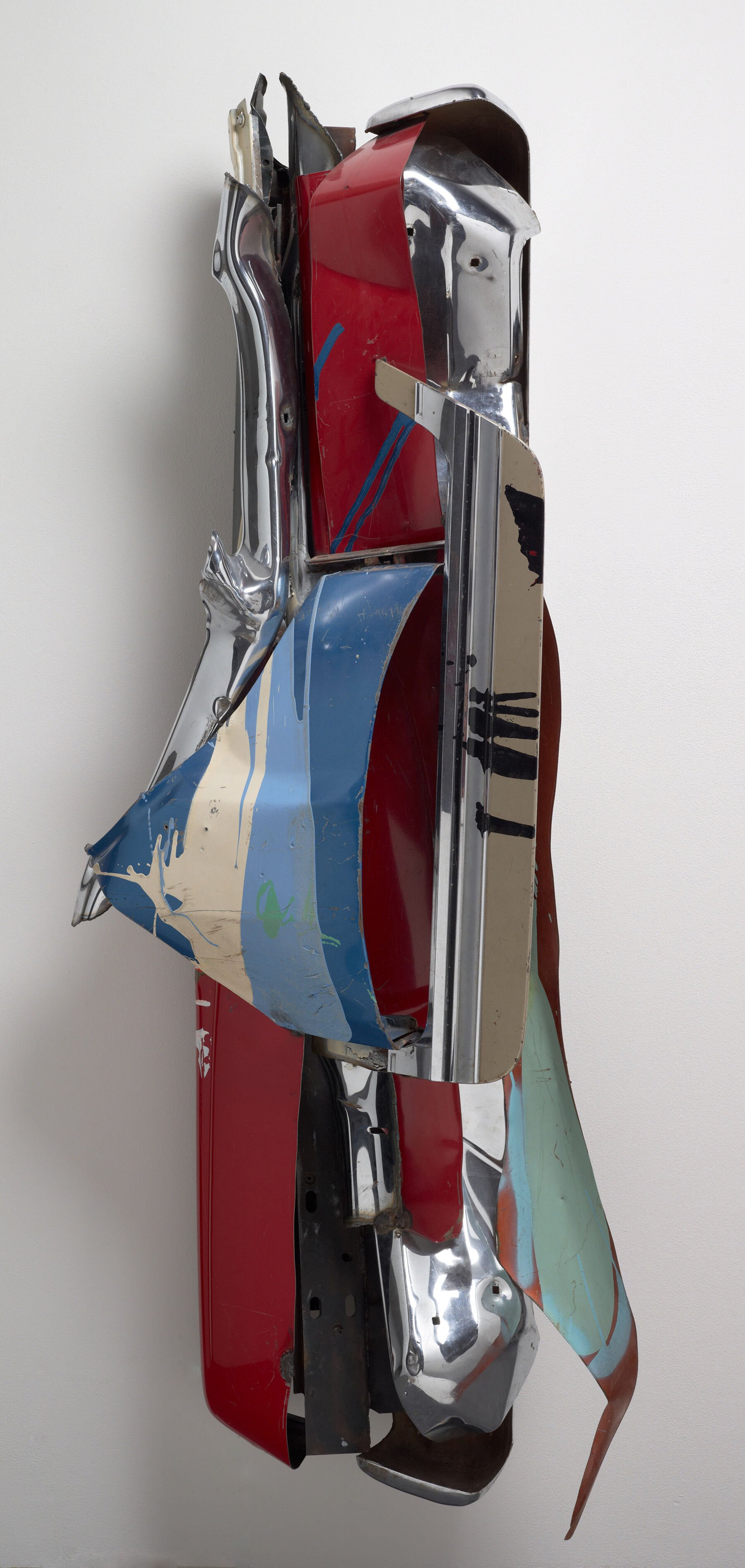
John Chamberlain, Rare Meat, 1977. Painted and chromium-plated steel, 82 1/2 in. x 30 1/2 in. x 17 3/4 in. (209.55 cm x 77.47 cm x 45.09 cm). Colby College Museum of Art, The Lunder Collection; 2013.041
What caught me off guard was that recognition didn’t end the encounter. It opened it.
The piece didn’t behave the way I expected. It felt lyrical. That’s not a word I usually associate with Chamberlain, and I didn’t trust it at first. But the sensation persisted. The form felt open. There was a rhythm to it, a sense of movement that read more like drawing than wreckage. If I hadn’t known the origin of the material, I might have read the piece very differently.
That gap—between what I thought I was seeing and what I was actually registering—made me stay.
It took a while before I understood what was happening. Chamberlain didn’t just crush and assemble the metal. He worked it further. He cut it, welded it, pushed it around until it behaved the way he wanted. And then I noticed something that reorganized the whole piece for me: he had repainted parts of it.
Once you see that, you can’t unsee it. The color isn’t simply inherited from the car’s original skin. It’s chosen. Adjusted. Sometimes intensified, sometimes quieted. Color becomes structural. The crushed metal stops reading as evidence of violence and starts reading as material disciplined into composition.
At that point, the automobile drops out of the picture entirely. What I was looking at no longer felt like salvaged debris elevated into art. It felt like an object made deliberately—raw material pushed hard enough to submit to a formal vocabulary that goes well beyond its source.
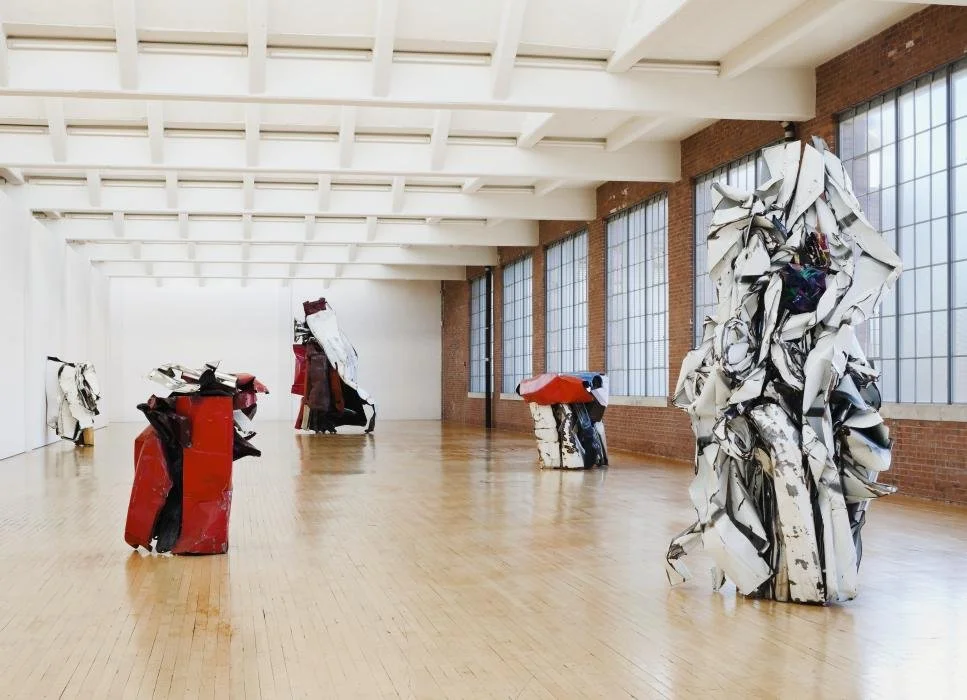
John Chamberlain at DIA
I found myself thinking about painting. About Abstract Expressionism, even. Not because the work mimics it, but because the gesture is there—translated. The movement happens through industrial pressure rather than a brush. The lyricism isn’t sentimental or decorative. It’s the result of force controlled just enough to produce rhythm.
What interests me most, in retrospect, is that this lyricism feels earned precisely because it runs against type. It’s not what we expect from Chamberlain. And I’m not convinced it was what he set out to achieve when he began working with crushed cars. He never framed the work as being about automobiles or industry. In interviews, he consistently resisted metaphor and talked instead about color, tension, how parts press against one another in space.
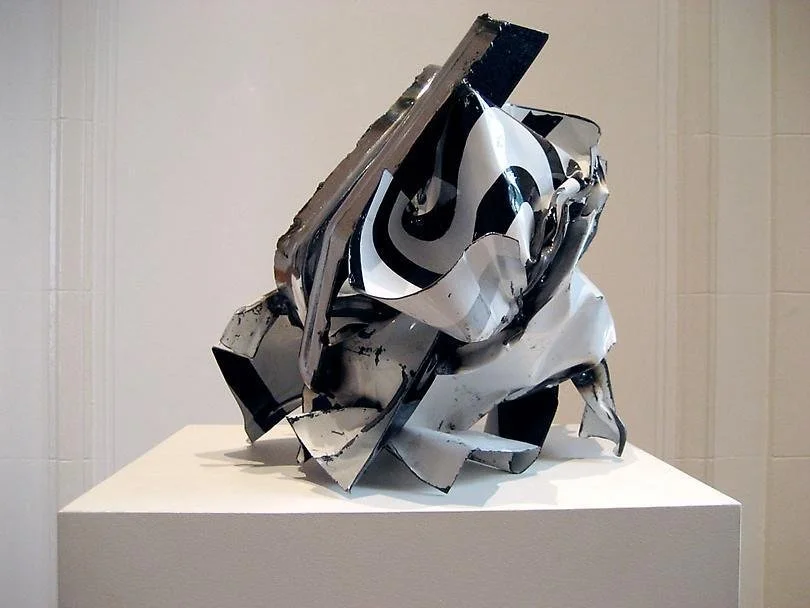
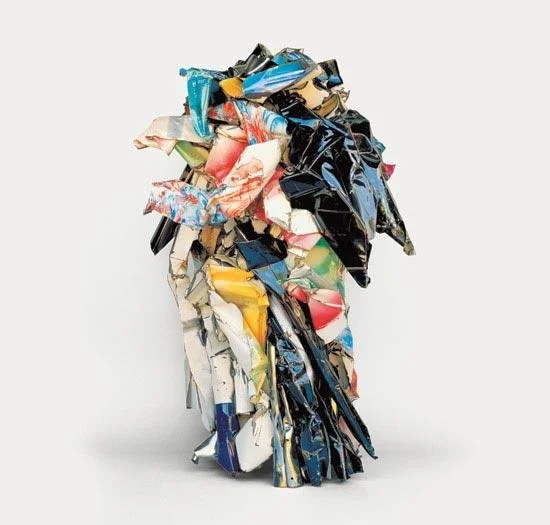
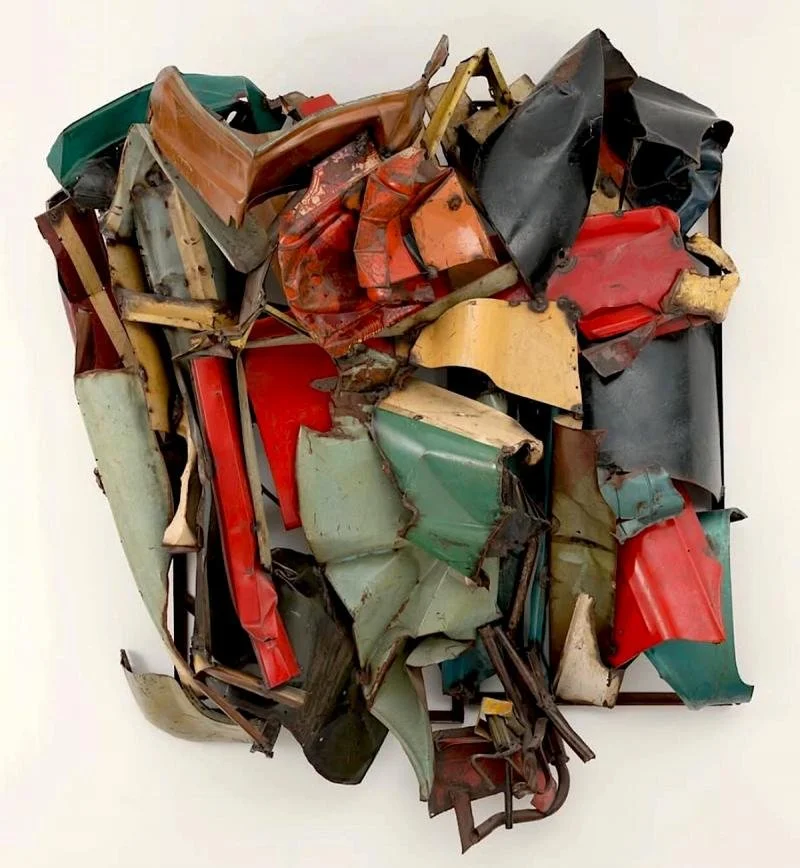
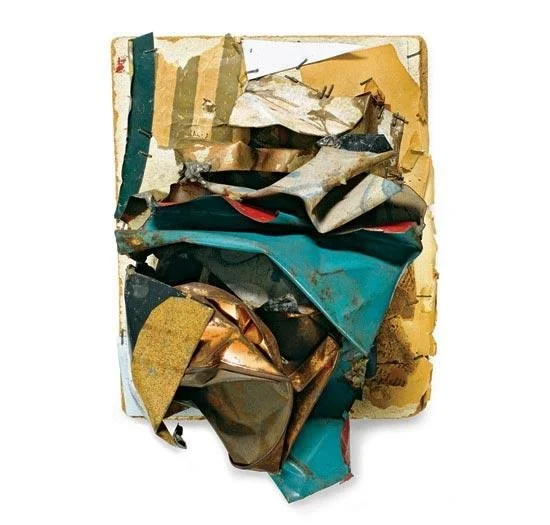
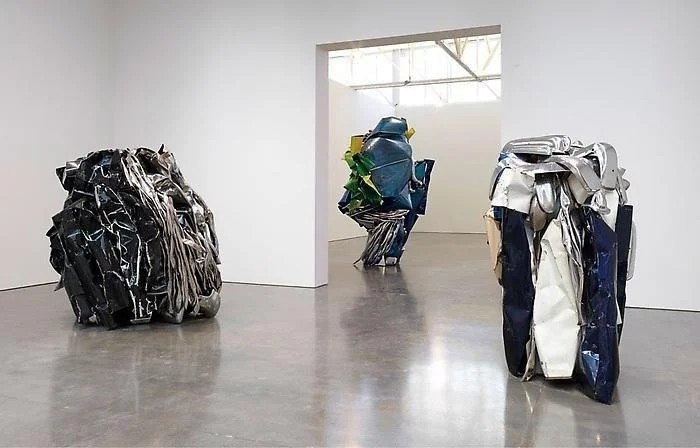
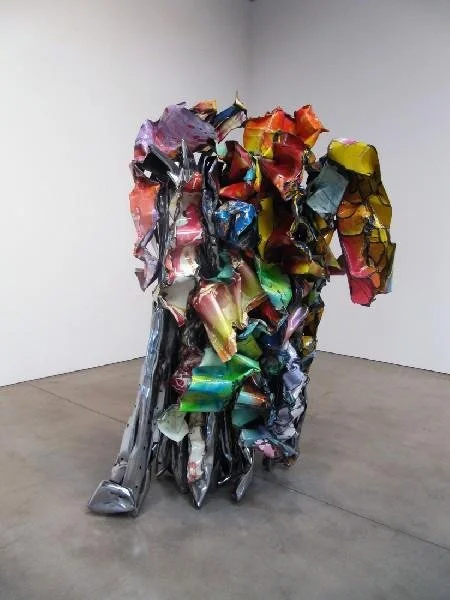
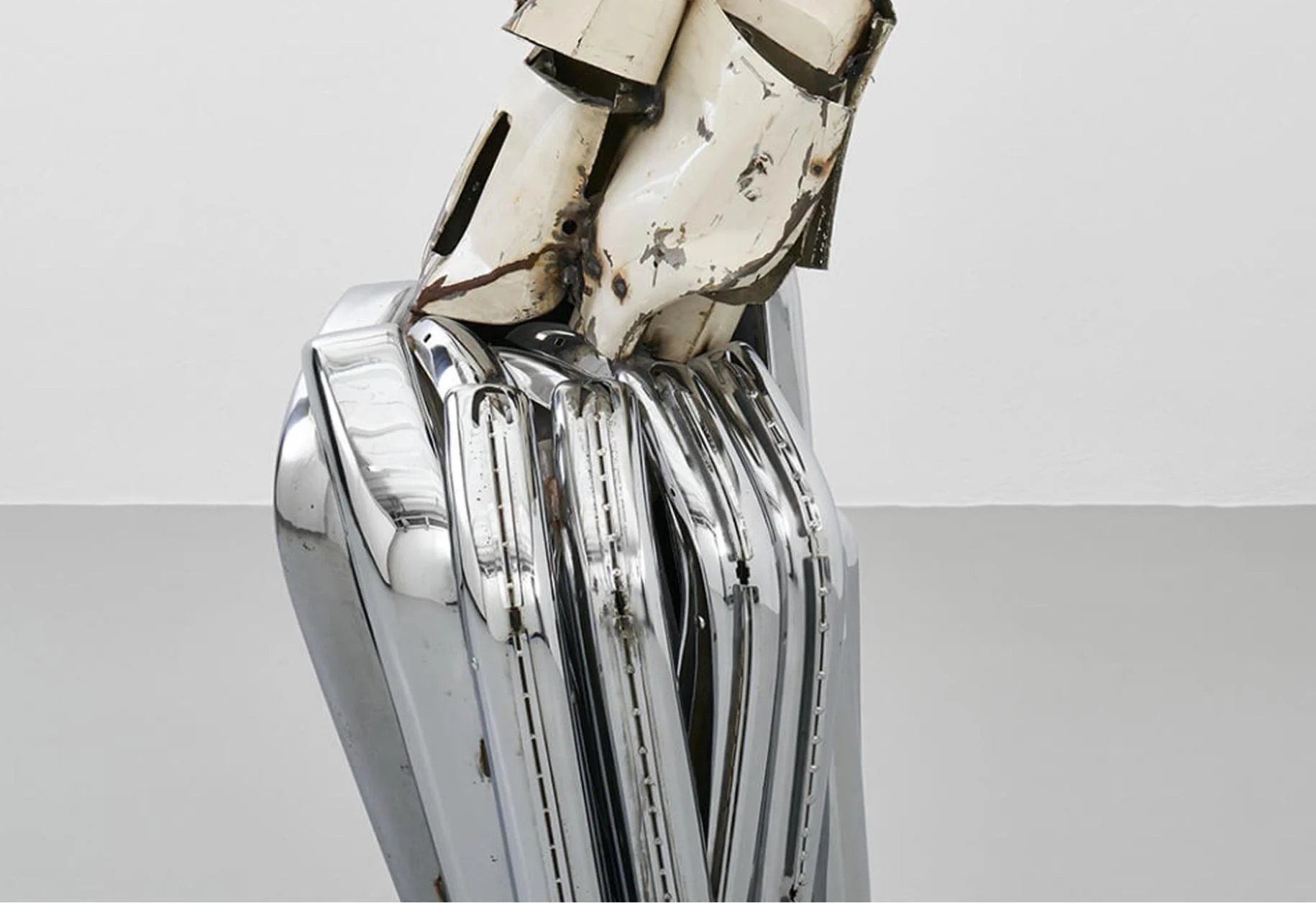
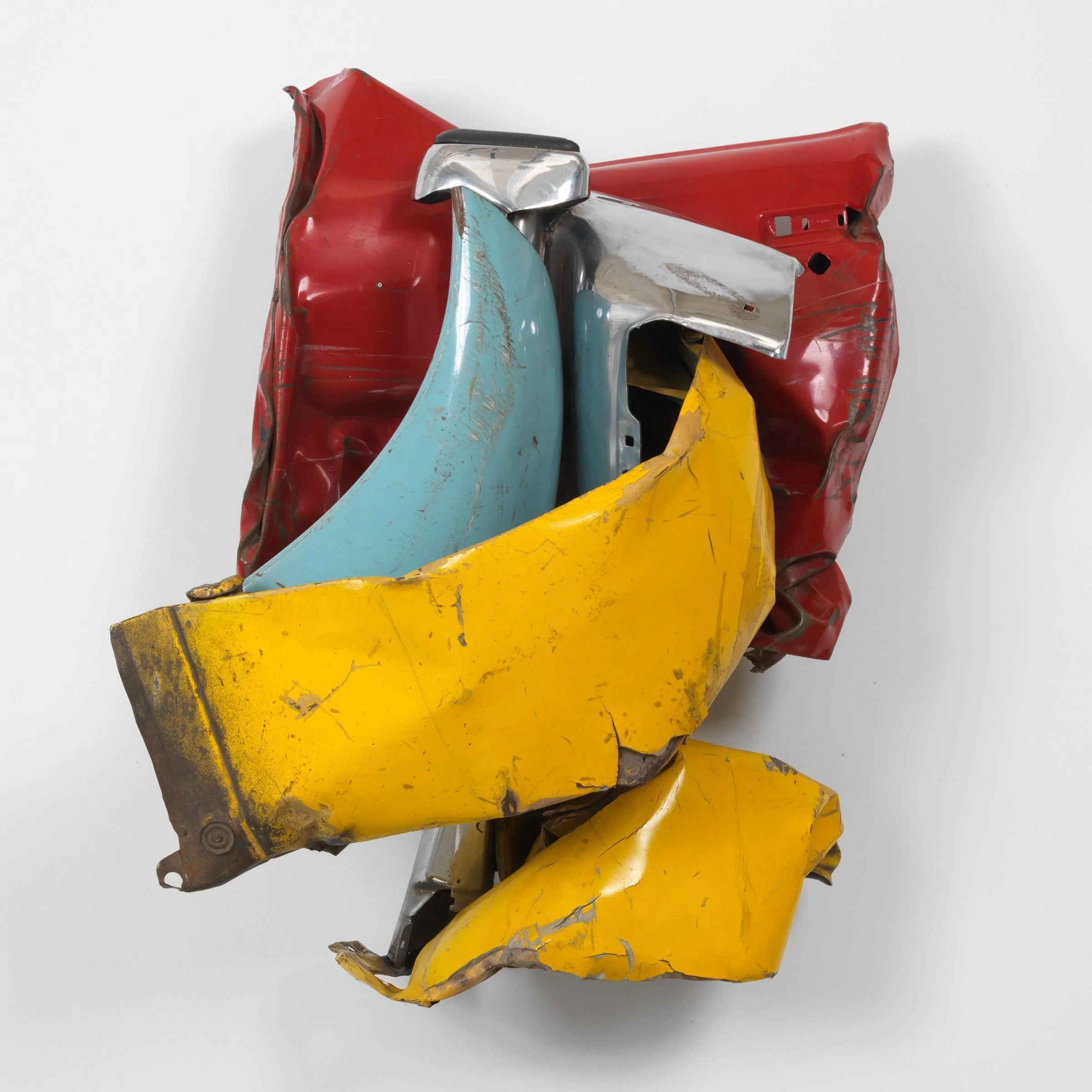
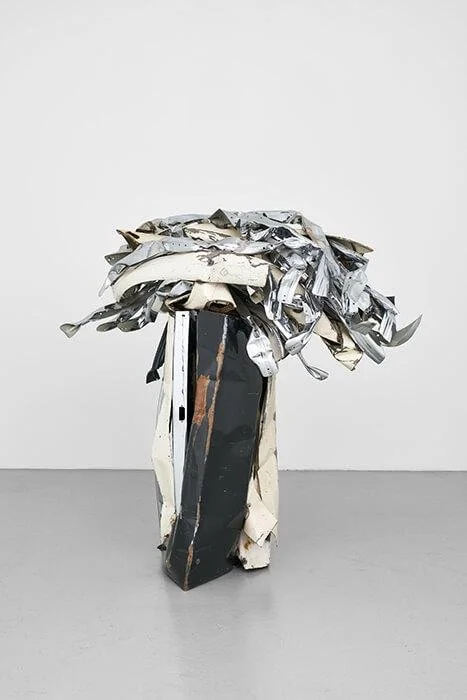
That makes the lyricism feel discovered rather than declared.
The contrast with Anthony Caro clarifies this for me. Caro’s work is lyrical almost by default. No matter what material he uses—industrial steel included—the result feels open, planar, rhythmic. The steel is never the subject. It’s a vehicle. With Chamberlain, the material arrives loaded, both physically and culturally, and the lyricism has to fight its way through. When it does, it carries more friction. More surprise.
Standing there at Colby, I realized that my old shorthand for Chamberlain had been too simple. The work isn’t about wreckage. It’s about insistence. About how much pressure a material can take before it begins to behave differently. And how beauty, when it appears where you don’t expect it, recalibrates not just the object in front of you, but your way of seeing the rest of the room.
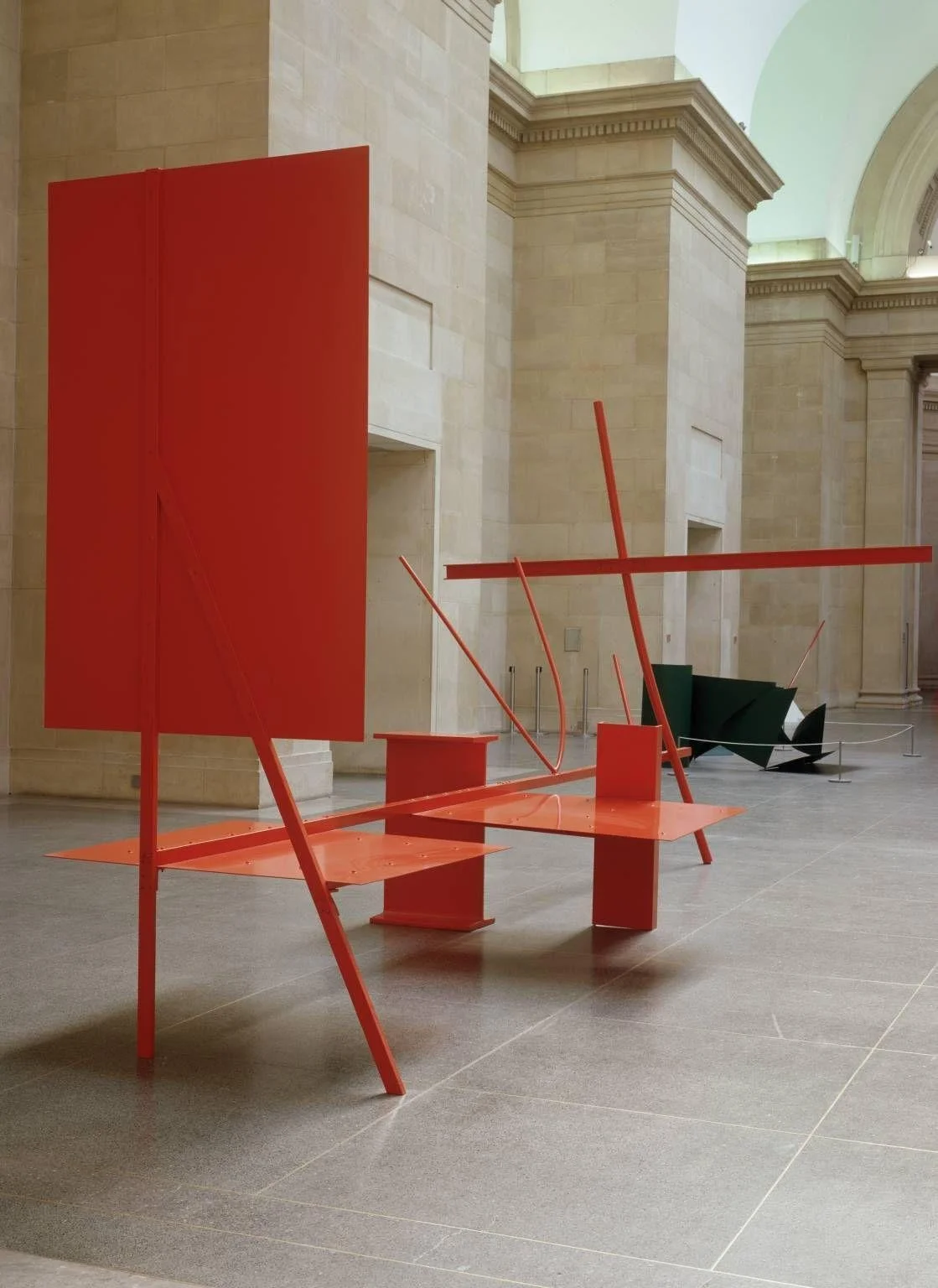
Sir Anthony Caro, Early One Morning
If you’re interested in this tension between force and lyricism, it’s worth looking again at artists who approach industrial material from very different starting points. Caro is one. So is Richard Serra in his early lead and rubber works, where weight and gravity dominate, but lyricism is largely withheld. Each of them clarifies Chamberlain by contrast.
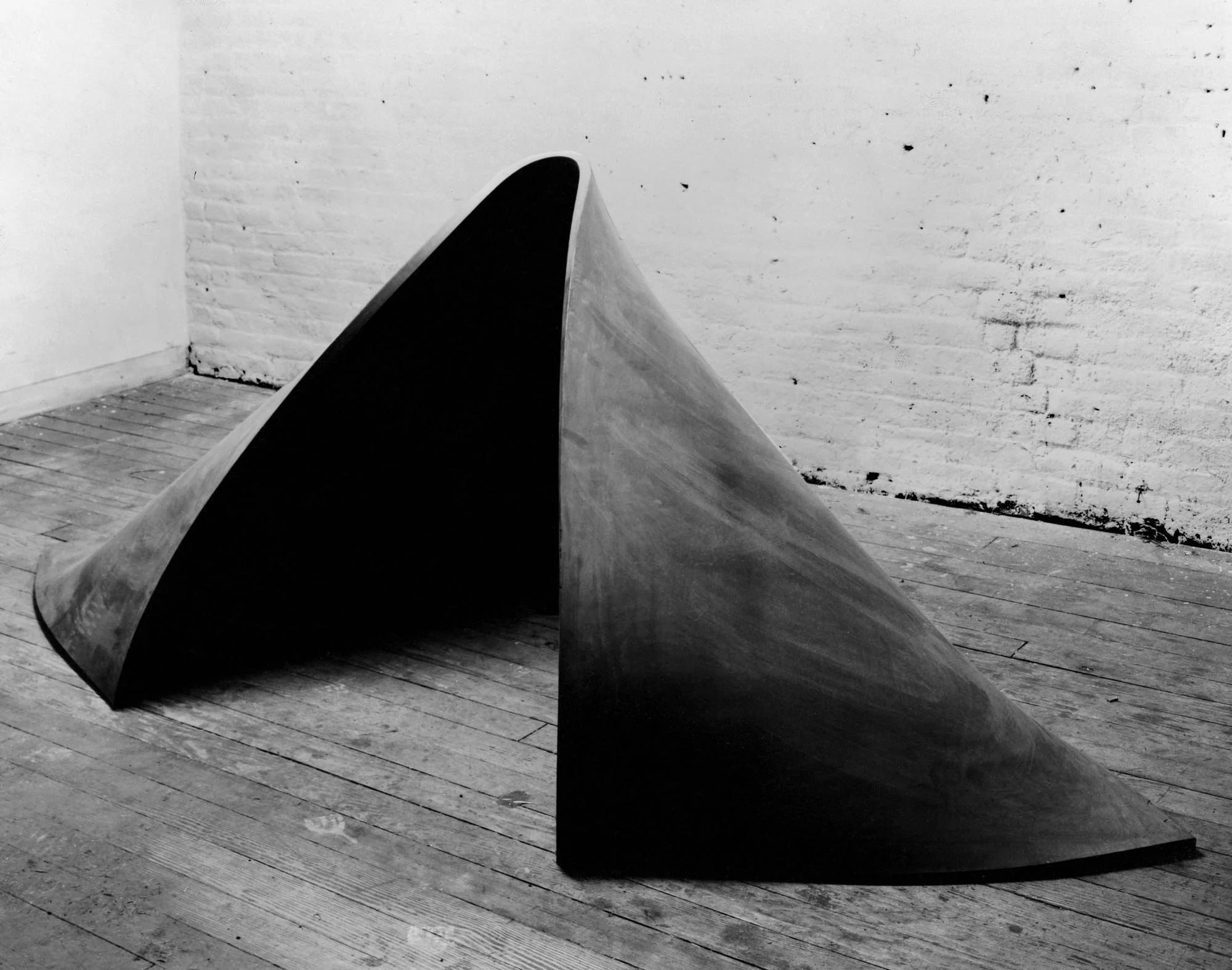
Serra, To Lift, 1967, MOMA
Context & Notes
John Chamberlain (1927–2011) began working with crushed automobile parts in the late 1950s. Although often loosely associated with Pop Art because of his materials, his concerns were fundamentally sculptural and painterly.
Chamberlain frequently cut, welded, and repainted elements of his sculptures. Color in his work is deliberate and compositional, not incidental.
He consistently rejected symbolic interpretations of automobiles or consumer culture, emphasizing instead formal relationships—balance, tension, compression, and color.
His work is often discussed alongside Abstract Expressionism, not because of style, but because of its commitment to gesture and physical engagement with material.