
September Notes - 2026
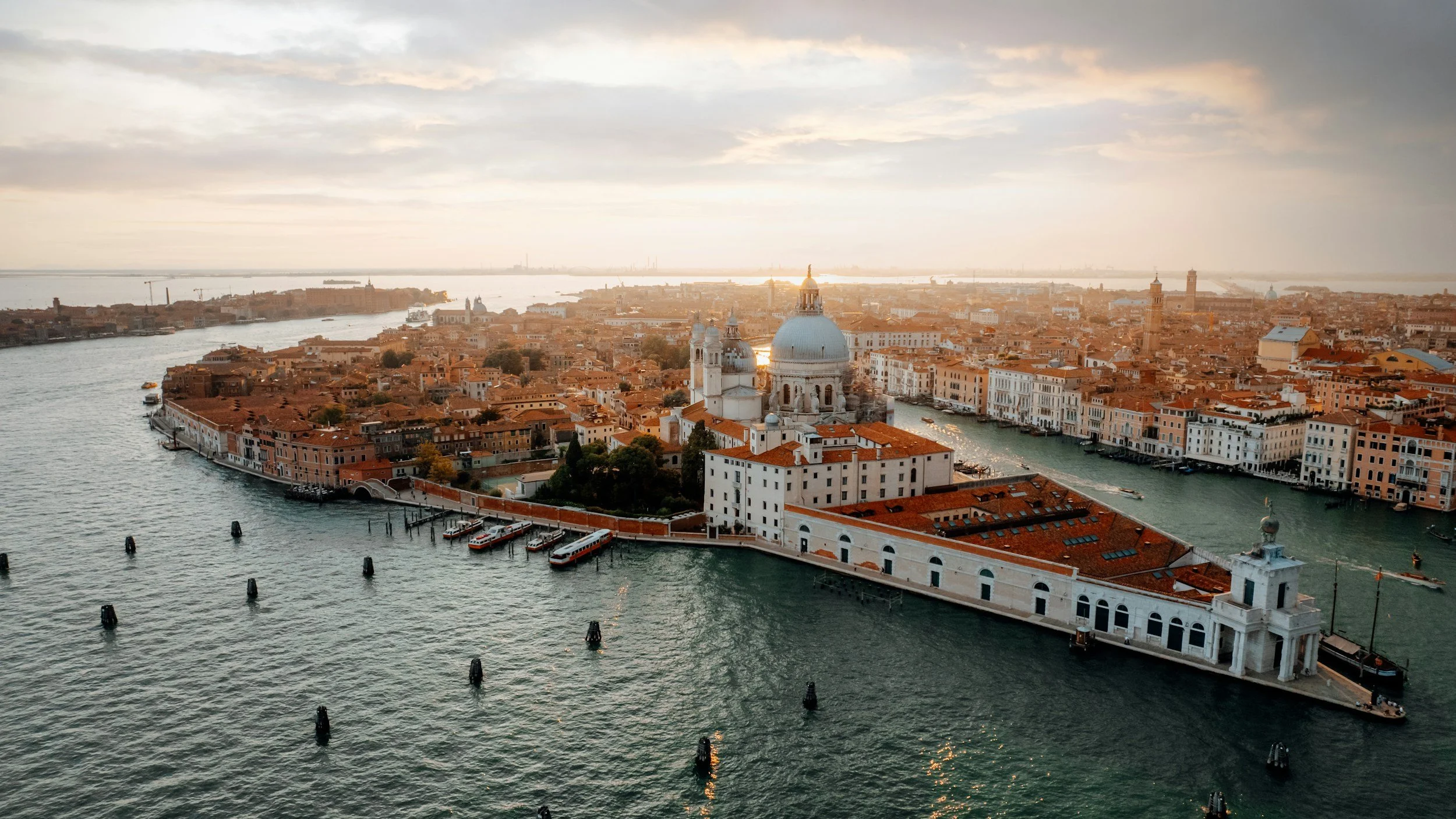
BEFORE THE STORY: BUILDING THE BELLINI’S VENICE
If I were to try to show all the forces and influences that shaped the art scene in Manhattan over the last seventy-five years, I would need to include returning veterans from World War II, the occupation of abandoned buildings by artists in SoHo, the Vietnam War, the feminist movement, the AIDS epidemic, the creation of the NEA and NYSCA, the major art dealers, the invention of acrylic paint, legalized abortion, and much, much more.
Now try doing that for fifteenth-century Venice.
I have spent this summer reading about how Venice was governed, who commissioned its artists, where their materials came from, the development of canvas as a painting support, the introduction of oil paint, how artists’ workshops operated, Venice’s wars with the Ottoman Empire, the periodic recurrence of the plague, and the laws governing sodomy.
I did this because I wanted to recount the workings of one artistic family: the Bellinis. Their collective presence in Venice spanned a hundred years. Their workshop became one of the most revered in Venice and the surrounding region. But that reputation came at a cost, and that is the story I want to tell you.
I'll begin this month by sharing some of what I looked at while trying to understand their world. I’ll tell you what is known, what might be true, and what is plausible but not yet proven.
I have sat through art history classes in which we moved from one altarpiece to the next. This is not that. Over the next several months, I am going to build a world for you, and then I am going to tell a story.
Skim the material or take a deep dive. There will be something here for everyone.
VENICE AN IMPOSSIBLE CITY
At first glance, Venice is an absurd place to build a city. There is almost no firm ground. The islands are low, muddy, and divided by tidal channels. The water is salt. Stone, timber, grain, fuel, and drinking water all have to come from somewhere else. A sensible person might have moved a few miles inland.
The people who became Venetians did the opposite.
By the time of the Bellinis, this unlikely settlement had become one of Europe's wealthiest and most powerful cities. It had spread across scores of small islands and commanded an extensive maritime empire. Venice prospered not despite the lagoon, but because of it. The same water that made the city difficult to build also made it difficult to attack. It connected Venice to the Adriatic and the eastern Mediterranean while keeping it just beyond the easy reach of mainland rulers.
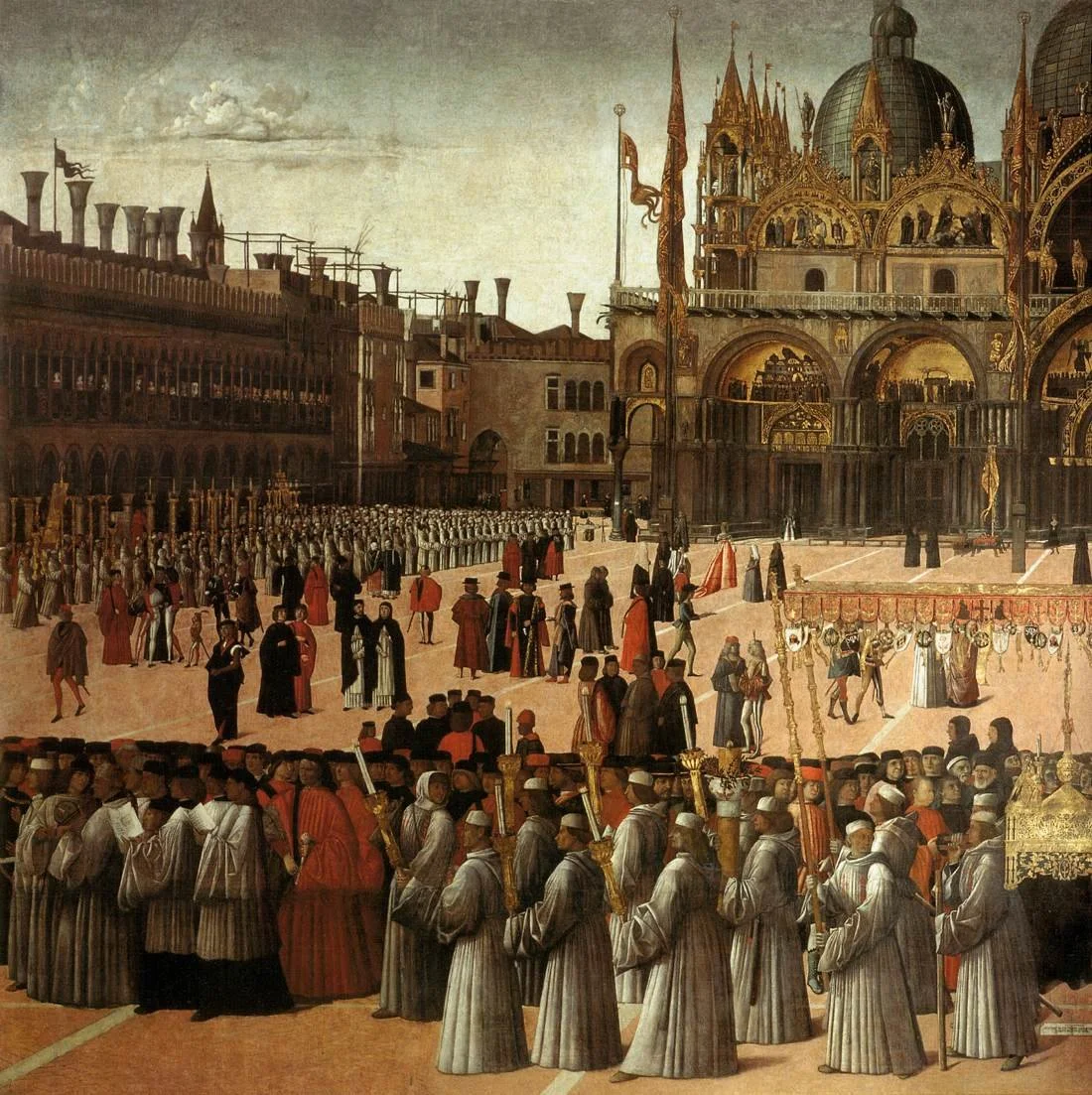
Gentile Bellini, detail, Procession in Piazza San Marco, 1496
ALSO NEW THIS MONTH
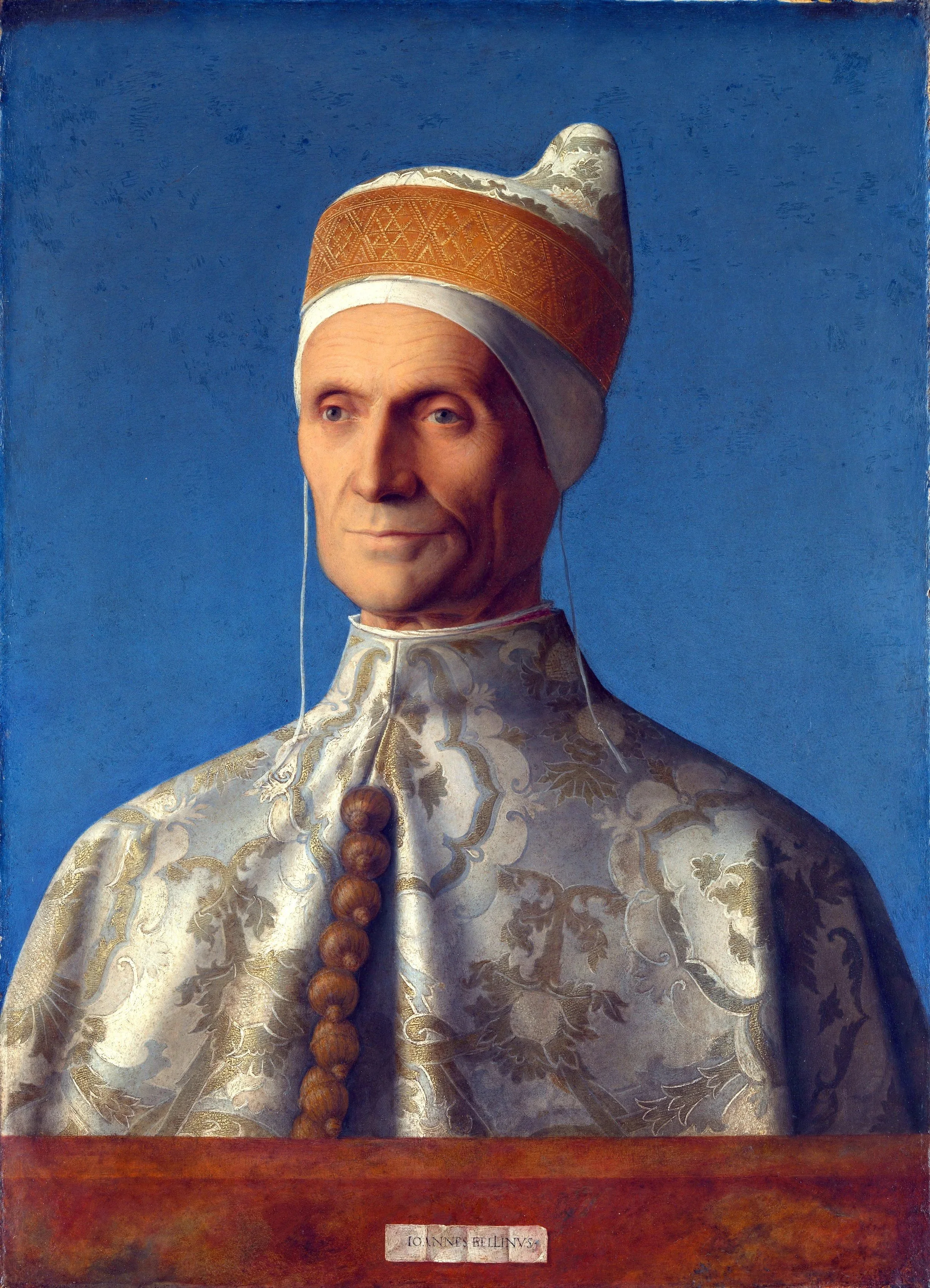
Giovanni Bellini, Doge Leonardo Loredan
WHO REALLY RAN VENICE
There is something misleading about the word republic.
When we hear it, we tend to imagine citizens choosing their leaders. Venice certainly had citizens, and it was fiercely proud of not having a king. But during the years of Jacopo, Gentile and Giovanni Bellini, political power belonged to a relatively small group of hereditary patrician families. If you were born into one of those families, you had a place in the government. If you were not, wealth, talent, and fame might bring you very close to power, but they would not give you a vote.
The Bellinis came very close.
Gentile painted the doges. He worked in the Doge’s Palace and was sent to Constantinople as a representative of the Republic. Giovanni was eventually made an official painter to the state. Their paintings helped Venice describe itself to its own citizens and to the rest of the world.
But the Bellinis did not run Venice.
They painted the men who did.
THE COUNCIL OF TEN: SECRECY, SURVEILLANCE, AND PUNISHMENT IN VENICE
Venice had a complicated system of government. Power was distributed among councils, committees, and elected officials, all carefully arranged to prevent any one person from taking control.
Then, in 1310, a group of Venetian noblemen tried to overthrow it.
The conspiracy failed, but it frightened the ruling class enough that they created a special committee to investigate what had happened and ensure it would not happen again. It was called the Council of Ten because ten patricians were elected to serve on it. The name was slightly misleading. The doge and his six councilors also attended its meetings, making seventeen men in the room before any additional members were called in.
It was intended to be temporary. Like many emergency powers, it proved difficult to give up.
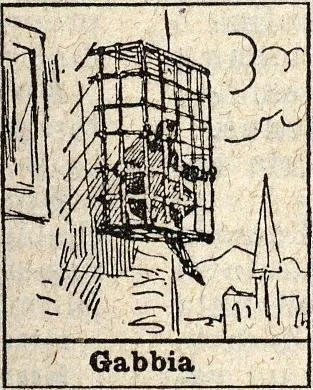
An undated representation of the chèba, the wooden and iron cage suspended from the Campanile of San Marco. A condemned prisoner remained exposed above one of the busiest public spaces in Venice, visible to anyone crossing the Piazza.
FROM THE LIBRARY:
Guido Ruggiero, The Boundaries of Eros: Sex Crimes and Sexuality in Renaissance Venice
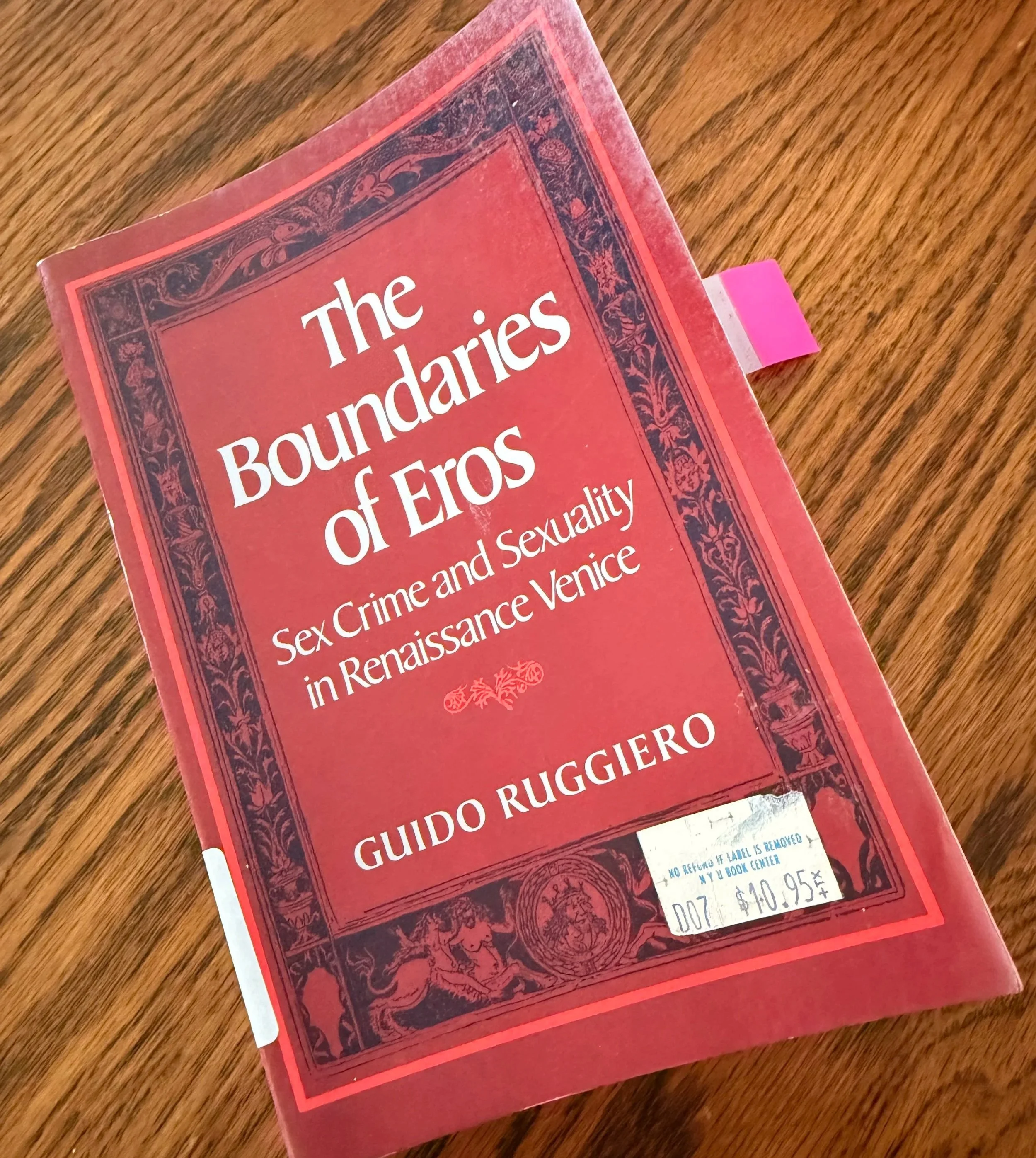
Perhaps not everyone’s idea of a light summer read, but Guido Ruggiero’s The Boundaries of Eros: Sex Crime and Sexuality in Renaissance Venice is a fascinating account of sex, power, and social rank in the fourteenth and fifteenth centuries. Working from Venetian court records, Ruggiero reconstructs a world of servants and masters, prostitutes and clients, illicit lovers, neighborhood witnesses, informers, magistrates, and frightened defendants. The cases reveal not only what Venetians did in private, but which offenses the courts were prepared to overlook and which they believed threatened the social order. The rape of a servant might be treated as a relatively minor matter, while sodomy, particularly for the active partner, could become a crime against God and the Republic. The book offers something conventional histories rarely do: Venice as it was lived behind closed doors.
ON SCREEN: Elena Ferrante’s MY BRILLIANT FRIEND
In thinking about the family dynamics of the Bellinis, I decided to revisit Jesse Armstrong’s HBO series Succession. The series follows the Roy family, whose members compete for control of the media empire their tyrannical father built. I had seen it before, and remembered that it understood something useful about an intergenerational struggle inside a family business: affection cannot be separated from ambition, and inheritance is never simply about money. After bingeing all four seasons, however, I felt as though I had just survived an abusive relationship.
That was until I came across HBO’s adaptation of Elena Ferrante’s My Brilliant Friend. Set in a poor neighborhood of Naples beginning in the years after World War II, the series follows Elena Greco and Lila Cerullo from childhood into adulthood. Their intense, competitive friendship unfolds within a world governed by poverty, family obligation, male violence, organized crime, political upheaval, and the possibility, available to very few, of escaping through education. It makes Succession look like a Disney production. What interests me is the way the series shows that a life is never shaped by character alone. Where someone is born, what the family needs, who controls the money, whether a girl is allowed to continue in school, whom she marries, and which neighborhood family holds power determine what choices are available long before anyone appears to make them.
This is part of what I have been trying to understand about the Bellinis. A family workshop does not exist apart from the city around it. Venice’s wars, laws, patronage systems, trade routes, religious institutions, rival workshops, and expectations of sons and daughters all entered the Bellini household. Before I could understand the family, I needed to understand the pressures acting upon it.
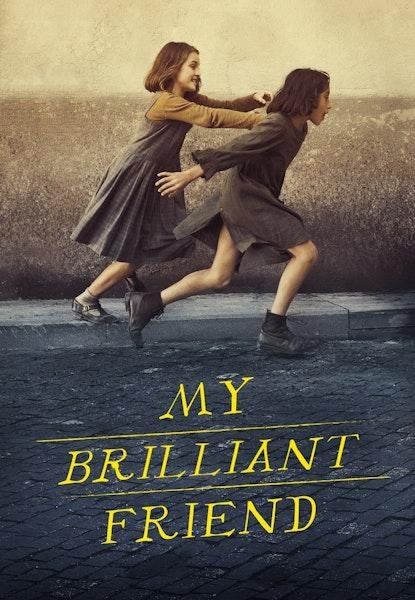
My Brilliant Friend, based on Elena Ferrante’s Neapolitan novels. Photograph courtesy of HBO.
FEATURED ART: FALLING, FALLING

"What Matters Most," 60 inches x 60 inches, oil paint and acrylic marker on canvas,
© 2026 Leslie Parke
COMING IN NOVEMBER:
November Energetic Fields, an exhibition at Ellio Fine Arts in Houston, Texas.