
THE STORY BEGINS:
JACOPO BELLINI & THE MAKING OF THE FAMILY BUSINESS
Next week I leave for Houston for the opening of ENERGETIC FIELDS, my new exhibition at Ellio Fine Art. The paintings left the studio last week, and I am looking forward to seeing them out of my hands and hanging together. Details are below.
On my writing days, meanwhile, I have been living somewhere else entirely. Last month I told you I was trying to reconstruct the world around the Bellini family rather than move from one painting to the next. I expected that to mean learning how fifteenth-century Venice worked. I didn’t expect the research to start behaving like a story.
A young man gets into a fight. He has reason to fear what the injured boy’s family might do, so he leaves the household of the painter he regarded as a father, gets himself out of Florence, and stays away for more than a year. When he finally comes home to Venice, his father is dead, and there is a baby in the family who will grow up to be Giovanni Bellini. He has debts, a career to establish, and a woman named Anna Rinversi he wants to marry. Anna’s family is in the silk trade, and she is going to matter. The young man is Jacopo Bellini. I started with a simple question about him: how does a Venetian tinsmith’s son become the pupil of Gentile da Fabriano, one of the most celebrated painters in Italy? That question took me to Florence and the fight in Gentile’s courtyard in 1423, and then to a record suggesting Jacopo had gone to sea. So I went looking for the ship.
This is where the project became slightly insane and enormously pleasurable. The librarians at the Clark Art Institute Library, Crossett Library at Bennington College, Bard College’s Stevenson Library, and Crandall Public Library in Glens Falls have found me books I couldn’t locate or get into on my own. I have gone to libraries to scan a chapter and come home with hundreds of pages. One book led me into the records of Florence’s new merchant galley system. There I could start asking where a ship Jacopo might have boarded was headed, and what he might have been doing aboard.
This month’s posts follow him from the tinsmith’s shop into Gentile da Fabriano’s household and his uneasy connection to Pisanello. From there they go to Florence, the fight in the courtyard, the galley, and finally his return to Venice and the rocky start of the Bellini Workshop. You don’t have to read all of them. Follow whatever catches your interest. If you do follow the whole trail, I think you’ll start to see what I see: a family business being put together, decision by decision.
And we are only at the beginning. Jacopo will be turning up here regularly, but he won’t have the place to himself.
HOW DOES THE TINSMITH'S SON GET A JOB WITH THE MOST FAMOUS ARTIST IN ITALY?
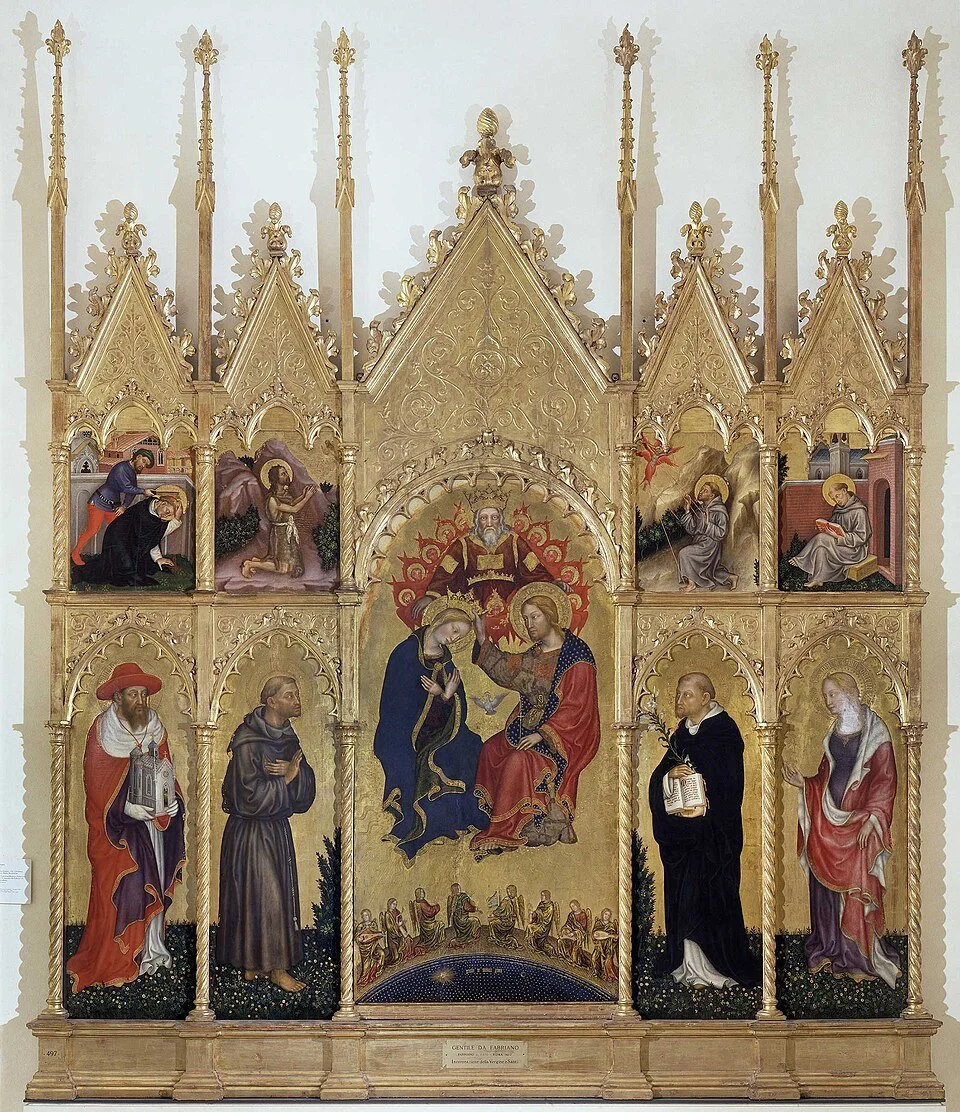
Gentile da Fabriano, Valle Romita Polyptych (about 1410 to 1412), Pinacoteca di Brera, Milan.
A gap at the beginning of Jacopo Bellini's story has always bothered me. His father, Nicoletto, was a tinsmith near the Rialto, and Jacopo would ordinarily have been expected to follow him into the trade. Then, somehow, Jacopo turns up as the assistant of Gentile da Fabriano, possibly the most famous painter in Italy. How did that happen?
The romantic explanation practically writes itself. Young Jacopo produces a drawing so brilliant that the great Gentile takes one look and recognizes genius. Unfortunately, there is no evidence that anything of the kind happened. What we do have is a fair amount about who Nicoletto was, where the Bellinis lived, and what Gentile was doing in Venice. Put those side by side, and the meeting starts to look much less mysterious.
I keep thinking about the New York art world in the 1970s. From the outside it looked enormous. Once you were inside it, it wasn't. You didn't need to know an artist personally to be one step away from them. You ran into them at Pearl Paint, David Davis, or New York Central. Your framer knew their assistant. Or you saw them at the Spring Street Bar. Venice in 1408 was not New York in 1975, but it was even more compressed, and its trades were often grouped by street. The famous painter and the tinsmith's son may not have been living in separate worlds at all.
MORE THIS MONTH : JACOPO’S TRAIL


THE ROCKY BEGINNINGS OF THE BELLINI WORKSHOP
Jacopo Bellini came home to Venice with the best reference a painter could have: his apprenticeship with Gentile da Fabriano. There was just one problem. Venice was already full of Gentile. He had painted the walls of the Great Council Hall and run a workshop in town, and for twenty years Venetian painters had been helping themselves to his gold, his brocades and his sweet-faced Madonnas. The market was saturated with Gentile-like decoration. There was no room for another imitator, even a superior one.
Venetian patrons were also loyal. If you ran a church, a confraternity or a government office, you already had a painter, and you weren’t shopping for a new one.
At the top sat Jacobello del Fiore. Before 1412 the state was paying him 100 ducats a year, the kind of steady salary most painters only dream about. In 1421 he painted Justice for one of the courts in the Doge’s Palace. She sits enthroned between two lions, with the archangels Michael and Gabriel on either side, and the whole thing is crusted with gilded relief. If you want to know what official Venice liked to look at, that’s it. Next in line was Michele Giambono, who could slip a new idea into a Gothic picture without frightening anybody.

Jacopo Bellini, Annunciation, Sant’Alessandro, Brescia. Gentile da Fabriano’s love of gold and patterned surfaces remains, but Jacopo is already working through the new Florentine problem of measurable space.
FROM THE LIBRARY:
Cleo Nisse, Venetian Canvas and the Transformation of Painting.
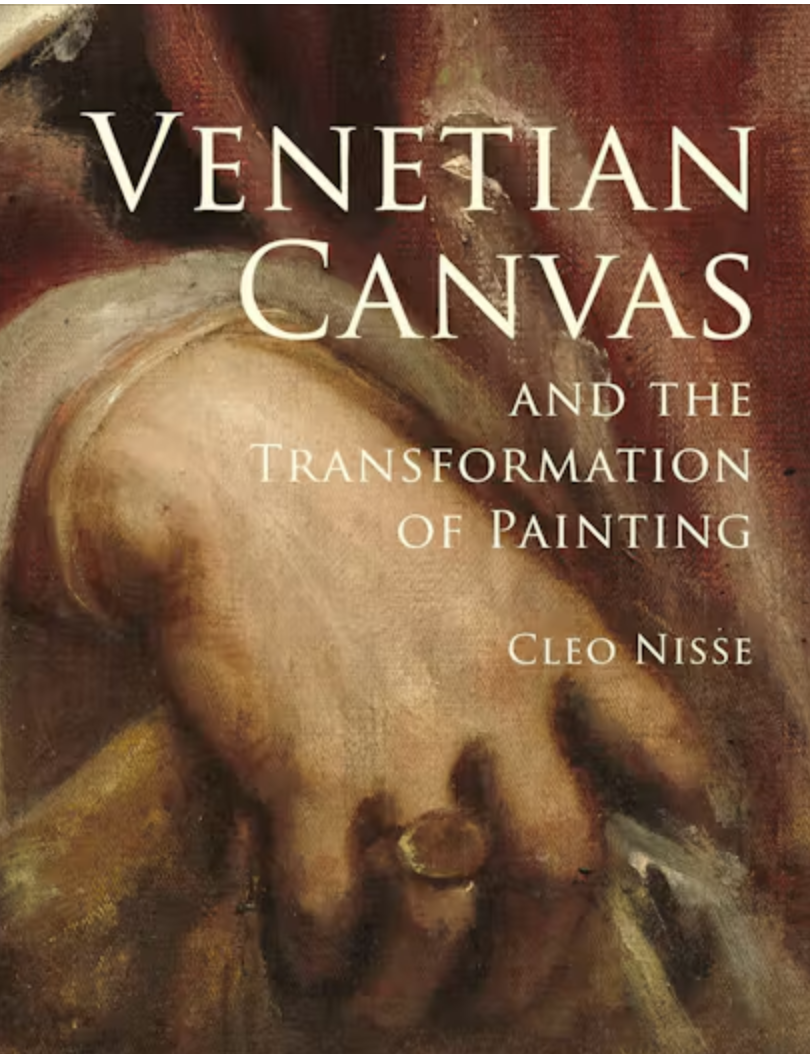
This is not a book I have read, but one I have on my wishlist. I have been wondering if the introduction of canvas as a painting surface had something to do with the manufacturing of canvas for sails. Venice being such an important port, if seemed like a logical leap.
I am also desperate to get my hands on A Forest on the Sea: Environmental Expertise in Renaissance Venice, by Karl Appuhn, but I have been able to find Michael S. Beaudoin, Lawyers and Sawyers: Venetian Forest Law and the Conquest of Terraferma (1350–1476), a 2014 Boise State University thesis.
Several things affected the choice of painting structure: Venice’s damp environment, which didn’t favor frescoes; deforestation and the scarcity of quality wood for panels; and the expansive spaces Venetians wanted covered with paintings.
EXHIBITIONS : OPENING NOVEMBER IN HOUSTON

5 NOVEMBER 2026 - 2 DECEMBER 2026
ELLIO Fine Art
3201 Allen Parkway #180
Houston, TX 77019
OPENING RECEPTION
Friday, November 6, 2026
6-8 pm
FOR MORE INFORMATION
(281) 660-1832
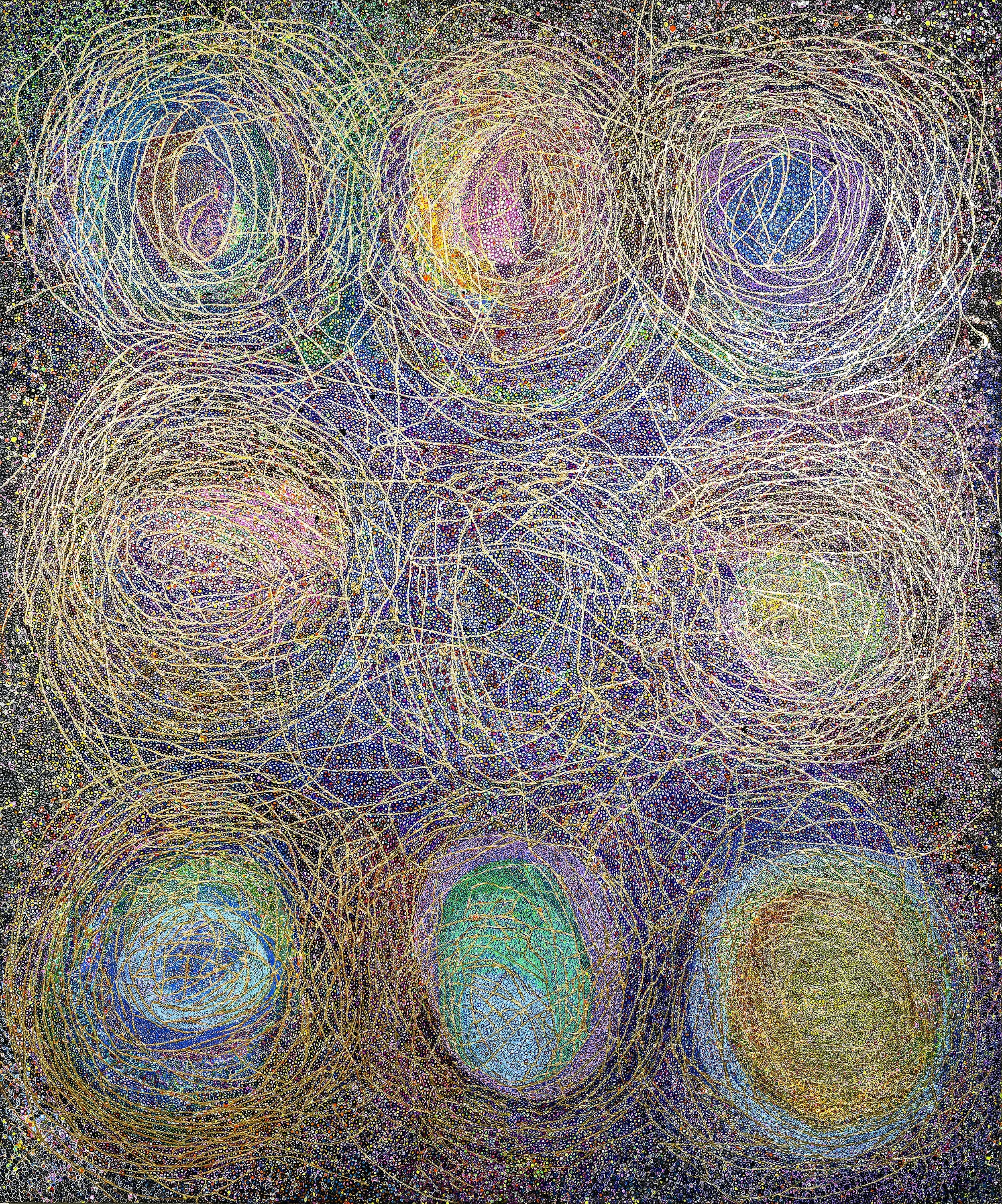
"It Begins," 72 inches x 60 inches, oil paint and acrylic marker on canvas, ©2026 Leslie Parke
FEATURED ART: CHARGED FIELD
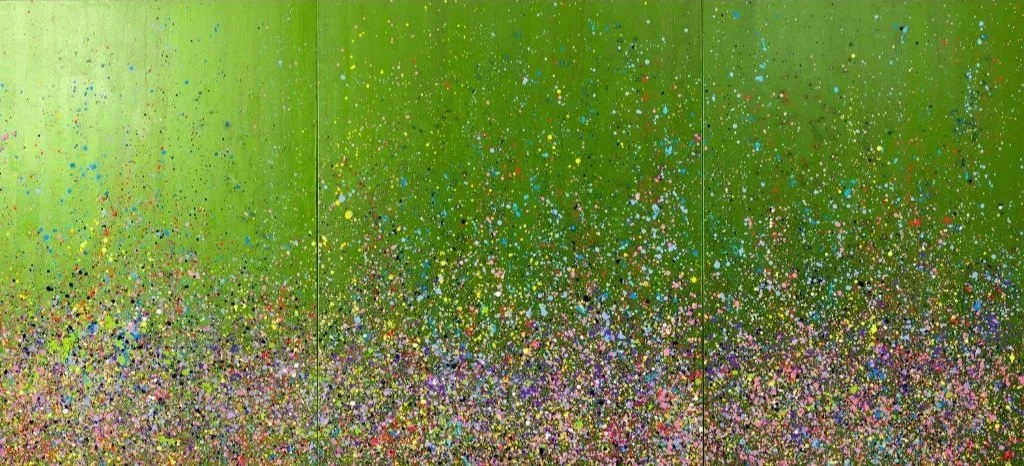
CHARGED FIELD, triptych, 60 inches x 128 inches, oil on canvas, © 2026 Leslie Parke
MORE IN NOVEMBER:
My painting, Pursuit of Happiness, in the Regional Artists Exhibition, Bennington Museum
November 19 through December 31, 2026