BARNETT NEWMAN AND THE ZIP
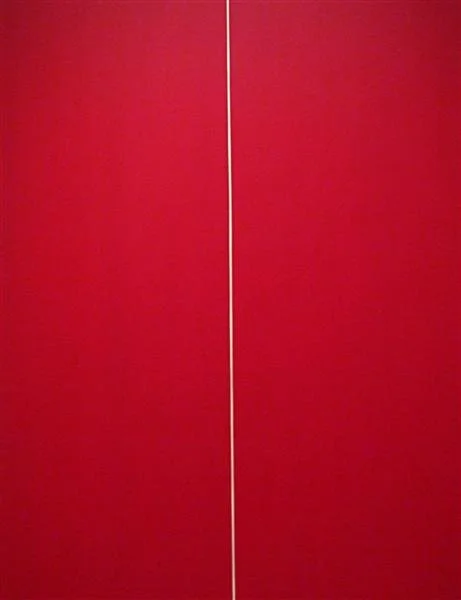
Barnett Newman, Be I, 1970
Standing in a parking lot in Maine, I saw the light glint off the chrome on a sports car's hood. Of course, my first thought was Barnett Newman. That may seem like an odd association, but Newman spent much of his career exploring the power of a single vertical stripe. He called it a "zip." Once you become aware of Newman's zips, you start seeing them everywhere. In tree trunks. In telephone poles. In shafts of light. In the narrow gap between two buildings. In reflections running down a pane of glass. Or in a strip of chrome running down the hood of a bright red sports car.
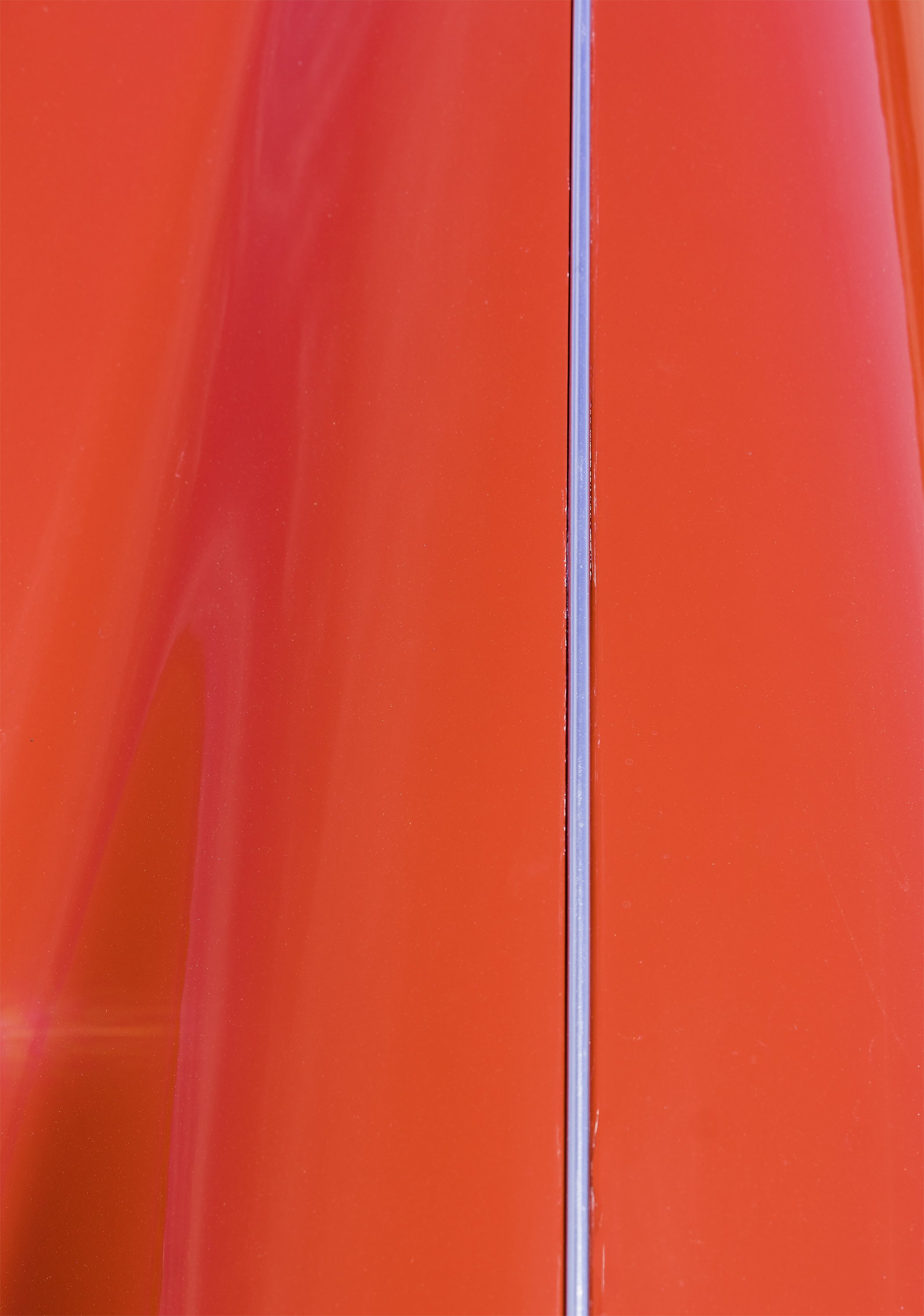
Leslie Parke, Zip, photograph, 2018
The photograph above is not a Newman painting, but the visual experience is surprisingly similar. The red field dominates your attention. The reflective strip divides the surface while simultaneously holding it together. The eye keeps returning to it, measuring the space on either side.
What interests me about Newman is that the zip is not really the subject of the painting. The field is.
Before Newman, painters generally treated a line as something that described an object or separated one thing from another. Newman used the zip differently. The stripe activates the space around it. Remove the zip and the painting becomes something else. Add the zip and the entire field comes alive. The zip gives the eye something to orient itself against, but the real subject is the field—the vast expanse of color and space that opens around it. That is why reproductions of Newman can be misleading. The paintings look simple. Almost obvious.
In person, they are anything but.
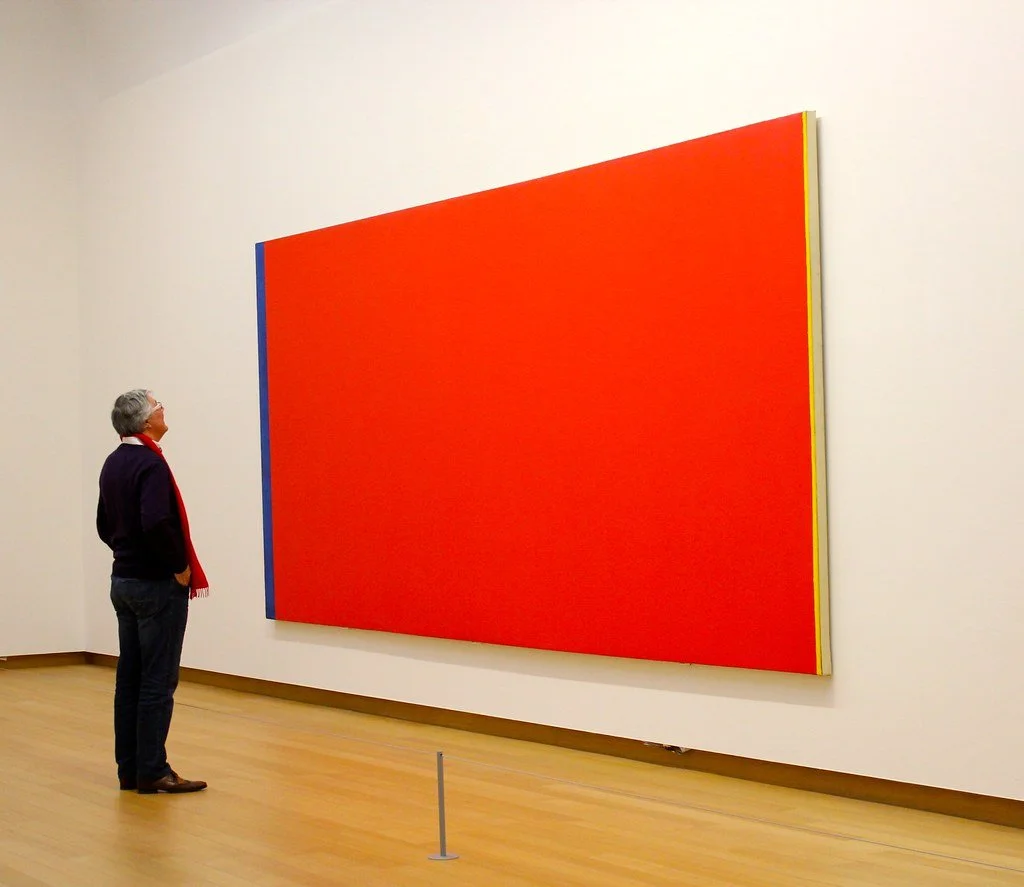
Barnett Newman, Who’s Afraid of Red, Yellow and Blue III, 1969-70
The paintings are large enough that they affect your sense of scale. As you move closer, the color field expands. The zip becomes less an object than an event. Your eye measures itself against it. Your body measures itself against it.
The painting is no longer something you look at. It becomes something you experience. Newman once said that aesthetics is to artists what ornithology is to birds. He was not interested in theories about painting. He was interested in what painting could do. A single vertical element could change the way we perceive an entire field. Standing in a parking lot in Maine, I saw the light glint off the chrome on the hood of a sports car.
Of course, my first thought was Barnett Newman.
YOU MAY ALSO LIKE: