
blog
ALL | ABOUT MY WORK | EVERYTHING ELSE
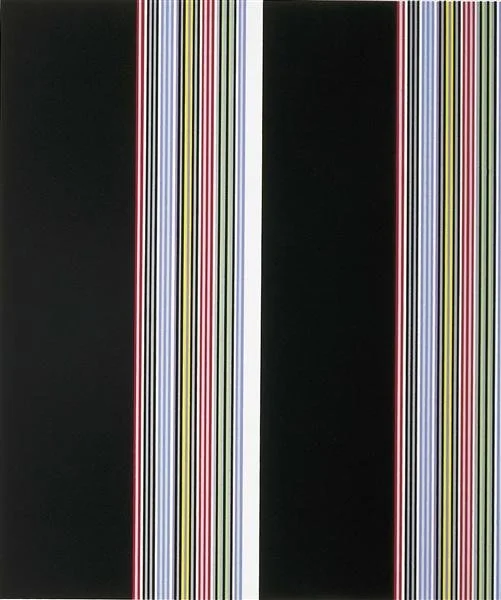
GENE DAVIS: PLAYING COLOR BY EYE
I had assumed that Gene Davis made nothing but stripe paintings. He did not. He began with drawings and Abstract Expressionist paintings and later made collages, micro-paintings, video, neon, and enormous outdoor works. But once he found the stripe in the late 1950s, it became his principal subject.
Subject is the word Davis himself used.
“I have very, very strong subject matter in my work, which is stripes,” he said. “A stripe is just as real as a goddamn flower.”
That gets us closer to the paintings. The stripe was not simply a device for arranging color. It was the thing itself.
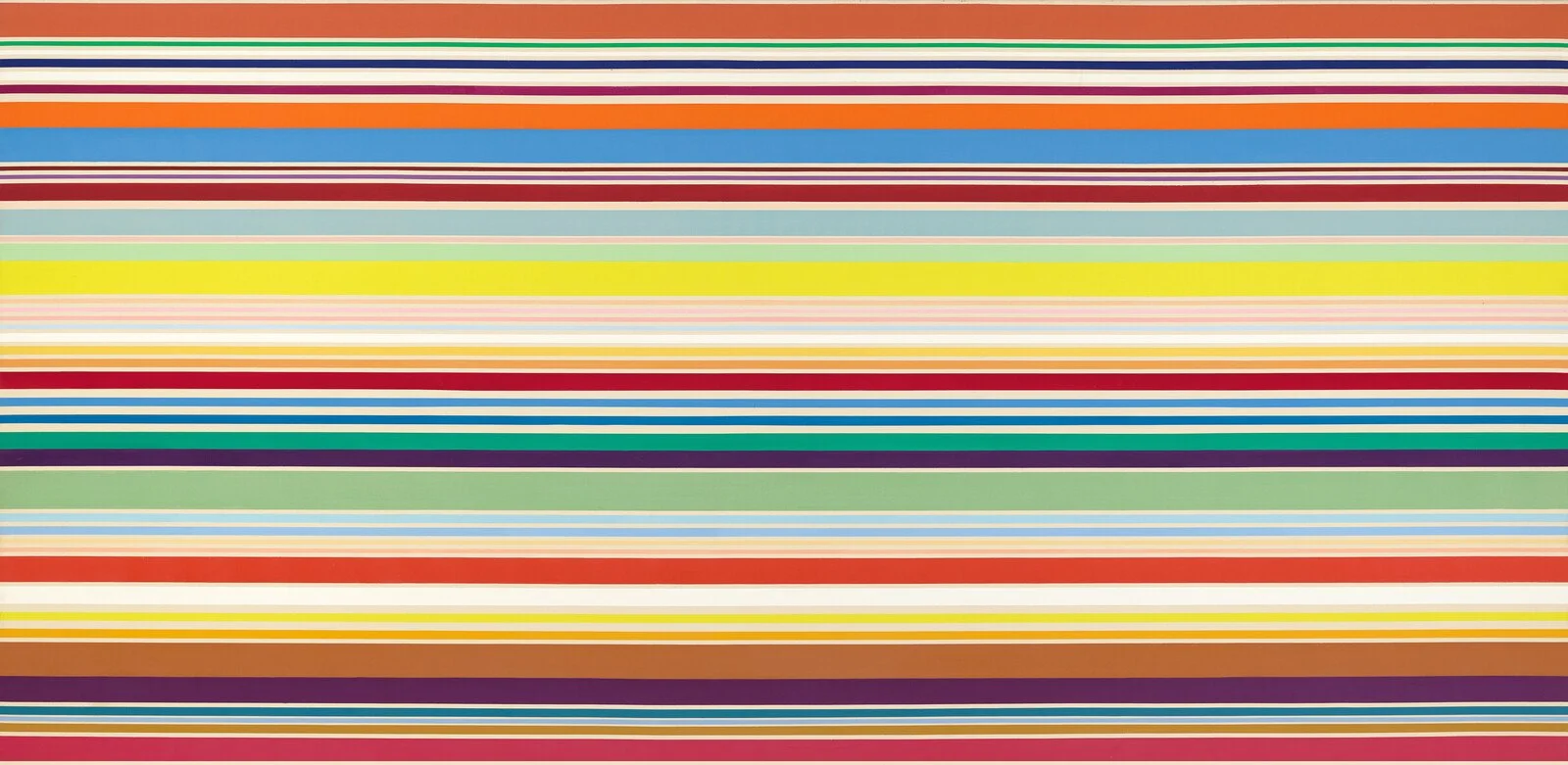
KEN NOLAND: WHEN COLOR MET COLOR
When I was a student at Bennington College, Kenneth Noland lived a few miles away in Shaftsbury, Vermont. He had nothing officially to do with the college while I was an undergraduate, but his presence was felt. Artists and critics who came to see him would sometimes turn up at Bennington—Larry Poons, Tony Caro, Clement Greenberg.
When I became a graduate student, Noland taught a course that I took. He was surprisingly practical. He talked about how we arranged our studios and how we dealt with all the things that pulled us away from the work. He was interested in the circumstances of being an artist: how you set things up so that you could keep painting.
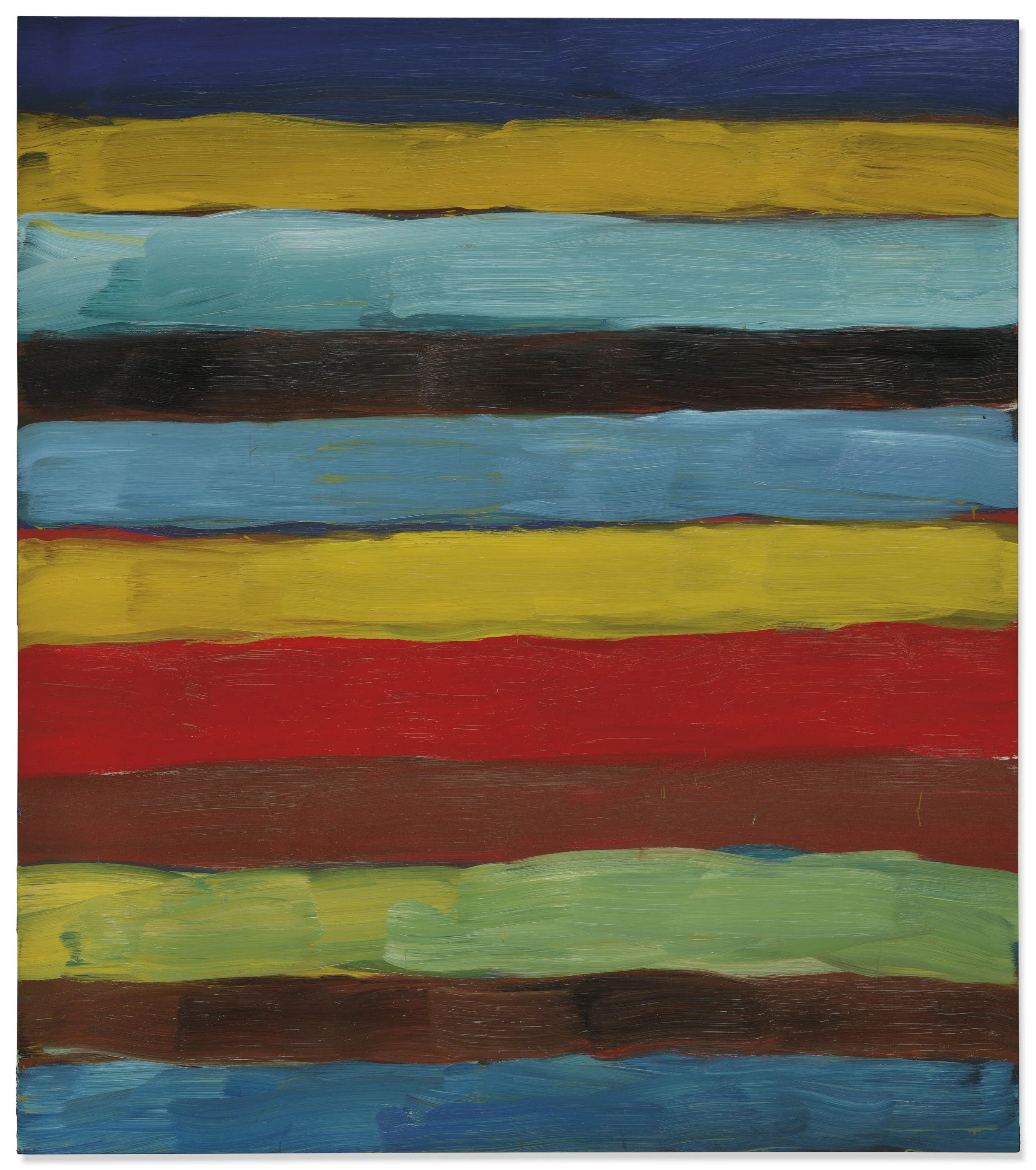
SEAN SCULLY AND THE PAINTED STRIPE
Frank Stella did not arrive at the stripe because he liked stripes.
He arrived at it because he was trying to solve a problem in painting.
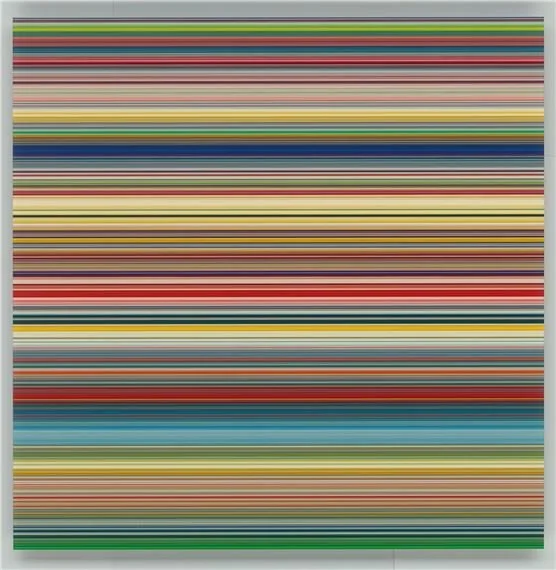
GERHARD RICHTER: THE REALITY OF PAINTING
Frank Stella did not arrive at the stripe because he liked stripes.
He arrived at it because he was trying to solve a problem in painting.
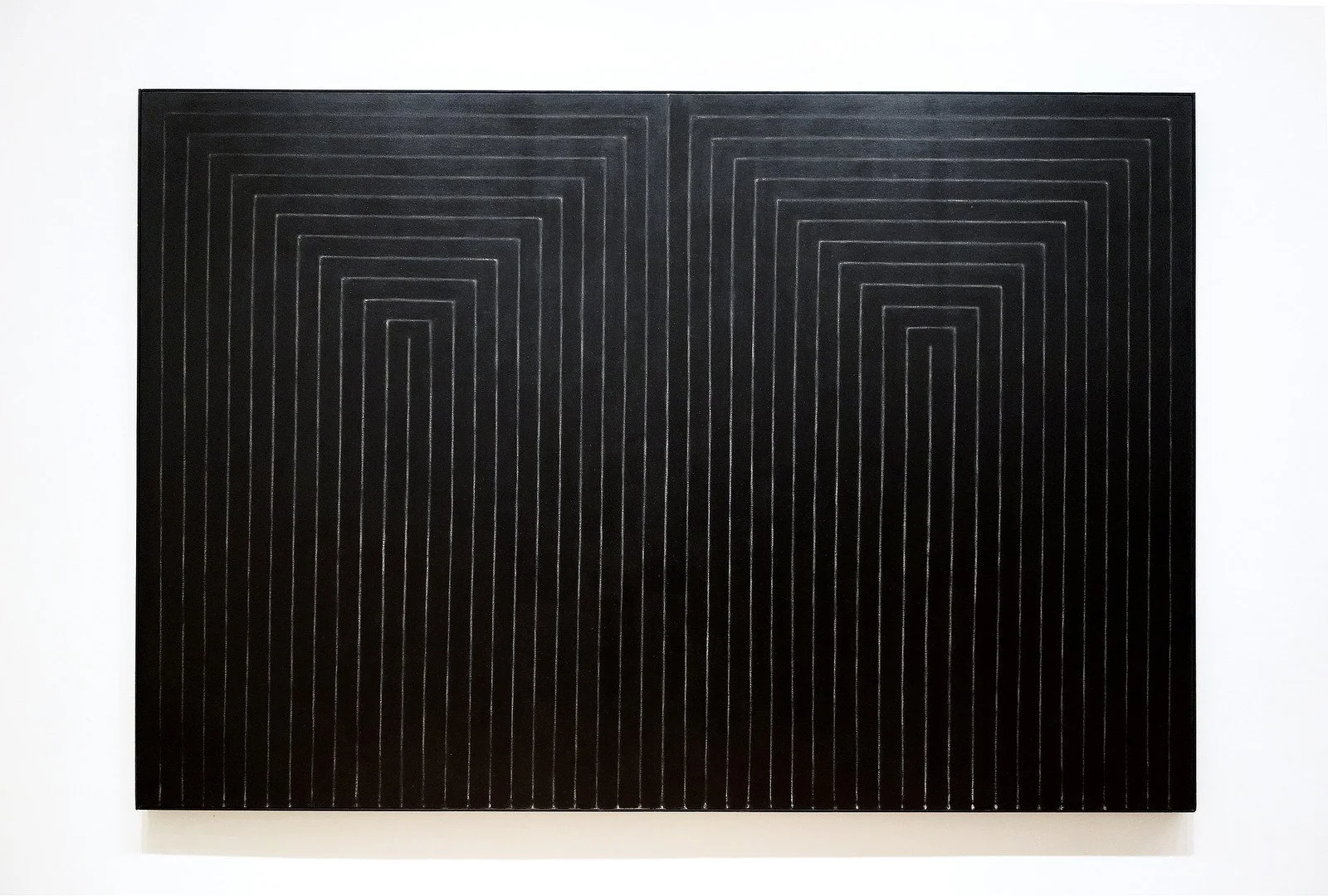
FRANK STELLA: WHAT THE STRIPE SOLVED
Frank Stella did not arrive at the stripe because he liked stripes.
He arrived at it because he was trying to solve a problem in painting.
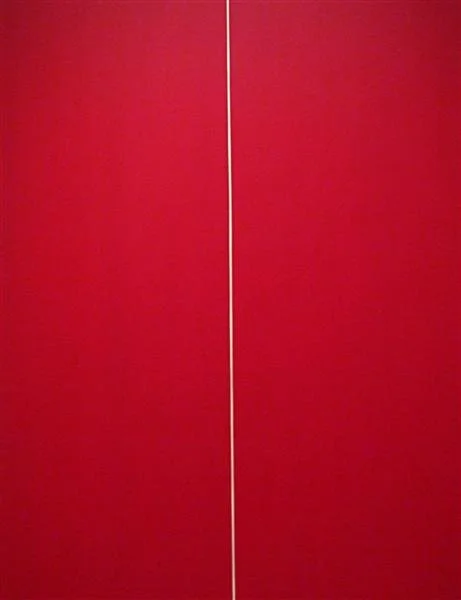
BARNETT NEWMAN AND THE ZIP
Standing in a parking lot in Maine, I saw the light glint off the chrome on a sports car's hood.
Of course, my first thought was Barnett Newman.
That may seem like an odd association, but Newman spent much of his career exploring the power of a single vertical stripe. He called it a "zip."
Once you become aware of Newman's zips, you start seeing them everywhere. In tree trunks. In telephone poles. In shafts of light. In the narrow gap between two buildings. In reflections running down a pane of glass.
Or in a strip of chrome running down the hood of a bright red sports car.
AN ONCOLOGIST AND AN ARTIST WALK INTO A BAR . . .
After my opening at the Soprafina Gallery in Boston several years ago, friends invited me to dinner with an oncologist* and his wife. Over the meal, he told me about his research. He had access to mountains of data collected from patients over many years, and he and his team were struggling to mine it for patterns that might predict cancer. This was before artificial intelligence could handle such a task. He had resorted to color-coding the data. I told him he was heading for trouble.

THREAD LINES AND SPIRIT LINES
When I first saw Georgiana Houghton’s spirit drawings, I felt an instant, almost bodily recognition: Oh, she was listening to the same hum. Houghton, a Victorian gentlewoman (1814-1884), claimed that spirit guides—Titian, Correggio, and dead relatives, moved her hand. The result was a web of translucent strands, loops, and knots so intricate that even now they look as if they’ve been plotted by software. No horizon, no figure: just thread-like energy fields curling across the page.

FREQUENCIES: Painting the Invisible
When viewers walk into my new exhibition, FREQUENCY, I want them to feel as if they’ve stepped inside light itself—where color doesn’t sit politely on a surface but vibrates through the body like sound through a tuning fork. These paintings grew out of two earlier bodies of work, Unified Field and Lightness of Being, yet they push even further into that liminal territory where surface, light, and matter dissolve into one radiant continuum.

COLOR IS VIBRATION— Ask Turrell, Agnes Martin, or Anyone Who’s Stood in Front of My Paintings
When I start a canvas I’m not really mixing paint; I’m tuning a field of tiny radio stations that happen to live in the visible band of the electromagnetic spectrum. Red light hums along at roughly 620–750 nanometers—about 400 terahertz in frequency—while violet screams past at closer to 380 nanometers, almost 790 terahertz . Knowing that lets me steer feeling with a bit more intention.

CLEMENT GREENBERG AND JACKSON POLLOCK, and a Defining Exhibition at Bennington College
The mid-20th century witnessed a seismic shift in the landscape of American art, with the emergence of Abstract Expressionism marking a departure from European traditions and establishing New York as a new global art center. At the heart of this transformative period were two towering figures: Clement Greenberg, a highly influential art critic whose formalist aesthetic shaped the discourse around modern art, and Jackson Pollock, an artistic innovator who revolutionized painting with his energetic "drip" technique

ARTISTS’ THINGS: 1929 René Lalique Gui Vase
I grew up with this Lalique vase in the entryway to our home. It was one of several pieces that my Grandmother bought in Paris in June of 1929. I know this because my father told me. The time of the purchase seemed significant as it was only a few months before THE CRASH. Later I discovered a receipt, which seems to be about the delivery of several other Lalique items — an ashtray, a box, and a perfume bottle — to her room at Hotel Crillon.

HENRY IN MY KITCHEN: THE INGREDIENTS OF AN ARTIST COLLABORATION
In 1981 I worked on a documentary with Michael Marton on the not-yet Pulitzer Prize-winning composer, Henry Brant. Marton’s approach to documentary filmmaking was to embed us with his subjects for a long period. This documentary coincided with when I was working on the drawings featured here, which ultimately led to a collaboration between Henry and me on a piece he did for the Holland Festival called Inside Track.
Here is a story I wrote at the time about just how embedded things could get.

THE POWER OF THE PERFECT CIRCLE: A Tribute to Giotto's Mastery
I've been having conversations with Giotto di Bondone (c. 1267 - 1337, born in Florence, Italy) since I was twelve years old and my class studied the Renaissance. The conversation became obsessive when in 1987 I created a cycle of paintings recreating the paintings of the Arena Chapel on seven shaped canvases, the largest of which is 18 by 24 feet.

FROM FARM TO CANVAS: Painting the Rural Landscape Slant
I live in a very rural part of New York State surrounded by farms. The landscape influences my work, but not always in the ways you might imagine. I pass this farm on a back road to the next town. I have stopped a few times to photograph it. What I really love is how the corn crib looks in front of the silo. It is a curved grid in front of a curved grid. In this photo it appears quite abstract. I love a subject that is completely real and seems completely abstract.


THE GRID PROJECT - PART THREE : Translating into Paint
From the start, I knew that I wanted to make paintings from the broken television "grid" photographs, but they posed a lot of technical difficulties. To begin with, I paint in oils. Making a clean stripe in oil is more difficult than with acrylic paint. With acrylics you can mask out your stripes with tape and then seal it with a clear acrylic layer, then add your color and it won't bleed. That pretty much insures that you will have a sharp edge.

ABSTRACT OR REPRESENTATIONAL : Depends on the Source of the Light
My paintings are about light.
When I paint representationally and I am about the business of rendering light, I often choose a subject that is backlit. It seems to offer the most extensive and complex qualities of light - light on a surface, passing through a surface, reflecting off of a surface, often highlighting transparency, translucency, reflection, or glitter.