BLACKER THAN BLACK: ANISH KAPOOR AND THE DISAPPEARING OBJECT
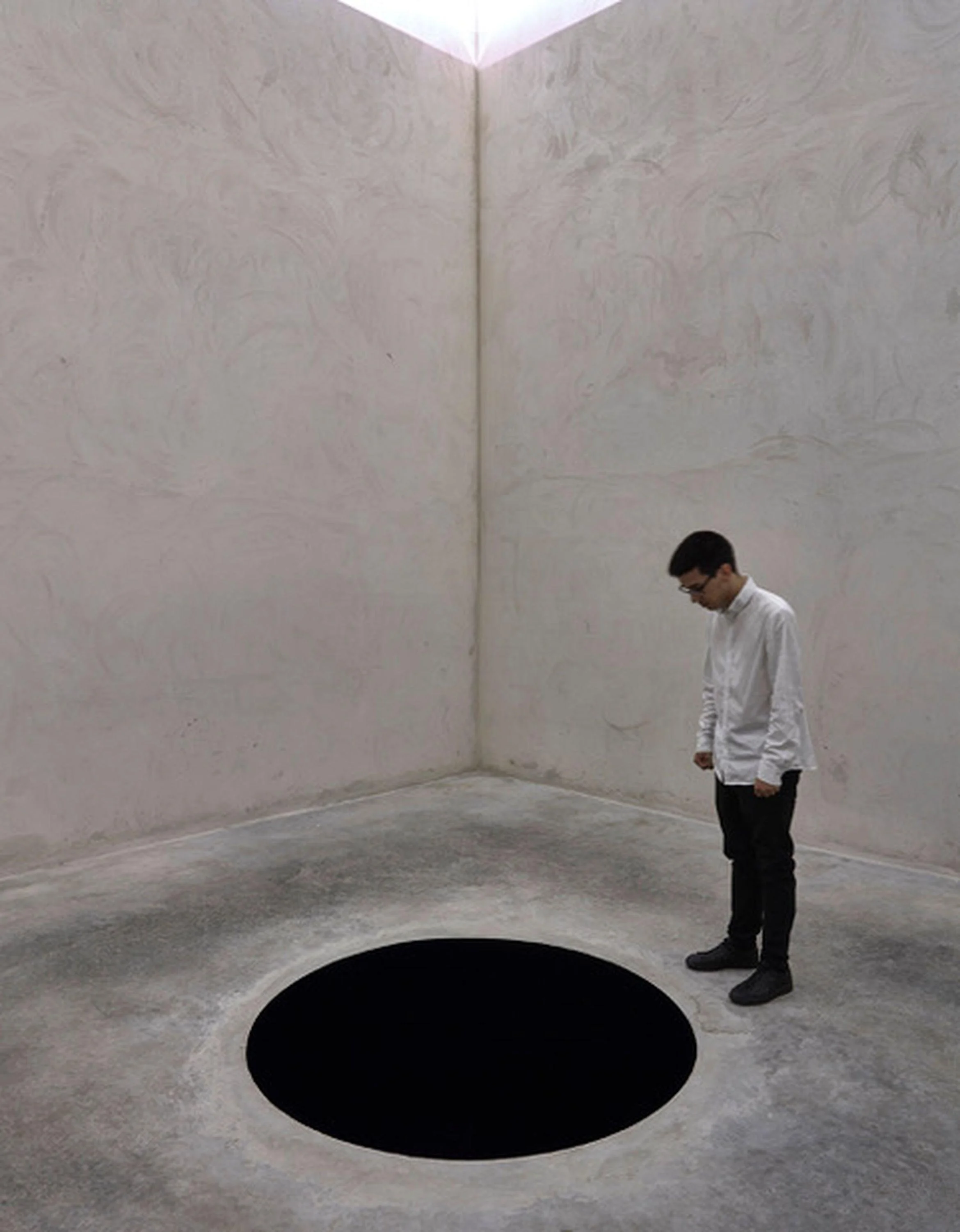
Anish Kapoor, Descent into Limbo, 1992 installation.It features a 2.5-meter (8.2-foot) deep circular pit inside a concrete cube, coated in dark pigment to create a dizzying optical illusion of a bottomless black void.
Some time ago I wrote a very short blog post called Having Sex with Artists. I had dreamed that I had sex with Frank Stella under a boardwalk on Fire Island. Not long after that, Anish Kapoor turned up in another dream, this time courting me. Harold Bloom called it the anxiety of influence. I called it having sex with artists. Apparently Kapoor had already made his way into my subconscious. Now that I have been looking at black paintings, I have a more respectable reason to think about him.
In my last post, Malevich’s “Black Square” turned out to be anything but empty. There were two paintings underneath it. There were fingerprints in the white border. Malevich used more than one mixture of black paint, and color still comes through the cracks. The painting announced a kind of zero point, but it was not made from nothing. It was made by covering what was already there. Kapoor wanted black to do something almost exactly opposite. He wanted the surface to disappear.
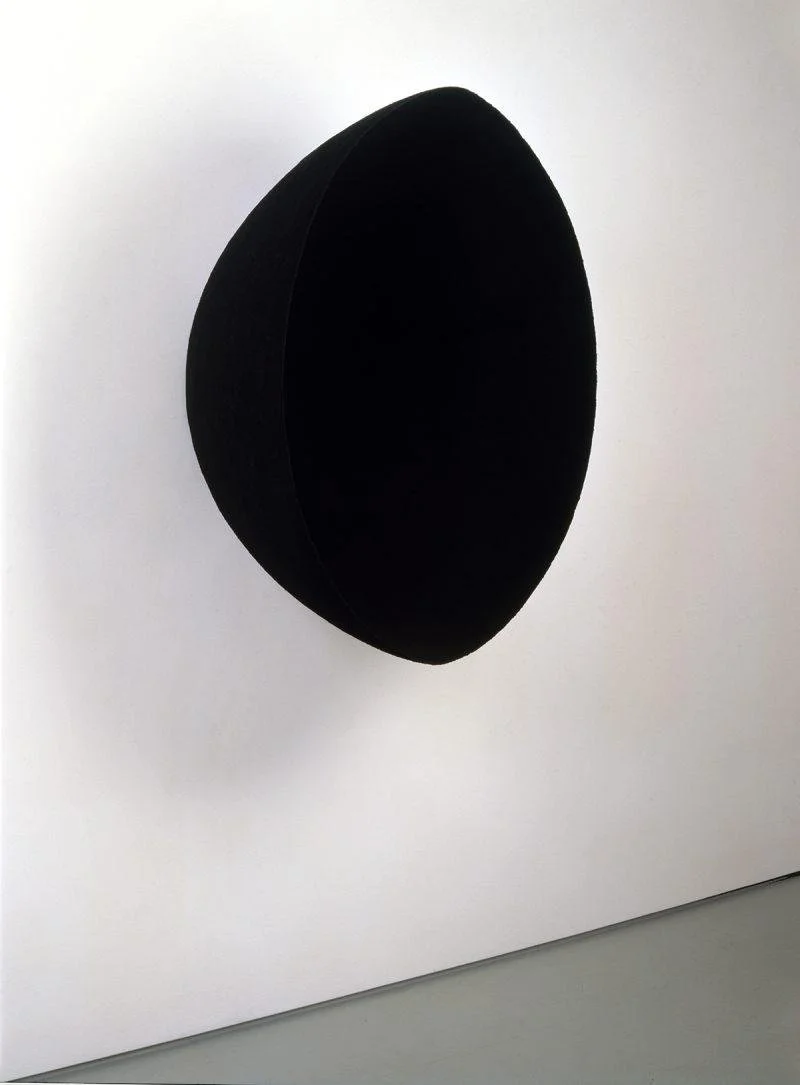
Anish Kapoor, Void, IX, 1991, Long before Vantablack, Kapoor was already using black pigment to make a solid object read as an opening or absence.
Kapoor has long been interested in voids. Years before he began working with Vantablack, the extraordinarily light-absorbing material later associated with his work, he made holes, cavities, and openings that made it hard to know what you were looking at. One of the best examples is “Descent into Limbo,” from 1992. From across the room, it looks like a flat black circle on the floor. Get closer, and the circle still gives you almost no information about itself. Is it painted? Is it solid? Is there a surface there?There isn’t. It is an actual cavity descending into the floor, lined with dark pigment so that you cannot judge its depth. The black removes the usual visual clues. Museum De Pont describes the effect perfectly: what appears to be a flat black disc is actually a dark cavity beneath the floor. This danger isn't entirely theoretical. In 2018, a visitor to an exhibition in Portugal apparently decided the black circle couldn’t really be a hole and stepped into it. It was. Kapoor later said he loved the story. I think I would have put up a rope. But it tells you something important about his work. Kapoor was already interested in making our eyes unreliable before he ever encountered the blackest black. And then a material came along that seemed almost made for him. Vantablack.
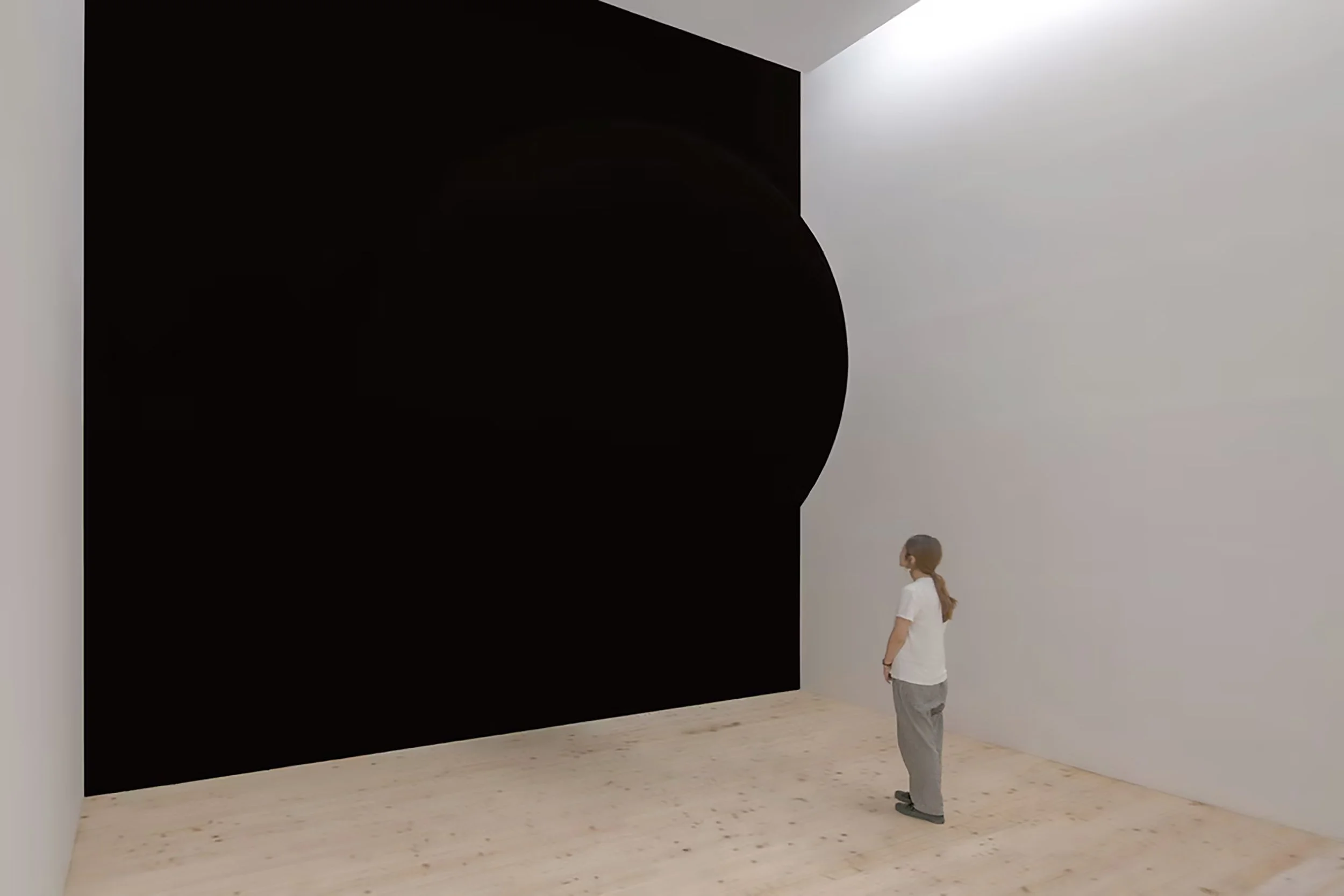
Installation view, Anish Kapoor, Gallerie dell’Accademia, Venice, 2022. Kapoor’s ultra-black works can appear less like objects placed in a room than holes cut into the architecture.
Developed by the British company Surrey NanoSystems, it could absorb so much light that a three-dimensional surface could begin to lose its visible contours. In the recent interview in The Art Newspaper that sent me down this particular rabbit hole, Kapoor connects his own black works directly to Malevich. He describes “Black Square” as an object that occupies a strange territory between what is real and what we are willing to believe is real. That interested me because Kapoor’s black does something rather different from Malevich’s. Malevich gives us an extremely physical object and asks us to entertain an idea. Kapoor uses an extraordinary material to make the physical object difficult to see. And I mean literally difficult to see.
FOR THOSE WHO LIKE TO WATCH PAINT DRY
Here is where my imaginary romance with Anish Kapoor begins to founder. I once dreamed that he was courting me. I’m beginning to think it might not have worked out. He strikes me now as the sort of man who orders a 1982 Château Margaux at dinner and, when the bottle arrives, tells me it’s only for him. Before Kapoor’s lawyers call, I should make clear that the dinner is imaginary. The exclusive artistic license for Vantablack was not. I would love to tell you how to mix Kapoor’s extraordinary black, but the first thing you need to know is that you can’t. Vantablack isn’t really paint. Or, as Kapoor himself puts it rather emphatically, “It is a technology, not a paint.” Surrey NanoSystems in Britain developed the original Vantablack. The name comes from Vertically Aligned NanoTube Arrays. Imagine an almost unimaginably dense microscopic forest of carbon nanotubes standing upright on a surface. Light enters this forest and has a very hard time getting back out. Instead of bouncing off the surface and returning to our eyes, it is repeatedly scattered among the nanotubes and absorbed. The original Vantablack coating absorbed as much as 99.965 percent of the light falling on it. Surrey NanoSystems has since developed a family of ultra-black coatings, some using carbon nanotube structures and others using newer technologies.
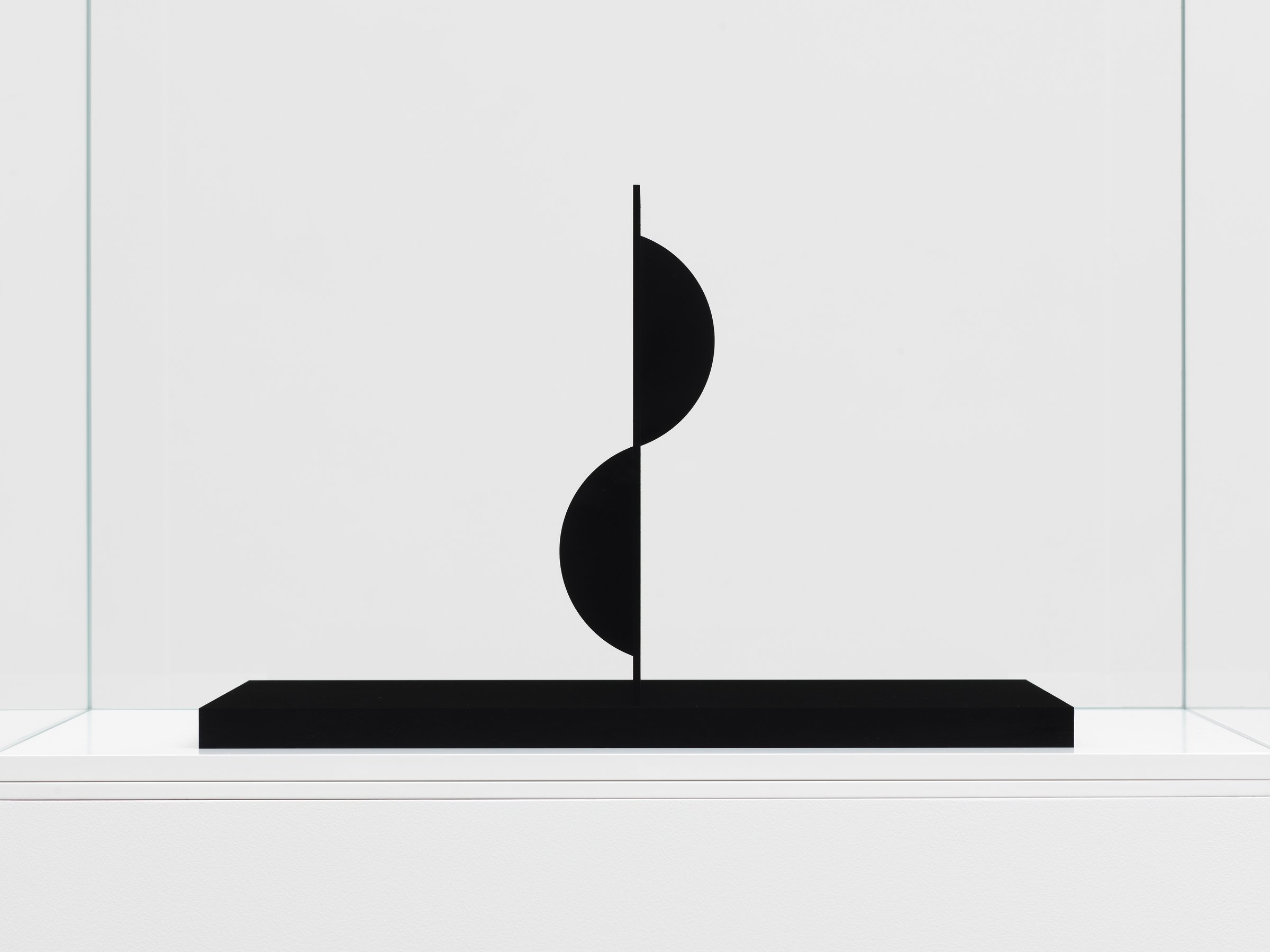
Anish Kapoor, Non-Object Black, 2015. A three-dimensional form coated in Vantablack. As reflected light disappears, so do many of the clues that tell us where the surface curves, projects, or recedes.
That missing light is the whole point. Ordinary black paint still reflects enough light for us to understand the surface underneath it. We can see a bump, a fold, a brushstroke, a dent. Light and shadow tell us where something curves and where it recedes. Take almost all of that reflected light away and something very strange happens. The object stops describing itself. A three-dimensional form can begin to look flat. A bulge disappears. A hollow becomes impossible to measure. Your eye keeps looking for information the surface refuses to provide. For an artist who had spent decades making voids, this must have been irresistible.
The original Vantablack wasn’t brushed on. A prepared object went into a reactor where the nanotube structure was grown on its surface. Later versions could be sprayed onto more complicated forms, but this is still highly specialized industrial technology, not something you buy at Blick and squeeze onto your palette. Surrey NanoSystems originally developed these coatings for things like aerospace and optical systems, where stray reflected light can interfere with instruments.Kapoor saw another possibility. Of course he did. The trouble is, in 2016 Kapoor obtained exclusive artistic access to certain Vantablack technology. Really, Anish? Not even one glass? I find this genuinely irritating. Part of the history of art is the history of artists getting their hands on materials and doing things with them that nobody anticipated. Give the same black to fifty artists, and you would get fifty entirely different answers. A sculptor would see one possibility. A painter another. Somebody would probably misuse it completely and discover the most interesting thing of all. That is what I want to see. For a while I thought Yves Klein had committed the same offense with International Klein Blue. A pox on both your houses. Except Klein didn’t. What Klein registered in 1960 was the process he developed for binding ultramarine pigment without losing the powdery intensity of the dry color. He didn't own blue, nor could he prevent other artists from using it. Fine. Half a pox on Klein’s house. I was not the only person annoyed by Kapoor. The British artist Stuart Semple responded to the Vantablack arrangement by producing what he called the “Pinkest Pink,” which he made available to everyone in the world except Anish Kapoor. Buyers were actually asked to certify that they weren’t Kapoor and weren’t purchasing it on his behalf. Somehow Kapoor got hold of it anyway. He posted a photograph of his middle finger dipped in Semple’s pink pigment. Artists. At which point I decided Kapoor deserved an answer.
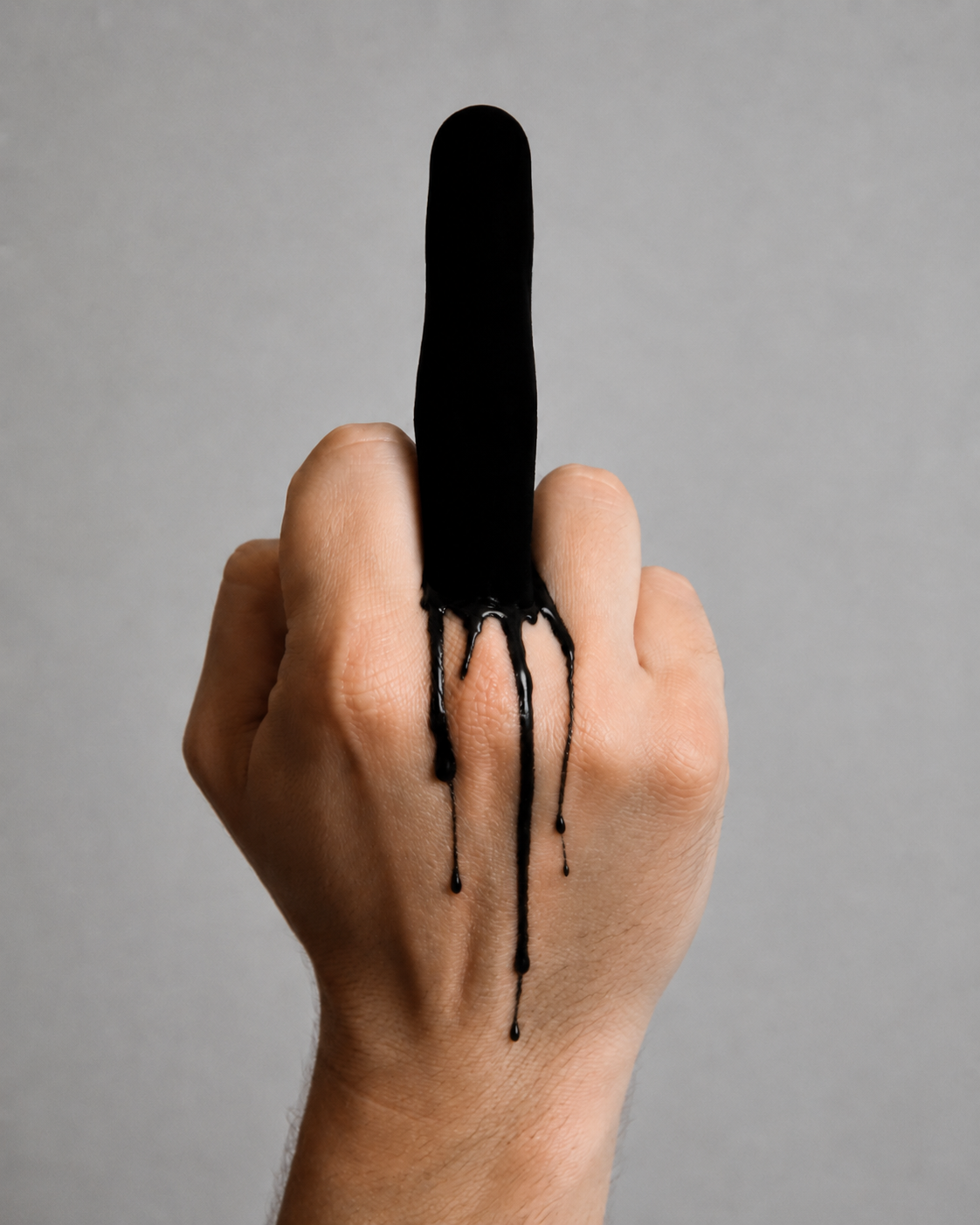
My entirely imaginary response to Anish Kapoor’s entirely real exclusive artistic license for Vantablack. The finger is AI-generated; the irritation is not.
Mine, of course, is not actually coated in Vantablack. Unlike Kapoor, I’m sharing. The silliness of the feud does obscure something I find quite serious about the work.Kapoor did not become interested in voids because Vantablack suddenly made them possible. He had already spent decades trying to make objects behave as though their boundaries were uncertain: pigment that seems to hover rather than sit on a surface, holes that look flat, reflective sculptures that seem to absorb the entire world around them. Vantablack simply gave him another way to interfere with the information our eyes normally trust. And that brings me back to Malevich. Malevich painted a black square and asked us to believe that something enormous had happened. Kapoor takes an object that is unquestionably there and makes us unsure that we can see it at all. Black is doing something quite different in each case. Which is beginning to be the point of all these black paintings.
IF WATCHING PAINT DRY HASN’T FROZEN YOUR BRAIN
My favorite source for this post is Louisa Buck’s 2026 interview with Kapoor in The Art Newspaper. Kapoor talks about Vantablack himself, and, even better, explains why he connects it to Malevich. Anish Kapoor interview in The Art Newspaper
For the technical side, Surrey NanoSystems’ own account of Vantablack is worth a look. It explains where the material came from and what the various ultra-black coatings actually do. Surrey NanoSystems on Vantablack
Museum De Pont has an excellent description of “Descent into Limbo” and exactly why the black cavity is so difficult to read. Descent into Limbo at Museum De Pont
And if you want the whole ridiculous Kapoor/Semple color feud, WIRED tells the story, including the pink middle finger. The Pinkest Pink versus the Blackest Black
YOU MAY ALSO LIKE