“I have very, very strong subject matter in my work, which is stripes.
A stripe is just as real as a goddamn flower.”—Gene Davis
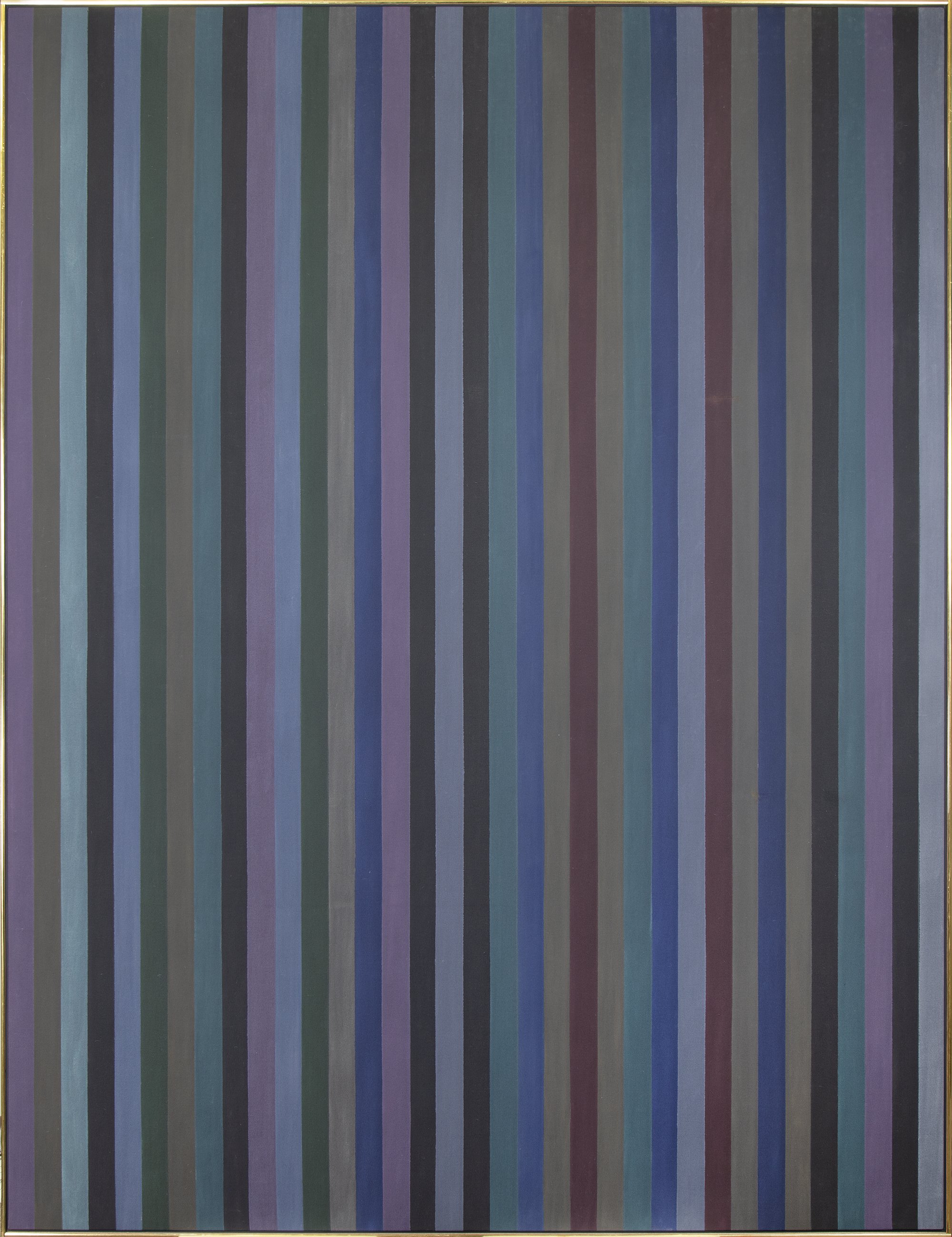
Gene Davis, Jabberwocky, Acrylic on canvas, 92 1/2 × 70 1/2in. (235 × 179.1cm), Courtesy of Smithsonian American Art Museum, Washington, D.C., Gene Davis Estate Collection
I had assumed that Gene Davis made nothing but stripe paintings. He did not. He began with drawings and Abstract Expressionist paintings and later made collages, micro-paintings, video, neon, and enormous outdoor works. But once he found the stripe in the late 1950s, it became his principal subject.
Subject is the word Davis himself used.
“I have very, very strong subject matter in my work, which is stripes,” he said. “A stripe is just as real as a goddamn flower.”
That gets us closer to the paintings. The stripe was not simply a device for arranging color. It was the thing itself.
Davis arrived at it partly through resistance. By the late 1950s, Abstract Expressionism had begun to look academic to him. Art schools were turning out small de Koonings, Pollocks, and Klines. Davis decided to go in the opposite direction. Instead of painterly, he would be neat. He later said that he made his first stripe painting partly to be outrageous.
The decision may have begun as a provocation, but the possibilities of the stripe kept him occupied for the rest of his life.
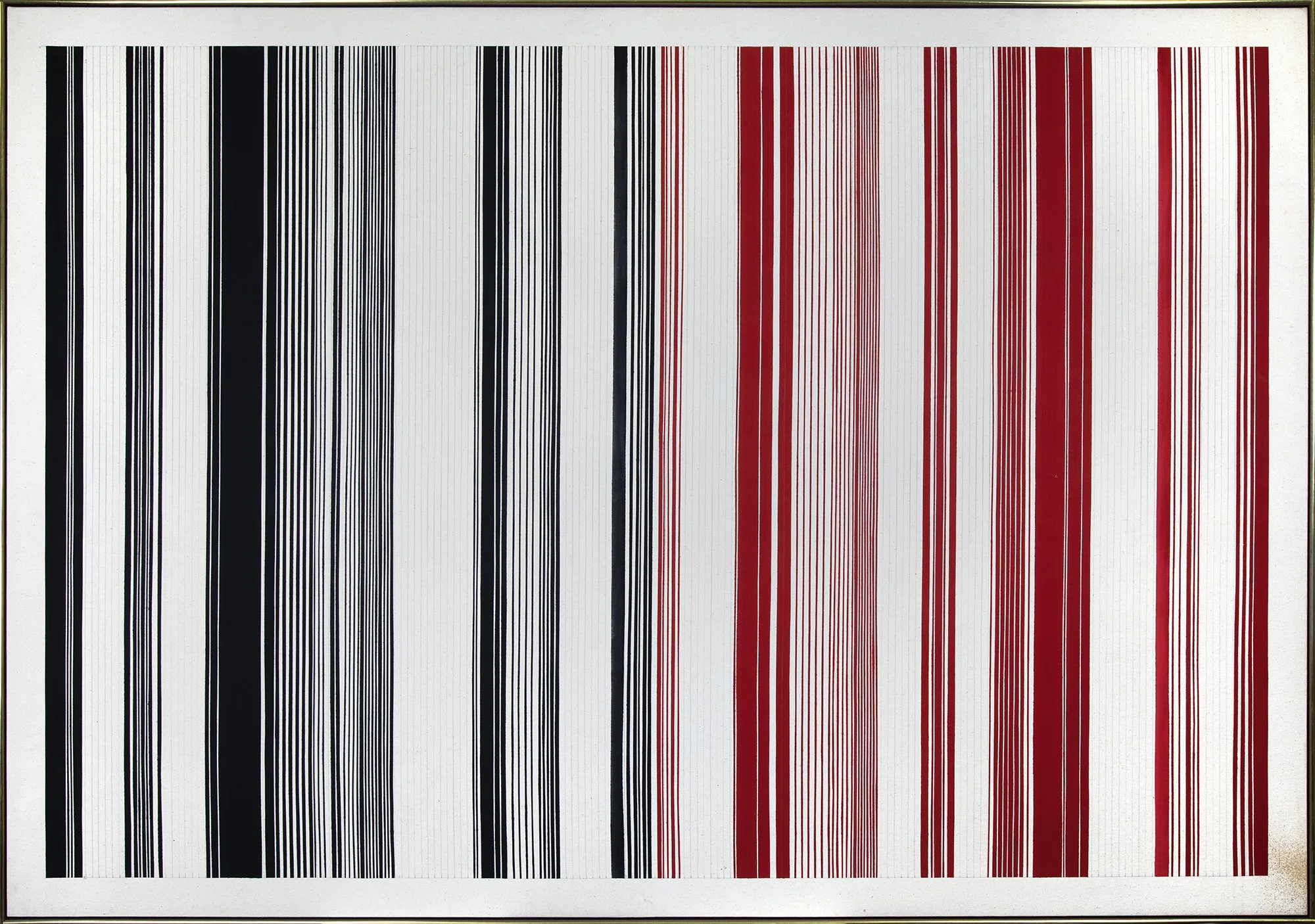
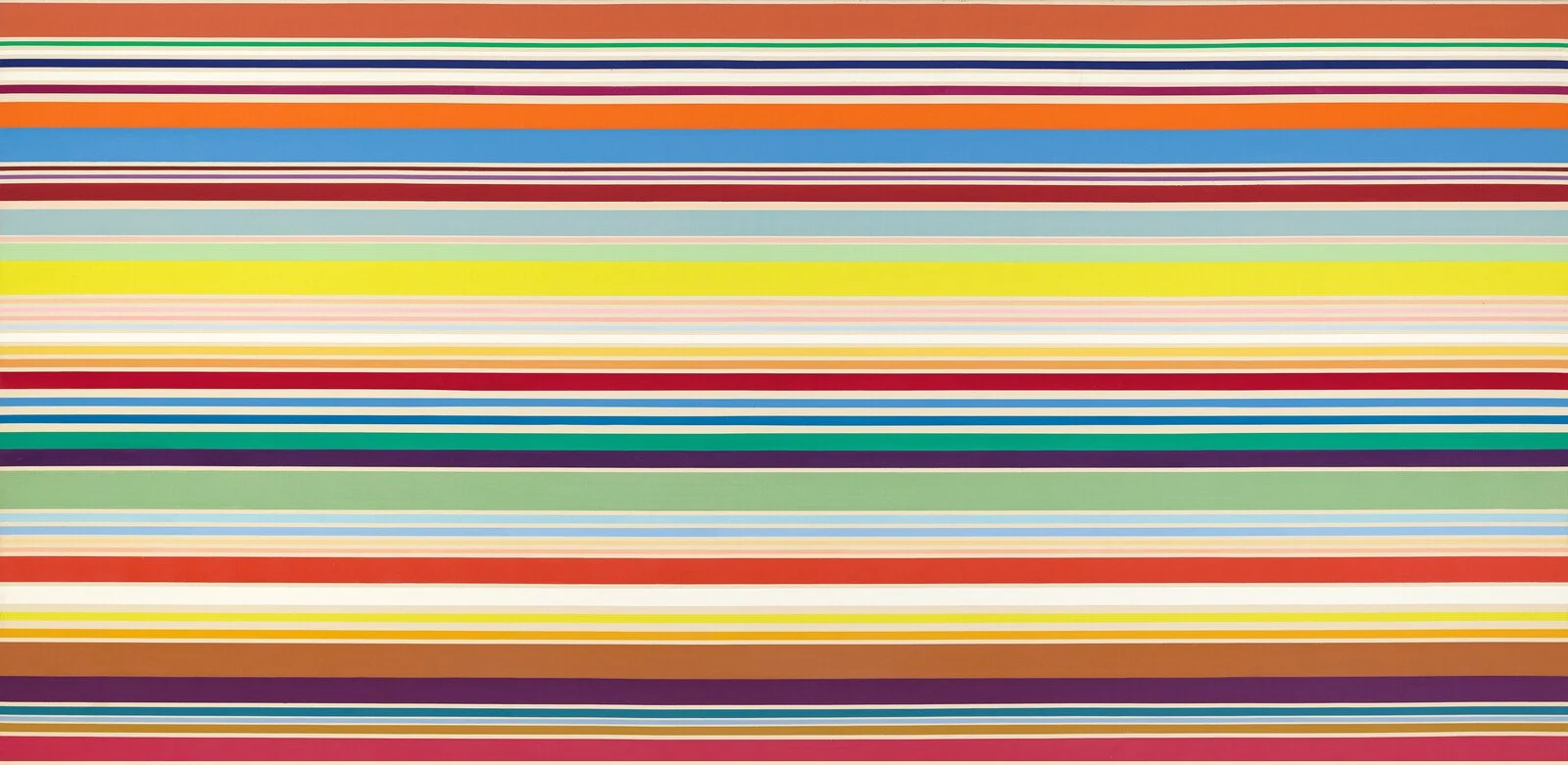
Gene Davis, Night Rider, Acrylic on canvas, 68 1/2 × 99 1/4in. (174 × 252.1cm), Courtesy of Smithsonian American Art Museum, Washington, D.C., Gene Davis Estate Collection
Davis was grouped with Morris Louis and Kenneth Noland as part of the Washington Color School, but the stripe served each of them differently. In Louis’s paintings, color remains liquid. Even the late Stripe paintings carry the memory of pouring, staining, and gravity. Noland used bands of color to establish proportion, direction, and the shape of the canvas itself.
Davis filled the entire field with vertical stripes. Nothing was left outside the system.
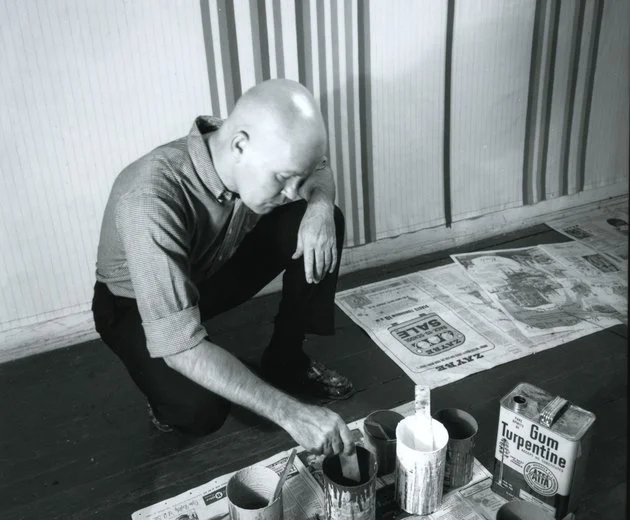
Yet system is a misleading word. His paintings look as though every color must have been plotted before he began. They were not. Davis said that he never made a study for a stripe painting. He chose the colors, widths, intervals, scale, and format intuitively as the painting developed. He compared himself to a jazz musician playing by ear. He called it “playing by eye.”
Gene Davis
This is what interests me most about Davis. The paintings look predetermined, but they were improvised.
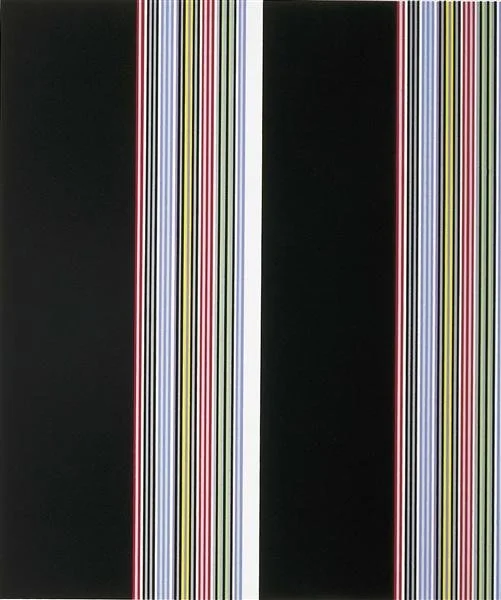
The repetition provided the underlying structure. Within it, Davis could place a bright yellow, move through blue, green, brown, black, and pink, and then bring the same yellow back several feet later. The two yellows would establish a relationship across everything that came between them.
Davis called this “color interval.” He thought interval might be even more important than color. Music unfolds through intervals in time. His paintings unfold through intervals in space.
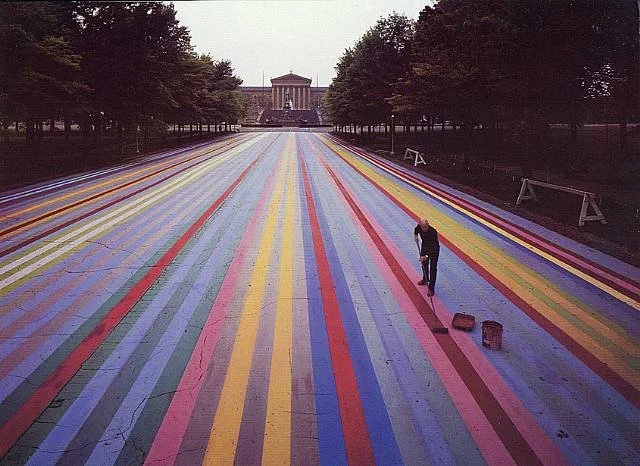
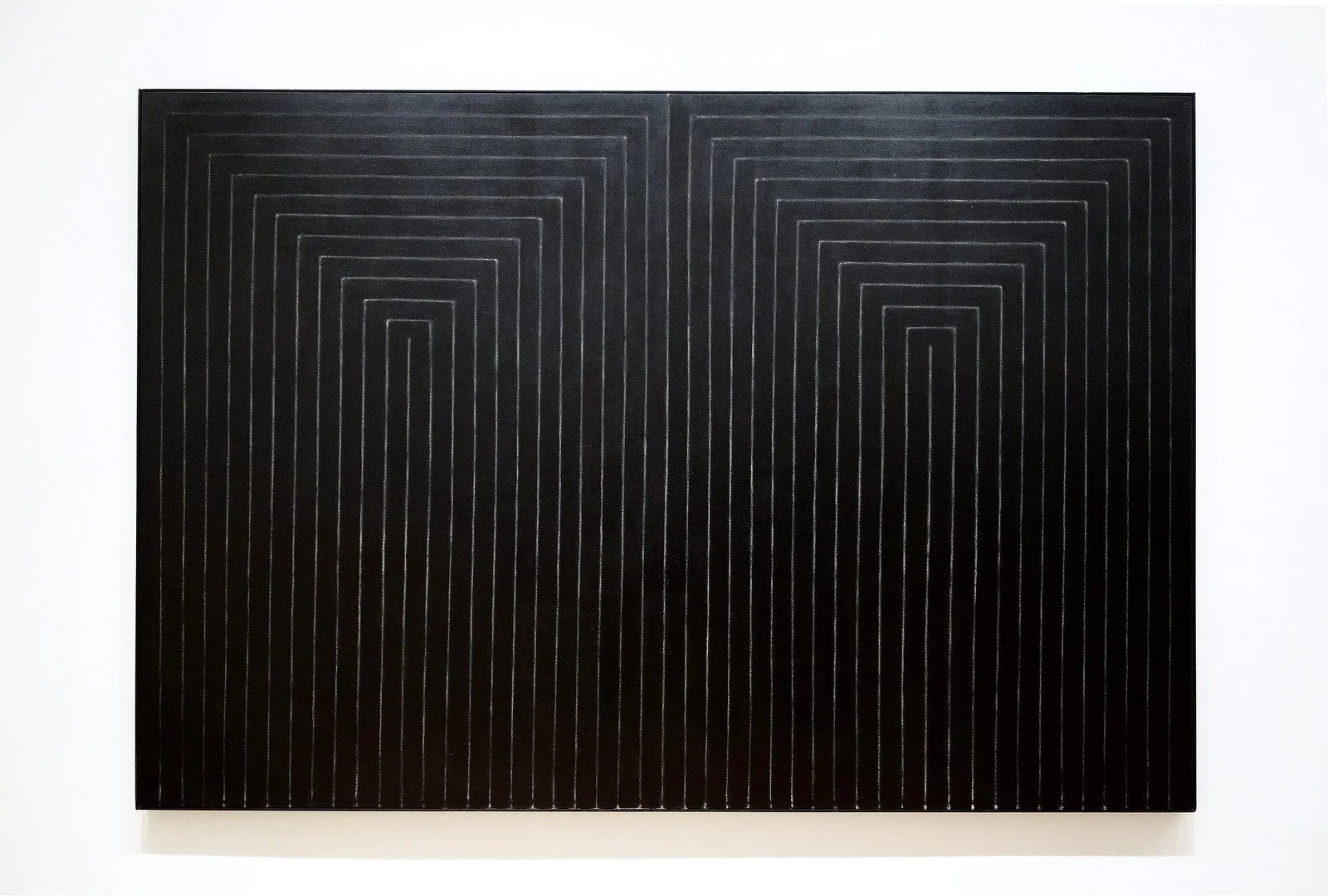
Gene Davis, Franklin Footpath
Louis and Noland often made what Noland called “one-shot” paintings: images that could be taken in quickly. Davis did not want his paintings seen that way. He suggested choosing one color and following it across the canvas.
“Enter the painting through the door of a single color,” he said.
Once you do that, the painting stops looking like a row of stripes. You begin to notice how long it takes for a color to return, how a pale green changes when it appears beside red rather than blue, or how several dark stripes can slow down a passage of brilliant color. The eye moves back and forth, remembering what it has just seen and anticipating what might come next.
Gene Davis
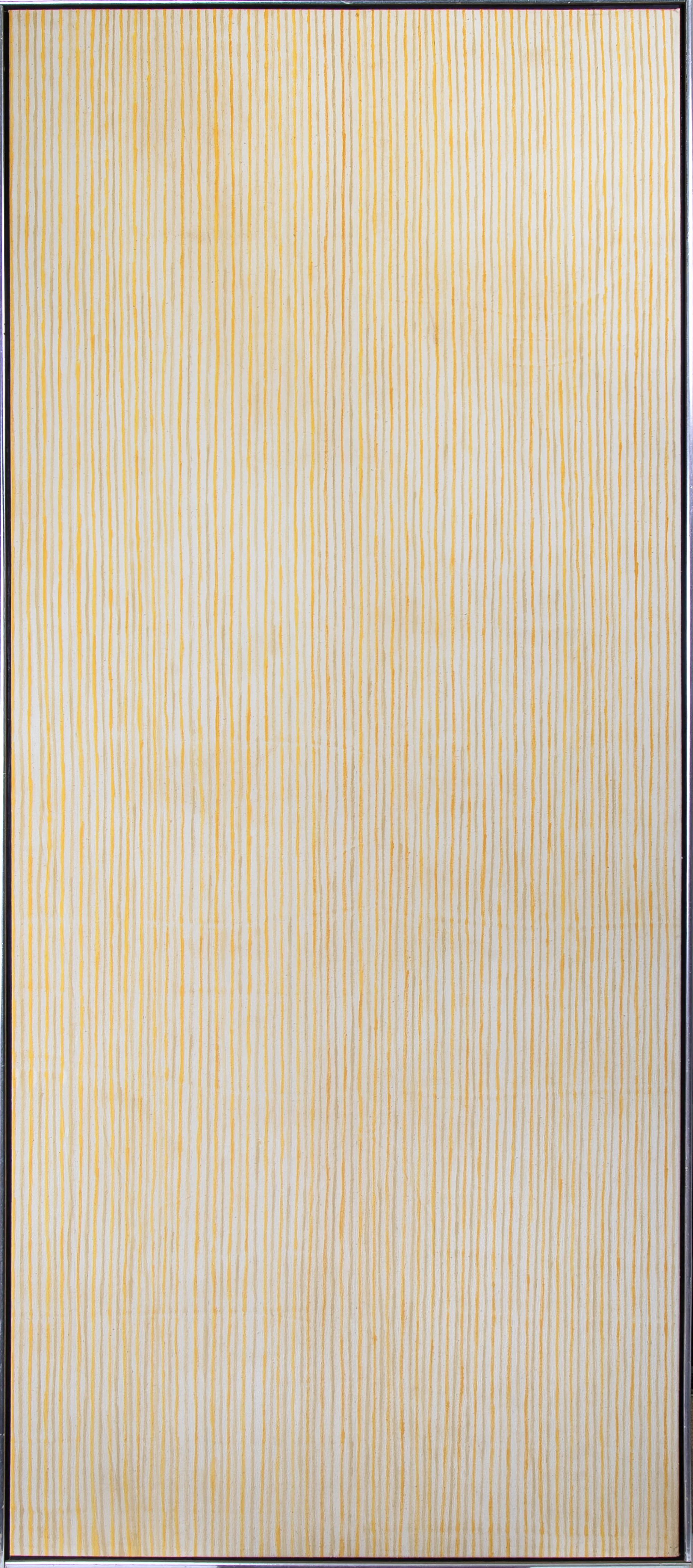
Gene Davis, Two Yellows, Oil on canvas,
70 1/2 × 30 1/4in. (179.1 × 76.8cm),
Courtesy of Smithsonian American Art Museum, Washington, D.C., Gene Davis Estate Collection
At large scale, this movement becomes physical. Some of Davis’s paintings are nearly twenty feet wide. You cannot see the entire sequence with equal attention at once. You have to travel across it.
He also allowed the stripe to move beyond the conventional canvas. In Wall Stripes No. 3, seven separate striped panels are interrupted by areas of bare wall. The wall becomes another interval in the painting. In 1972, he carried the stripes across the street outside the Philadelphia Museum of Art in Franklin’s Footpath. Students and members of neighborhood street gangs helped paint the work directly onto the pavement.
The stripe could be a narrow line, a twenty-foot painting, or a city street.
FOR THOSE WHO LIKE TO WATCH PAINT DRY
Davis’s earliest stripe experiments were painted by hand. He described making Peach Glow on raw canvas without measuring or masking the lines. He simply painted them by eye.
As the paintings developed, masking tape helped him establish cleaner edges and repeatable widths. The early works include oil paint, while the mature stripe paintings were generally made with acrylic on canvas. He sometimes used colors directly from the tube, particularly during the mid-1960s, but more often mixed them himself.
He frequently worked with the canvas on the floor, which meant painting on his hands and knees. Despite the precision of the finished surface, there was nothing mechanical about the process. He did not prepare a complete color plan and then fill it in. He began painting and allowed one color to suggest the next.
The straight edge gave him something stable to work against. The decisions remained open.
In reproduction, Davis’s paintings can look orderly, almost decorative. In front of a large one, the eye cannot hold the entire sequence at once. It has to move, lose its place, return to a color, and begin again.
That is where the painting is.
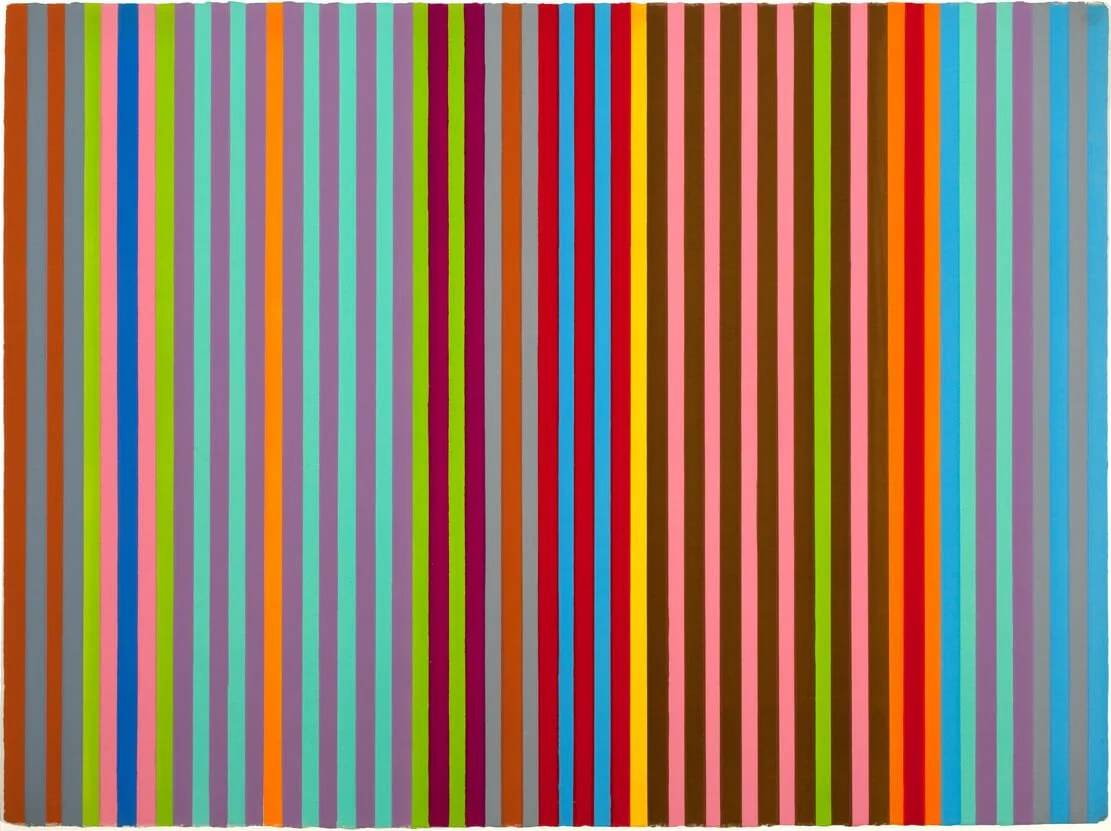
Gene Davis, 1968, color screenprint, 22 1/4" x 30"
YOU MAY ALSO LIKE: