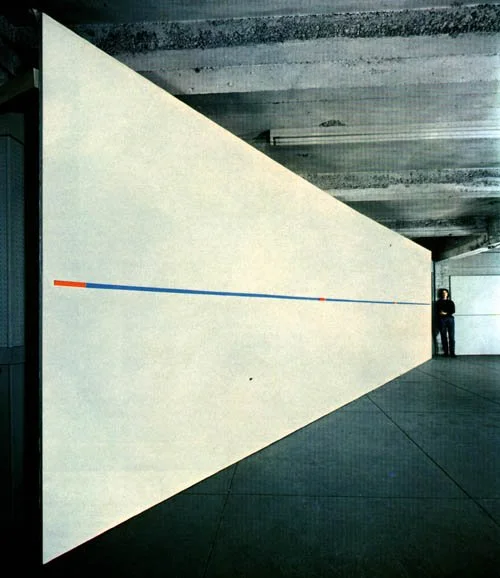
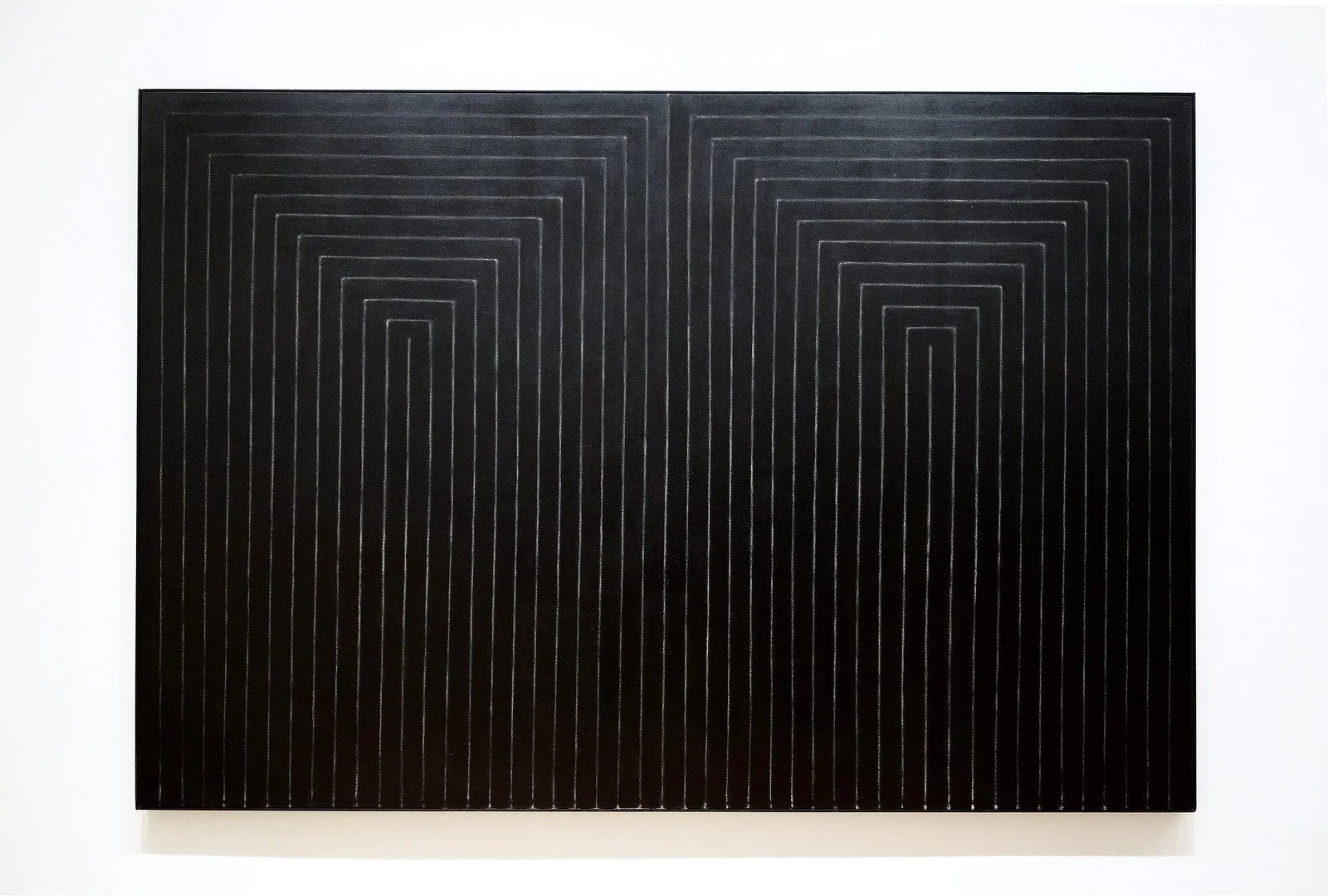
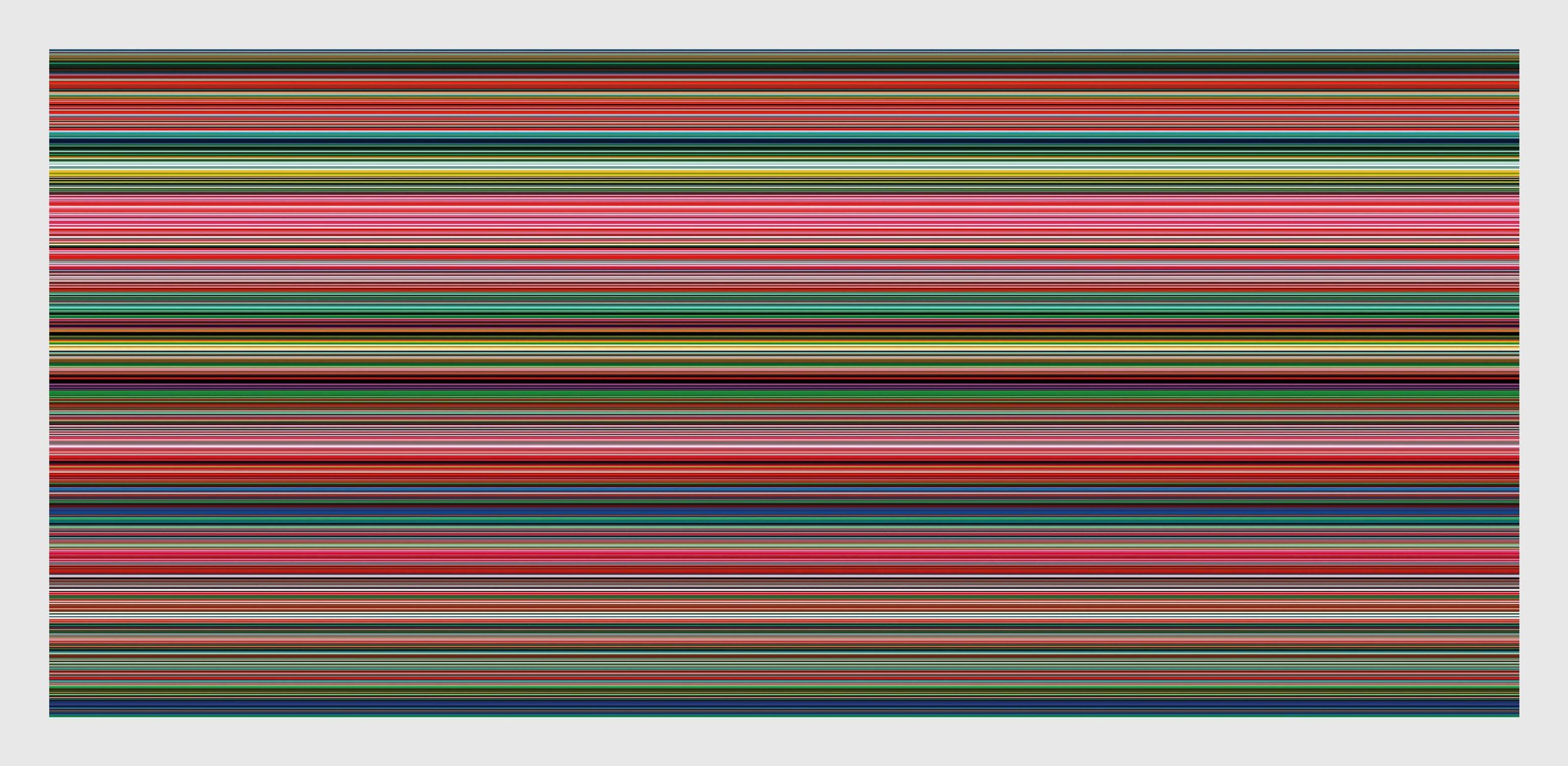
“The stripe can do anything in any direction, and since it is so common,
it corresponds to everything around us.” —Sean Scully
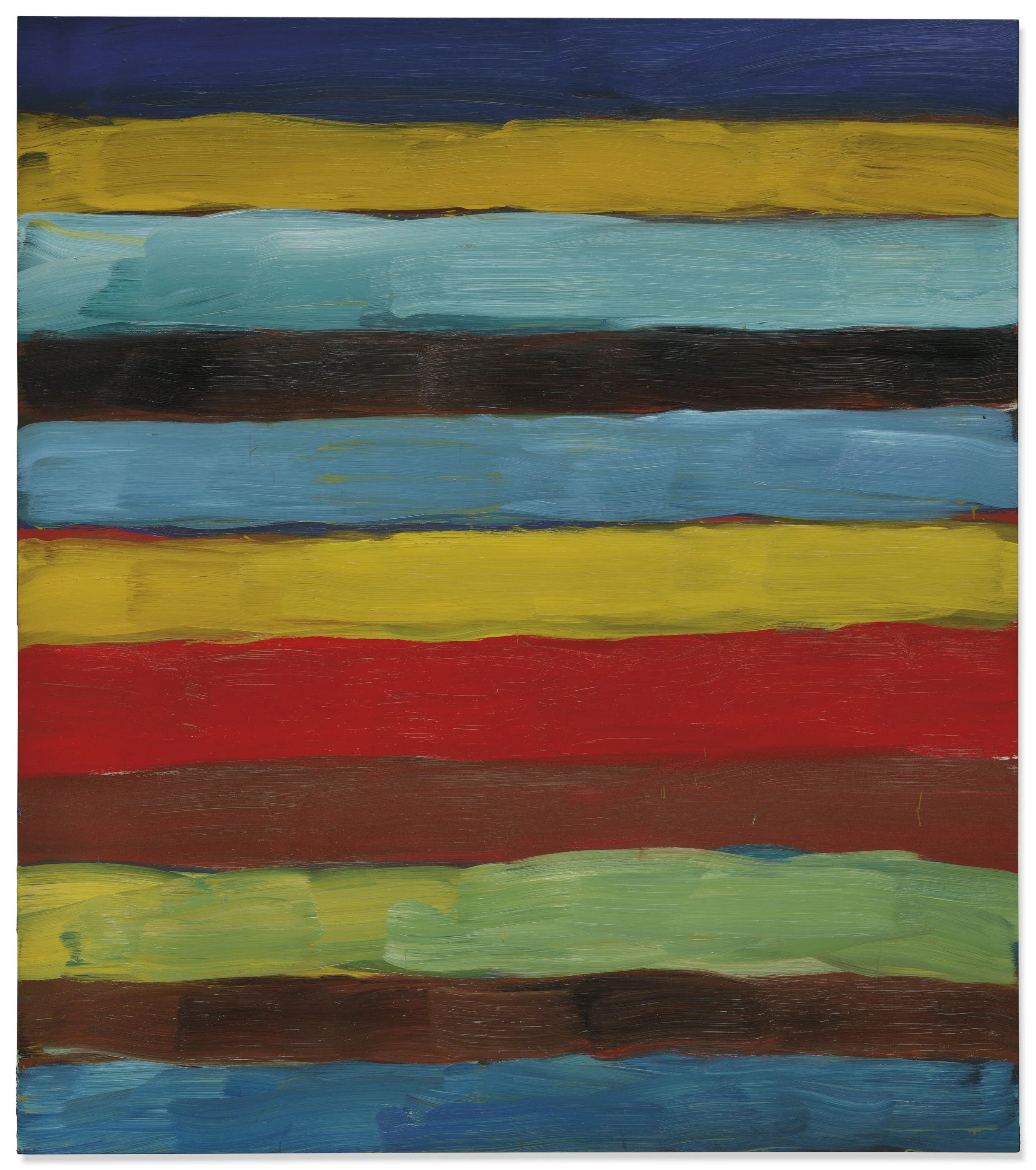
Sean Scully (b. 1945), Landline Red Horizon, executed in 2016. 85 x 75 ¼ in (216 x 191 cm).
The first time I encountered Sean Scully’s work was at a gallery exhibition in New York. I had never seen his paintings before, and I was struck by the visceral way they entered my body. The work felt charged. I did not read the paintings at first. I felt them.
This surprised me. Their structure was plain enough: broad horizontal and vertical bands, blocks of color, one painted section set against another. I could see how the paintings were organized, but that was not how I experienced them. What registered first was their physical force.
I have been thinking about stripes because I recently returned to them in my own work. Scully’s paintings remind me that a stripe can do more than measure or divide a surface. It can carry paint.
And Scully’s stripes carry a great deal of it.
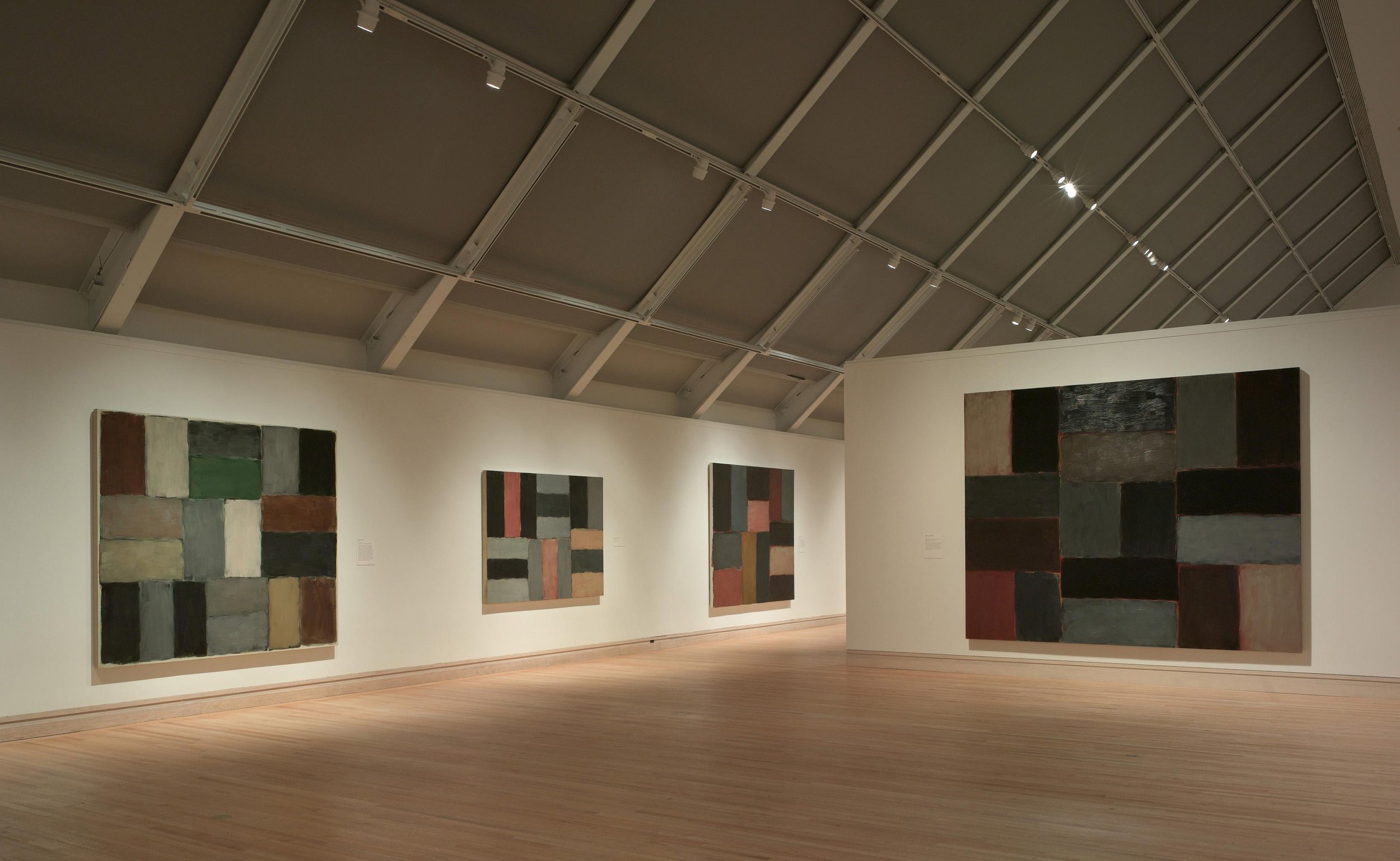
Sean Scully, Walls of LIght, 2006 - Galerie Max Hetzler
SOMEWHERE TO PUT THE COLOR
One of Scully’s teachers told him that his gift was color, but his problem was where to put it.
The stripe gave him somewhere to put it.
His early striped paintings were far more controlled than the paintings for which he is now best known. He used tape to make tightly organized grids of crossing bands. Over time, he gave up the taped edge and began painting the stripes freehand. The bands became wider. The brush became visible. The paintings opened up.
That change made all the difference.
A mechanically perfect stripe tells us where one area ends and another begins. A stripe painted by hand carries the speed and pressure of the brush. Its edge swells or wavers. Paint gathers in one place and thins in another. A color from underneath may remain visible along the edge.
The geometry gives Scully something firm enough to work against. It holds the painting together without draining the life from it.
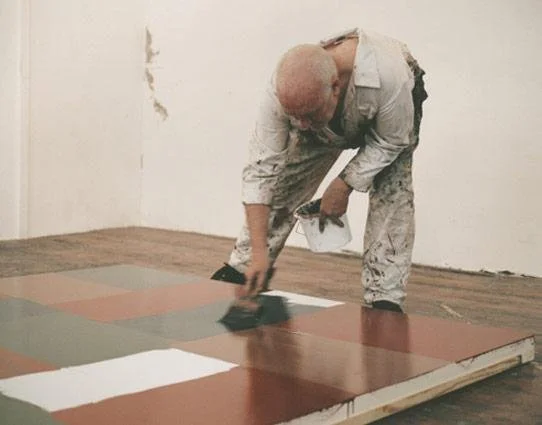
Sean Scully Painting - LA LOUVER
THE PAINT
A reproduction can show us the arrangement of a Scully painting. It cannot quite show us the paint.
From across the room, the paintings can look blunt and declarative. Up close, each band begins to break apart. A brown may contain red, violet, ochre and black. One grey is warmer than the grey beside it. The direction of the brush changes. Underpainting shows through. The edge between two colors is never quite settled.
The stripe may be simple, but the color within it is not.
This may be why the paintings feel so physical. The bands are not flat compartments filled with color. Each one has been worked, revised and built up. They carry the history of their making.
Sometimes Scully joins several painted panels together. A smaller striped section may be inserted into a larger one, with its bands moving in another direction. One part interrupts another. The painting becomes less like an image and more like something constructed.
The parts touch, but they do not disappear into one another.
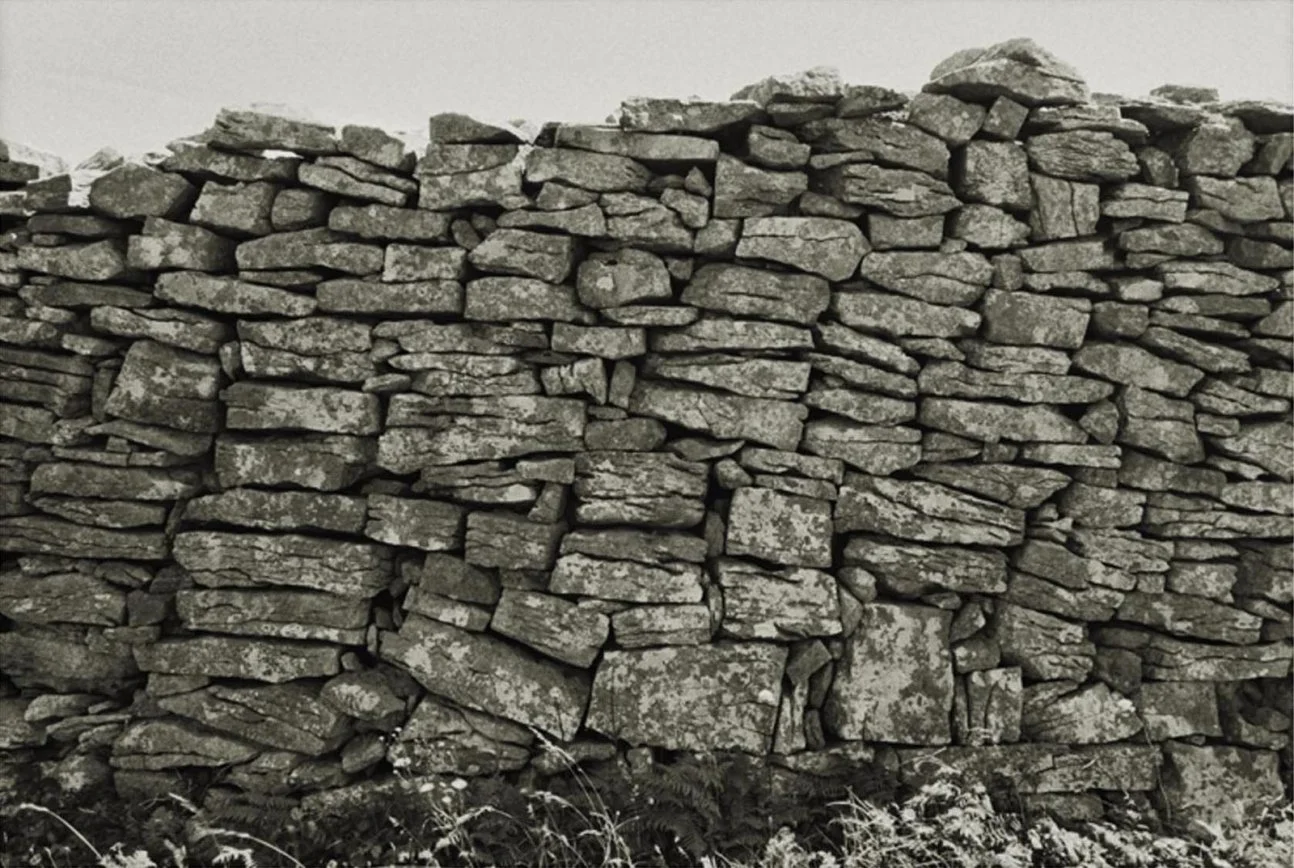
Sean Scully, Walls of Aran, Inis Meain, 2006, black and white photograph, 23.3 × 28.8 inches- Kerlin Gallery
THE PHOTOGRAPHS
Scully is also a photographer. He photographs walls, doorways, buildings, horizons and stacked stone. These photographs show how often the structure of his paintings already exists in the world.
His photographs of dry-stone walls are especially revealing. The walls are built from irregular pieces fitted together without mortar. Long horizontal stones are interrupted by vertical ones. Heavy blocks rest on smaller fragments. There are gaps, shifts and occasional misalignments.
The wall holds, but it is not perfect.
I do not think Scully photographs these things in order to turn them directly into paintings. The relationship is less literal than that. The photographs show what catches his eye: weight, interval, repetition, interruption, and the way light moves across a constructed surface.
He sees the stripe in the world.
A stone wall can provide a structure, but every stone remains particular. The same is true of the bands in his paintings. The repeated form allows us to notice the differences.
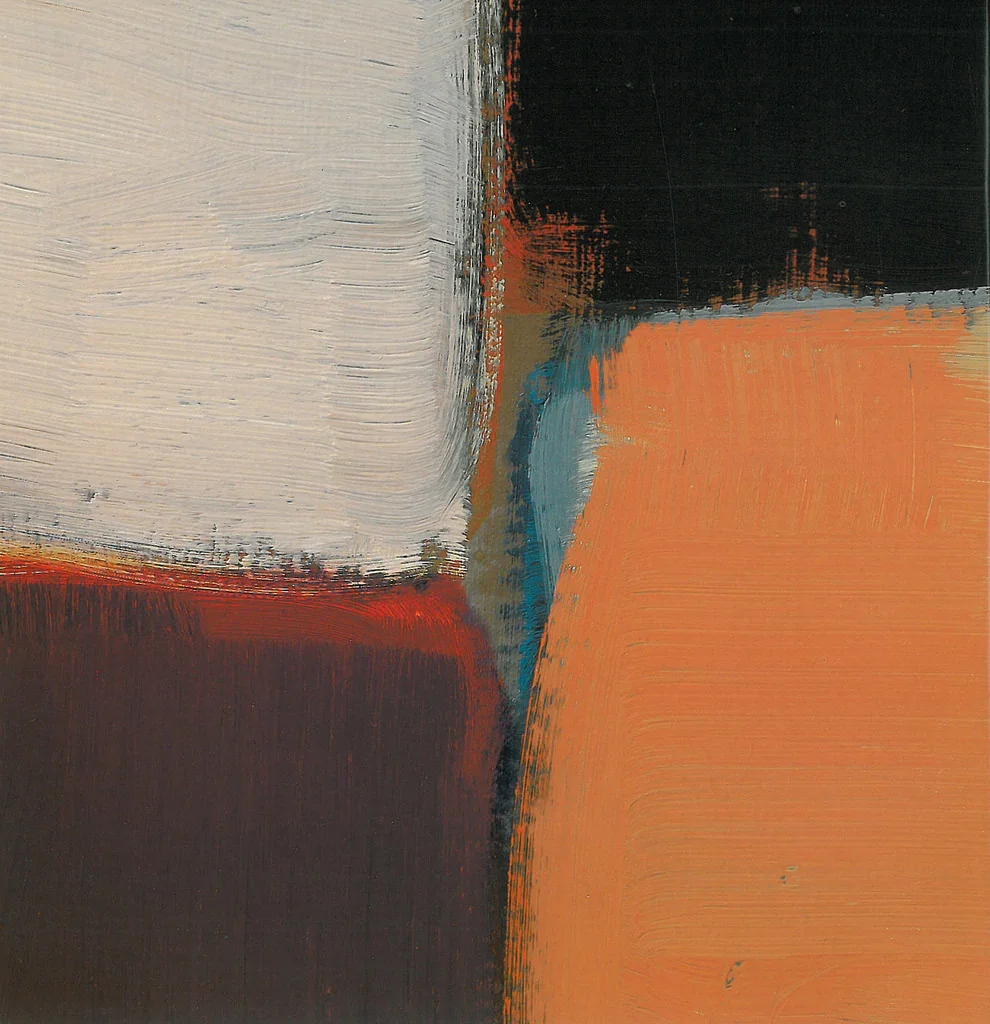
Sean Sculley, detail
FOR THOSE WHO LIKE TO WATCH PAINT DRY
Scully’s early stripe paintings were made with acrylic paint, masking tape and, at times, sprayed color. The tape allowed him to build intricate grids with relatively precise edges.
By the early 1980s, he had moved toward oil paint and freehand brushing. He has worked on linen, canvas, wood, and aluminum, sometimes joining several supports together or placing a smaller painted panel within a larger one.
Oil paint allows the surface to be built slowly. One layer can cover another completely, or the earlier color can remain visible through a thinner passage. On aluminum, light can reflect back through the paint. On linen, it is absorbed differently.
But the material alone does not account for the paintings. Their force comes from the tension between the simple structure and the way the paint has been handled. The stripe establishes the order. The brush complicates it.
At that first exhibition, I knew none of this. I knew only that I felt the paintings before I understood them.
YOU MAY ALSO LIKE: