
MATERIAL EVIDENCE: Bellini, Mehmed and What Paint Knows
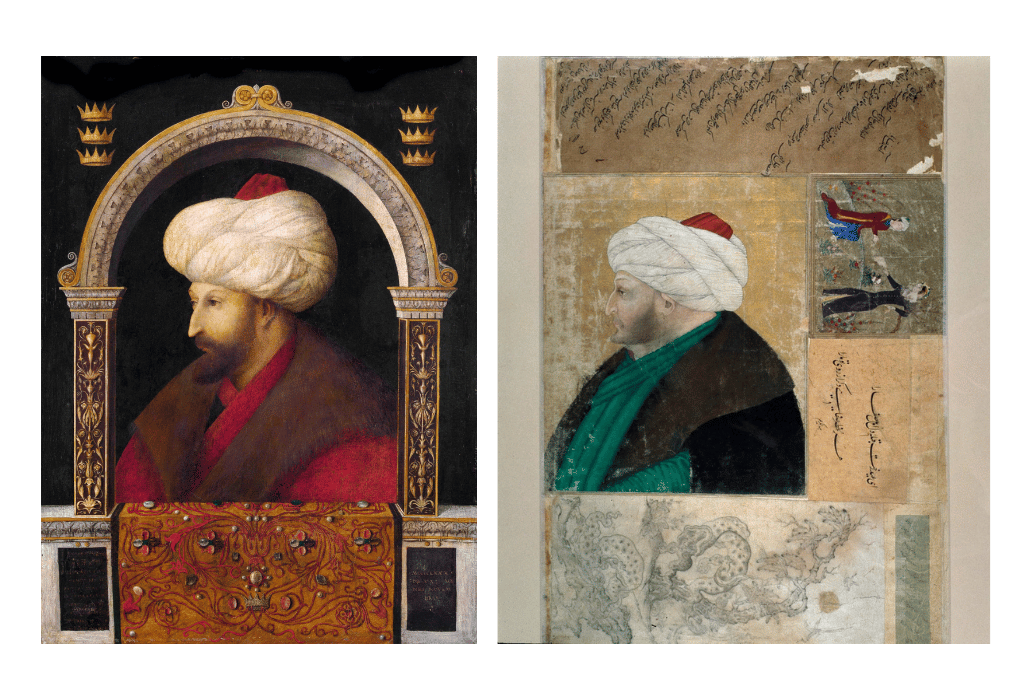
Gentile Bellini, Portrait of Sultan Mehmed II, 1480, National Gallery, London
After writing about Gentile Bellini’s portrait of Sultan Mehmed II, I found myself asking a different question.
Not who commissioned the painting.
Not why Bellini was sent to Constantinople.
Not even whether he had been looking at Persian and Ottoman miniatures.
I wanted to know how the picture was made.
The portrait seems to sit between two traditions. The Sultan’s face is modeled with light and shadow, unmistakably Venetian in its interest in weight, individuality, and psychological presence. But the arch, the textiles, the pattern, and the contained, almost jewel-like space around him made me think of Islamic manuscript painting. That led me to the question materials can sometimes answer better than iconography.
Artists borrow imagery from one another all the time. Materials are harder to fake. So I started where paintings begin.
With the surface.
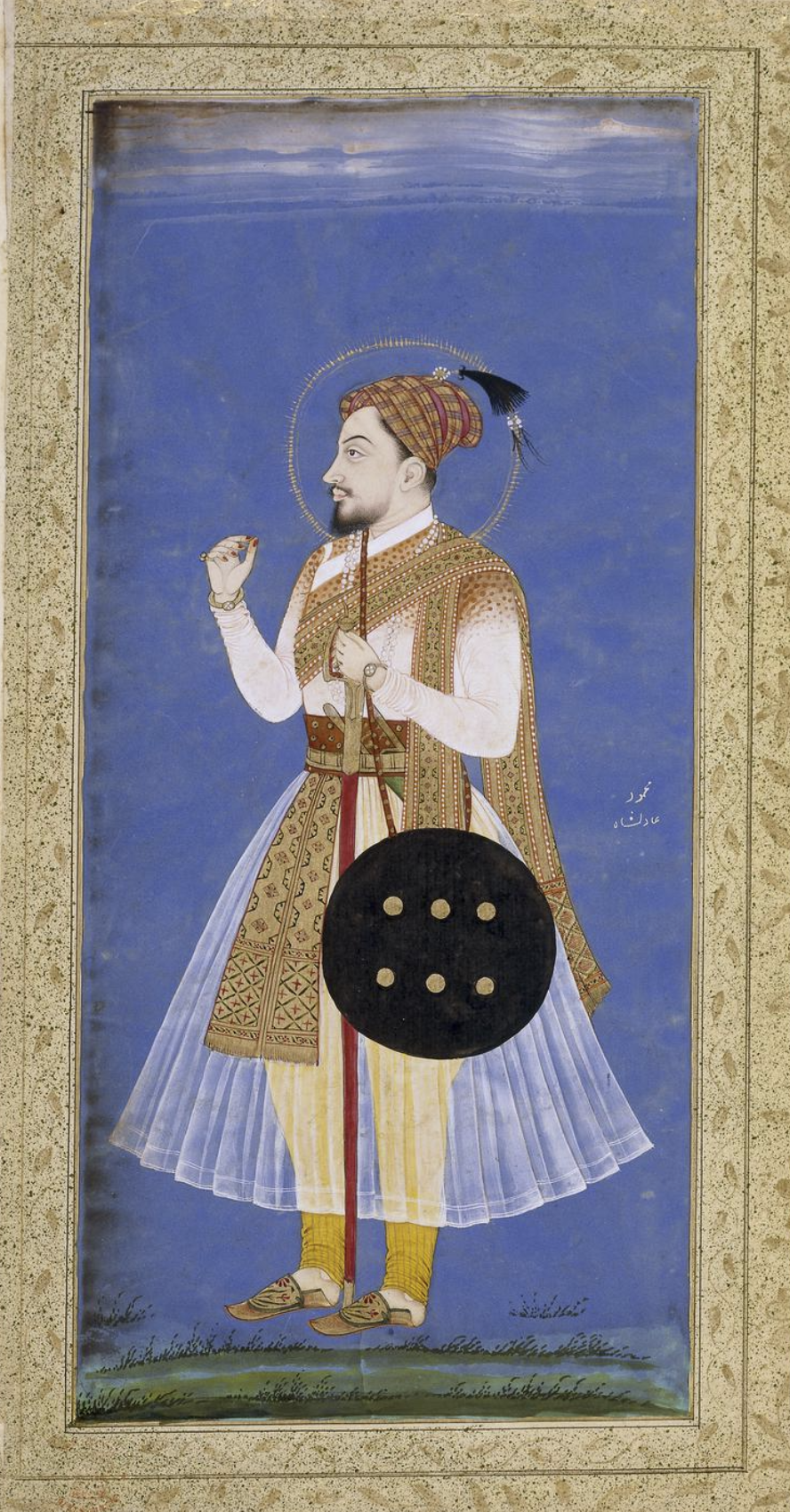
For more than a decade, I made paintings from paper pulp. Most of the pulp came from discarded clothing. Cotton and linen behaved predictably enough, but synthetic fibers were another matter. When beaten, polyester turned into something closer to fuzz than fiber. Acrylic fibers refused to cooperate altogether, appearing as little sperm-shaped strands swimming through the mix. They would not lock together when pressed.
Working that way teaches you that paper is not simply paper. It is a collection of fibers with particular properties and behaviors.
When I learned that Persian and Ottoman miniatures were painted on paper rather than vellum, my first thought was that the paper might be made from abaca or another Asian fiber. Papermaking had reached the Islamic world from China, so I assumed the fiber had traveled with the technology.
But I was wrong.
The technology traveled. The raw materials changed.
By Bellini’s time, luxury manuscript papers were commonly made from linen, hemp, flax, cotton, and other textile fibers. The sheets were then sized, polished, and burnished until they acquired an almost satin-like surface. The paper itself became part of the optical system.
Bellini began somewhere else.
His portrait of Mehmed was originally painted on a wooden panel, later transferred to canvas and heavily restored. Much of the original paint surface has been lost, which makes it difficult to reconstruct exactly how the painting was built. But Bellini belonged to a Venetian tradition that often began with luminous white grounds. Long before paint was applied, the panel was prepared to reflect light back through the layers above it.
Years ago, painter Stephen Lack, whose studio was downstairs from mine, pointed to a wall of small paintings and asked if I could identify the one painted on a lead white ground.
I scanned the wall. One painting stood out immediately.
I am not sure I could have explained why. It was not brighter exactly. It seemed to glow.
That was the first time I understood that the surface beneath a painting changes everything.
The manuscript painters understood that, too.
Before either Bellini or a manuscript painter picked up a brush, both traditions had already begun engineering the movement of light. Then the paths diverged.
Having ground pigments into oil myself, I know that pigment and paint are not the same thing. Pigment is only colored dust. Paint begins when that dust meets a binder.
The palettes overlapped more than I expected. Lapis lazuli, vermilion, lead white, malachite, verdigris, gold. If you spread the raw materials on a table, Bellini and a manuscript painter might have recognized many of the same substances.
Yet they produced entirely different pictures. The difference was not the minerals. The difference was what happened next.
Bellini suspended his pigments in oil.
The manuscript painters suspended theirs in gum arabic, producing something much closer to gouache than to oil paint.
The same minerals were being asked to do different jobs.
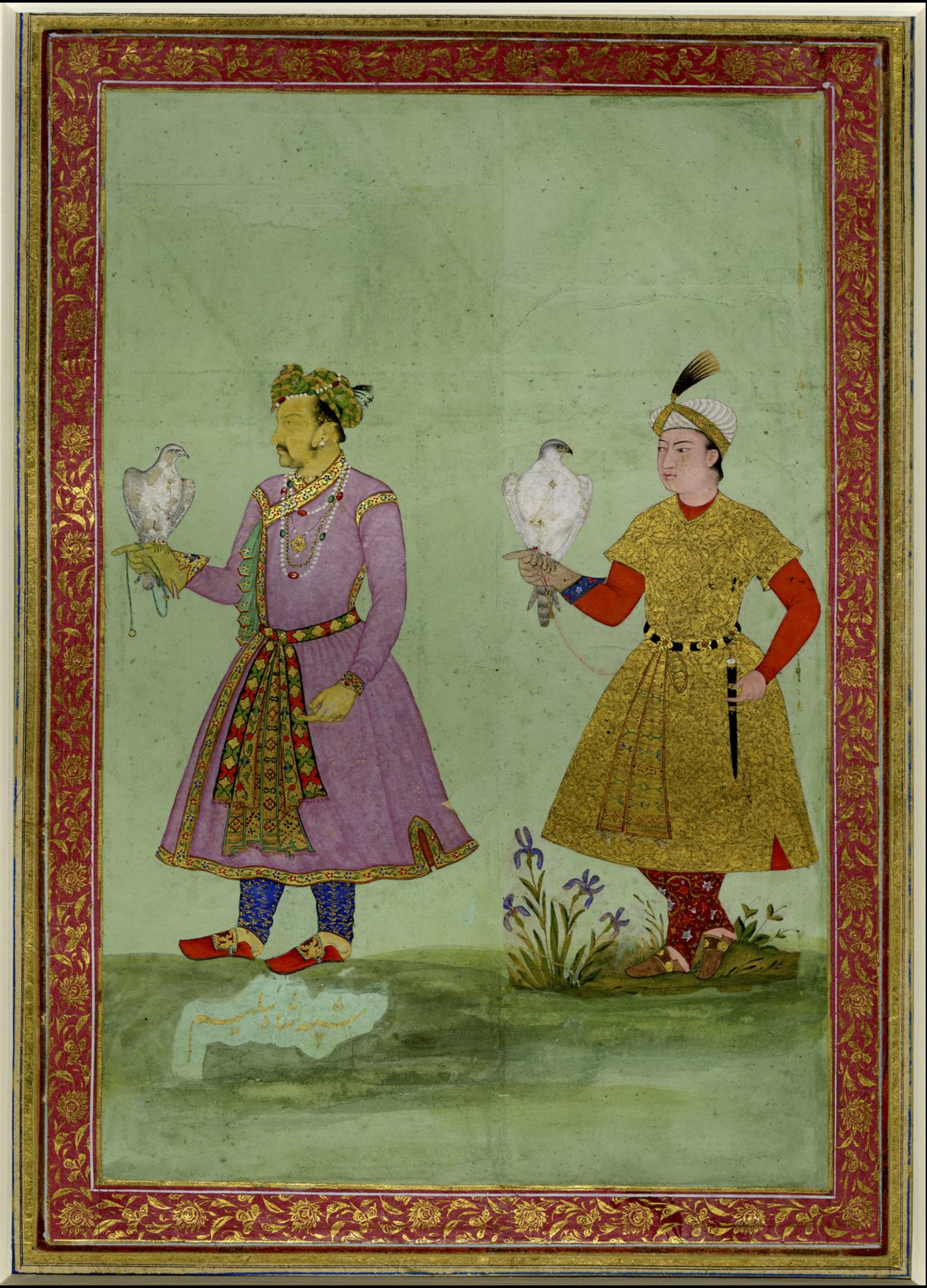
At first, I thought I was writing an essay about materials. Somewhere along the way, I realized I was really asking a different question.
What did these artists think color was for?
Bellini’s answer was light.
His colors are designed to describe the world as light reveals it. Oil paint allowed him to build translucent layers, or glazes, through which light could travel before reflecting back to the eye. The glow comes from depth. Light enters the painting, moves through it, and returns.
The manuscript painters were pursuing something else.
They were not trying to recreate the way light falls across a face at a particular moment of day. Their colors often behave more like jewels than atmosphere. Lapis lazuli is blue the way a sapphire is blue. Not the blue of a sky under changing weather, but blue as an ideal. Vermilion remains intensely red. Orpiment remains intensely yellow. Each color is allowed to make its full declaration.
The more I looked, the more I wondered if the real hero of manuscript painting might not be lapis lazuli at all.
It might be lead white. The same pigment Stephen Lack had challenged me to identify decades earlier.
Mixed into colors, lead white increases opacity and reflectivity. It brightens pinks, greens, blues, and lavenders, helping them retain their brilliance on the page. Looking through Persian and Ottoman miniatures, I began to suspect that many of those luminous passages owe as much to lead white as to the more famous pigments themselves.
Both traditions were trying to bring light into color. They simply took different routes. Bellini buried light inside the painting. The manuscript painters brought it to the surface.
Then there were the brushes.
Considering the precision of Bellini’s portraits, how his brush behaved would have mattered enormously to him. According to Cennino Cennini, artists of Bellini’s era often made their own brushes or had apprentices make them in the workshop. Fine hairs from ermine, squirrel, sable, and other animals were inserted into bird quills. Every hair mattered.
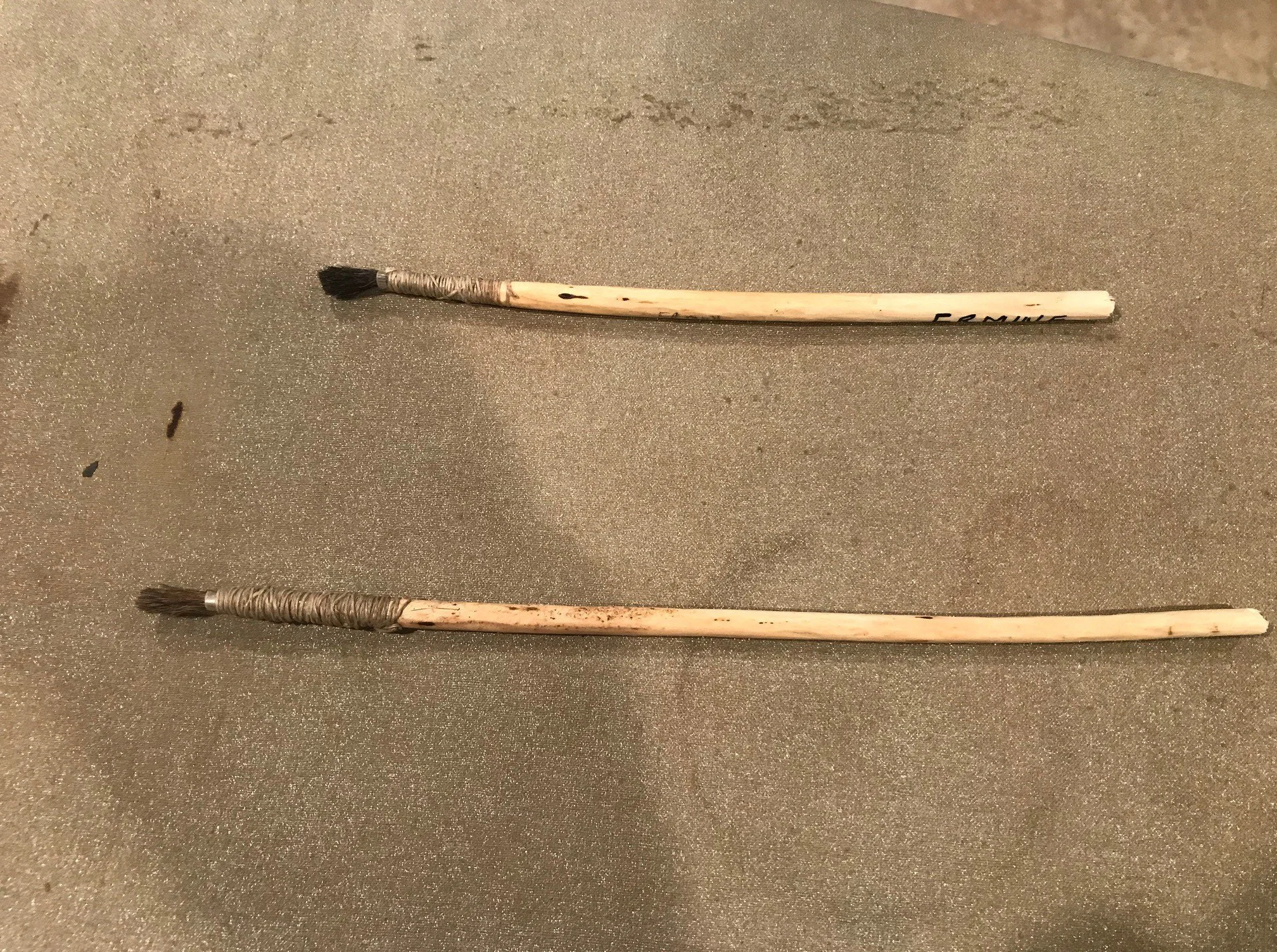
Here are two brushes (ermine top, squirrel bottom) made from the description by Cennino Cennini. Here is a link to the maker.
If you have never handled a finely crafted brush, you cannot imagine the control it can give you. I was once given a brush made of Russian sable. In the 1980s, it cost over one hundred dollars. You could paint a one-inch stripe in one direction, turn the brush on its side, and draw a line the width of a hair. That is the kind of control that would have mattered to Bellini.
I am pretty sure he did not trap the animals himself. Having spent time with trappers in upstate New York, I could explain that aspect of brush making to you as well, but I will spare you.
The manuscript painters were no less demanding. Persian painters are often said to have prized brushes made from the hair of specially bred white cats. Mughal painters favored squirrel hair. For the finest work, some sources describe the use of a single squirrel hair.
A single hair.
Then there was the matter of time.
Once Bellini mixed pigment into oil, he was playing Beat the Clock. The paint remained workable for a period, but eventually it would skin over and dry. The manuscript painters faced no such urgency. Their pigments could sit quietly for weeks or months. Add water and the paint came back to life.
That changes how an artist thinks.
Oil paint asks for decisions made inside time. It permits revision, but not indefinitely. It allows blending, glazing, scraping, building, waiting. It creates depth partly through delay.
Gum-based paint behaves differently. It can be returned to. It can be reawakened. It lends itself to precision, pattern, edge, and the patient accumulation of small decisions.
The more I learned, the less this felt like a story about East and West.
It felt like a story about two artistic cultures looking at many of the same materials and imagining different possibilities.
And then I returned to Bellini’s drawing of the Ottoman scribe.
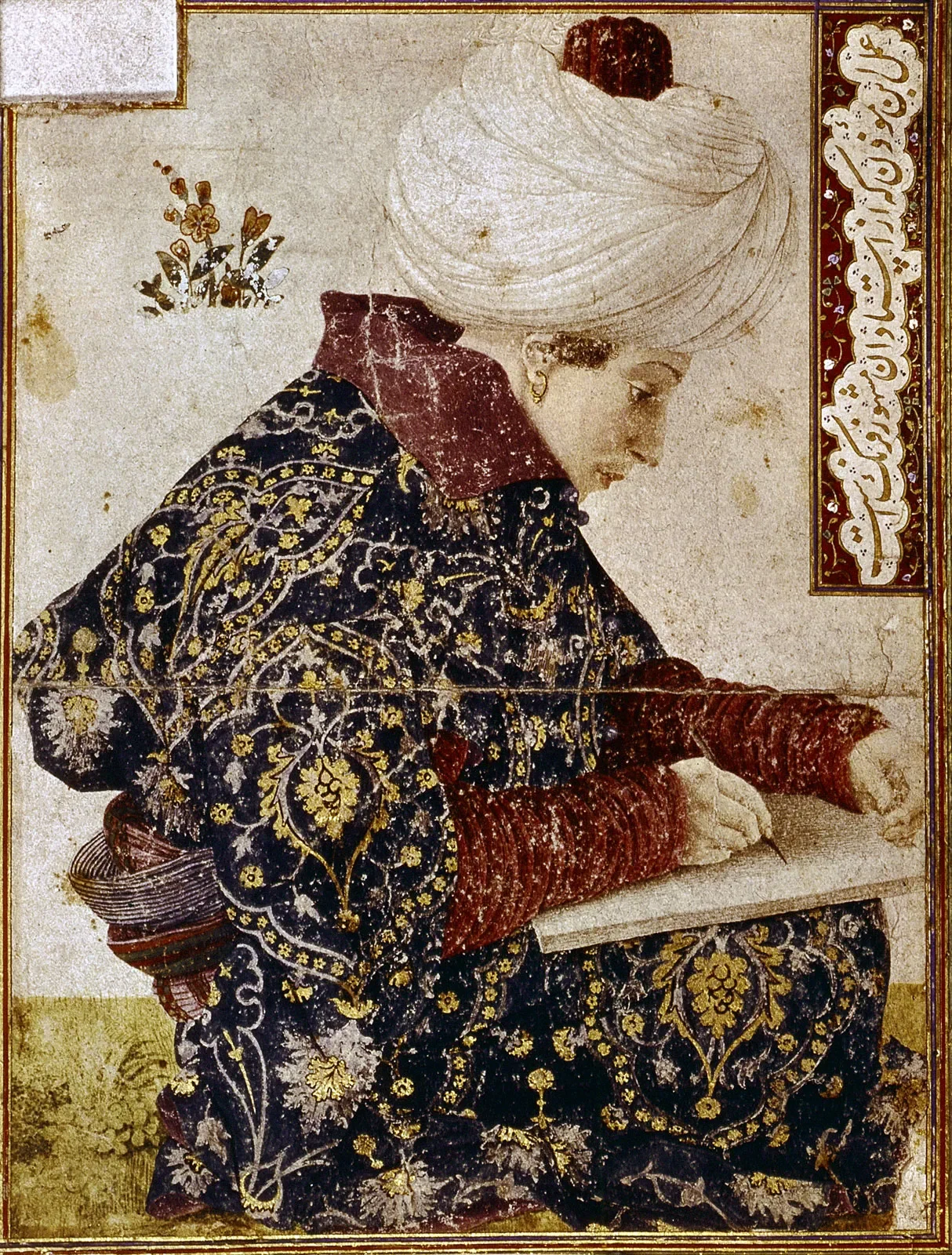
Gentile Bellini, Seated Scribe, 1479–81, Isabella Stewart Gardner Museum, Boston
Of all the works Bellini produced during his stay in Constantinople, this small drawing may be the most revealing. The line becomes more important. Modeling recedes. The figure sits on the page rather than inhabiting deep space. Bellini has not abandoned his Venetian training, but he is clearly experimenting with another visual language.
We do not know whether he received instruction from Ottoman painters. We do not know whether he watched manuscript painters burnish paper, prepare pigments, or make brushes. But it is difficult to imagine that a curious artist spent nearly two years at one of the great artistic centers of the Mediterranean without paying attention to how another tradition worked.
Artists borrow motifs all the time. More rarely, they borrow ways of seeing. The portrait of Mehmed suggests that Bellini had been looking at Islamic art. The drawing of the scribe suggests something more intimate.
It suggests that, at least for a moment, he let another tradition enter his hand.