
blog
ALL | ABOUT MY WORK | EVERYTHING ELSE
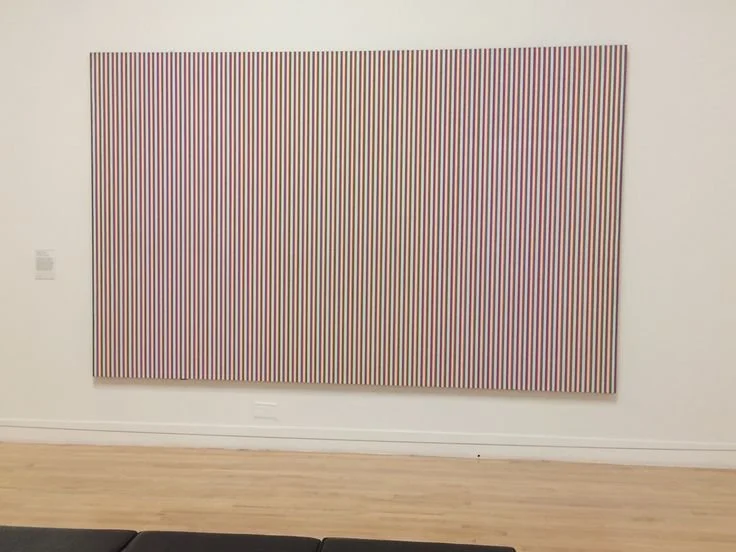
BRIDGET RILEY: WHY THE STRIPES?
When people first encounter Bridget Riley's stripe paintings, they often assume the work is highly calculated. The stripes appear so precise, so controlled, that it is easy to imagine a system determining the outcome.
The reality is more interesting.
Riley was not trying to make a system. She was trying to understand color.

AN ONCOLOGIST AND AN ARTIST WALK INTO A BAR . . .
After my opening at the Soprafina Gallery in Boston several years ago, friends invited me to dinner with an oncologist* and his wife. Over the meal, he told me about his research. He had access to mountains of data collected from patients over many years, and he and his team were struggling to mine it for patterns that might predict cancer. This was before artificial intelligence could handle such a task. He had resorted to color-coding the data. I told him he was heading for trouble.
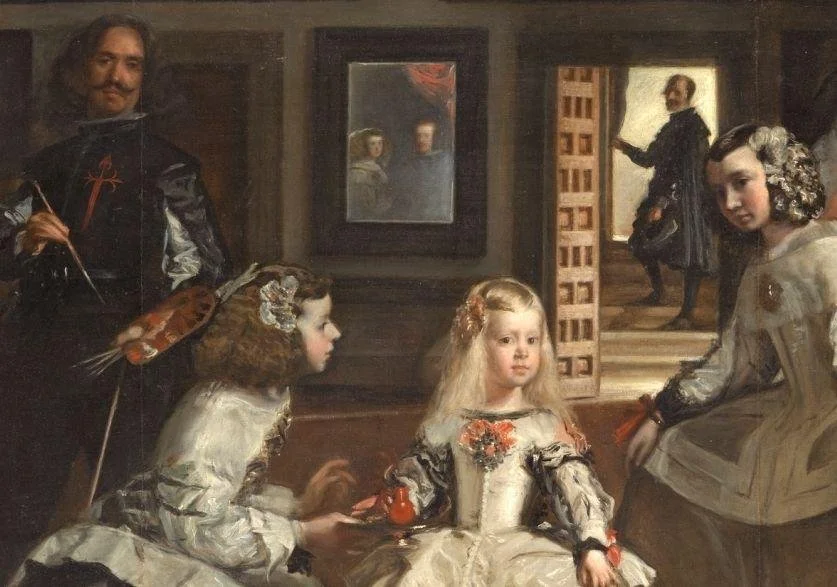
THE KING AND I: HOW THE VIEWER COMPLETES THE PAINTING
It wasn’t until I stood in front of Diego Velázquez’s Las Meninas that I understood that I, as the viewer, was the subject.
I had seen the painting countless times in reproduction. I knew the arguments, the diagrams, the mirror at the back of the room reflecting the king and queen. Intellectually, it all made sense. But none of that prepared me for the quiet, almost disorienting recognition that occurs when you are actually there, standing where the king and queen stood.
IS AN ARTIST’S PALETTE BIOLOGY OR TASTE?
I once attended a dinner at Jan and Warren Adelson’s home. Their New York gallery is known for its collection of American Impressionists and the work of John Singer Sargent. As I moved through the house during this charity event for the Hudson River Museum, I began to recognize paintings at a glance—Sargent and Eakins, a drawing by Ingres, a grisaille gouache by Homer, a medallion by Saint-Gaudens. Nothing was labeled. It was a home, not a museum. But the work announced itself.
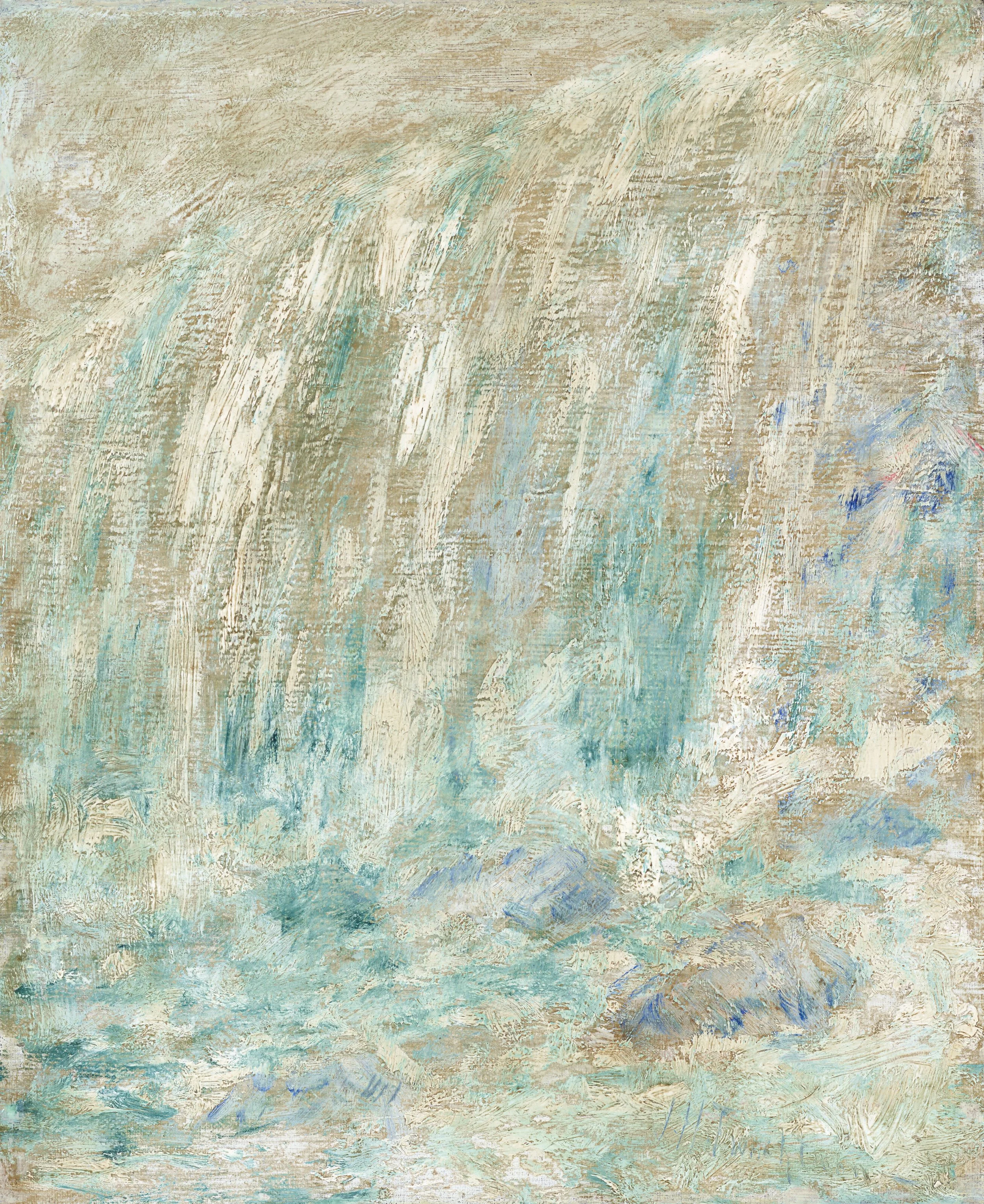
Then, over a desk, there was a painting that stopped me. At first, it looked like scratches of color. After a moment, a waterfall began to resolve, but what held me was the color—a very particular Veronese green. And then it clicked: Twachtman. John Henry Twachtman. Adelson confirmed it.
I’ve always been struck by how specific an artist’s palette can be. Not just a preference for color, but something closer to identity.
LOOKING WITH ROGER FRY
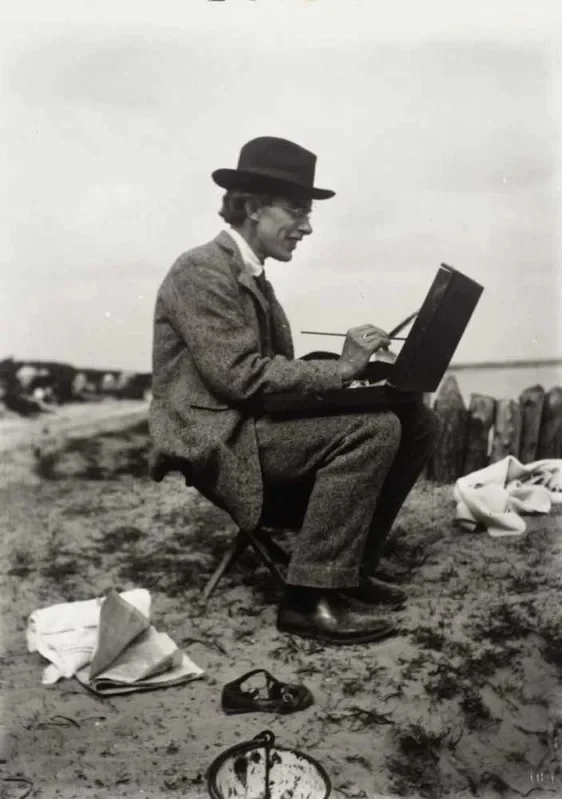
The first time I read Roger Fry, my immediate thought was: finally, someone who looks at a painting the way I do. Not emotionally first, not narratively, not in search of reassurance or uplift, but through a disciplined form of attention. What we now call formalism felt, in his writing, less like a theory than a discipline—a way of agreeing to stay with what is actually there. Fry’s focus on line, color, rhythm, and spatial structure was not a narrowing of meaning but a refusal to dilute it.
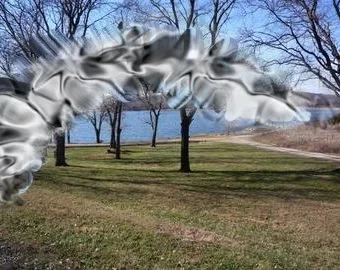
WHEN THE BRAIN SEES
Most people think that seeing happens in the eyes. Light enters, the eye focuses, and the image appears. Simple. But the real story of vision is stranger than that. Our eyes collect information, yes—but the brain does the heavy lifting. It edits, organizes, fills in gaps, and sometimes invents. And every so often, the system glitches in ways that can be terrifying, beautiful, or both.