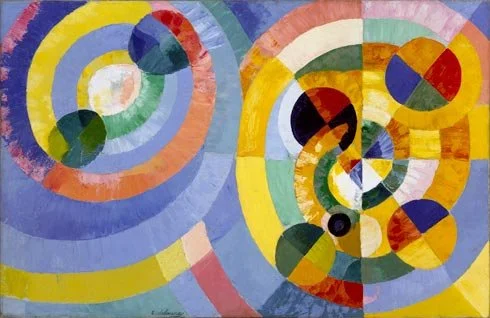
Sonia and Robert Delaunay are usually described as collaborators through theory. Simultanéité. Color as vibration. Perception over subject. All of that is true. But for me, the collaboration only really comes into focus when you put their paintings next to each other.
I have always found Sonia Delaunay’s paintings more compelling than Robert’s. Not because they are more decorative or more applied, which is how they were too often dismissed, but because they are less resolved and more alive. They do not announce an idea. They work it out.
Place Sonia’s Prismes électriques beside Robert’s Formes circulaires and the difference is immediate. Robert’s painting is expansive and declarative. Color radiates outward, organized around a central logic. The movement is architectural. You feel the ambition to build a system, to describe how color operates at scale, almost as a cosmology.
Sonia’s painting stays closer to the surface. The color relationships are tighter. The shifts are quicker, sometimes abrupt. Instead of broadcasting outward, the energy circulates within the field. The painting feels negotiated rather than proclaimed. Color presses, resists, reasserts itself. The eye does not settle easily.
Robert’s paintings seek coherence. Sonia’s tolerate friction. Where his forms feel confident in their authority, hers seem alert to contingency. They register how color behaves when it is crowded, interrupted, put under pressure.
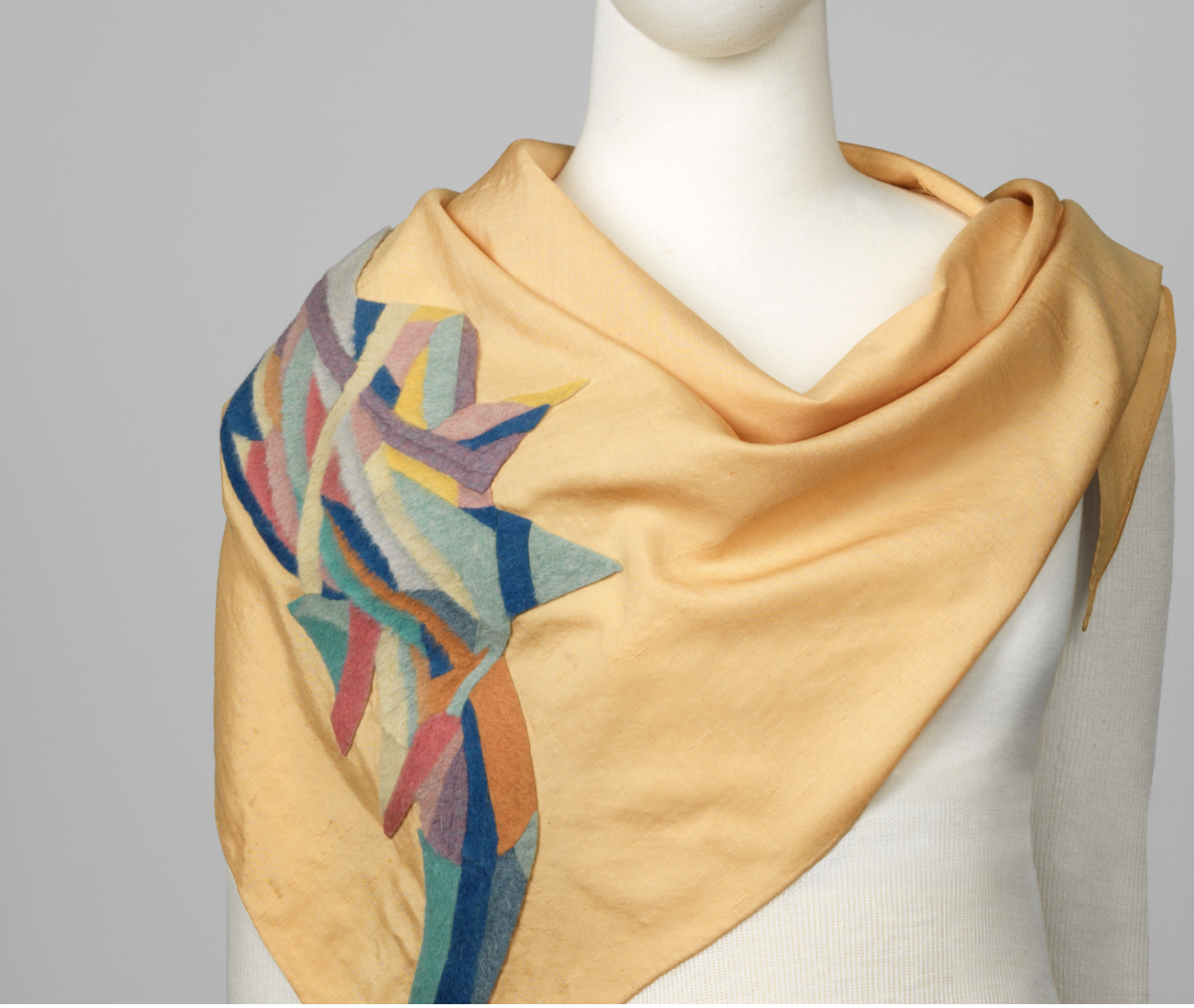
Sonja Delaunay’s textile work.
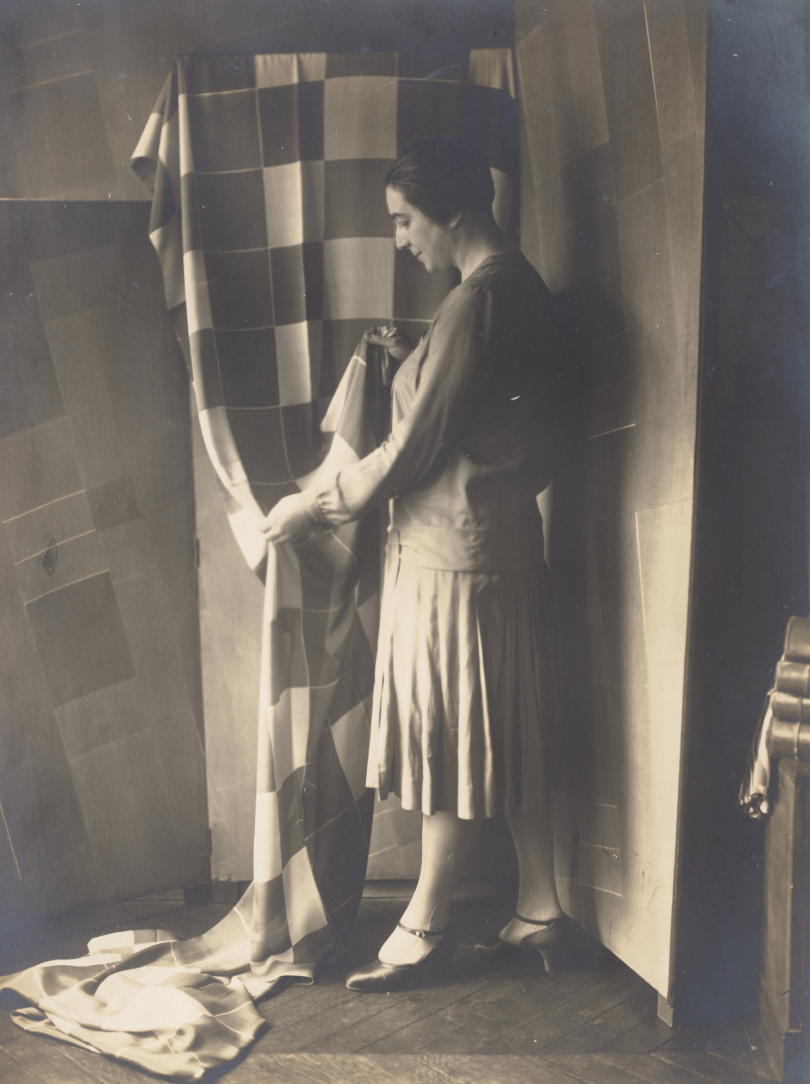
Sonia Delaunay
Seen this way, Sonia’s work in textiles, fashion, and interiors does not read as a departure from painting. It reads as a continuation of painterly intelligence. These are paintings that already understand translation, that anticipate movement, touch, and use without giving up rigor. Color that can survive being worn, folded, inhabited, or moved through has been tested in a different way.
Robert’s paintings, by contrast, feel more terminal. They are complete in themselves. Sonia’s feel provisional, in the best sense. They remain open to what might happen next.
This is where their collaboration becomes precise. They were not making the same paintings in parallel. They were asking the same question and accepting different answers. Robert expanded the idea outward. Sonia complicated it inward. One built the structure. The other stressed it.
Historically, that complication was easier to marginalize. Design has always been mistaken for application rather than inquiry. But when you return to the paintings, the hierarchy collapses. Sonia’s work does not dilute the idea. It sharpens it.
Together, the Delaunays show that collaboration does not require fusion or sameness. It requires agreement about what matters, and enough trust to let the work diverge. Some ideas need more than one temperament to stay alive. Color was one of them.