GOYA: LIVING INSIDE THE BLACK PAINTINGS
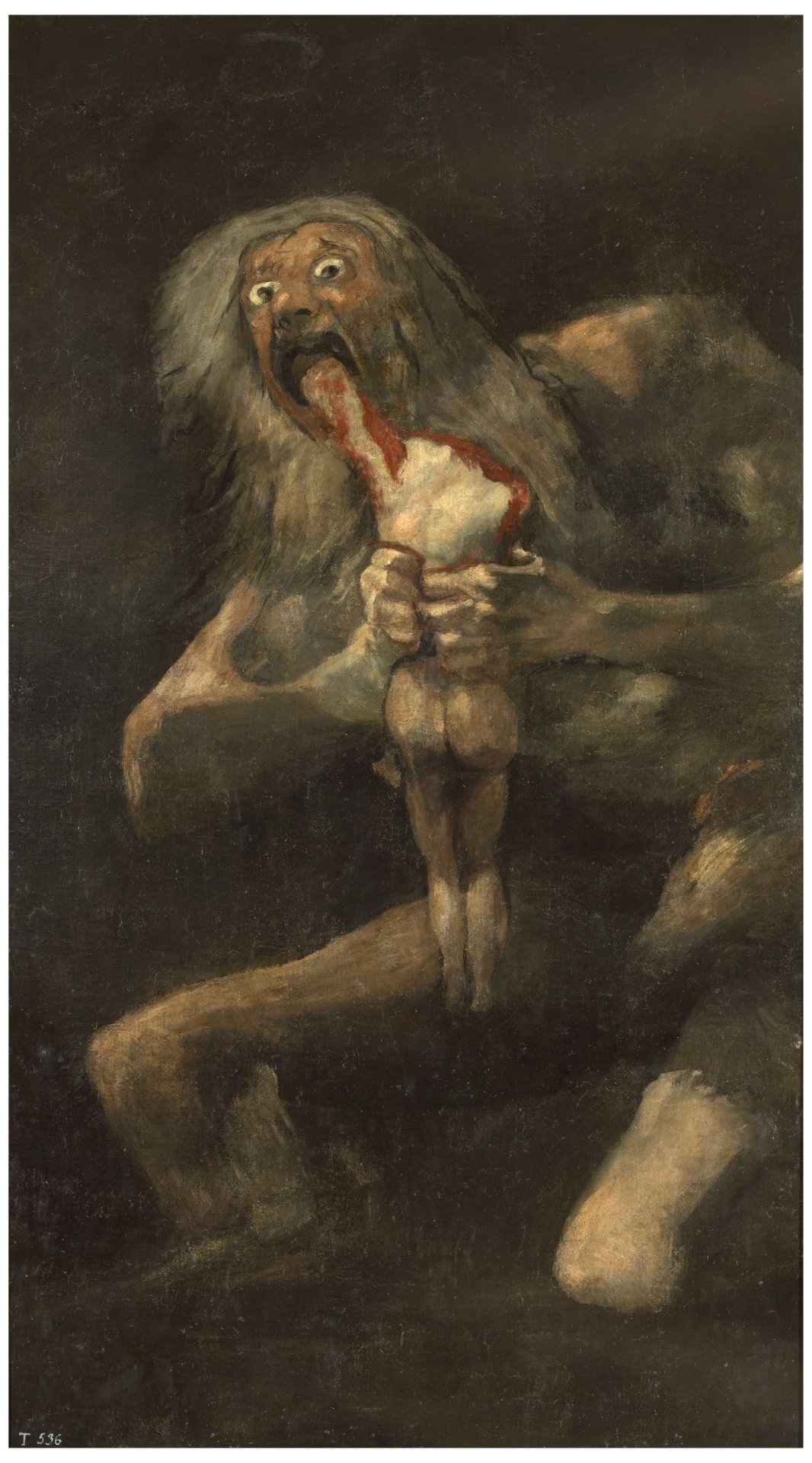
Francisco de Goya y Lucientes, Saturn
Goya's Black Paintings were not his first encounter with black. Years before he painted those extraordinary images on the walls of his house outside Madrid, black had already carried the weight of The Disasters of War, the print series he began during the Peninsular War. They are some of the most horrifying images of war ever made. Bodies are mutilated. People are hanged. Women are attacked. Families flee. People starve. There are no heroic generals on horseback, no glorious battles, no suggestion that war ennobles anyone.
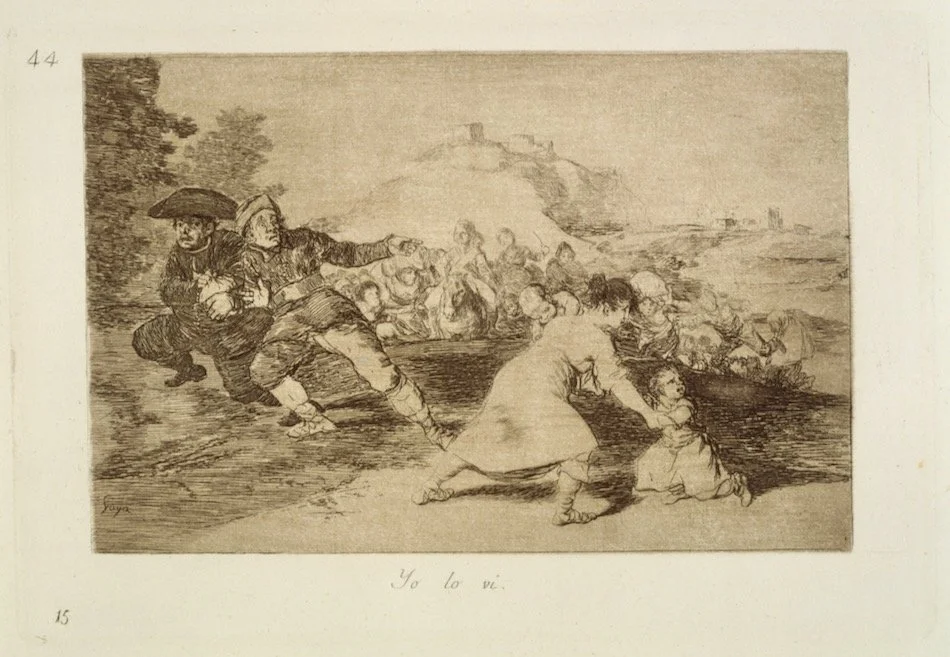
Francisco de Goya y Lucientes, I Saw It
One print is simply titled I Saw It. Goya had been in Madrid when the uprising against Napoleon's troops began in 1808. He traveled to Zaragoza after the city had been under siege. He lived through the famine in Madrid. We cannot know that every scene in The Disasters of War was something he personally witnessed, but these were not imagined horrors from someone who had never experienced war. He knew what war looked like. I have thought about this a great deal because of my late partner Michael. Michael was two during the war. As the Russians advanced toward Berlin, he and his mother fled the city. They were strafed as they ran. He saw a man have his head blown off. Even as a small child, Michael constantly scanned his surroundings for danger. He believed it was his job to keep his mother safe. After the war, he grew up in Berlin's ruins. There were bomb craters in the streets. Buildings had been sliced open so that you could see wallpaper, furniture, the remains of rooms hanging several stories above the ground.
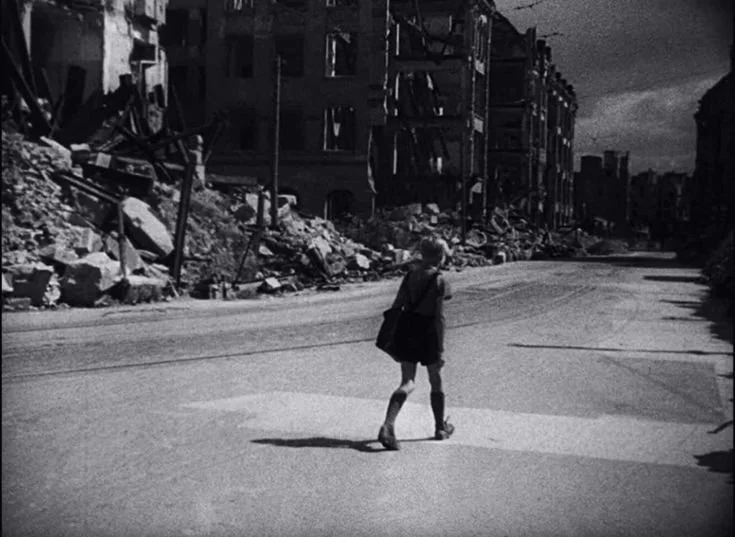
Rossellini, Germany Year Zero, 1948 film
Michael described all of this to me. But his words did not enter my psyche until what he described appeared on screen in Roberto Rossellini's Germany Year Zero, filmed in the ruins of Berlin shortly after the war. Suddenly I could see it. The streets Michael had described were there. The hollowed-out buildings were there. Whole domestic interiors were exposed to the weather. Children moved through the rubble as though it were their jungle gym. I could not imagine what Michael had described to me until I saw it through the filter of art. I think about that when I look at Goya.
The Disasters of War are close to firsthand testimony. Goya takes the unspeakable things human beings were doing to one another and puts them on paper. He made the plates largely for himself — they were not commissioned, and he did not publish them during his lifetime. He made proofs as he worked and eventually assembled a complete set for his friend Juan Agustín Ceán Bermúdez, who kept the album until his death in 1829. It passed through the collection of Tomás Harris and has been at the British Museum since 1975. The copperplates themselves stayed with Goya, kept at his own house. Years later, he bought that house. It was called the Quinta del Sordo, on the outskirts of Madrid. And then something changed. Instead of putting the images onto paper, he put them onto the walls. The etchings of The Disasters of War were the reality — his own recording of the catastrophe and cruelty of war. The Black Paintings, on the walls of his own house, may have served as the remove from that reality: a way of getting those images out of his mind.
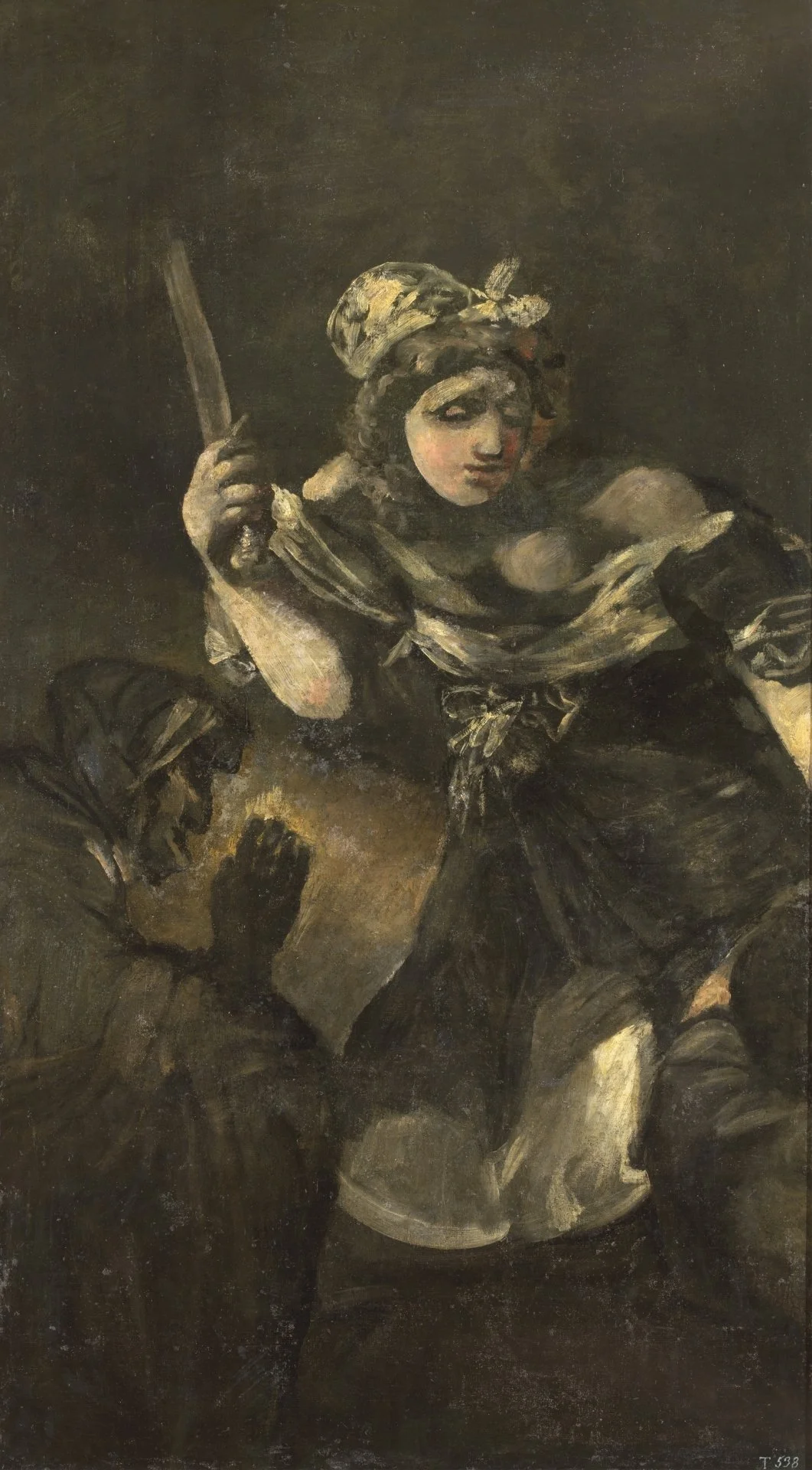
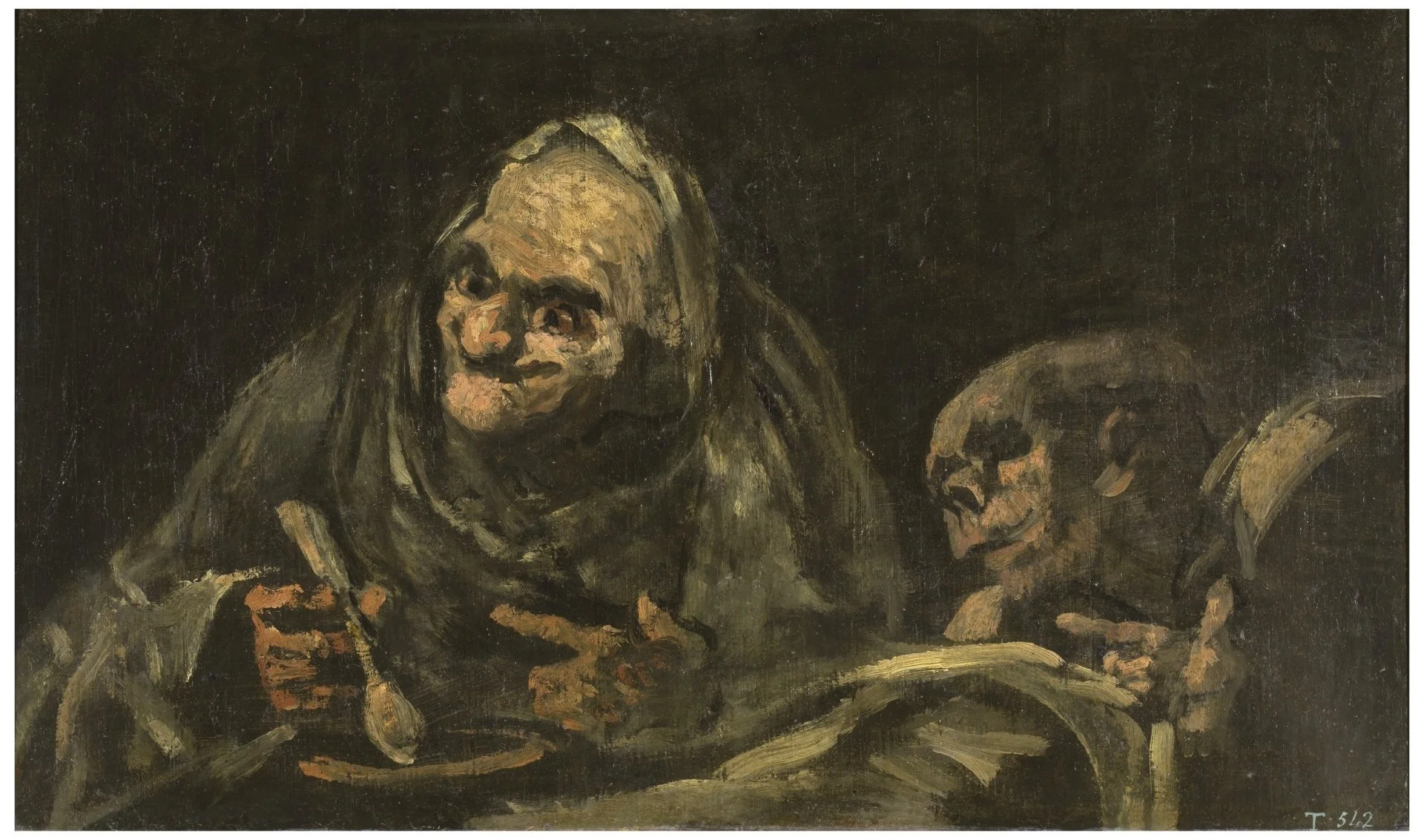
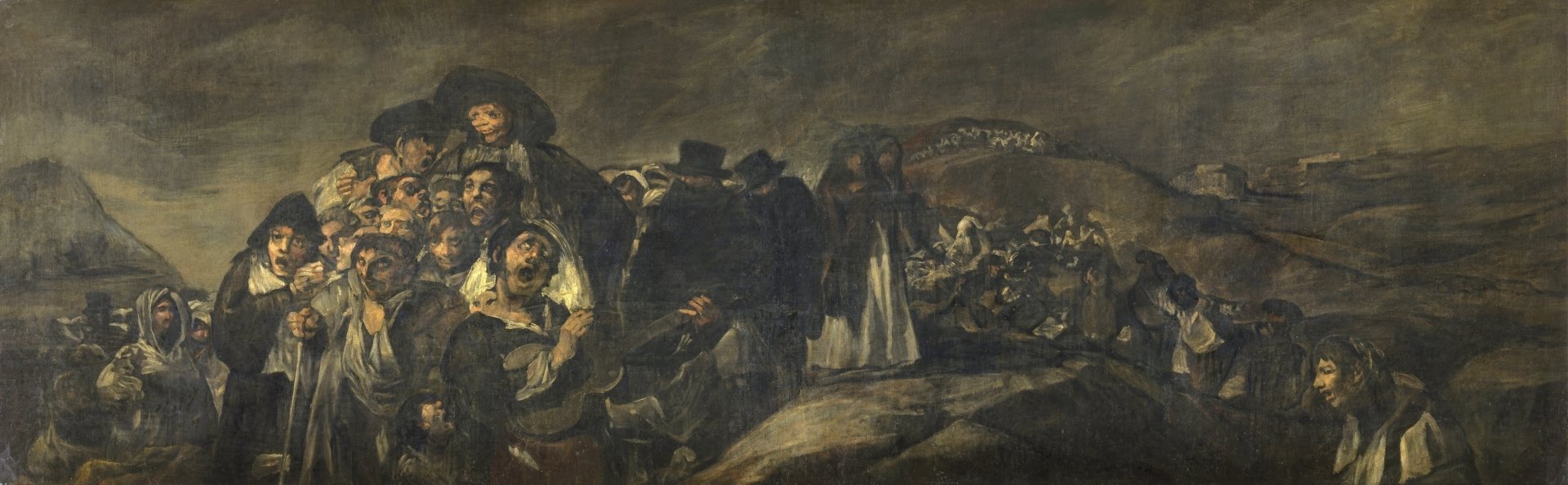
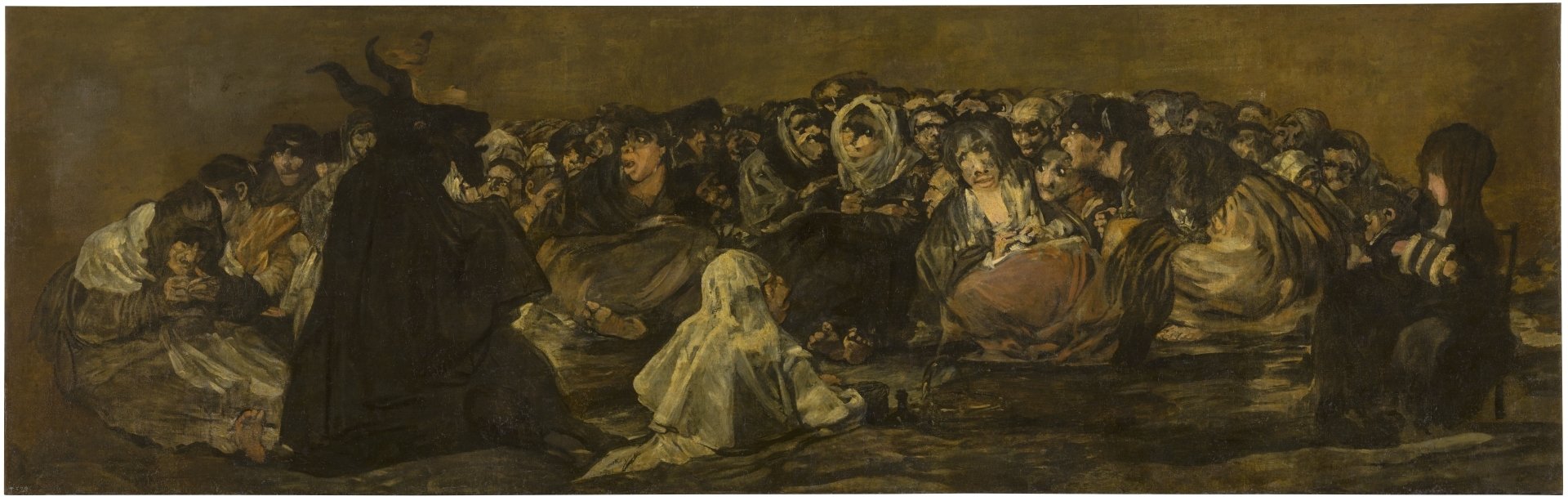
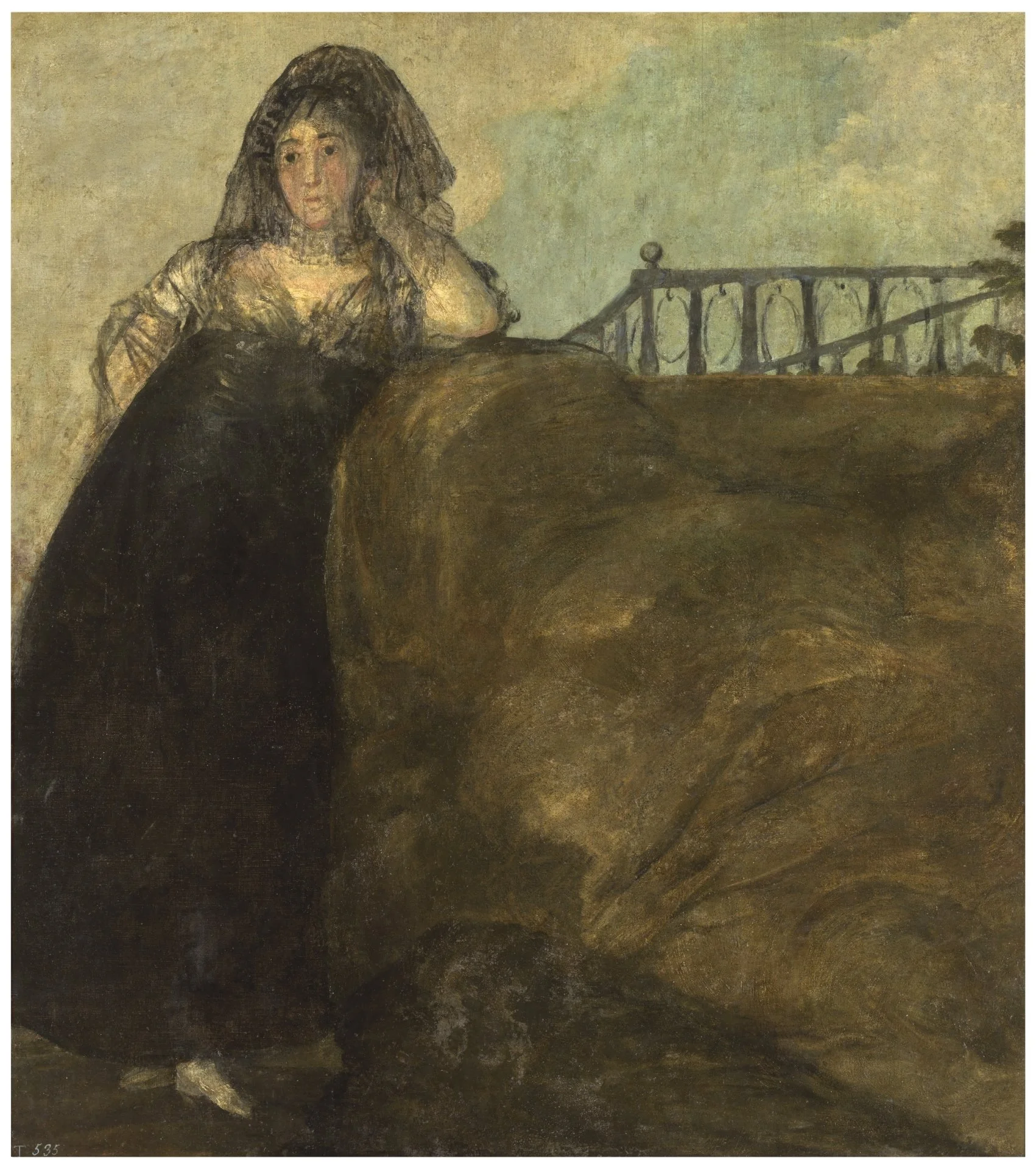
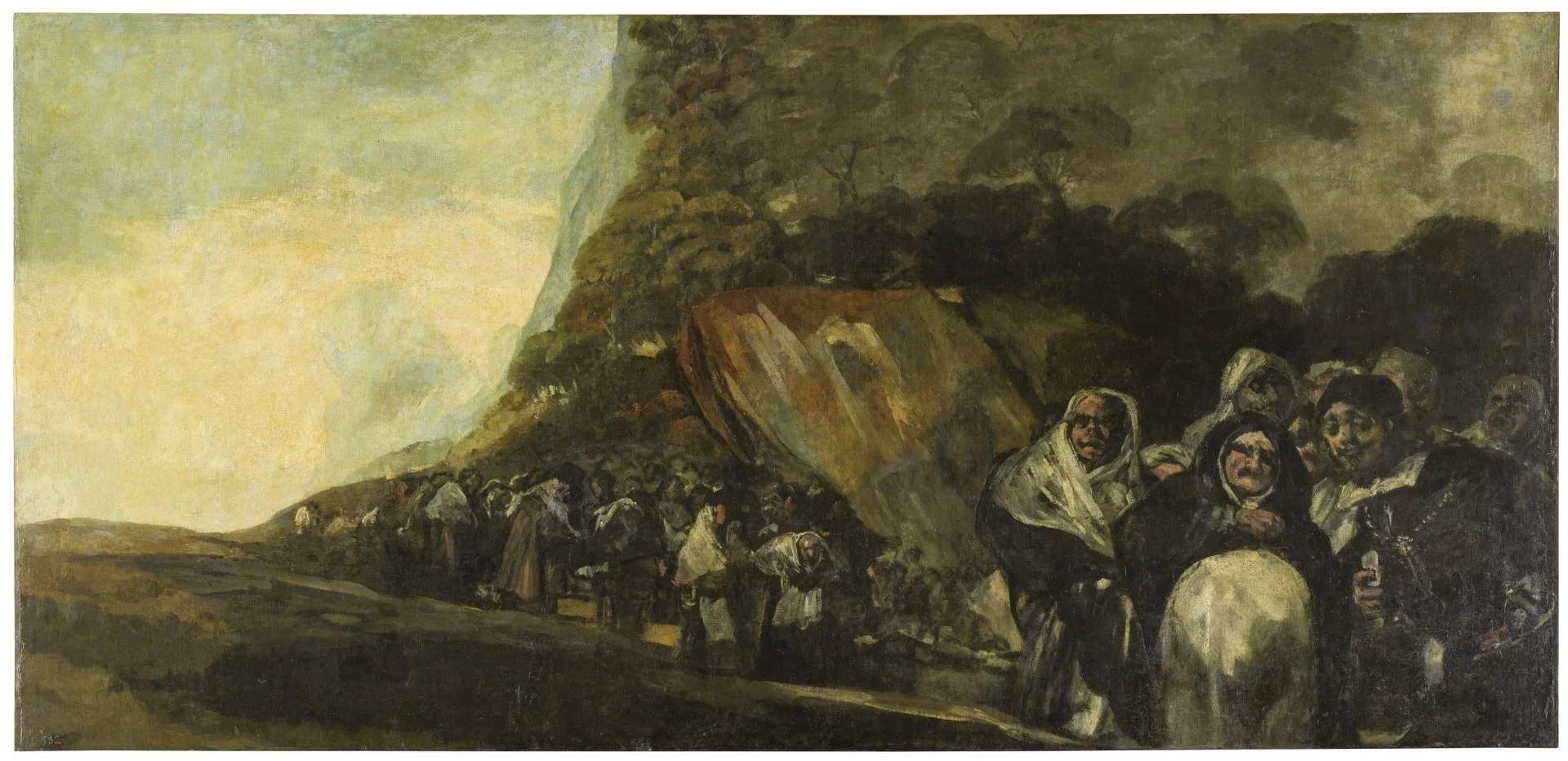
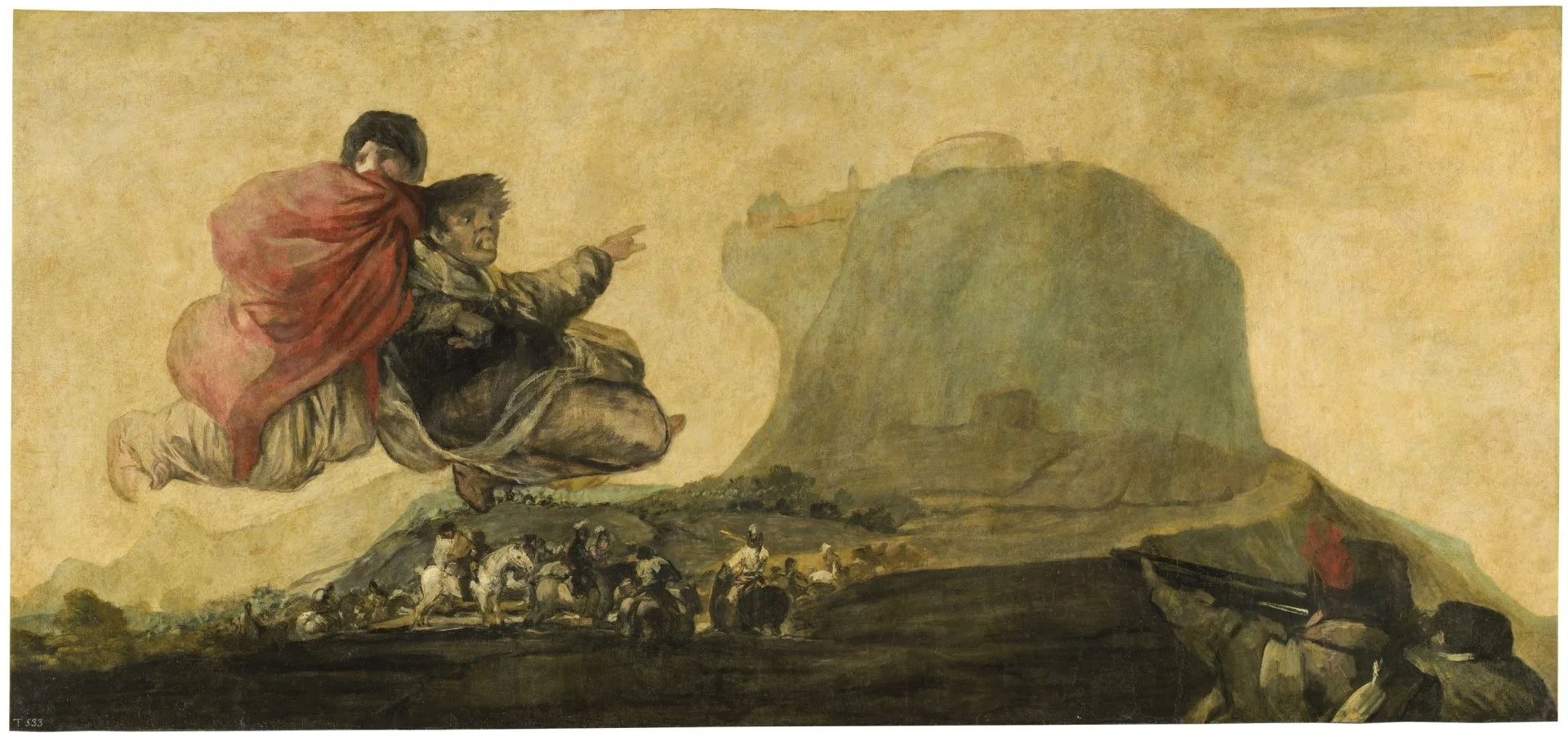
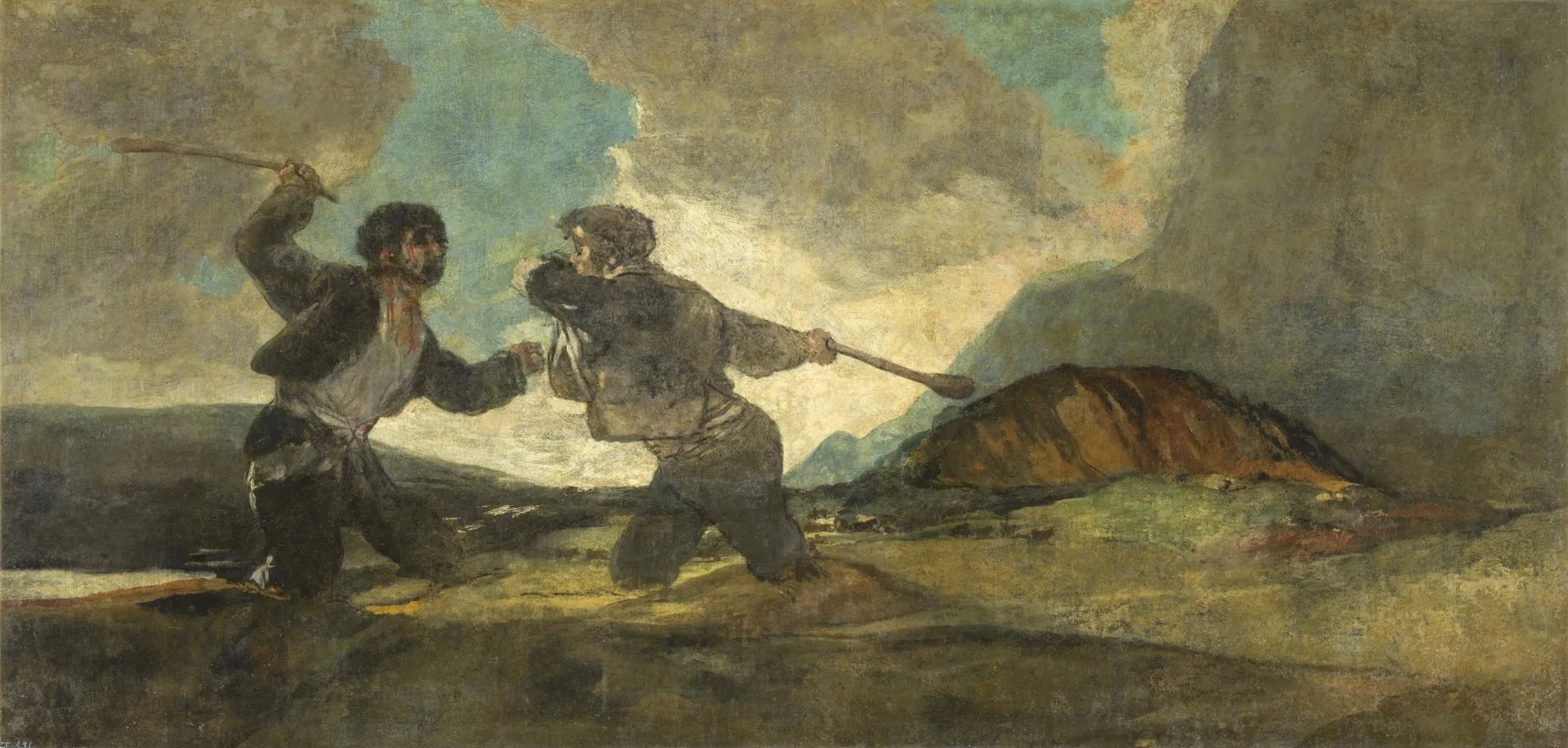
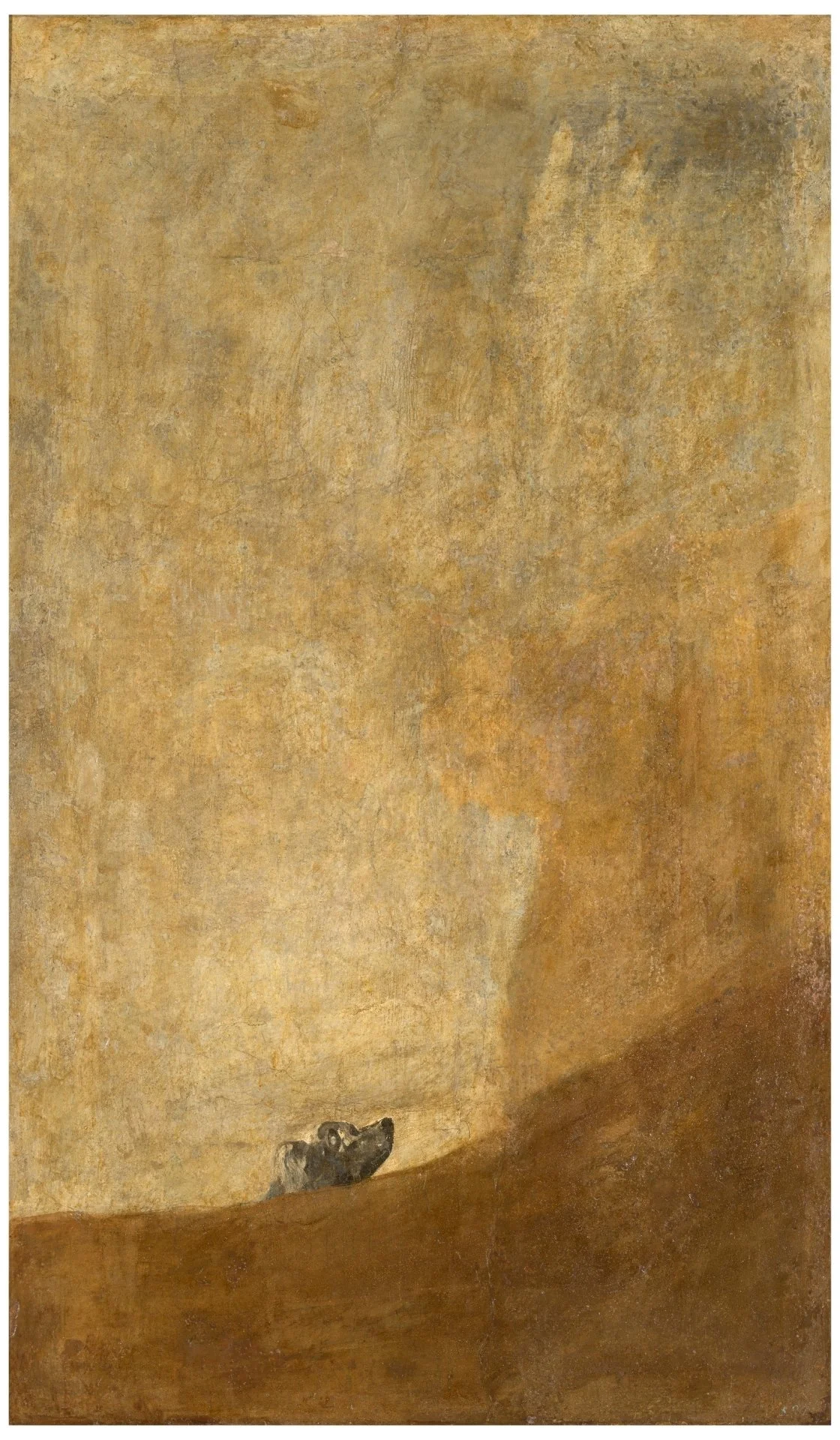
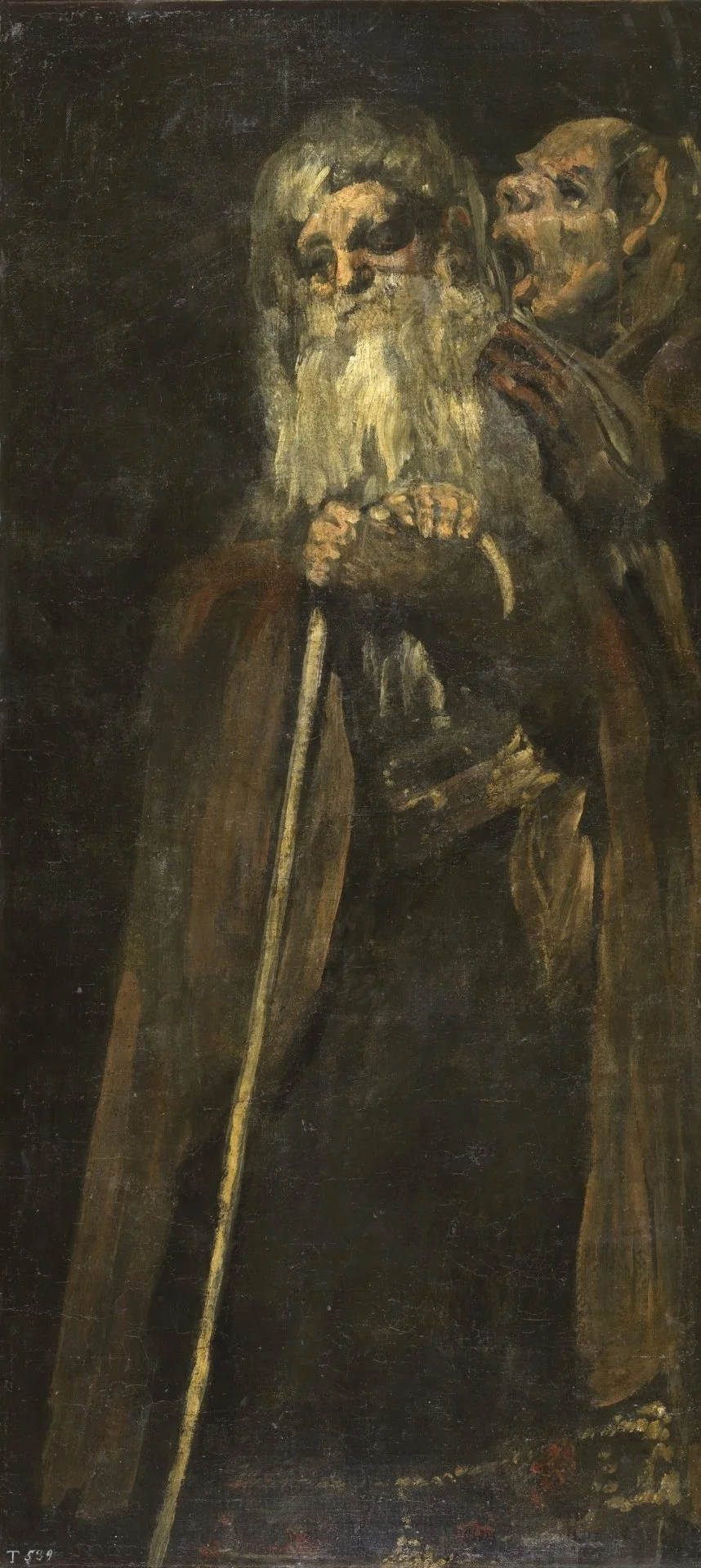
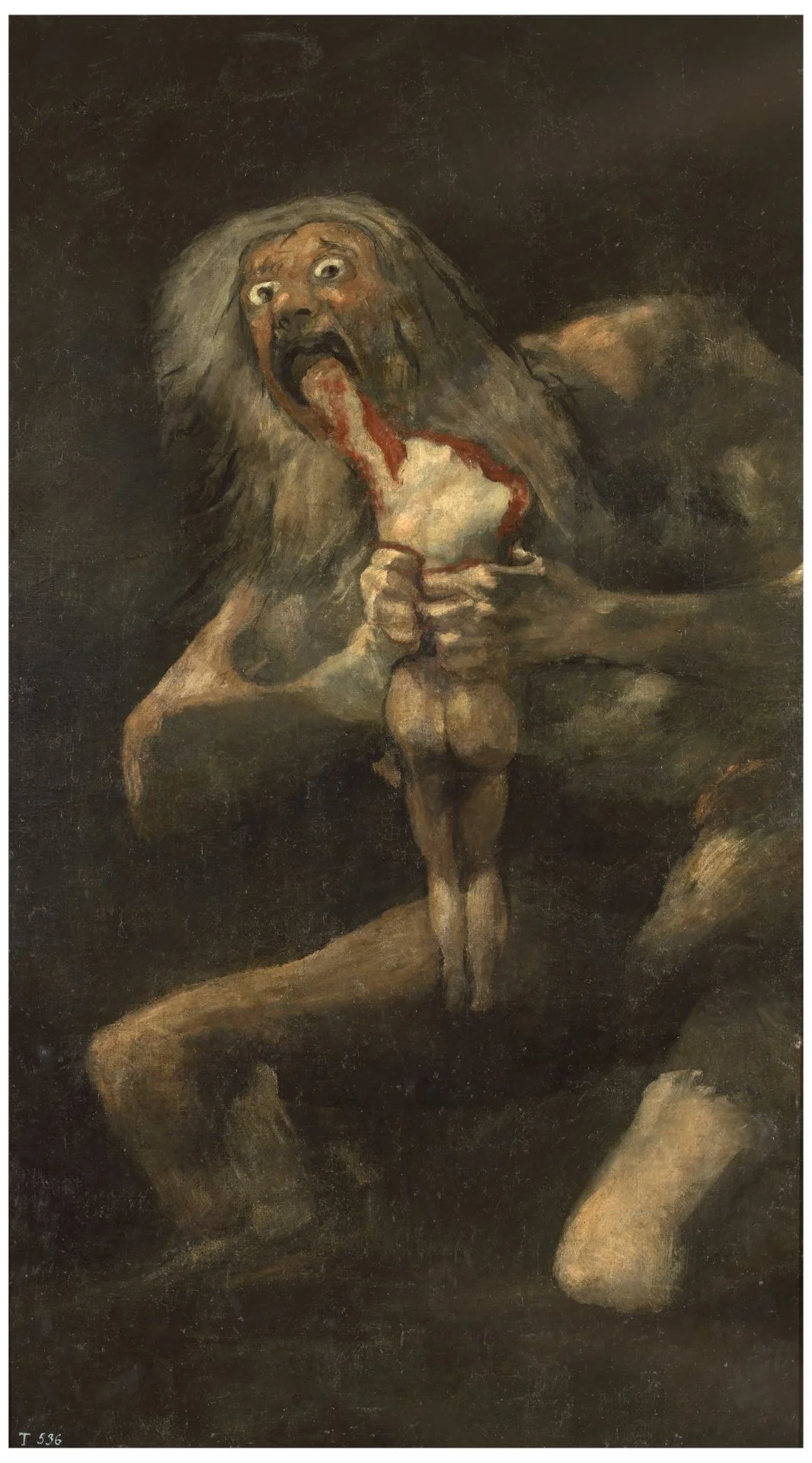
Fourteen paintings covered rooms on two floors. We now call them the Black Paintings, though Goya did not. There is Saturn Devouring His Son, Witches' Sabbath, Duel with Cudgels, The Fates, The Dog, strange processions, frightened faces, old men, figures that seem to come out of nowhere. And Goya lived among them. That may be the thing about the Black Paintings that astonishes me most. He was, in a way, living inside a painting. Why?
The usual story is that Goya was old, deaf, ill, politically disillusioned, perhaps depressed. All of that may have mattered. But I'm not interested in turning his house into a psychiatric diagnosis — we cannot diagnose someone who died nearly two hundred years ago, and the impulse to do it anyway says more about our own comfort than his. I also think we make too much of the darkness itself. Spain can be blindingly bright. A cool, shuttered room after that kind of daylight does not necessarily feel oppressive. Darkness can be a relief. It's the images I keep coming back to. Why would a man who had already seen terrible things choose to put terrible images on the walls around him?
I cannot help thinking about what happens to things once they have been seen. Michael could describe the war to me seventy years later in astonishing detail. Certain images had simply never left him. I am not saying Goya had what we would now call PTSD — that word didn't exist for him and the diagnosis isn't mine to make. But we can ask what happens to memory after catastrophe. Perhaps The Disasters of War were one way of digesting what Goya had experienced. Years later, perhaps he spat the memory of it onto his walls.
The prints say, in a way: I saw this. The walls seem to say: I still see it.
Goya left us no explanation for the Black Paintings, which is one reason they remain so unsettling. But here is what I keep landing on: putting those images on the walls gave them a boundary. If something unbearable is inside your head, it can be everywhere. If you paint it on the wall, it has edges. You can stand in front of it. You can walk away from it. You can come back and look again. An ancient impulse drives us to make images of the things we fear. Giving horror a form doesn't neutralize it, but it does something — it converts something formless and total into something you can walk around. Was that what Goya was doing? I don't know. But I no longer look at the Black Paintings and think: what a dark place to live. I think instead about what it might have meant to him to get those images out of himself and onto the walls.
FOR THOSE WHO LIKE TO WATCH PAINT DRY
There is another complication: we are not actually looking at the Black Paintings as Goya lived with them.
He painted them directly onto the plaster walls of the Quinta del Sordo, in oil, as part of the house's architecture. In 1873–74 — roughly fifty years after he painted them and about forty-five years after his death — they were removed from the walls and transferred to canvas under the Prado's Salvador Martínez Cubells, at the direction of the house's new owner, Baron Émile d'Erlanger. He donated the canvases to the Spanish state in 1881, and they entered the Prado. That is a fairly violent thing to do to a painting. What we see today has been through removal, transfer, restoration, and a century and a half of aging. The paintings at the Prado are both Goya's paintings and survivors of what happened to Goya's paintings — which feels, in its way, appropriate.
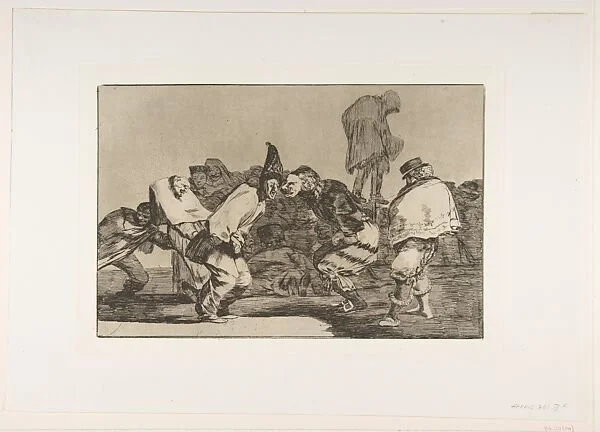
The Disasters of War present a different material problem. Goya worked in etching, drypoint, and, crucially, aquatint. Aquatint let him build large fields of tone rather than relying on etched line alone — he could move from white paper through gray into pools of almost complete black. That black does most of the emotional work. It can make a figure emerge from darkness, swallow a background, isolate a body, make the space around an event as threatening as the event itself. Color might have made war picturesque. Black does not.
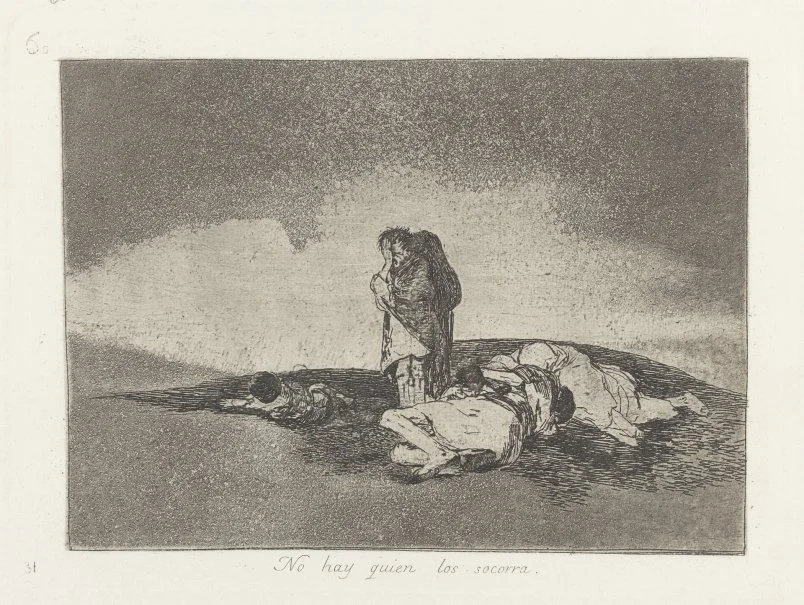
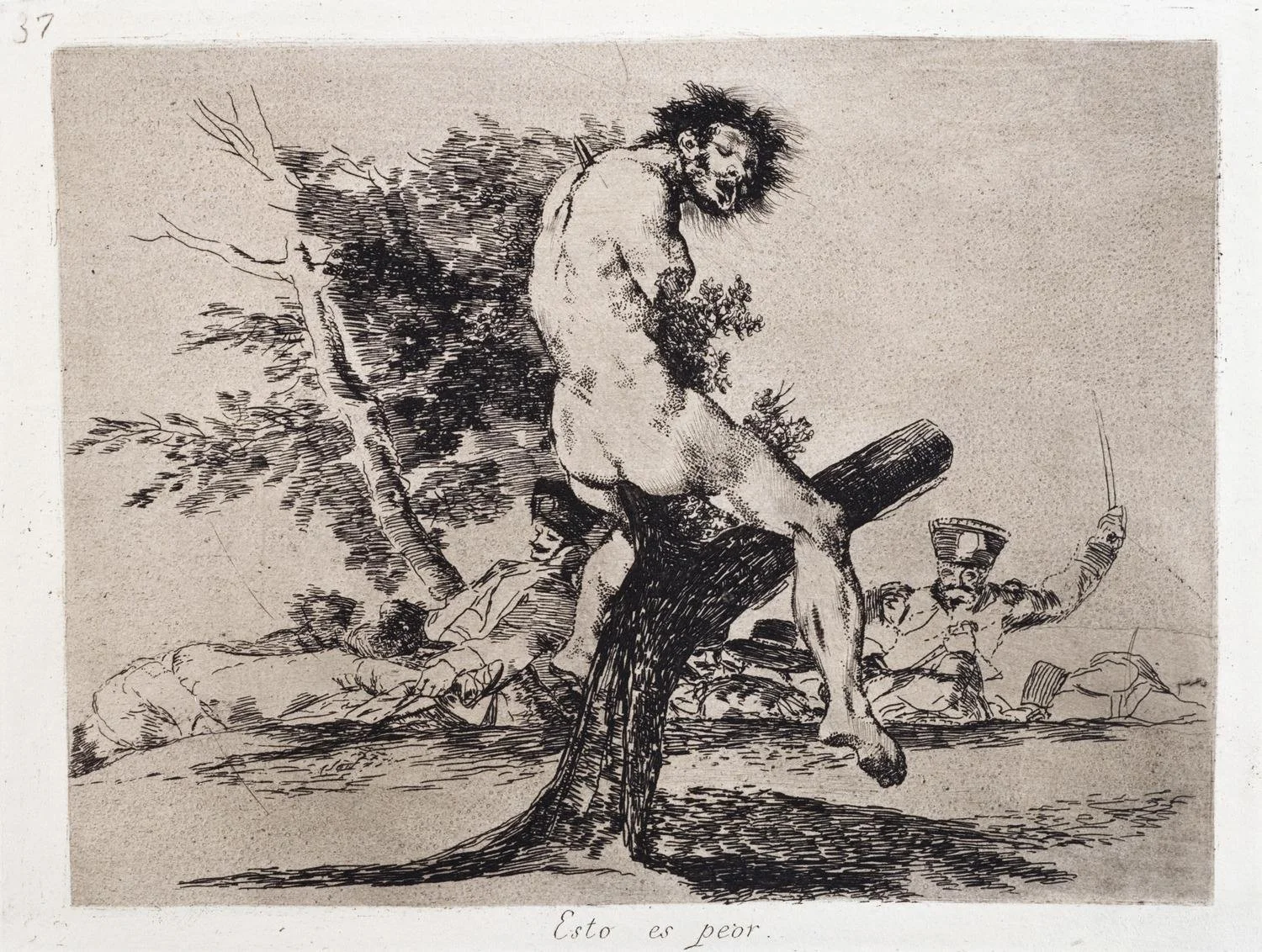
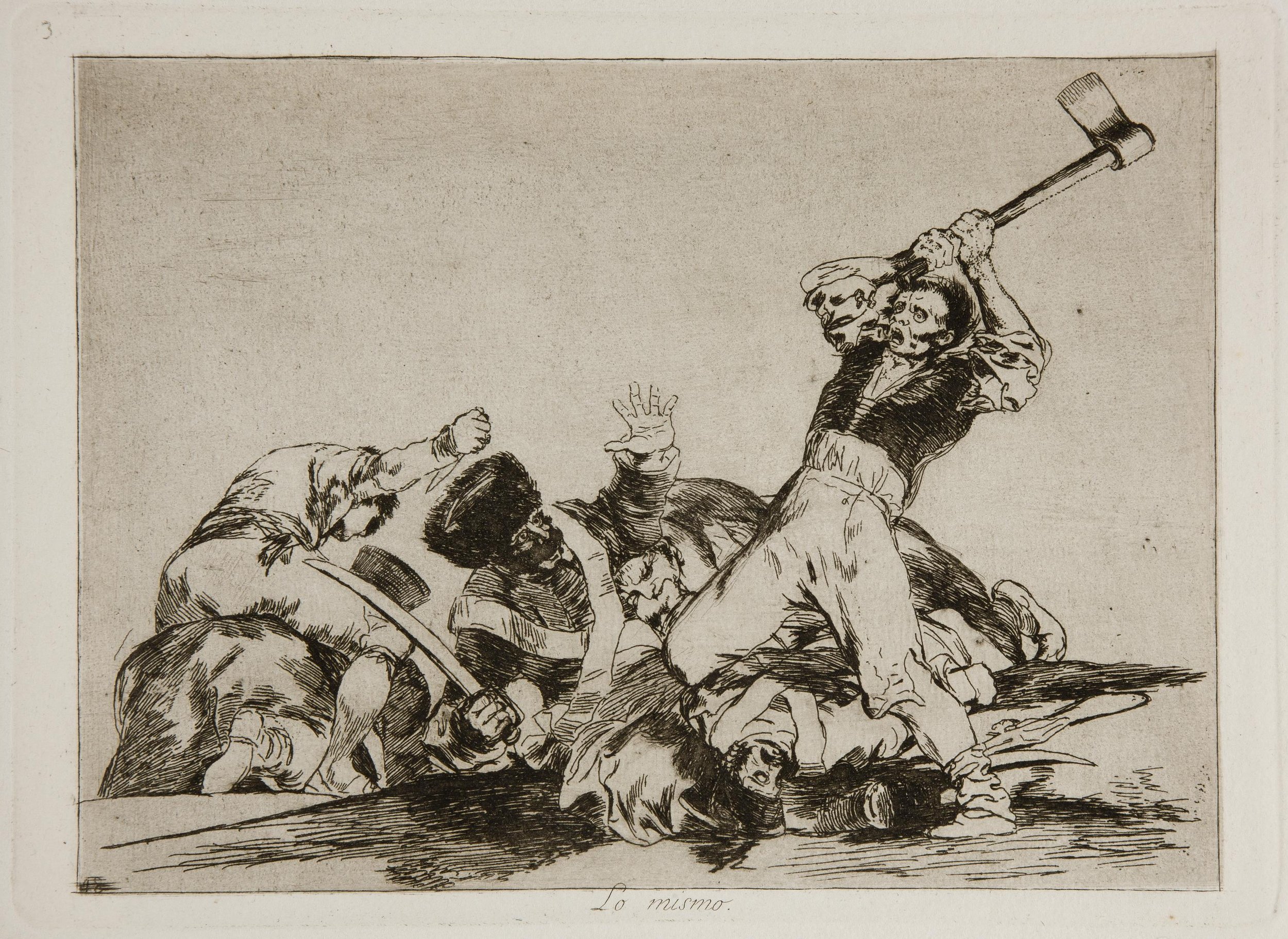
Goya kept the copperplates at the Quinta del Sordo — at least two of them stayed there even after he left for Bordeaux in 1824, only rejoining the rest of the set decades later. I find that extraordinary. The plates that carried the war were in the same house where, years later, Goya surrounded himself with the Black Paintings. First the memory was incised into copper. Then it was painted onto the walls.
IF YOU WANT TO KEEP LOOKING
I would start at the Museo del Prado. Their material on the Black Paintings is especially useful because they have reconstructed how the paintings were originally arranged in the Quinta del Sordo. Seeing them as part of rooms, rather than as fourteen separate paintings hanging in a museum, changed the way I thought about them. The Prado is also very good on The Disasters of War and on Goya’s use of black, aquatint, and tone.
TheBritish Museumhas Goya’s own bound album of working proofs of The Disasters of War, the set he gave to his friend Juan Agustín Ceán Bermúdez. This is the source I would go to if you want to get as close as possible to the prints as Goya himself handled and arranged them.
For a larger picture of Goya’s life, I like Janis Tomlinson’s Goya: A Portrait of the Artist. Tomlinson has spent decades working on Goya, and she is particularly useful because she resists turning the late Goya into the convenient cliché of the isolated, half-mad old genius. She puts the work back into the political, social, and personal world he lived in.
And for the Berlin I described, I would watch Roberto Rossellini’s Germany Year Zero. This is not a source on Goya, of course. It is here because it was the work of art that finally allowed me to see the world Michael had been trying to describe to me.
YOU MAY ALSO LIKE