
July Notes - 2026
THE MYRIAD MEANINGS OF THE STRIPE:
From Gerhard Richter to Agnes Martin
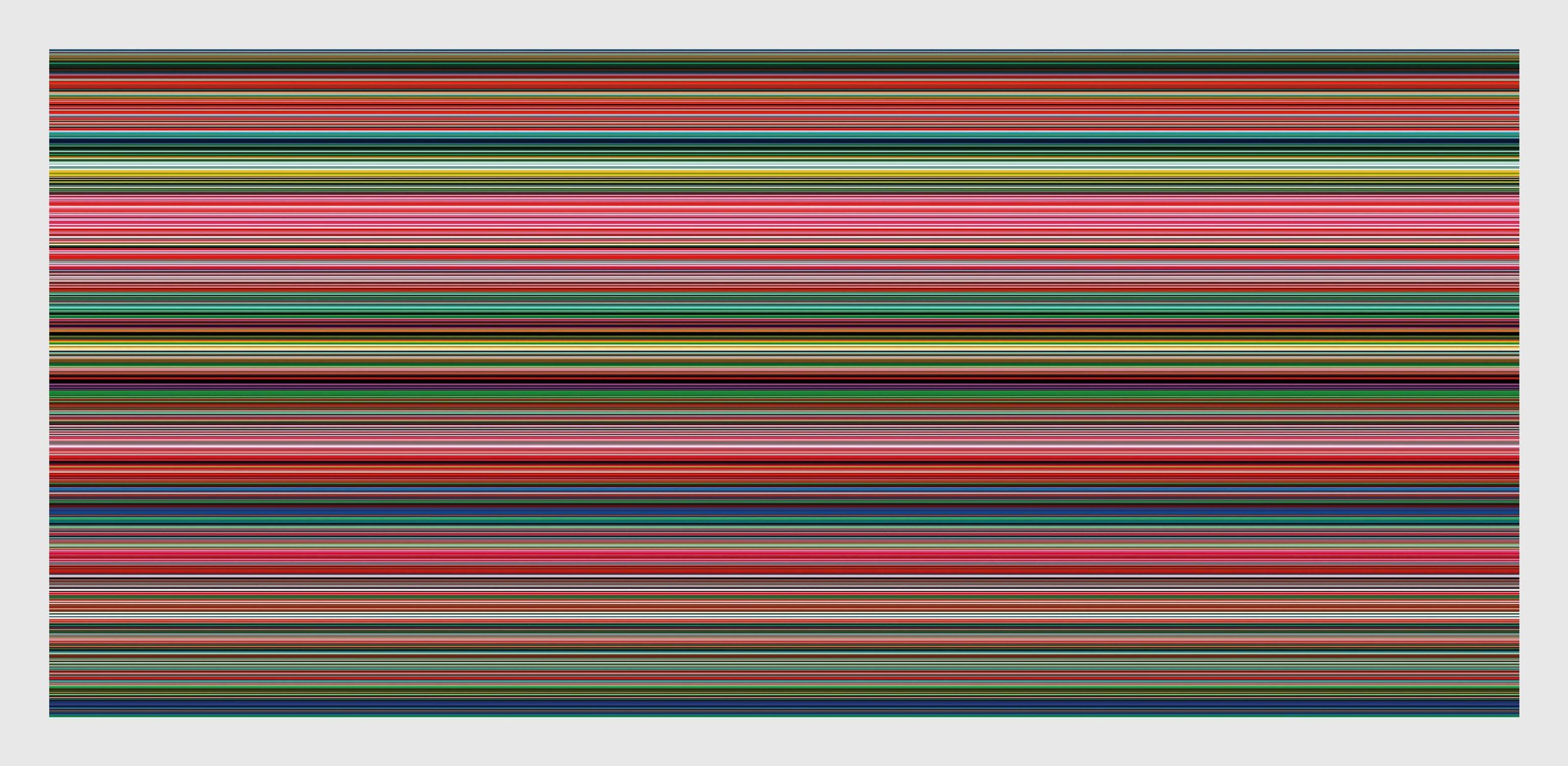
Gerhard Richter, Strip, 2011
This spring, while I was working on several paintings involving stripes, I began looking at other artists who had used them, because each time the stripe appears, it means something different. Two paintings can look remarkably similar, while the motivation, process, and meaning behind them are completely different.
I will admit, this month I went deep, looking at the work of ten artists—and, frankly, there is still more to come. Half of those artists appear in this post; the other half are included in my VIEWING ROOM.
I like to examine things in which the same visual fact can have an entirely different engine. A stripe can be a measure, a rhythm, a boundary, a flow of paint, an optical disturbance, a bodily presence, a piece of information, or a way of holding instability in place.
As an artist, I also love knowing how these works were made. In the “For Those Who Like to Watch Paint Dry” section for each artist, I look at how the stripes were actually produced. Some were drawn in graphite, some stained into raw canvas, some poured, taped, brushed, or painted with commercial tools. Others were printed on fabric, applied directly to architecture, or created by taking a digital image of an earlier painting, breaking it into thousands of narrow fragments, and rearranging them as horizontal stripes. The stripe may look like one of painting’s simplest devices, but the means of making it could hardly be more varied.
I also want to share my most recent paintings, which sparked this inquiry, and the ways I have used stripes in my own work over the years.
THE STRIPE AS ATMOSPHERE
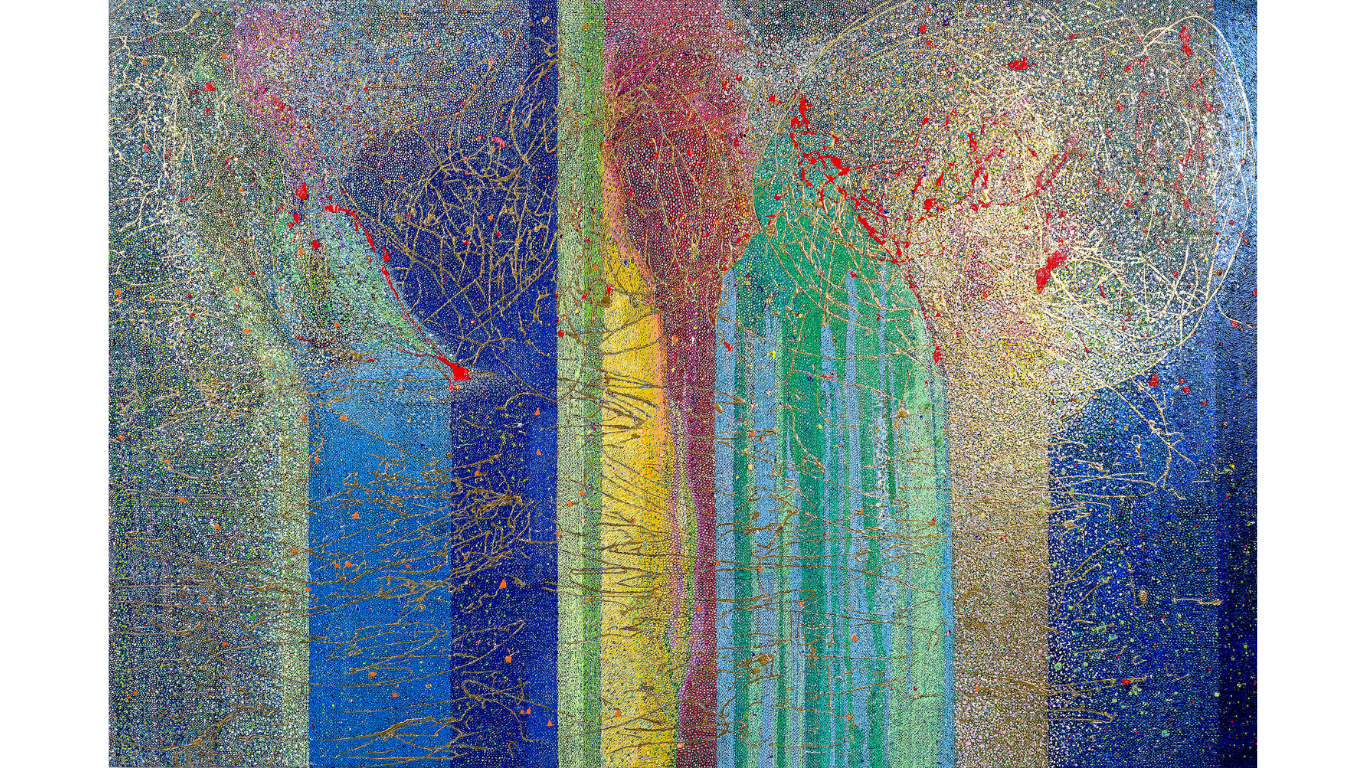
Leslie Parke, Luminous Morning, 48 inches x 72 inches, oil paint and acrylic markers on canvas 2025, Stanford University, ©2025 Leslie Parke
Luminous Morning began my new group of paintings. When I was asked to make a larger painting based on it, I wasn’t sure I could, but the attempt led to a series of new works—and back through the different forms and meanings the stripe has taken in my paintings over the years.
ALSO NEW THIS MONTH
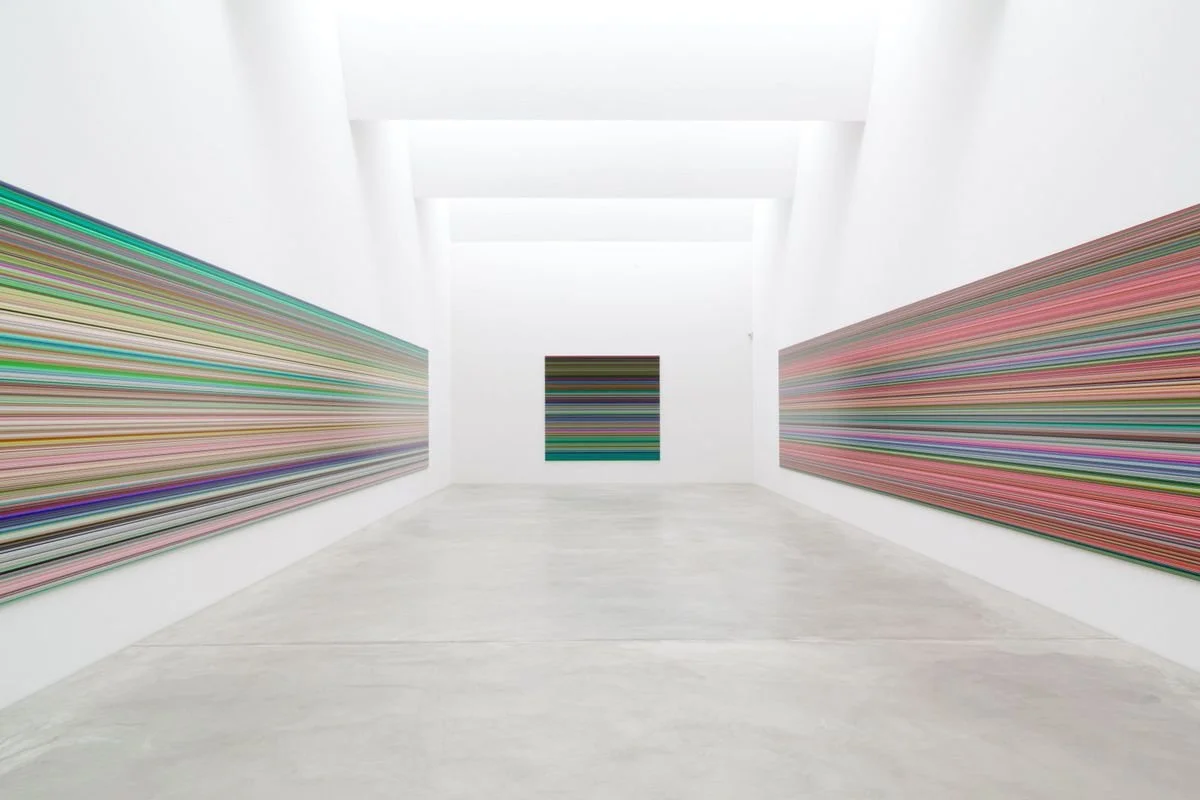
Exhibition of Gerhard Richter’s paintings.
In the late 1970s, I often visited Berlin with my then partner, Michael Marton, a German documentary filmmaker. On one of those trips, we went into East Berlin with his film friend Norbert, who was delivering a roll of wallpaper to a friend.
That detail stays with me now: wallpaper. A domestic thing. A room thing. A pattern meant to make a wall more livable, carried across one of the most heavily policed borders in the world.
Staying in West Berlin was already strange. It was a Western enclave inside the German Democratic Republic, a dot of democracy in a sea of communism, or socialism, depending on how careful one wants to be with the language. There was a literal wall around it. When I was there, I felt vulnerable. The city was precarious by definition, but its life argued against that fact. West Berlin was vibrant, exposed, defiant. It did not feel safe, exactly, but it felt alive.
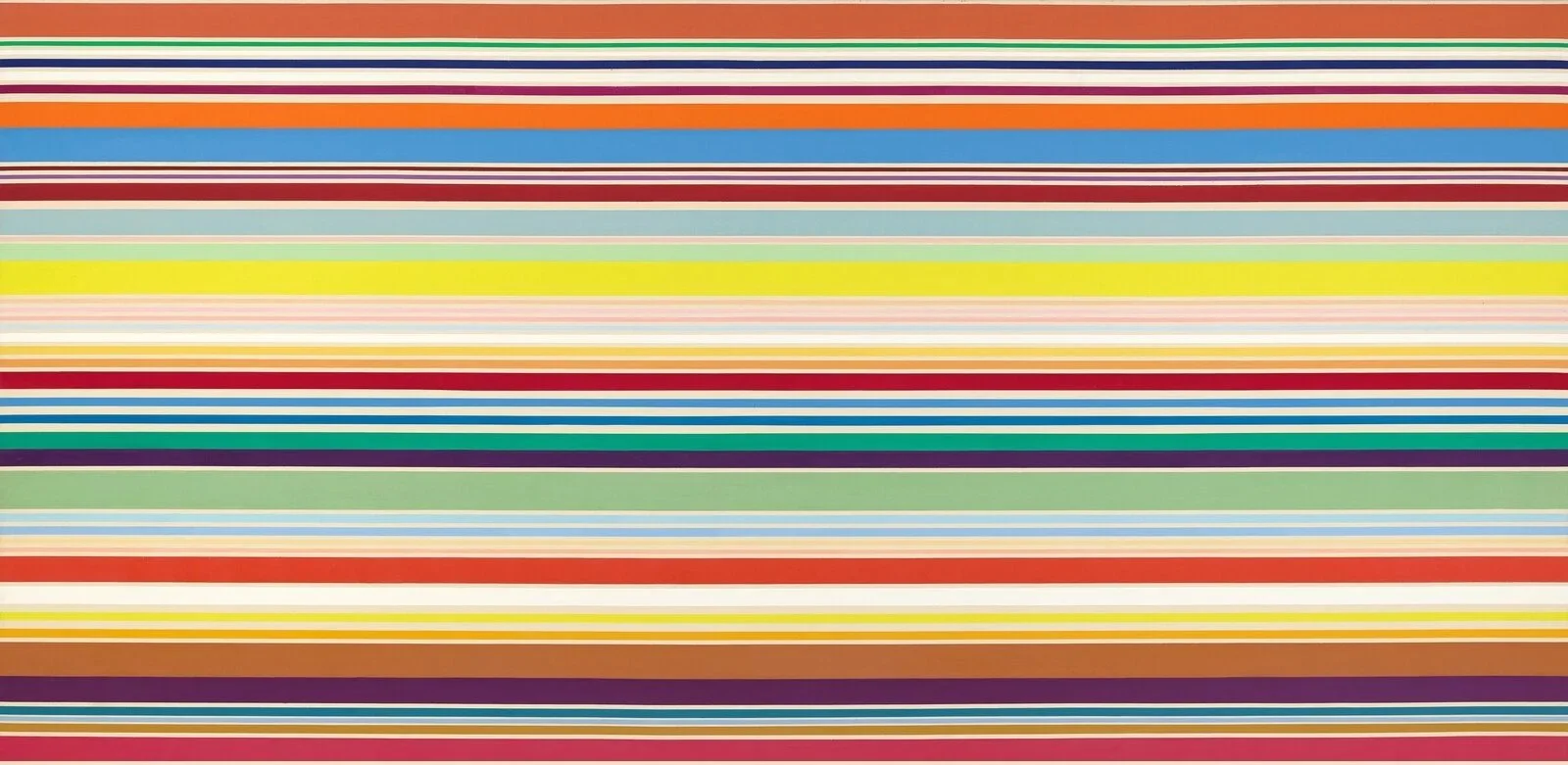
KEN NOLAND: WHEN COLOR MET COLOR
When I was a student at Bennington College, Kenneth Noland lived a few miles away in Shaftsbury, Vermont. He had nothing officially to do with the college while I was an undergraduate, but his presence was felt. Artists and critics who came to see him would sometimes turn up at Bennington—Larry Poons, Tony Caro, Clement Greenberg.
When I became a graduate student, Noland taught a course that I took. He was surprisingly practical. He talked about how we arranged our studios and how we dealt with all the things that pulled us away from the work. He was interested in the circumstances of being an artist: how you set things up so that you could keep painting.
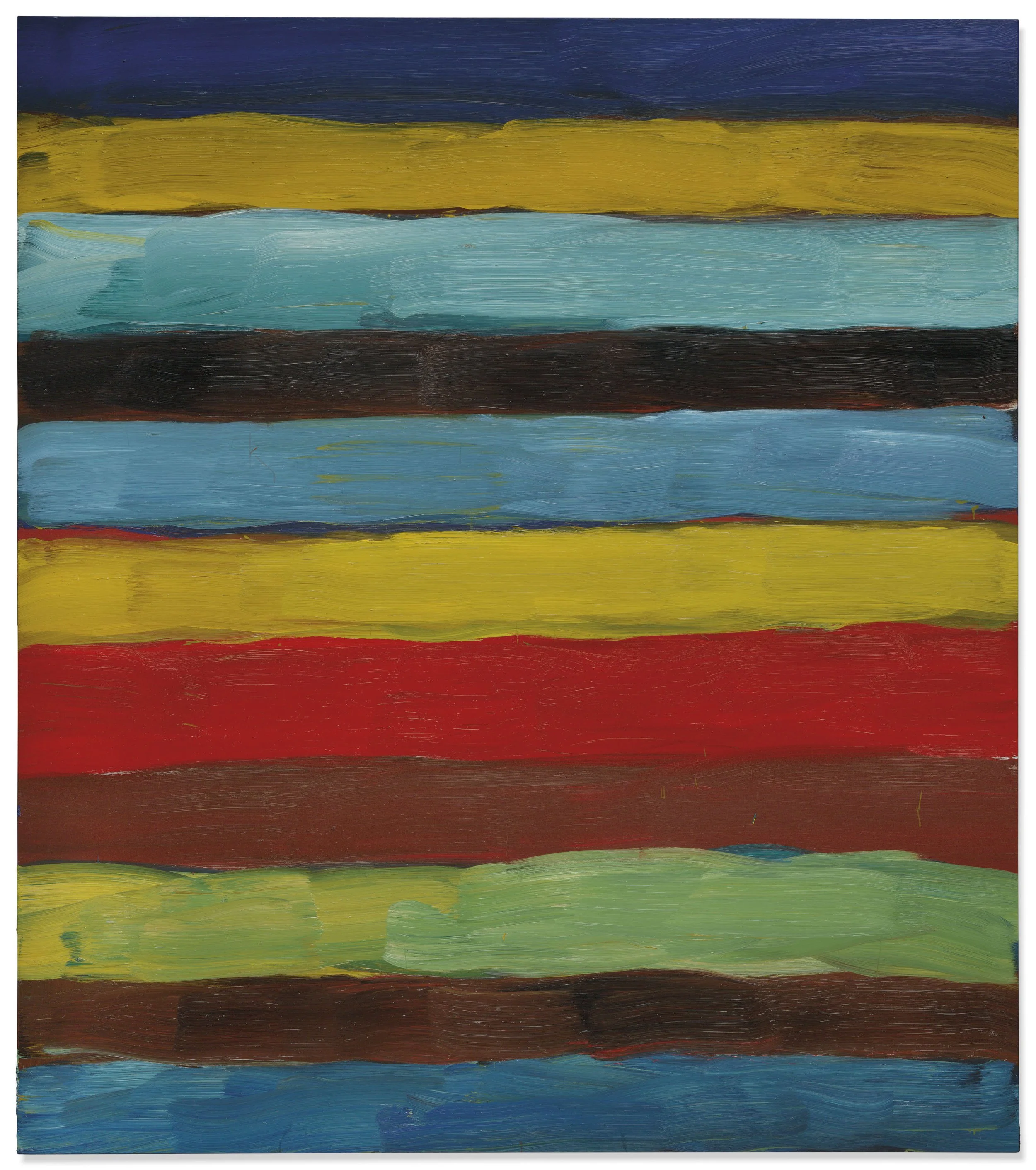
SEAN SCULLY AND THE PAINTED STRIPE
The first time I encountered Sean Scully’s work was at a gallery exhibition in New York. I had never seen his paintings before, and I was struck by the visceral way they entered my body. The work felt charged. I did not read the paintings at first. I felt them.
This surprised me. Their structure was plain enough: broad horizontal and vertical bands, blocks of color, one painted section set against another. I could see how the paintings were organized, but that was not how I experienced them. What registered first was their physical force.
I have been thinking about stripes because I recently returned to them in my own work. Scully’s paintings remind me that a stripe can do more than measure or divide a surface. It can carry paint.
And Scully’s stripes carry a great deal of it.
AGNES MARTIN: PAYING ATTENTION
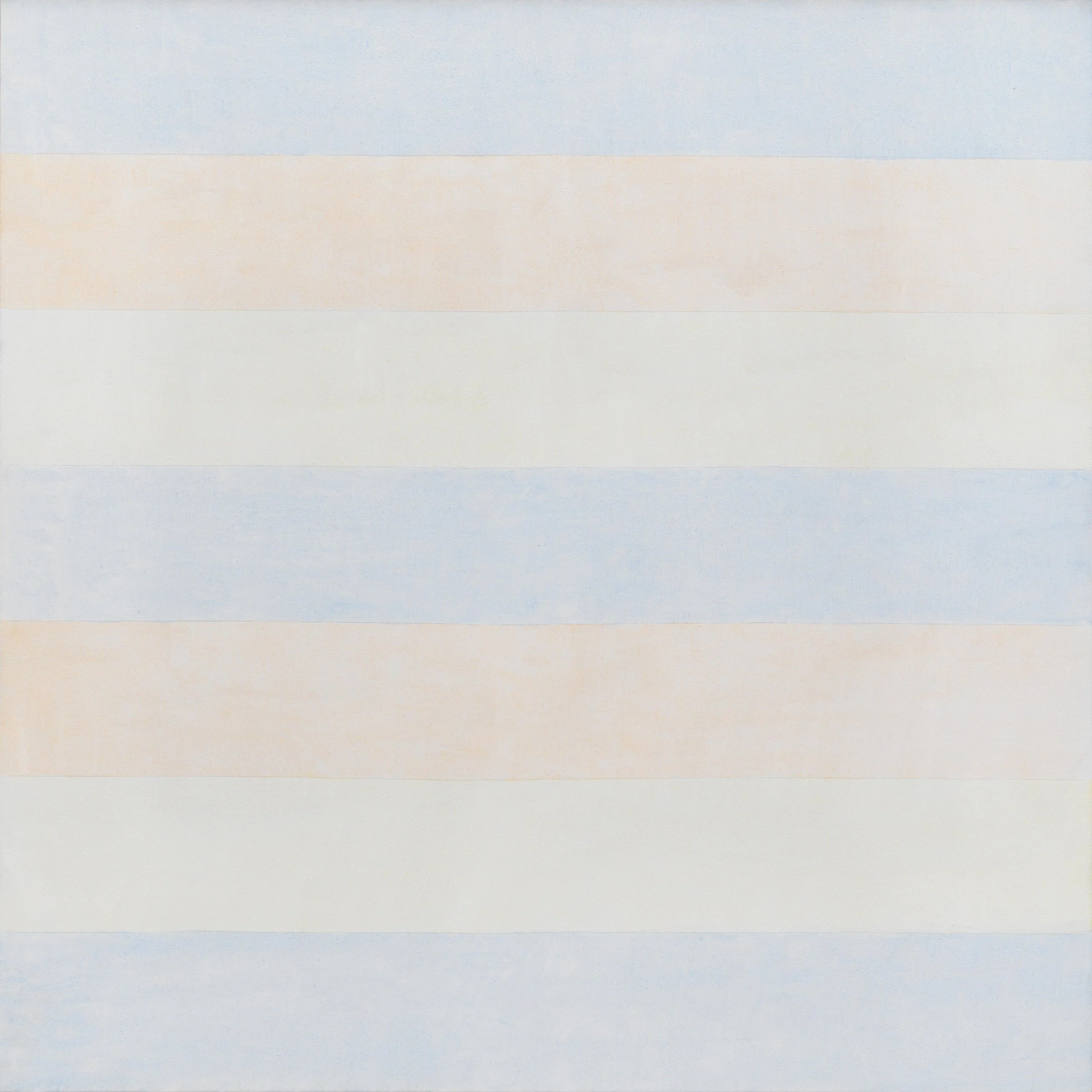
A million years ago, when I was in the Whitney Museum Independent Study Program, the program left New York City for what I believe was the only time and spent the summer in New Mexico. David Diao, Ron Clark, and a few others visited Agnes Martin.
What they may have thought would be a studio visit became something else.
Instead of taking them into the studio and showing them paintings, Martin took them on a long hike on a very hot day to see a remote tree she insisted they had to see.
I have thought about that story for years.
It was not, or not only, eccentricity. It was an exercise in attention. Before talking about paintings, she made them look. Not at a painting. Not at a work of art. Not at something framed, signed, and understood to be important. A tree. Far away. Reached slowly. Under a hot New Mexico sun. By the time they got there, the tree could not have been just a tree. It had become the thing they had walked toward. The thing she had asked them to notice.
That seems to me the right way to enter Agnes Martin’s work.
READ MORE . . .
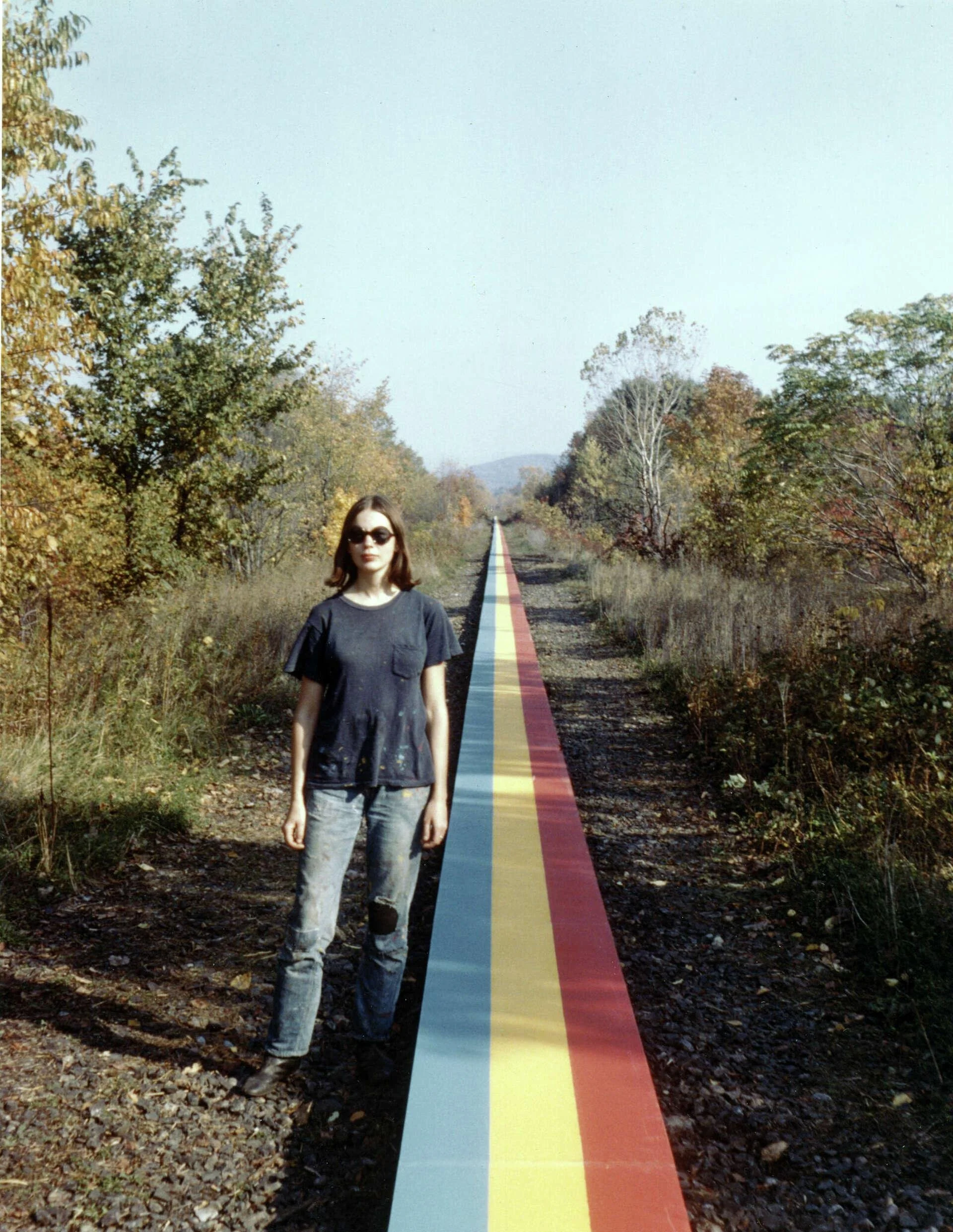
PAT JOHANSON: THE STRIPE LEAVES THE FIELD OF VISION
After Pat Johanson gave her talk at the Curiosity Forum, I walked her to her car. She had come with almost nothing. A computer bag, a fanny pack, and the clothes she was wearing. She told me this was how she traveled, whether she was going to a dinner or to a site where she might have to walk through mud, look at drainage, think about water flow, plants, animals, erosion, construction, access, use. The same clothes. The same body. The same attention.
That is what stayed with me. Not just the work, though the work is remarkable, but the way she carried herself in relation to it. She did not seem to arrive anywhere with an idea to impose. She came prepared to look.
FEATURED ART: FIELD SONG
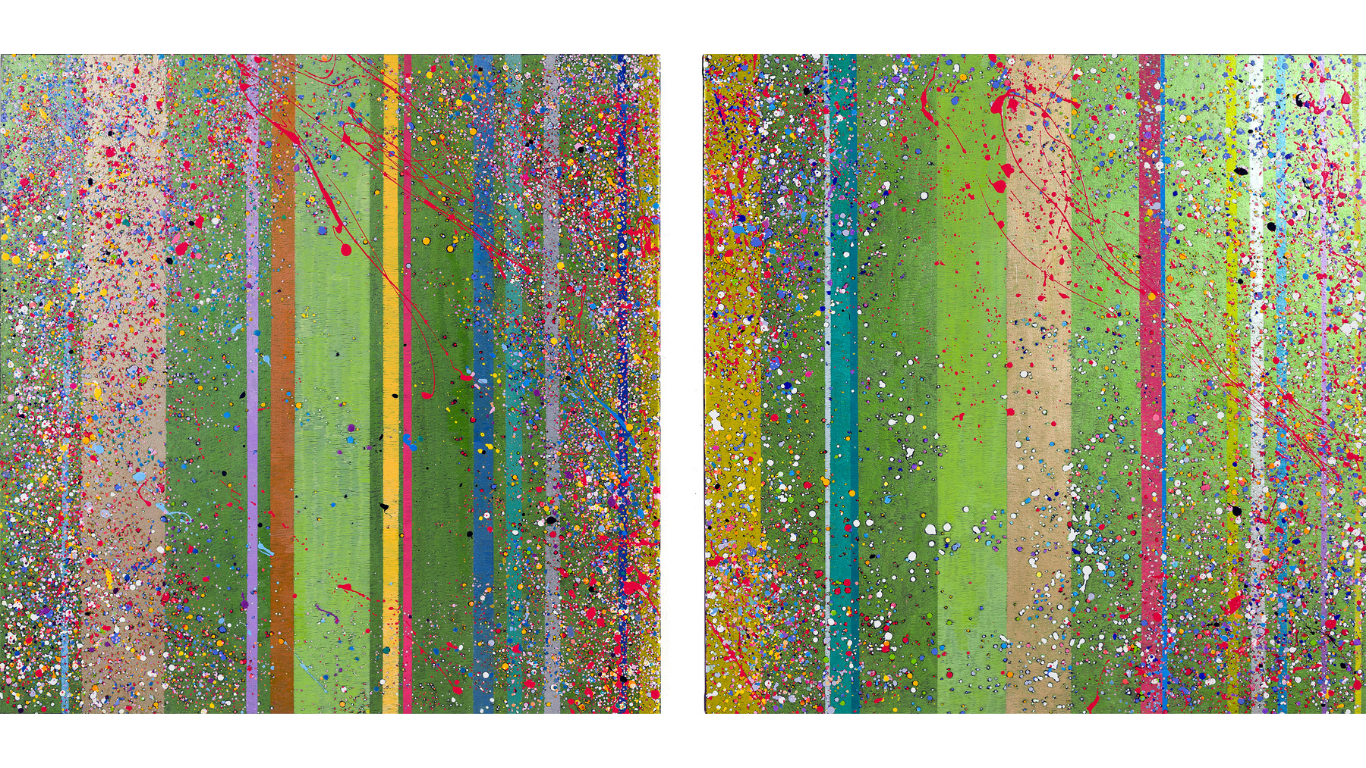
Field Song, 48 inches x 96 inches, oil paint and acrylic markers on canvas, © 2026 Leslie Parke