
FINDING THE DRAMA
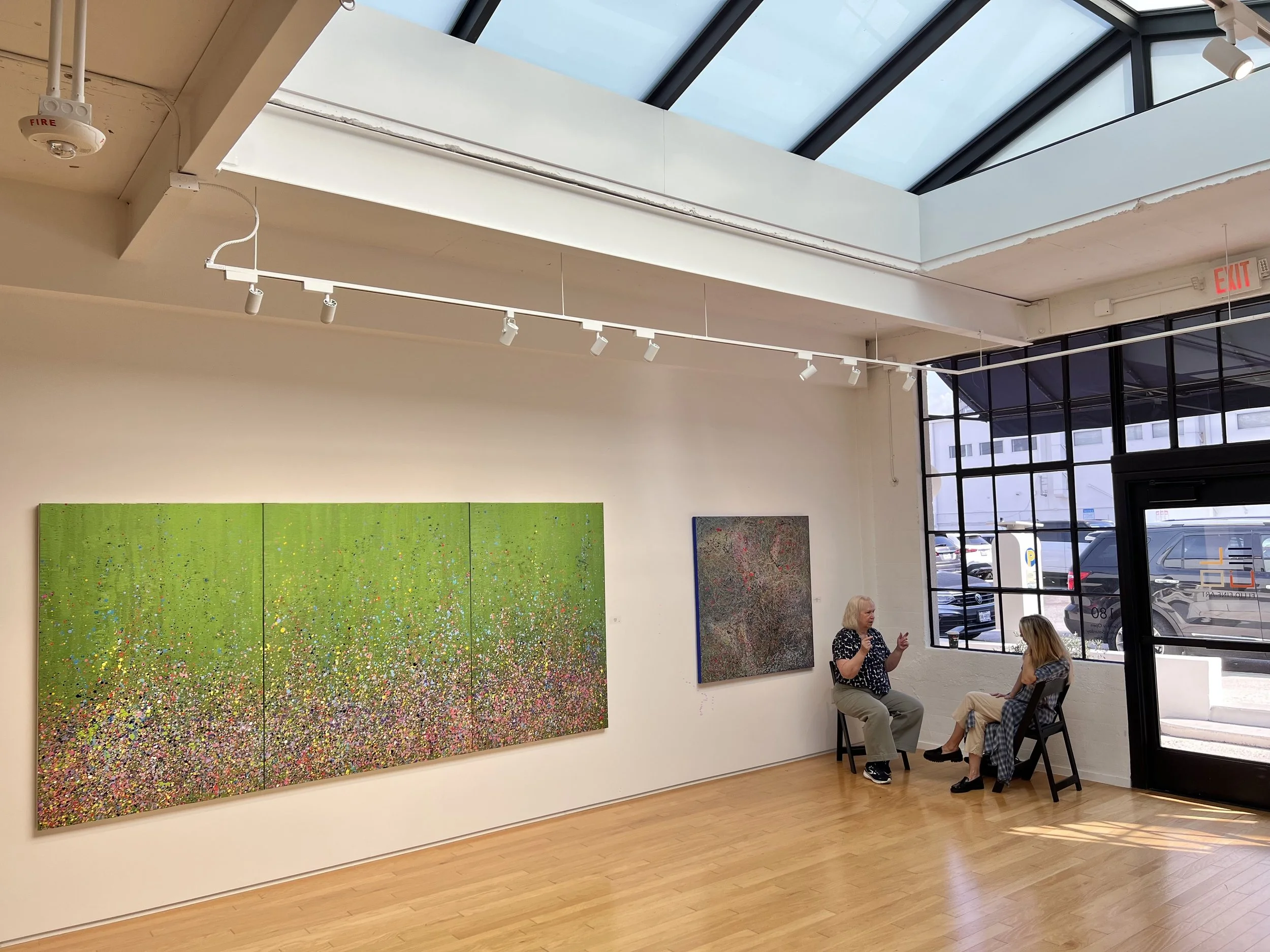
A corner of my exhibit at Ellio Fine Art in Houston.
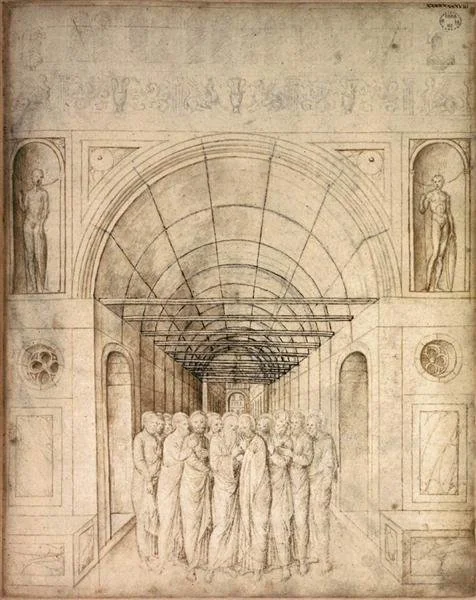
I am back from Houston and the opening of ENERGETIC FIELDS at Ellio Fine Art. The exhibition will be up all month, and I hope some of you will get to see it. While there, I did try to track down the double portrait of Giovanni Bellini and his assistant Vittore at the Museum of Fine Arts, but it was not on display. I begged the gatekeepers to put me in touch with a curator so I could convince him to let me into the storage to view it, but they wouldn’t budge. The piece is on their website, which is why I thought it was on view. Maybe next time.
FINDING THE DRAMA
Last month I told you my research into Jacopo Bellini was starting to behave like a story. All of this was supposed to help me develop a television drama about the Bellini family. I kept at it all this month, because the holes in the historical record were driving me crazy. Here is what I've pieced together so far, with a few questions still unanswered.
After the fight in Gentile da Fabriano's courtyard in Florence, Jacopo had good reason to be afraid. Bernardo, the boy he fought, was the son of a notary with friends in the city's courts, and Jacopo was charged with assaulting him with a stick. A court case and possible jail were bad enough, but the real danger was the revenge Bernardo's family might take on him and possibly on Gentile's workshop. The need for revenge was so deeply embedded in the culture that an offense in one century could still be avenged in the next. All family members were enlisted in carrying out the revenge, which could be anything from bodily harm to keeping the person from ever working again.
Jacopo, the wise and practical person that he was, fled. The logical thing would have been for him to return to Venice. Unfortunately for him, Venice was in the middle of another outbreak of the plague, so bad that the Senate voted that summer to set up a hospital for the sick on an island in the lagoon. Instead, he headed to Porto Pisano, the harbor near Pisa that Florence had bought from Genoa in 1421 as a base for its new state galleys. They sailed east to the Levant, and soon west and north to Flanders and England. Jacopo headed east. On his return 15 months later, he was picked up within days and thrown in jail, having been found guilty in absentia. He made peace with Bernardo, admitting fault and promising to pay him 25 florins over time, but he still owed the city its fine. He was finally released at Easter for the humiliating reason that he had no money at all. Then the record goes blank.
My guess is that he reunited with Gentile and continued to work with him. Then when Jacopo's father died, he returned to Venice expecting to collect his inheritance. His mother had died long before, and his stepmother disappears from the records around this time. But his stepmother left him with a half-brother, Giovanni. This, in effect, cut his inheritance in half. His father had also stipulated that a loan he made to Jacopo be repaid or taken out of his inheritance. On top of that, the law made him partners with this brother, who was more than thirty years younger than he, and responsible for him until he came of age. (There are many different theories about Giovanni's parentage, but this is the one put forward by Daniel Wallace Maze, and it's the one I chose to go with.)
Jacopo was hoping to set up his own workshop. He had taken on some jobs of his own while working for Gentile, and had some cachet as Gentile's protégé. But he didn't have the money to start a workshop. That is, until he married Anna Rinversi, the daughter of Branca Rinversi, a Venetian silk broker whose family came from Lucca. She came with a dowry of 250 ducats and, I presume, some knowledge of trade. With that, the Family Business was started. Anna will be an important figure in the drama.
My instinct had always been to start the drama with Jacopo and Mantegna, and I'd largely developed that story first. But then I thought, "Who the hell is Jacopo? What motivates him? What does he want? And why does he want it?" Those questions drove my deep dive, and what I found was certainly rich. We have a possible father-son drama, a master-student drama, an Odyssean voyage, an arrest, poverty, and redemption. But as each part filled in, I saw that dramatic things had happened without a dramatic story evolving. When I tried to build an episode out of it, it felt much more like a biopic than the sort of drama I imagined. After six weeks of research, I've decided to kill this darling. The early Jacopo material will live in my blog posts as background for The Family Business. Jacopo's Rosebud, if you will.
So I'm fast-forwarding to where I think the dramatic center of the story is. Jacopo, already stressed by his rivalry with the Vivarini workshop, meets Mantegna, the Basquiat of the Venetian Renaissance. By then, Jacopo is basically the Warhol of Venice: highly respected, sought after for big commissions, but ever heedful of his competition and who might threaten his dominance in the market. And then, Mantegna marries Jacopo's daughter, Nicolosia, making the professional rivalry a family affair.
My blog posts cover the things I needed to understand either about the artists in The Family Business or the circumstances that surround the action. Nina, my web person, is making a page where all of the Family Business material will live: the episodes, my fantasy casting, the settings, and links to the background material.
I feel that I have all the material for the first episode. I have already written a version of it around the encounter between Jacopo and Mantegna. But then I found out that some things were out of historical sequence: dramatically interesting, historically questionable. Once I have made the drama align with the history, I'll be ready to post. In the meantime, I'll continue to share my process with you.
CONTINUING RESEARCH FOR THE FAMILY BUSINESS



THE ARTIST’S UNIFORM

Sacha Guitry and Claude Monet in a white linen suit.
I have never understood how some artists manage to paint in their good clothes. In 1915, Sacha Guitry filmed Claude Monet painting beside his water lily pond at Giverny, dressed in a white suit. A white suit! Matisse was nearly as bad. Photographs show him standing in his studio with a palette, wearing a suit and tie, looking as though he might have an appointment with his banker later that afternoon. I can't walk within fifty feet of my studio without getting paint on my clothes.
ON SCREEN: Netflix - The Diplomat

Detail of ‘The Rainbow Portrait of Queen Elizabeth I’ (c.1602). Attributed to Isaac Oliver. Oil on canvas. 127 × 99.1 cm. Hatfield House, Hertfordshire, UK. Image source Wikimedia Commons, One of the few women, who had no trouble conveying her power by how she dressed.
WARDROBE COMBAT: Women, Clothes and Power in The Diplomat
The sartorial politics of The Diplomat
One of the things I love about the Netflix series The Diplomat, aside from its wonderfully complicated political and marital intrigues, is what it has to say about women in power and their clothes. Kate Wyler, played by Keri Russell, is a woman who knows how to negotiate her way through an international crisis but is considerably less adept at negotiating her way through the clothes other people want her to wear. Having spent much of her professional life in places where the functionality of her clothes was of some consequence, she finds herself, as the American ambassador to Great Britain, in the hands of people for whom the primary consideration is what her clothes communicate.
For her first big magazine profile, they dress her up to look like an Oscar statuette. On another occasion, she is put into a dress that looks like sausage wrapping dipped in glitter, so constricting that when she has an opportunity to have sex with the British Foreign Secretary against his desk, she can't get her skirt up. She subsequently has to enlist the help of her security detail to get out of the dress.
EXHIBITIONS : Ellio in Houston and the Bennington Museum

5 NOVEMBER 2026 - 2 DECEMBER 2026
ELLIO Fine Art
3201 Allen Parkway #180
Houston, TX 77019
FOR MORE INFORMATION
(281) 660-1832
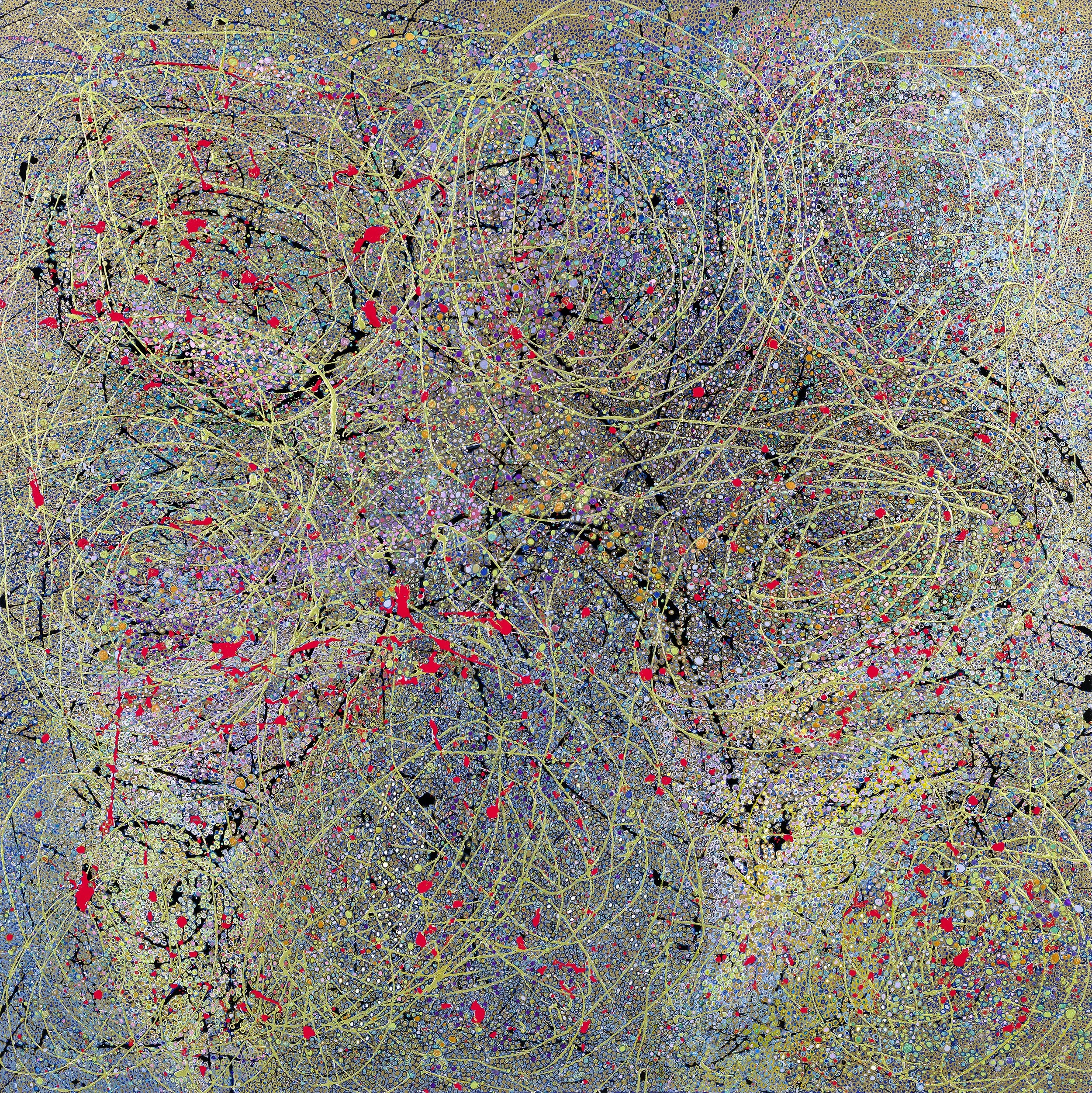
"The Invitation," detail, 48 inches x 48 inches, oil paint and acrylic marker on canvas, ©2026 Leslie Parke
FEATURED ART: PURSUIT OF HAPPINESS
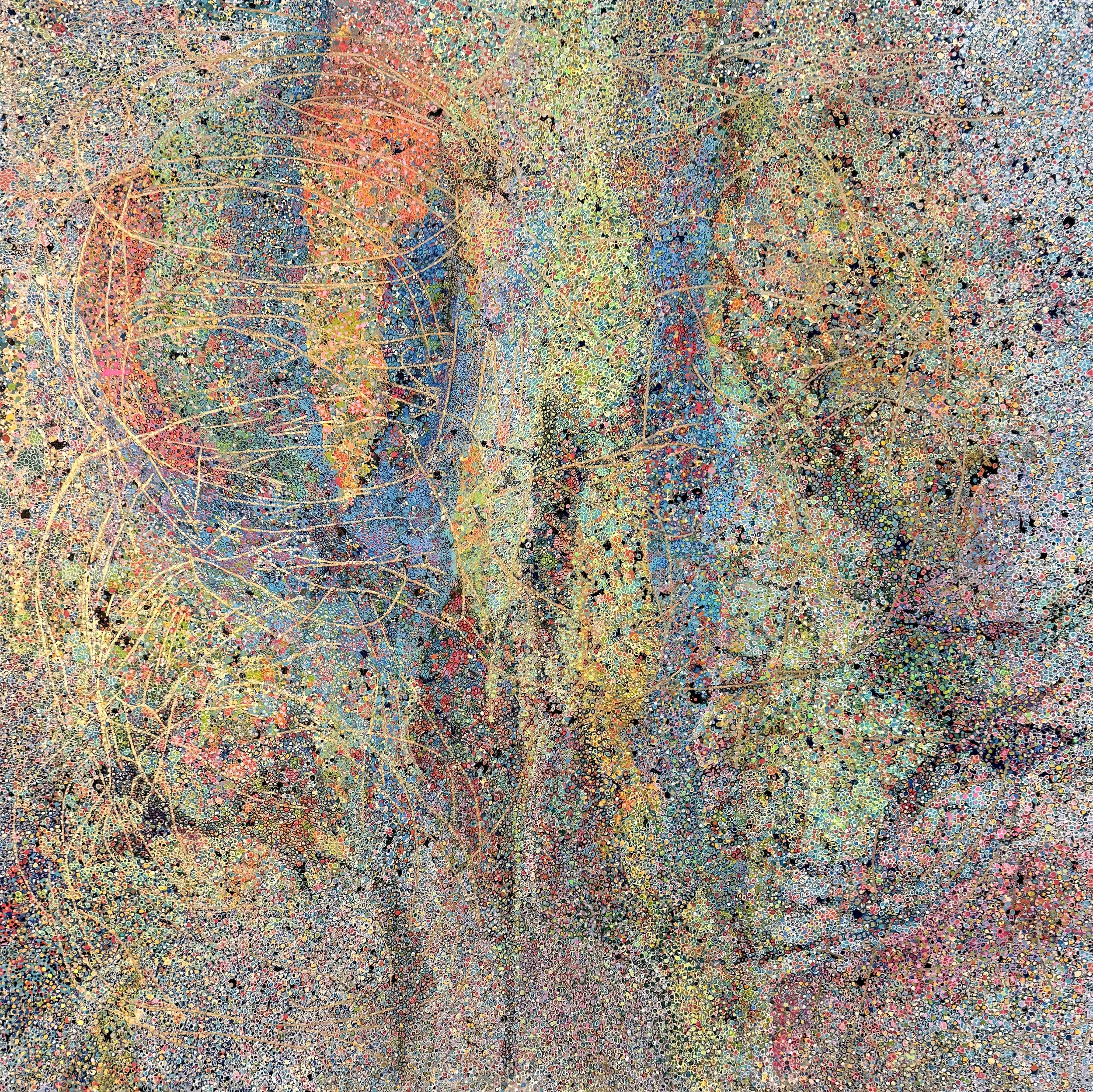
PURSUIT OF HAPPINESS, 48 inches x 48 inches, oil on canvas, © 2026 Leslie Parke
MORE IN NOVEMBER:
My painting, Pursuit of Happiness, in the Regional Artists Exhibition, Bennington Museum
November 19 through December 31, 2026
You can bid on this painting here: Silent Auction Open November 19 through December 20 More Details