
blog
ALL | ABOUT MY WORK | EVERYTHING ELSE
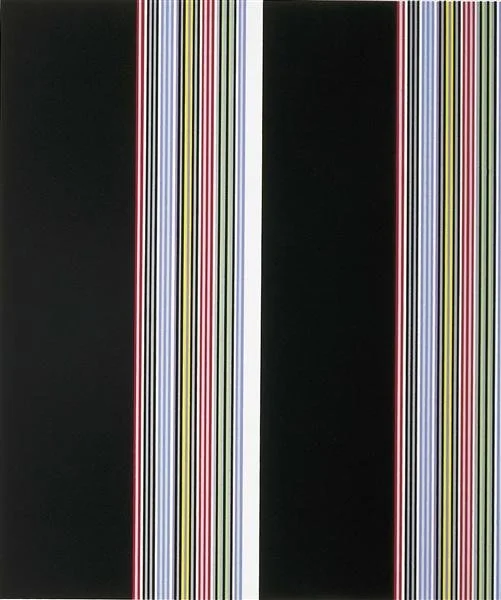
GENE DAVIS: PLAYING COLOR BY EYE
I had assumed that Gene Davis made nothing but stripe paintings. He did not. He began with drawings and Abstract Expressionist paintings and later made collages, micro-paintings, video, neon, and enormous outdoor works. But once he found the stripe in the late 1950s, it became his principal subject.
Subject is the word Davis himself used.
“I have very, very strong subject matter in my work, which is stripes,” he said. “A stripe is just as real as a goddamn flower.”
That gets us closer to the paintings. The stripe was not simply a device for arranging color. It was the thing itself.
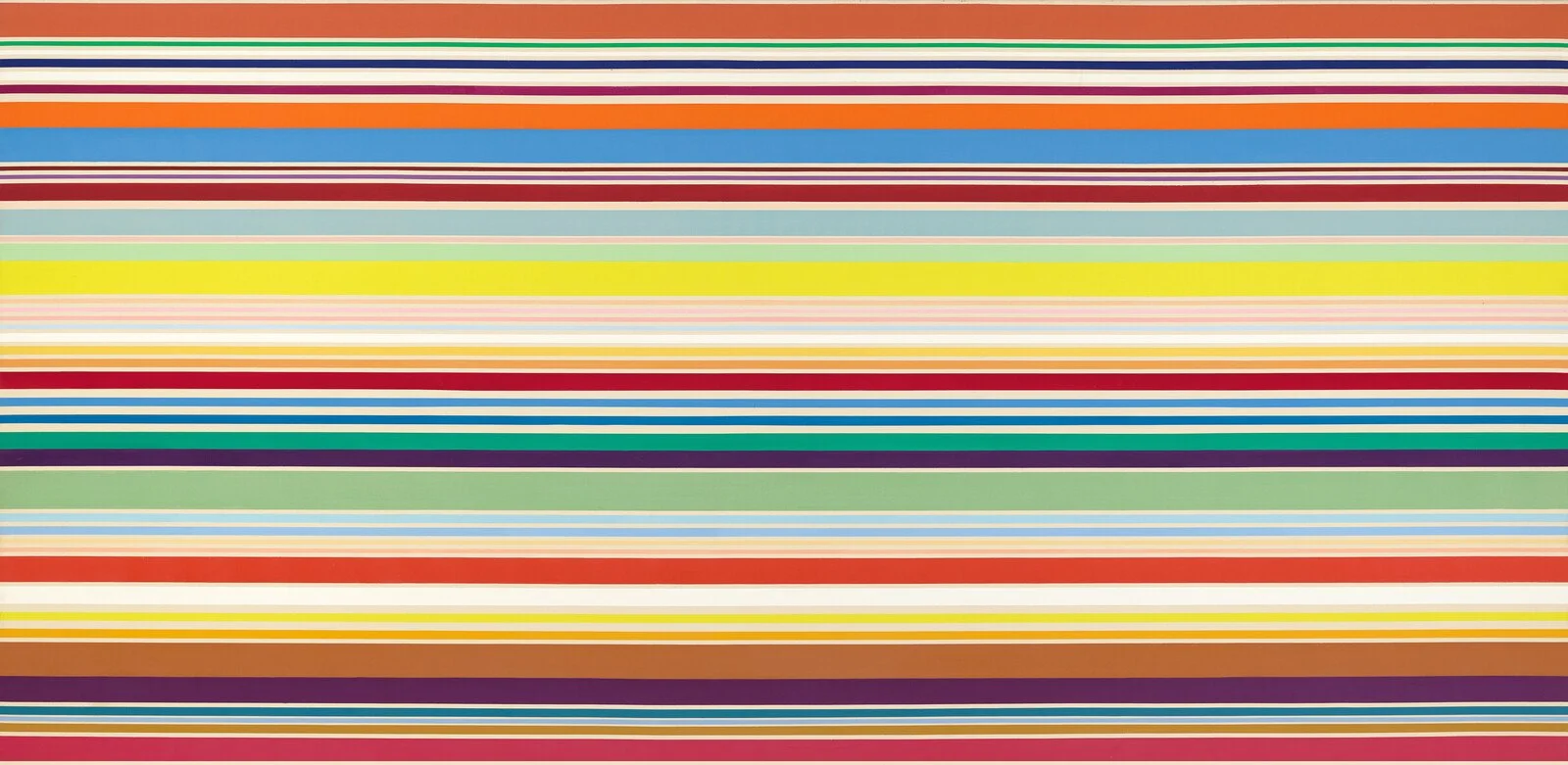
KEN NOLAND: WHEN COLOR MET COLOR
When I was a student at Bennington College, Kenneth Noland lived a few miles away in Shaftsbury, Vermont. He had nothing officially to do with the college while I was an undergraduate, but his presence was felt. Artists and critics who came to see him would sometimes turn up at Bennington—Larry Poons, Tony Caro, Clement Greenberg.
When I became a graduate student, Noland taught a course that I took. He was surprisingly practical. He talked about how we arranged our studios and how we dealt with all the things that pulled us away from the work. He was interested in the circumstances of being an artist: how you set things up so that you could keep painting.
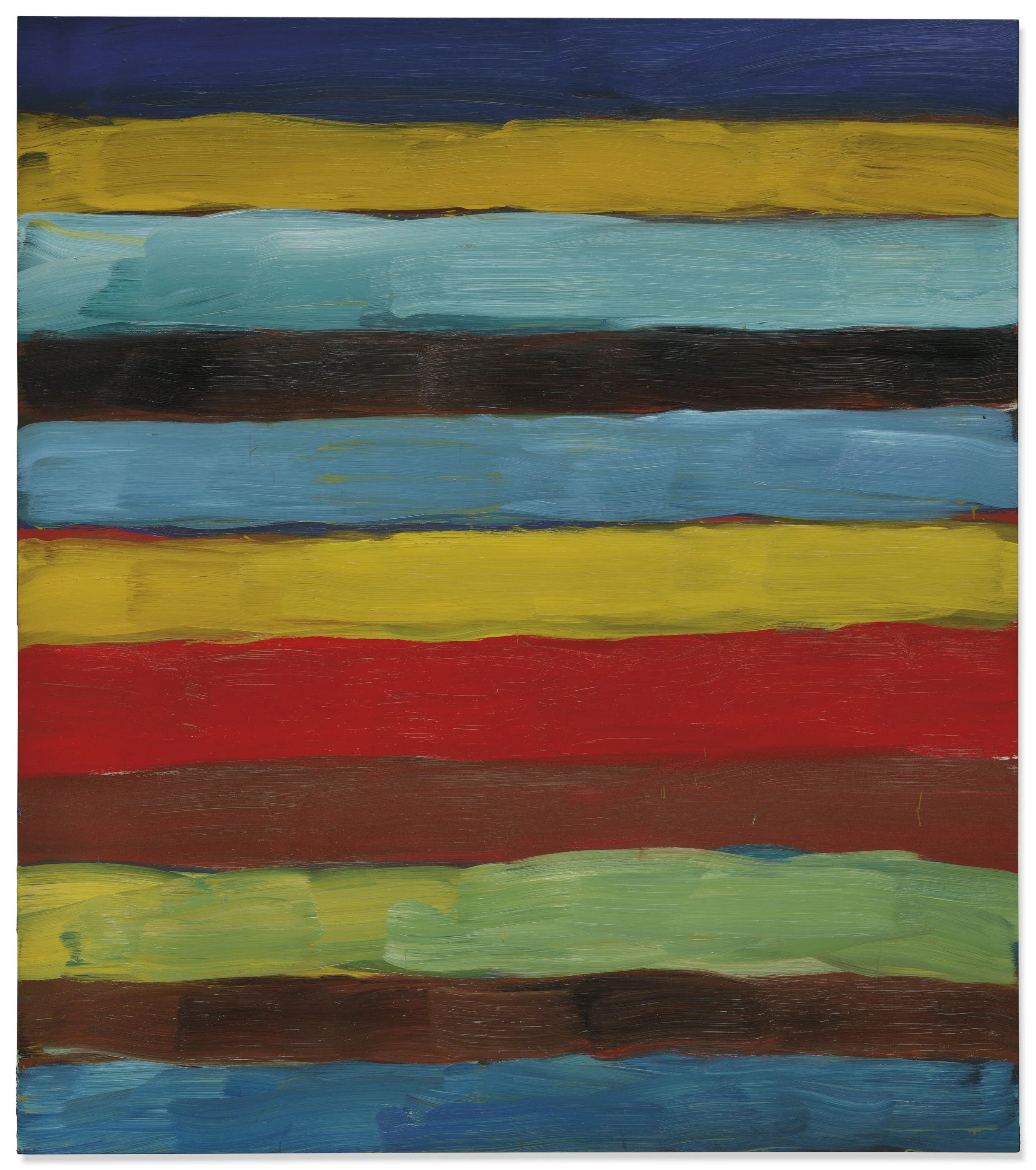
SEAN SCULLY AND THE PAINTED STRIPE
Frank Stella did not arrive at the stripe because he liked stripes.
He arrived at it because he was trying to solve a problem in painting.
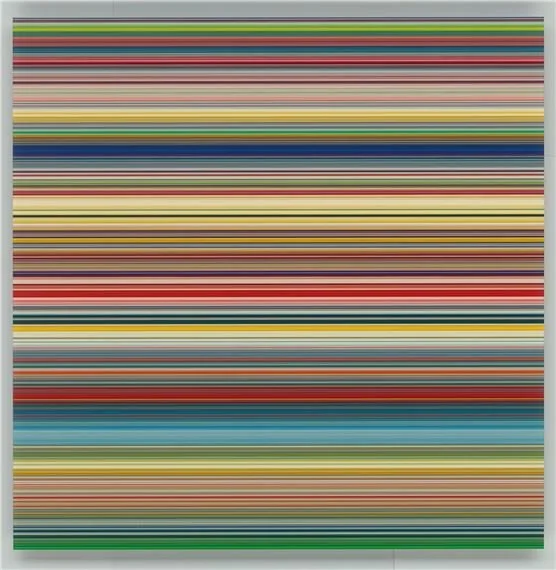
GERHARD RICHTER: THE REALITY OF PAINTING
Frank Stella did not arrive at the stripe because he liked stripes.
He arrived at it because he was trying to solve a problem in painting.
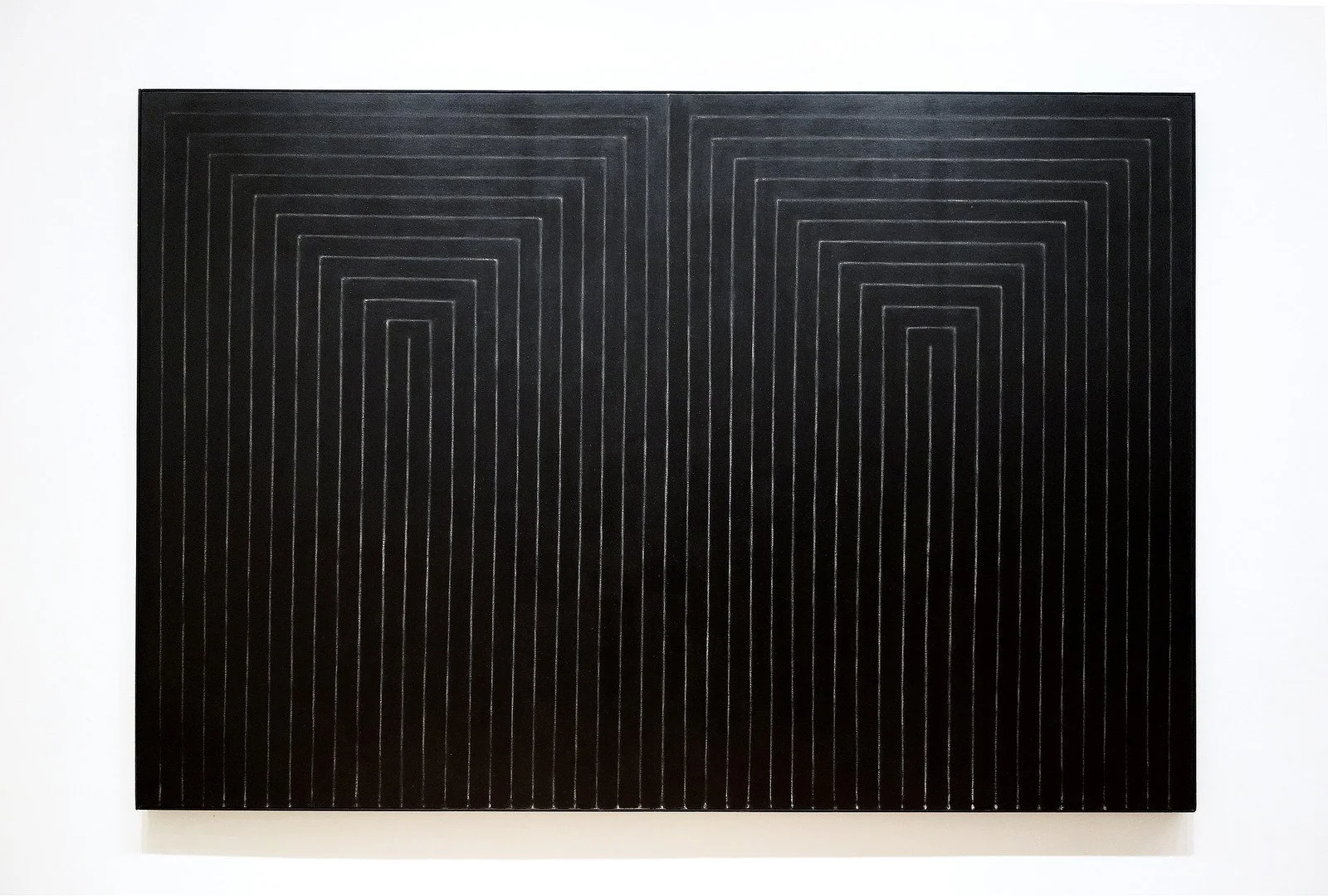
FRANK STELLA: WHAT THE STRIPE SOLVED
Frank Stella did not arrive at the stripe because he liked stripes.
He arrived at it because he was trying to solve a problem in painting.
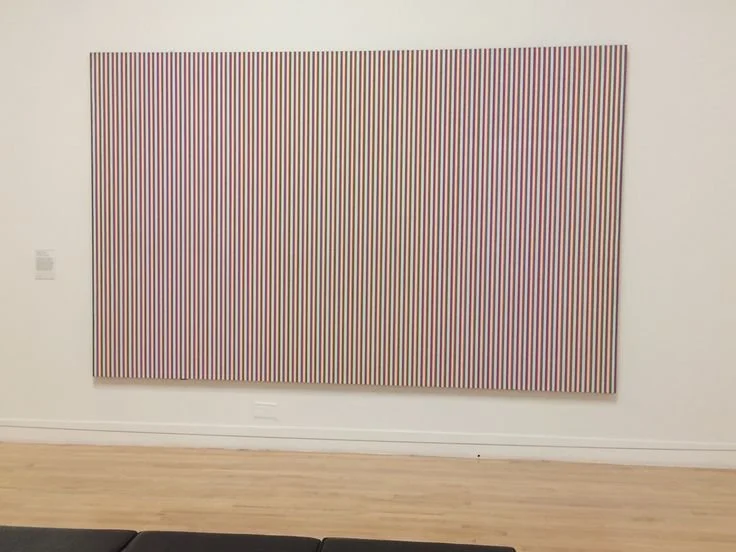
BRIDGET RILEY: WHY THE STRIPES?
When people first encounter Bridget Riley's stripe paintings, they often assume the work is highly calculated. The stripes appear so precise, so controlled, that it is easy to imagine a system determining the outcome.
The reality is more interesting.
Riley was not trying to make a system. She was trying to understand color.

AN ONCOLOGIST AND AN ARTIST WALK INTO A BAR . . .
After my opening at the Soprafina Gallery in Boston several years ago, friends invited me to dinner with an oncologist* and his wife. Over the meal, he told me about his research. He had access to mountains of data collected from patients over many years, and he and his team were struggling to mine it for patterns that might predict cancer. This was before artificial intelligence could handle such a task. He had resorted to color-coding the data. I told him he was heading for trouble.

HILMA AF KLINT AND KANDINSKY: A Spiritual and Artistic Connection
Hilma af Klint and Wassily Kandinsky, two influential artists of the early 20th century, shared a profound interest in the spiritual and abstract realms of art. While their paths diverged in many ways, their work was deeply intertwined by their explorations of spirituality, physics, and music.

THREADING A NEW PATH: How a Disability Led to a New Artistic Style
In 2018, I developed bilateral trigger thumbs, which meant I could not tie my shoes, write my name, or hold a brush, much less paint. I wanted to keep painting while contemplating the possibility of surgery, but with both hands in metal braces, I had to devise a new way to work.

CONTINUOUS FLOW: A Year of Artistic Exploration
Over the last year I have had several versions of an exhibition that I call, Continuous Flow. The first in Boston at Soprafina Gallery, the second and largest at SUNY Oneonta, and in April, a third at Gremillion and Company, Fine Art, Inc. in Houston, Texas.
These shows came at an interesting time for me. In 2017, as I was preparing for these exhibitions, I lost use of my hands for six months. I had double trigger thumbs, which meant I could not bend my thumbs, write my name, or hold a brush. What to do? I kept working.

THE QUEEN’S SKIRT: A Reflection on Power and Privilege
One day I was moving paintings in the "gallery space" of my studio and I heard the words, "French Revolution". We had just been through a long spate of Trump tantrums and I believe it was that, as much as anything, that brought the French Revolution to mind. I love French history, and while I haven't studied the Revolution in many years, I spent the afternoon in a revery of free association. I was working on some large paintings that are mostly abstract, but with a representational association. And I was using a lot of metallic paint. I decided that I wanted to paint one of those wide, diaphanous skirts worn by Marie-Antoinette

FROM FARM TO CANVAS: Painting the Rural Landscape Slant
I live in a very rural part of New York State surrounded by farms. The landscape influences my work, but not always in the ways you might imagine. I pass this farm on a back road to the next town. I have stopped a few times to photograph it. What I really love is how the corn crib looks in front of the silo. It is a curved grid in front of a curved grid. In this photo it appears quite abstract. I love a subject that is completely real and seems completely abstract.

ABSTRACT OR REPRESENTATIONAL : Depends on the Source of the Light
My paintings are about light.
When I paint representationally and I am about the business of rendering light, I often choose a subject that is backlit. It seems to offer the most extensive and complex qualities of light - light on a surface, passing through a surface, reflecting off of a surface, often highlighting transparency, translucency, reflection, or glitter.
