
March Notes - 2026
COLLABORATORS
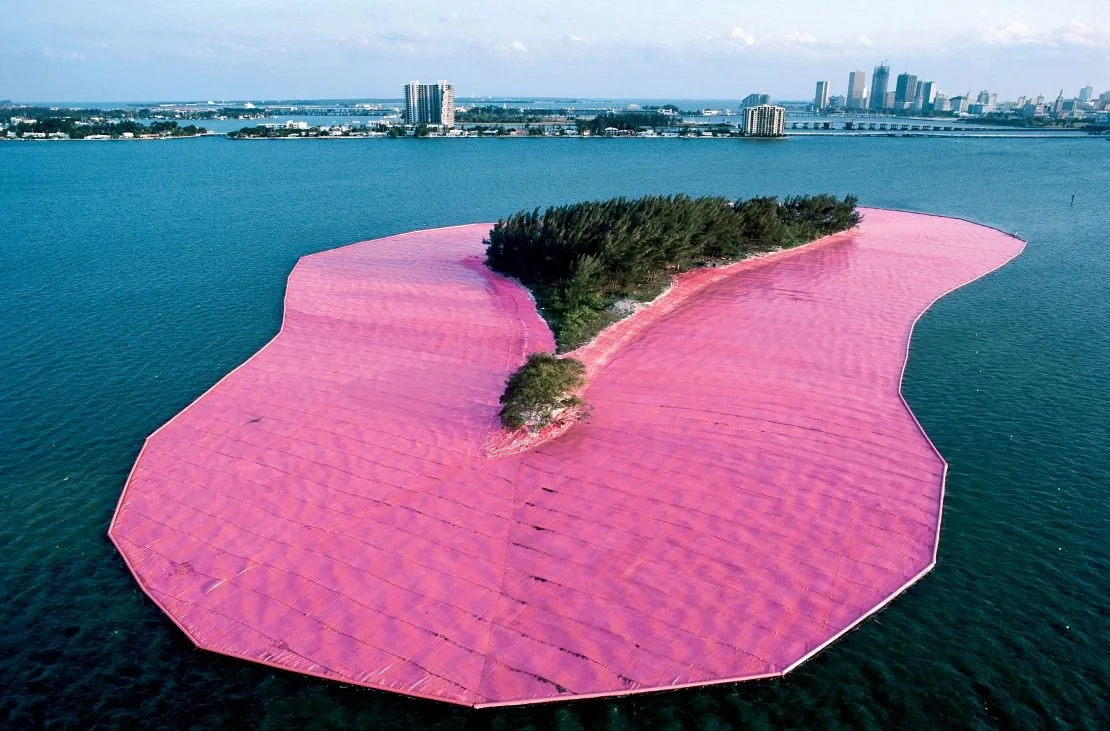
Jeanne-Claude and Christo, Surrounded Islands
This month, I’ve been thinking about collaboration not as a personality trait or a working style, but as a structural fact. When two people share authorship in a meaningful way, the work changes. Not always visibly at first. Sometimes the practice exists for years before the language catches up to it.
We are used to stories of solitary genius. We are less practiced at recognizing how much art is made through sustained partnership. Ideas tested in conversation. Decisions negotiated. Risk shared. In some cases, acknowledgment comes late, long after the work itself has already demonstrated that it could not have been made alone.
The collaborations gathered here are not about harmony in the sentimental sense. They are about alignment. About shared seriousness. About what becomes possible when more than one intelligence is fully inside the work. Some of these partnerships were publicly recognized only after the fact. Others were visible from the start. All of them ask us to look more carefully at how authorship actually functions.
Rather than compressing these stories into a single essay, I’ve written individual posts on each collaboration and linked to them here. They live together, but they do not collapse into one another. Each partnership reveals something slightly different about how work is made, sustained, and understood over time.
What they share is simple and rare. The work holds because the structure behind it holds.
JEANNE-CLAUDE AND CHRISTO
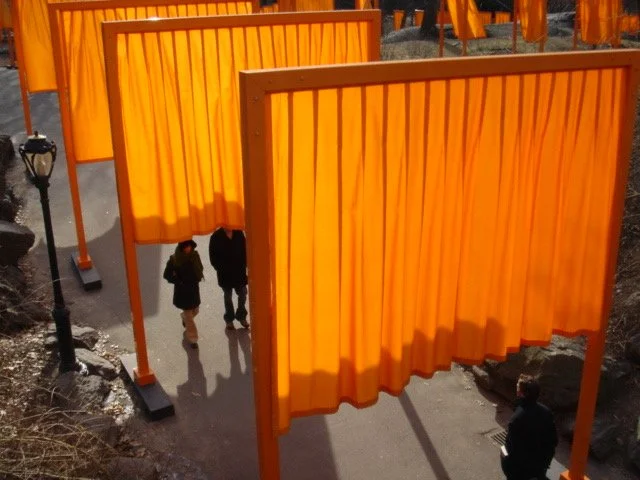
When Surrounded Islands appeared in Biscayne Bay in 1983—eleven islands ringed with floating pink fabric—the work felt unmistakably whole. Monumental, precise, improbable. It looked like a single idea carried out with absolute conviction. What it did not appear to be was a late addition to an already established practice. And yet, in a quiet but consequential way, it marked a public shift: the acknowledgment that Christo and Jeanne-Claude had always been working together.
ALSO NEW THIS MONTH :

Bernd Becher and Hilla Becher
With Bernd and Hilla Becher, collaboration is not expressive. It is procedural. The work announces itself through repetition, restraint, and refusal. Two people, one method, sustained over a lifetime.
Their photographs of industrial structures are often described as neutral, even deadpan. Water towers, blast furnaces, gas tanks. Shot straight on. Overcast light. No drama. But neutrality here is a discipline, not an absence. What the Bechers built together was a way of seeing that required agreement at every level: subject, angle, distance, timing, sequencing. Nothing could drift.
Sonia Delaunay and Robert Delaunay
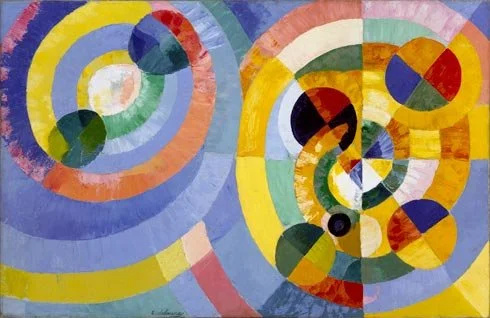
Sonia and Robert Delaunay are usually described as collaborators through theory. Simultanéité. Color as vibration. Perception over subject. All of that is true. But for me, the collaboration only really comes into focus when you put their paintings next to each other.
I have always found Sonia Delaunay’s paintings more compelling than Robert’s. Not because they are more decorative or more applied, which is how they were too often dismissed, but because they are less resolved and more alive. They do not announce an idea. They work it out.

Gilbert and George
Gilbert and George present perhaps the most literal form of collaboration in this series. They did not align two practices or share a method. They declared themselves a single artist, split across two bodies, and then lived that declaration without exception.
From the beginning, they insisted on authorship as unity. There is no Gilbert work and no George work. There is only Gilbert and George. This was not a conceptual pose adopted late in their careers. It was the premise from which everything followed. Art, life, image, and labor collapsed into one continuous practice.
Anni Albers and Joseph Albers
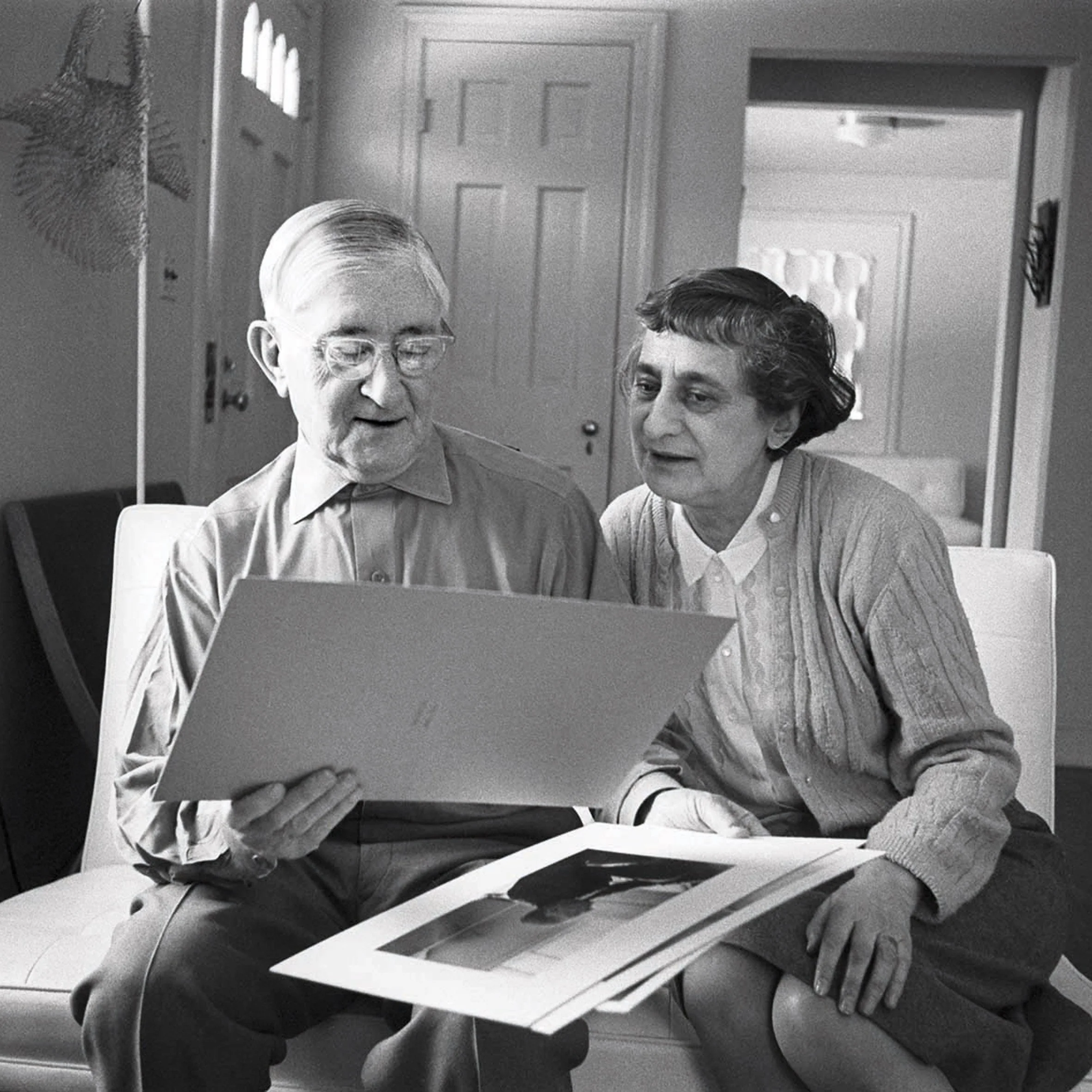
With Anni and Josef Albers, collaboration does not announce itself through shared objects or joint signatures. It appears instead through parallel concentration. Two practices, rigorously separate in material, moving toward the same questions with extraordinary discipline.
Again, the collaboration becomes clearest when you look at the work side by side.
FROM THE LIBRARY: Steven Naifeh and Gregory White Smith
Two of the most searching artist biographies of the last half century, Van Gogh: A Life and Jackson Pollock: An American Saga, were written by the same partnership: Steven Naifeh and Gregory White Smith.
What makes their collaboration notable is not simply the scale of research, though that is formidable, but the way two voices combine without blurring. Naifeh and Smith worked closely for decades, reading, arguing, corroborating, and revising together. The books emerge from a shared process of verification and interpretation, in which assertions are continually tested against evidence.
Their method resists the single-author myth of biography. Instead of constructing heroic arcs or tidy psychological explanations, they allow complexity to stand. Contradiction is not smoothed away. Context is treated as essential rather than explanatory padding. The result is work that feels both rigorous and humane.
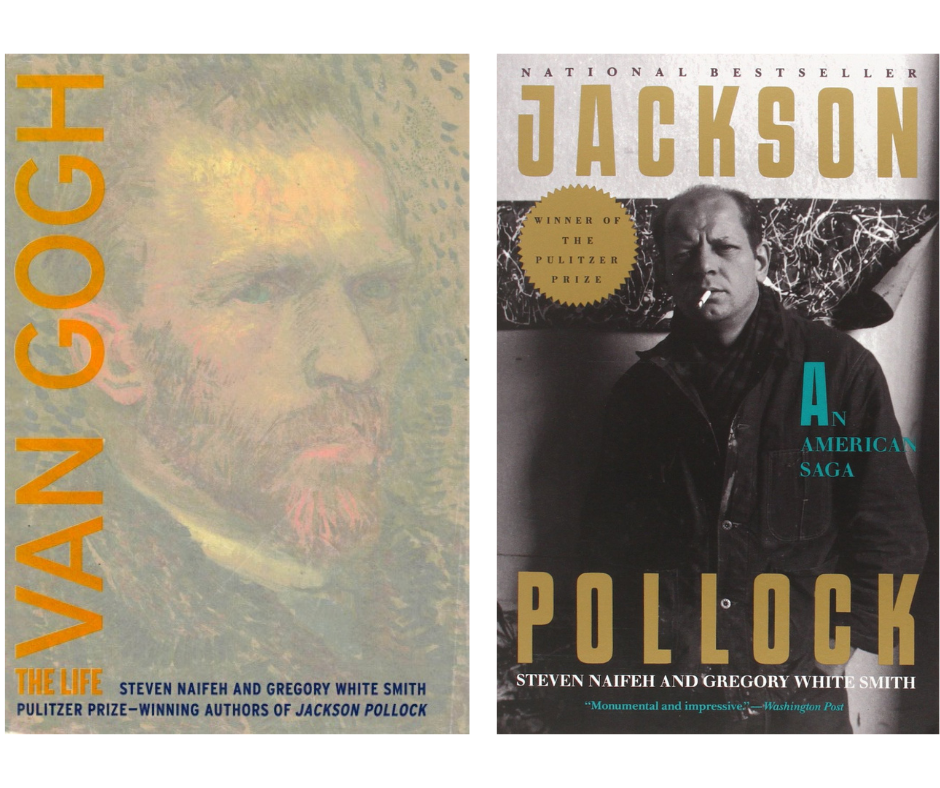
In Van Gogh: A Life, this means restoring Vincent to the density of his circumstances, economic, familial, and intellectual, rather than isolating him as a figure of pure suffering. In An American Saga, Pollock is neither sanctified nor reduced. The painting is central, but so are the structures that made the work possible and, at times, impossible.
These books could not have been written alone. They depend on sustained dialogue, on the willingness to slow down, to disagree, to revise assumptions in real time. The collaboration does not announce itself stylistically. It reveals itself through balance, patience, and depth.
It is a reminder that some of the most powerful creative partnerships are invisible. They leave no trace of negotiation on the surface, only the feeling that the subject has been given the time and seriousness it deserves.
ON SCREEN: Waste Land
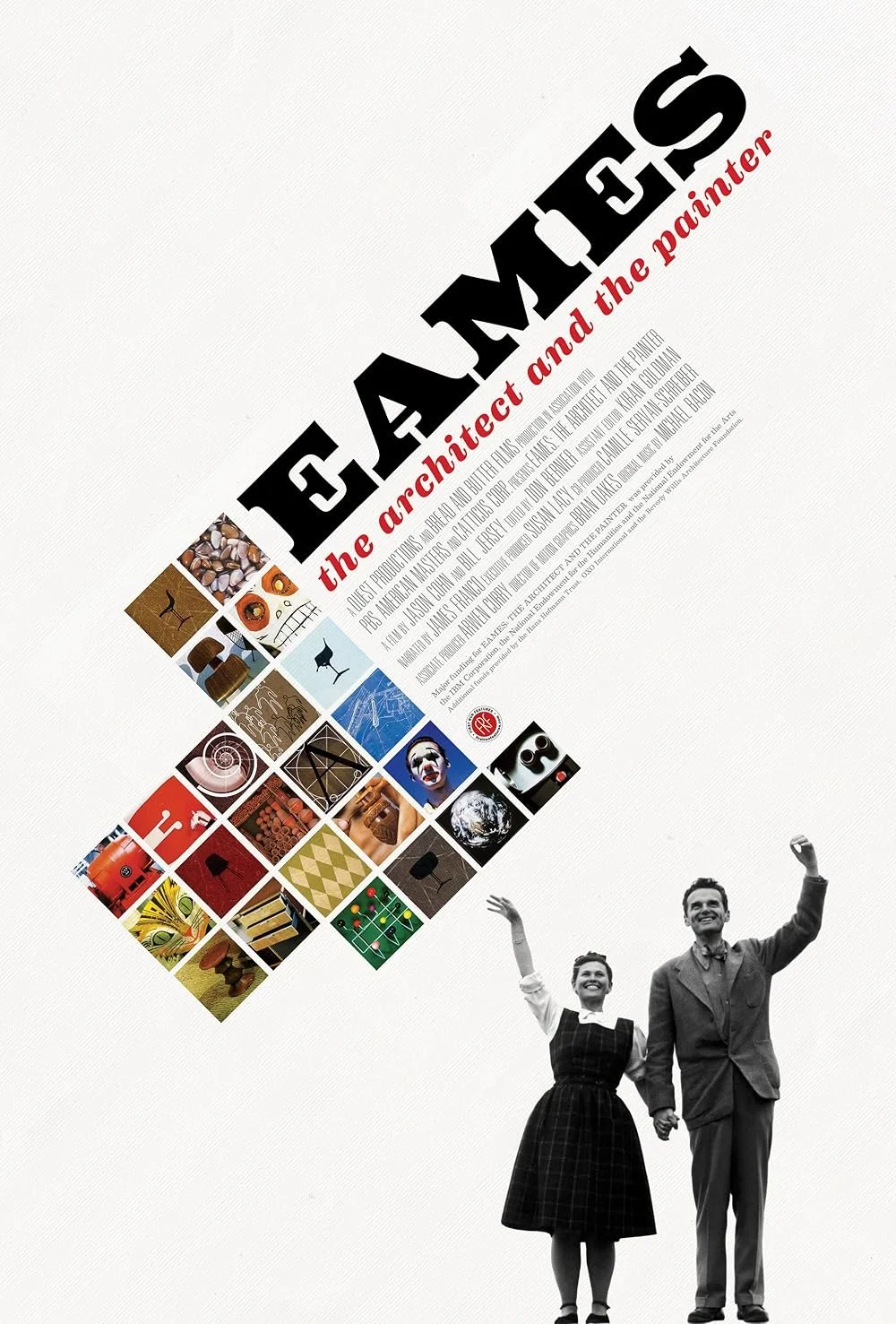
Eames and Ray Eames through the lens of their partnership. Rather than constructing a dramatic narrative, the film allows the collaboration to reveal itself through process. Design, architecture, film, exhibitions, and teaching are shown as inseparable outcomes of two distinct intelligences working in sustained alignment. Ray’s eye for composition, materials, and visual clarity emerges as central, even though her role was long subsumed under Charles’s name. The film is careful and unsentimental. It shows how ideas moved back and forth, how decisions were shared, and how the work gained strength from that reciprocity.
What makes the film belong squarely in this collaboration grouping is that it mirrors the Christo and Jeanne-Claude story almost exactly. The partnership existed from the beginning. The work never made sense as the product of one person. What changed over time was not the practice, but the accuracy of its attribution. Like the other collaborations you’ve gathered here, the film is not about conflict or sacrifice. It is about structure. About what becomes possible when authorship is genuinely shared, even if it takes years for the public record to catch up.
FEATURED ART: TURNS OR RACES BY
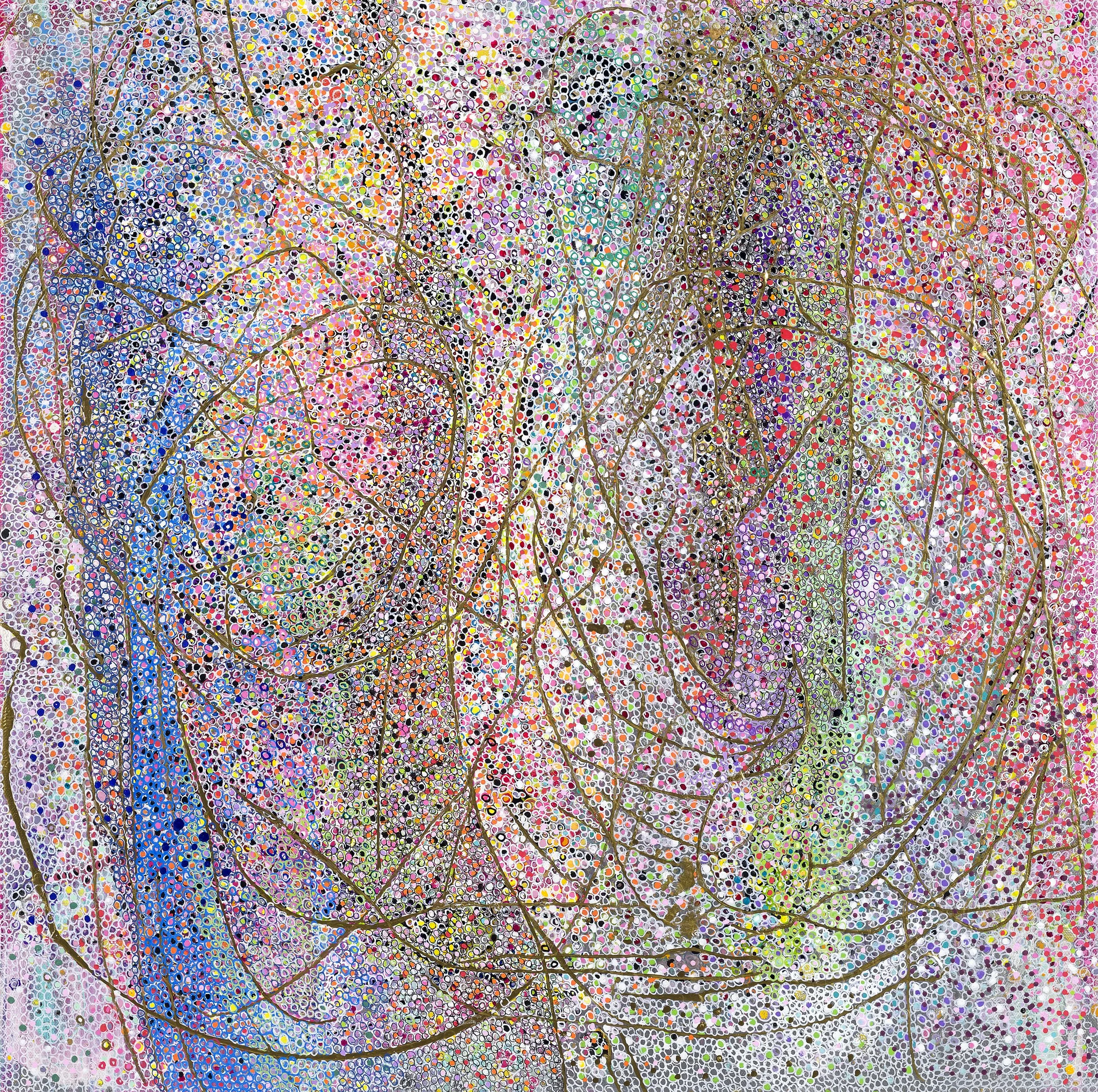
"Turns or Races By", 24 inches x 24 inches, oil and metallic paint and acrylic markers on canvas, © 2026 Leslie Parke